Dyson purifier review insights reveal how these bladeless towers blend HEPA filtration with high-velocity airflow. Choosing the right unit requires weighing CADR delivery against upfront investment. This guide examines filtration efficiency, room coverage, sound output, and real running expenses across top-rated Dyson machines.
Our top picks




As an Amazon Associate we earn from qualifying purchases at no extra cost to you.
By Daniel Foster
As an Amazon Associate we earn from qualifying purchases.
Decisive Metrics and Space Requirements for Dyson Purifiers
Evaluating modern air treatment systems requires understanding how circulation mechanics interact with certified filtration media. When conducting an objective Dyson purifier review, one must prioritize raw airflow metrics, filter sealing standards, and long-term acoustic impact across various domestic living situations.
Room Coverage and Physical Footprint Considerations
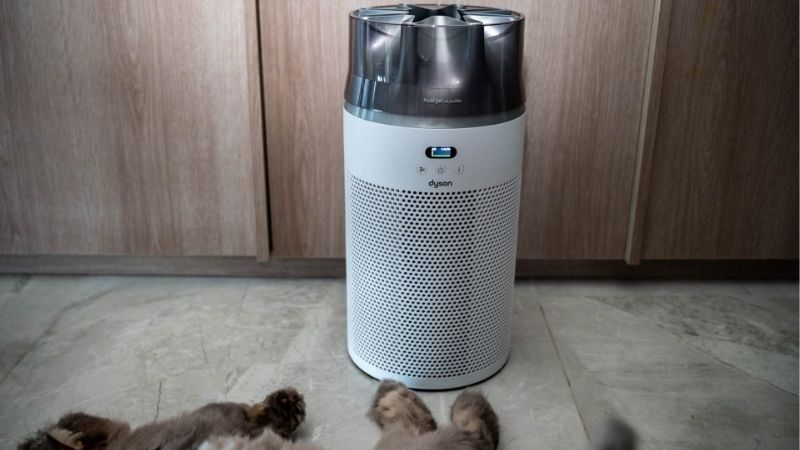
Selecting an air treatment device requires matching its projected circulation capacity to your interior floor space. A standard Dyson tower measures roughly 41 inches (104 cm) in height with a compact 8.7-inch (22 cm) circular base, allowing it to fit neatly into tight bedroom corners or alongside living room consoles.
Standard units cover approximately 399 sq ft (37 m²) based on two air changes per hour, while heavy-duty models handle up to 1,076 sq ft (100 m²). Always measure your room dimensions and ceiling height prior to ordering to guarantee adequate air exchanges per hour and avoid purchasing an undersized machine for open layouts.
Decisive Category Metrics: CADR and True HEPA Filtration
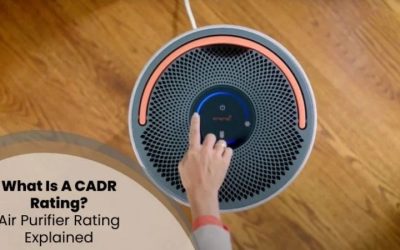
The core benchmark for air cleaning efficacy is Clean Air Delivery Rate (CADR), measuring cubic feet per minute of purified air. While conventional purifiers target high CADR through boxy fans, Dyson relies on Air Multiplier technology to circulate roughly 614 cfm (290 L/s) of total airflow across the entire living environment.
Filtration integrity separates premium appliances from substandard hardware. Modern Dyson models feature fully sealed HEPA H13 filtration capturing 99.95% of ultrafine particles down to 0.1 microns, preventing dirty air from bypassing filter seals. Unlike hazardous ionizing machines, mechanical HEPA produces zero toxic ozone.
Furthermore, a recurring finding across any rigorous Dyson purifier review is the balance between fan velocity and filtration rate. Achieving five air changes hourly (5 ACH) in smaller spaces ensures that airborne pollen, dust mite allergens, and particulate matter are continuously captured before settling onto domestic surfaces.
Total Cost of Ownership and Maintenance Realities
The initial retail purchase price represents only part of your overall financial commitment over a five-year ownership span. Genuine Dyson replacement filters cost between $70 and $90 annually, acting like a recurring maintenance subscription that preserves proper motor performance, sensor clarity, and optimal particulate capture.
Electricity expenses remain modest in cooling mode, consuming roughly 6 W on whisper-quiet low speeds and up to 40 W on maximum setting ten. However, combo models with ceramic heating elements draw up to 1,500 W in active heating, which noticeably raises monthly utility bills if operated continuously throughout harsh winter months.
Top Dyson Air Purifiers Reviewed and Compared
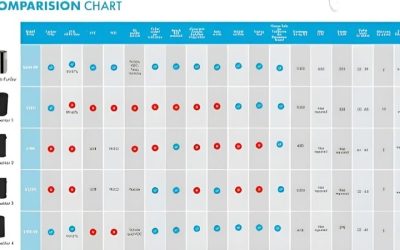
Our comprehensive Dyson purifier review evaluates each standout model across distinct price tiers and capabilities. To help you identify the ideal balance of filtration, acoustic comfort, and room reach, the comparison table below summarizes the essential technical specifications across current and legacy machines.
| Model | Primary Function | Coverage | Max Airflow | Sound Range | Filtration Standard | Power Consumption | Best Suited For |
|---|---|---|---|---|---|---|---|
| Dyson Purifier Cool TP07 | Purifier + Cooling Fan | 399 sq ft (37 m²) | 614 cfm (290 L/s) | 42 – 61 dB | HEPA H13 + Carbon | 6 W – 40 W | Smart Living Rooms |
| Dyson Purifier Hot+Cool HP07 | Purifier + Heater + Fan | 399 sq ft (37 m²) | 614 cfm (290 L/s) | 43 – 62 dB | HEPA H13 + Carbon | 40 W (Cool) / 1500 W (Heat) | All-Season Bedrooms |
| Dyson Purifier Big+Quiet BP03 | High-Capacity Purifier | 1,076 sq ft (100 m²) | 184 cfm (87 L/s) | 24 – 56 dB | HEPA H13 + K-Carbon | 50 W max | Large Open Lofts |
| Dyson Purifier Humidify+Cool PH03 | Purifier + Humidifier + Fan | 400 sq ft (37 m²) | 580 cfm (274 L/s) | 42 – 60 dB | HEPA H13 + Carbon | 45 W max | Dry Urban Climates |
| Dyson Pure Cool Link TP02 | Connected Purifying Fan | 400 sq ft (37 m²) | 410 cfm (193 L/s) | 35 – 62 dB | 360 Glass HEPA | 40 W max | Budget-Conscious Homes |
| Dyson Purifier Cool Gen1 | Essential Purifying Fan | 399 sq ft (37 m²) | 614 cfm (290 L/s) | 43 – 61 dB | HEPA H13 + Carbon | 40 W max | No-App Simplicity |
Dyson Purifier Cool TP07 – Best Overall Smart Tower
The Dyson Purifier Cool TP07 serves as the benchmark oscillating tower for contemporary living areas and larger primary bedrooms. Equipped with integrated Wi-Fi and voice assistant connectivity, it continuously transmits particulate concentrations, nitrogen dioxide spikes, and ambient humidity figures to the MyDyson smartphone app.
Real testing data demonstrates in this Dyson purifier review why it remains the benchmark tower for standard suburban living rooms. However, its lower raw CADR scores compared to boxy purifiers mean rapid smoke clearing takes longer, and proprietary replacement filter cartridges cost around $80 each year to maintain.
Dyson Purifier Hot+Cool HP07 – Best All-Season Heating and Cooling
Combining thermal management with medical-grade air cleaning, the HP07 incorporates self-regulating PTC ceramic plates within its compact loop amplifier. It delivers targeted room heating during freezing winter days and transitions instantly into a cooling purifying fan when warm spring weather arrives in your neighborhood.
Its 30-inch (76 cm) chassis covers roughly 399 sq ft (37 m²), generating between 43 and 62 dB across fan settings. However, activating its ceramic heating elements pulls up to 1,500 W of household power, creating a substantial surge in monthly electricity bills if used as a primary heat source throughout freezing winter seasons.
Dyson Purifier Big+Quiet Formaldehyde BP03 – Best for Large Open Spaces
Engineered specifically for expansive open-concept living rooms, commercial lounges, and loft apartments, the BP03 represents Dyson’s highest air delivery platform. Utilizing specialized cone aerodynamics, it projects clean air over 32 feet (10 m) across vast indoor spaces up to 1,076 sq ft (100 m²) with minimal turbulence.
Its oversized HEPA filter lasts up to five years, supported by a catalytic filter that permanently destroys formaldehyde without degradation. However, standing 32.7 inches (83 cm) tall and weighing 26 lbs (11.8 kg), its bulky barrel profile and premium price tag make it impractical for compact urban bedrooms or cramped apartments.
Dyson Purifier Humidify+Cool PH03 – Best Dual-Action Climate Purifier
The PH03 addresses in this Dyson purifier review the dual challenge of arid indoor climates and stagnant airborne dust. It combines sealed HEPA H13 filtration with evaporative humidification, using a 1-gallon (3.8 L) reservoir and biocide ultraviolet light to distribute purified vapor across rooms up to 400 sq ft (37 m²).
Automated sensors modulate humidity between 30% and 70%, operating at acoustic levels between 42 and 60 dB. Nonetheless, owners must perform bi-weekly descaling cycles with citric acid, as hard municipal water leaves stubborn mineral deposits that can prematurely compromise the internal evaporator pump column over time.
Dyson Pure Cool Link TP02 – Best Budget-Friendly Legacy Model
Shoppers seeking Dyson aesthetic appeal without paying top-tier pricing frequently consider legacy workhorses like the Pure Cool Link TP02. Operating with a 360-degree glass HEPA filter, it effectively captures 99.97% of airborne pollen, pet dander, and microscopic dust down to 0.3 microns across medium-sized bedrooms.
While Wi-Fi integration provides remote scheduling via legacy mobile apps, the TP02 lacks modern whole-machine H13 sealing, allowing minor air leakage around older housing gaskets. Additionally, its basic sensors track general dust spikes but cannot detect specific gaseous threats like formaldehyde or nitrogen dioxide.
Dyson Purifier Cool Gen1 – Best Essential Filtration Tower
The Purifier Cool Gen1 strips away unnecessary smart home complexities to focus strictly on dependable mechanical air cleaning. Designed for users who prefer tactile remote control over smartphone pairing, it incorporates genuine HEPA H13 media with an active carbon layer to tackle ambient odorous household compounds.
Distributing purified currents across 399 sq ft (37 m²) spaces at modest sound levels of 43 to 61 dB, the Gen1 offers straightforward physical controls. However, lacking Wi-Fi or Bluetooth connectivity means you sacrifice mobile scheduling, historical air tracking, and smart ecosystem routines available on higher-tier models.
Practical Buying Considerations and Long-Term Durability
Purchasing an air cleaner requires evaluating sustained physical durability, operational failure points, and dynamic seasonal demands. By analyzing long-term mechanical reliability alongside environmental shifts, homeowners can make prudent investments that protect their indoor spaces without excessive ongoing frustration.
Sensor Accuracy, Drift, and Mechanical Reliability
Integrated particulate sensors track real-time indoor air quality, yet optical sensors naturally accumulate fine debris across 6 to 12 months of daily use. When dust coats internal sensing lenses, automated mode may trigger maximum fan speeds unexpectedly or register false spikes during pristine ambient room conditions.
Field data compiled for this Dyson purifier review highlights the importance of vacuuming sensor ports every six months to avert calibration drift. While brushless motors endure over 40,000 operational hours, rough impacts can fracture the plastic chassis, which falls outside standard two-year manufacturer warranty terms.
Seasonal AQI Surges and Wildfire Preparedness
Late summer and autumn across North America increasingly trigger severe wildfire smoke episodes, causing regional Air Quality Index (AQI) readings to surpass hazardous 200 PM2.5 levels. During smoke events, keeping closed indoor air circulating through sealed HEPA filters prevents microscopic soot from penetrating bedrooms.
Air cleaner demand peaks during seasonal wildfires and spring pollen surges, frequently depleting retail inventories. Planning purchases ahead of late June Prime Day or late November Black Friday events secures promotional discounts, while Amazon ensures verified buyer reviews and prompt home delivery over local retail pickup.
Living Situations: Apartments, Allergies, and Pet Owners
Urban renters living in tight apartments benefit greatly from Dyson’s vertical space efficiency, as the slender tower footprint occupies less than one square foot (0.09 m²) of floor area. Its dual role as an oscillating cooling fan eliminates the need to store separate fans during sweltering metropolitan summer heatwaves.
For households with shedding pets, integrated carbon layers absorb volatile pet odors while the HEPA mesh captures dander flakes that provoke sneezing. However, mechanical air purifiers capture airborne particulate matter only and cannot cure medical asthma or allergies; individuals with chronic issues should consult physicians.
Frequently Asked Questions About Dyson Purifiers
Before finalizing an investment in premium domestic air treatment hardware, prospective buyers frequently raise questions regarding maintenance routines, filtration capabilities, and long-term operating costs. Below are straightforward, factual answers addressing common operational inquiries.
How often do Dyson air purifier filters need replacement?
Under standard residential use of roughly 12 hours daily, Dyson combined HEPA and carbon filters require replacement approximately once every 12 months. The MyDyson mobile app and onboard LCD monitor real-time airflow resistance, alerting you when particulate accumulation necessitates a fresh replacement filter cartridge.
Can a Dyson air purifier remove wildfire smoke and cooking odors?
Dyson purifiers capture wildfire smoke particulates efficiently down to 0.1 microns through certified HEPA H13 media, while activated carbon layers absorb smoke odors and cooking fumes. However, in heavy smoke crises, high room air exchanges are essential, so run units continuously on speed seven or higher for maximum clearing.
Are Dyson purifiers energy efficient for 24/7 continuous operation?
In cooling or dedicated purification mode, Dyson towers consume roughly 6 W on minimum night settings and up to 40 W at maximum velocity, costing just a few cents per day to run continuously. Conversely, heating models draw up to 1,500 W when warming a room, which increases electric bills if run 24/7 during winter.
See More:
- Best eyeshadow blender brush
- Best frozen foods for air fryer
- Best frozen food for air fryer
- Best way to reheat steak in air fryer
- Best air fryer recipes book
Final Verdict: Is a Dyson Purifier Worth It?
In summary, this Dyson purifier review confirms that while upfront capital costs are high, the aesthetic integration and app connectivity deliver solid utility. For urban apartments and design-focused homes, combining an oscillating tower fan with sealed HEPA H13 air cleaning reduces room clutter while purifying living spaces.
If your priority is pure CADR volume per dollar during severe smoke events, utilitarian box cleaners offer faster raw turnover at lower costs. Yet for balanced all-year climate comfort, whisper-quiet night operation, and sealed filtration, investing in a top-rated Dyson model provides reliable, refined household air protection.