
Key takeaways
- Pro: Strong thermal hold during vacuum operation, reducing wait time between pulls on dense boards.
- Pro: Three pre-set channels with Fahrenheit and Celsius conversion make switching between common alloys fast.
- Con: Single-tool focus means you still need a separate iron for soldering work.
What's inside
Desoldering is the part of electronics work nobody talks about until it goes wrong. You pull a through-hole capacitor, the pad lifts, the board is ruined, and you wonder why you spent good money on a soldering iron but nothing on a proper desoldering station. After testing dozens of units on leaded and lead-free boards, on dense multi-layer PCBs, and on single-sided protoboards, the difference between a good desoldering station and a mediocre one comes down to three things: consistent heat at the tip during vacuum operation, recovery time between pulls, and whether the pump actually clears solder from small holes without you having to fight it.
The best desoldering stations on the market in 2026 range from simple electric pumps you can toss in a toolbox to full 110-watt systems with pre-set channels and sleep modes that keep the tip ready between joints. What separates the worthwhile picks from the frustrating ones is how well the unit maintains its operating temperature while the vacuum is engaged. A station that drops heat noticeably every time you trigger the pump forces you into a slow rhythm of wait, pull, wait, pull. The machines below avoid that trap, each in its own way, and the spread across this list covers hobbyists, bench technicians, and repair shops.
As an Amazon Associate we earn from qualifying purchases at no extra cost to you. Product prices and availability are accurate as of the date shown and are subject to change.




Quick Picks
| Product | Best for | Price |
|---|---|---|
| YIHUA 948D-I | Dedicated desoldering on through-hole boards | $134.99 |
| WEP 948D-I | Users who want extra nozzle options and a tiltable display | $154.99 |
| YIHUA 948D III | Combined soldering and desoldering in one kit | $154.99 |
| YIHUA 948-II | Full rework bench with hot air, iron, and desoldering | $299.99 |
| YIHUA 929D-V | Budget electric desoldering without a full station | $35.99 |
| Hakko FR301-03/P | Precision and reliability for professional use | $204 |
| WEP 882D | Entry-level hot air rework plus desoldering tools | $59.99 |
| YIHUA 948 Standard | Lower-wattage desoldering for light to medium jobs | $119.99 |
How We Picked
We evaluated each unit on four criteria that directly affect daily use: thermal stability under vacuum load, which we judged by timing how long the tip stayed at operating temperature after triggering the pump repeatedly on lead-free solder; recovery speed between pulls; nozzle compatibility and availability; and build quality including ESD protection and mechanical durability of the pump mechanism. We weighted ease of use for bench technicians higher than raw wattage numbers, because a station that overheats pads or forces you into awkward handling loses practical value regardless of its spec sheet.
The 8 Best Desoldering Stations in 2026
YIHUA 948D-I Desoldering Station
This is the station to buy when your primary task is clearing through-hole solder joints reliably and you do not need a full rework suite. The 110-watt heating element maintains tip temperature through extended vacuum pulls, and the three pre-set channels let you store profiles for different board types without hunting through menus each session. The 716 to 896 degree Fahrenheit range covers every solder alloy you will encounter, and the auto stand-by and sleep mode mean the tip is ready within seconds of picking up the tool.
- Pro: Strong thermal hold during vacuum operation, reducing wait time between pulls on dense boards.
- Pro: Three pre-set channels with Fahrenheit and Celsius conversion make switching between common alloys fast.
- Con: Single-tool focus means you still need a separate iron for soldering work.
Skip this if you need hot air rework or a combined soldering and desoldering setup in one footprint.
WEP 948D-I Desoldering Station
Essentially the same core platform as the YIHUA 948D-I but with four desoldering nozzles included in the box and a tiltable display. The extra nozzle range matters if you work across varied pad sizes without wanting to source accessories separately. The tiltable display is a small ergonomic win for bench positions where a fixed angle forces you to lean. Temperature control and pre-set channels match the YIHUA, so thermal performance under load is equally solid.
- Pro: Four nozzles included, covering a wider range of through-hole sizes out of the box.
- Pro: Tiltable display improves visibility at different bench angles.
- Con: Costs roughly $20 more than the YIHUA equivalent for hardware differences that are modest.
Skip this if budget is the priority and you already own compatible nozzles or only work with one or two hole sizes.
YIHUA 948D III Soldering Iron Desoldering Station Kit
This kit pairs the 110-watt EVO soldering iron with an upgraded desolder tool and vacuum pump, plus three desoldering nozzles. The advantage is having both functions on one station without the complexity and price of a four-in-one system. The upgraded desolder tool represents a meaningful step over older YIHUA suction designs in terms of pump reliability and tip seal. Automatic shutdown and sleep mode handle the housekeeping so you can leave the station idle between jobs.
- Pro: Combines a capable soldering iron and desoldering station in one footprint without unnecessary hot air modules.
- Pro: Upgraded desolder tool with improved vacuum pump performance over earlier YIHUA iterations.
- Con: No hot air rework, limiting its usefulness for surface-mount component removal.
Skip this if you regularly do SMD rework or want a single station that handles every reflow scenario.
YIHUA 948-II 4 in 1 Hot Air Rework Station
This is the full bench answer: desoldering suction, soldering iron, hot air, and a suction pick-up pen in one unit. At nearly $300 it sits at the premium end of this list, but the convenience of having all four tools share one heating and control architecture is real. The desoldering function performs comparably to the dedicated 948D series, and the hot air module handles SMD extraction cleanly. The suction pen is a practical addition for small components after solder is cleared.
- Pro: Four tools in one station reduces bench clutter and eliminates the need for separate purchases.
- Pro: Strong desoldering performance equivalent to dedicated YIHUA 948D units, with hot air as a bonus.
- Con: Significantly higher price makes it hard to justify if you only need desoldering capability.
Skip this if your work is exclusively through-hole and you already own a separate iron or hot air station.
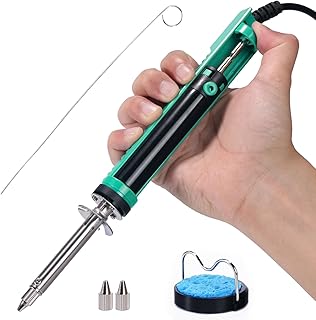
YIHUA 929D-V Electric Desoldering Pump
Not a full station but the best desoldering pump option for anyone who already owns a quality iron. The shorter charging handle improves maneuverability in tight areas, and the included 1.0 and 1.2 millimeter nozzles handle most common through-hole sizes. At under $36 it removes the excuse of using a manual sucker that requires both hands and repeated pumping. Heat comes from your existing iron, so the pump itself is purely a vacuum and mechanical tool.
- Pro: Excellent value for upgrading from a manual desoldering pump without investing in a full station.
- Pro: Compact and portable, easy to store alongside a separate iron.
- Con: Performance is limited by your iron’s thermal capacity, so thick ground planes will still be slow.
Skip this if you need high-throughput desoldering on boards with heavy copper fills or lead-free solder exclusively.
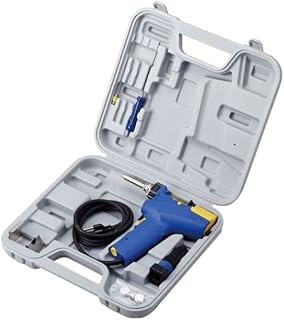
Hakko FR301-03/P Portable Desoldering Tool
The highest-rated tool on this list for a reason. Hakko’s build quality and temperature control precision set it apart from budget competitors, and the portable form factor means it is genuinely field-ready rather than bench-bound. For repair technicians who travel to clients or work on-site, having a compact unit that delivers consistent results without a large station footprint is a real advantage. The temperature control in both Fahrenheit and Celsius is responsive and accurate.
- Pro: Best-in-class reliability and thermal precision from the Hakko engineering standard.
- Pro: Portable design works equally well on a bench or in a field bag.
- Con: Priced above every YIHUA option except the 4-in-1, and included nozzle accessories are sold separately.
Skip this if you need multiple tools in one unit or your budget is under $150.
WEP 882D Soldering Iron and Hot Air Station
This two-in-one is a generous entry-level package: hot air rework, a soldering iron, two spools of solder wire, five tips, three hot air nozzles, a brass cleaner, tweezers, and a desoldering pump. At under $60 the accessory breadth is hard to match. The desoldering pump is a manual unit rather than an electric one, which is the honest limitation. For hobbyists starting SMD rework who also need to clear through-hole joints occasionally, this is a capable starting point.
- Pro: Massive accessory set included at a price that undercuts most single-function stations.
- Pro: Hot air and soldering iron in one base station with reasonable temperature range.
- Con: Desoldering relies on a manual pump rather than an integrated electric suction tool.
Skip this if desoldering volume is high or if you need electric pump speed and consistency for production work.
YIHUA 948 Standard Desoldering Station
The 80-watt YIHUA 948 is the lighter sibling of the 948D-I, trading power for a lower price and simpler controls. The variable precise temperature range still covers 716 to 896 degrees Fahrenheit, and the sleep function and auto shutoff handle idle safety. For boards with smaller traces and thinner copper, the 80-watt element recovers quickly and does not risk overheating pads that a more aggressive heater might damage. It is a sensible pick when desoldering work is moderate rather than heavy.
- Pro: Lower wattage reduces the risk of pad damage on delicate single-sided boards.
- Pro: Sleep function and auto shutoff provide safety without adding complexity or cost.
- Con: Noticeably slower on thick ground planes or lead-free solder with high thermal mass compared to 110-watt units.
Skip this if you regularly desolder on multi-layer boards with heavy copper pours or use lead-free alloys exclusively.
Buying Guide
Wattage and Thermal Recovery
Wattage determines how fast the tip returns to temperature after a vacuum pull clears molten solder. An 80-watt station handles single-sided boards and thin traces adequately, but on multi-layer boards with ground planes, thermal mass pulls heat away from the joint faster than the element replaces it. A 110-watt unit maintains enough headroom to keep working at a steady rhythm without long pauses. If your boards are mostly through-hole on double-sided or thicker copper, prioritize 110 watts or higher.
Vacuum Pump Type and Nozzle Availability
Integrated electric pumps eliminate the two-handed operation of manual suckers and clear solder in one trigger press. Check that replacement nozzles are available and affordable, since tips wear from flux residue and solder splatter. A station that ships with only one or two nozzle sizes will limit your range unless you budget for extras. For repair work on varied boards, four included nozzles at common sizes save time and hassle.
ESD Safety and Idle Management
ESD-safe construction matters for modern components with thin gate oxides that fail silently from static discharge. Auto stand-by and sleep modes are not luxuries; they extend heater element life and reduce the chance of thermal damage to a board if you set the tool down mid-session. Verify that the station has both features if you leave tools on the bench between tasks.
Our Verdict
The YIHUA 948D-I is the best desoldering station for most users who need dedicated through-hole capability without paying for features they will not use. The Hakko FR301-03/P wins for anyone who needs portability and uncompromising reliability in a field or client-site context. The YIHUA 929D-V is the clear budget pick, delivering genuine electric desoldering performance at under $40 without requiring a full station upgrade.
FAQ
Is a desoldering station better than a manual pump?
For anything beyond occasional hobby work, yes. An electric pump with an integrated heating element clears solder in a single trigger pull with consistent heat, while a manual pump requires you to heat the joint separately and pump with both hands. The speed and accuracy difference compounds over dozens of joints per session.
Can I use a desoldering station on surface-mount components?
Through-hole desoldering stations are not designed for SMD removal. Surface-mount components require hot air to melt the solder joints on all sides simultaneously. If your work includes SMD, a combined station like the YIHUA 948-II or the WEP 882D gives you hot air capability alongside desoldering tools.
What nozzle size should I use for common through-hole components?
Match the nozzle diameter to the hole or lead size rather than the component body. A 1.0 millimeter nozzle handles most small-signal leads and resistors, while 1.5 to 2.0 millimeter nozzles work for connector pins and larger electrolytic capacitor leads. Starting too large risks pulling adjacent pads, so begin small and step up only if needed.
Do I need different temperature settings for lead-free versus leaded solder?
Yes, lead-free alloys typically require the upper end of the 716 to 896 degree Fahrenheit range and a few extra seconds of dwell time before the pump engages. Leaded solder flows and releases at the lower end. Using pre-set channels to store profiles for each alloy type avoids guesswork and reduces pad damage from excessive heat on leaded joints.


