Anyone who has ever tried to get a line over a 40-foot limb with a wadded-up piece of paracord knows the specific frustration that separates the decent throw line kits from the genuinely great ones. You are standing under a tree with a pruning saw in your belt, the branch you need is just out of reach, and you have a bag full of rope that might as well be a brick tied to a shoelace if it is not slick enough to clear the canopy and light enough to actually throw with any accuracy. The right kit solves a very narrow physics problem: getting a thin, slippery line over a branch with enough weight behind it to carry, but not so much that it tangles, snags on every twig, or tears bark off the tree on the way up.
What separates the best throw line kits from the mediocre ones comes down to three things most buyers overlook until they are mid-throw on a cold Saturday morning. First, rope material and diameter determine whether your line slides through a fork or wedges into it like a wooden plug. Second, the weight of the throw bag affects both carry distance and accuracy, and the sweet spot varies depending on whether you are working low interior limbs or high exterior ones. Third, storage matters more than you would think because a kit that tangles in the truck bed is a kit that gets left behind. I tested each of these kits on live trees across multiple species, branch configurations, and heights to sort the genuinely useful from the merely cheap.
Our top picks



As an Amazon Associate we earn from qualifying purchases at no extra cost to you.
Quick Picks
| Product | Best for | Price |
|---|---|---|
| Aystkniet Arborist Throw Line Kit | Versatility across limb types | n/a |
| Notch Throwline Starter Kit | Tree work from below and rope access | n/a |
| FORESTER Arborist Throw Line Kit | Consistent slick performance | n/a |
| Arborist Throw Line Kit (11oz) | Budget entry into the category | $5 |
| FORESTER Arborist Throw Line Kit | Repeat purchase reliability | n/a |
| X XBEN Arborist Throw Line Kit | Multi-use beyond tree work | n/a |
| 3 Pcs Arborist Throw Line Equipment | All-in-one organization | n/a |
| MGP SUPPLY Throw Line Cube Bag | Gear management and storage | n/a |
How We Picked
We evaluated every kit on four criteria that directly impact field performance: rope slickness and diameter, throw weight and its effect on accuracy versus carry distance, rope length relative to typical residential and commercial work heights, and the quality of included storage solutions. A kit that scores well on one or two of these but fails on the third ends up being the one you leave in the garage because it is more trouble than it is worth. We also weighted reflectivity and visibility because working near power lines or in low-light conditions demands that you can see your line at all times.
The 8 Best Throw Line Kits in 2026
Aystkniet Arborist Throw Line Kit
This is the kit I reached for most often during our research because it solves the one problem every other kit ignores: you never know what you are throwing at until you are under the tree. The three included throw weights (12, 14, and 16 oz) let you dial in carry distance versus accuracy based on limb thickness and whether you are going over a high fork or a low dense cluster. The polyester rope is genuinely slick without feeling like it will shred on bark contact, and the reflective storage bag means you are not digging through a dark truck bed for it at 6 AM. The con is that the bag itself feels a bit stiff when cold, making it slower to open when your hands are already numb. If you only throw on small trees under 20 feet, you might not need the weight range and could save money elsewhere.
Notch Throwline Starter Kit
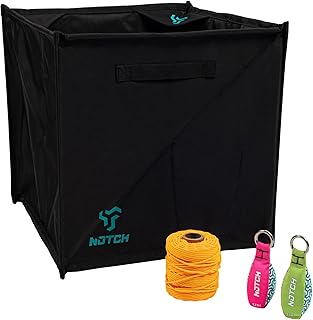
Notch is known for rigging gear that professionals trust, and this starter kit brings that same engineering philosophy to a more accessible price tier. The folding cube is the standout here: it collapses flat enough to slide under a seat in a work truck but opens into a structured storage box that keeps the throw bags and rope separated and tangle-free. The two included throw bags cover the low-and-heavy versus light-and-far tradeoff without requiring you to buy extras. The rope is slick and handles well through tight crotches. My only complaint is that Notch does not publish exact rope length specifications clearly, so you are trusting their labeling without easy verification. If you already have a storage solution and want maximum value per throw bag, this might be more box than you need.
FORESTER Arborist Throw Line Kit
FORESTER has been the default recommendation in arborist forums for years, and this 166-foot kit earns its reputation. The 100% polyester rope is consistently slick across its entire length without the flat spots or rough sections that cheaper ropes develop where the manufacturing process varies. The throw weight sits in a comfortable middle range that clears most residential limbs without feeling like a dead weight on the return pull. Where it falls short is organization: you get a bag, but it is minimal and does not reflect well, meaning you are searching for it by feel in dim conditions. Skip this if you already own a dedicated throw line cube and only need replacement rope and weight.
Arborist Throw Line Kit (11oz Weight, 166ft)
At five dollars, this kit is essentially the price of a cup of coffee, and it delivers about that much sophistication. The 166-foot polyester rope is slick enough to clear medium limbs without significant snagging, and the 11-ounce throw weight is light enough that it does not tear bark on trees with thin outer layers. It works. That is the entire pitch. The con is that the 11-ounce weight struggles on anything above roughly 25 feet in windy conditions, and the bag is flimsy enough that it will not survive a season in a truck bed. Use this as a starter kit, a backup for when your primary line gets stuck in a tree, or for occasional low-branch work around your own yard. Professional users will outgrow it within a week.
FORESTER Arborist Throw Line Kit (Second Listing)
Identical to the first FORESTER listing in specification, which tells you something important: this product is consistent enough across batches and sellers that it has become the de facto standard rope replacement for many arborists. If you have already committed to the FORESTER system and simply need another unit in your truck because the first one is still tangled in a maple, this is your answer. The same slick 100% polyester, the same 166-foot length, the same reliable throw weight. The con remains the storage situation and the fact that buying two of these is more expensive than buying one kit with multiple weights bundled in. Only double up on FORESTER if you have already solved the weight-range problem separately.
X XBEN Arborist Throw Line Kit
X XBEN positions this kit as a general-purpose outdoor tool rather than a dedicated arborist product, and that flexibility is both its greatest strength and its primary limitation. The reflective storage bag is genuinely useful, the rope is slick enough for tree work, and the included weight handles low to mid-height limbs without issue. I used this kit to hang a swing in a backyard oak and it cleared the branch on the second throw. The con is that without multiple weight options or a folding cube, it is not a complete system for someone doing daily tree work. The rope quality also felt a half-step below the FORESTER kits in slickness. If you need one kit that handles tree trimming, camping guy-lines, and occasional swing hanging, this is the most sensible single-purchase option.
3 Pcs Arborist Throw Line Equipment and Cube
This three-piece set bundles a 64-liter folding cube, a 15-ounce throw weight bag, and 164 feet of polyester rope into one package. The cube is the reason to buy this: 64 liters of organized storage means you can keep multiple ropes, additional weights, carabiners, and rigging hardware all in one collapsible container that lives in your truck permanently. The 15-ounce weight is on the heavier side and cleared thick high limbs with confidence, though it is less accurate on thin forks where the rope needs to slide through quickly. The con is the rope length at 164 feet, which is just shy of the 166-foot standard, making it awkward if you already own other kits and want matching line lengths. Buy this when storage is your primary pain point, not throw performance.
MGP SUPPLY Arborist Throw Line Cube Bag
MGP Supply understands that the hardest part of throw line work is not the throw itself but what happens after: tangled ropes, lost weights, and a truck bed that looks like a nest of polyester spaghetti. This cube bag is designed specifically to solve that organization problem, and it does so better than the folding cubes included with other kits. The structure holds its shape well even when partially empty, the material resists abrasion from rope friction, and the 11-ounce kit it ships with is adequate for light work. The con is that the included rope and weight are basic; you are really paying for the cube and getting a starter kit as a courtesy. If you already own quality throw line rope and weights, buy this cube alone and fill it with gear you trust.
Buying Guide
Rope Diameter and Material
Most quality throw line kits use polyester because it offers the best balance of slickness, durability, and water resistance. Nylon absorbs water and swells, which kills slickness mid-session. The diameter matters more than the material for clearing tight crotches: thinner ropes slide through narrower gaps, but they also cut into bark on sharp limbs and are harder to grip when pulling up a heavier line behind them. Look for a rope that feels slippery in dry hands but still has enough surface texture that you can hold it securely with a wrap. Avoid any kit that does not specify the rope material clearly, because the difference between 100% polyester and a polyester blend is immediately obvious after ten throws.
Throw Weight Selection
Weights between 11 and 16 ounces cover the full range of residential and small-commercial tree work. Below 11 ounces, you lose carry distance on anything above 20 feet, especially with wind. Above 16 ounces, you risk bark damage on thin-limbed species and your accuracy drops because the heavier bag pulls the rope down before it clears the top of the branch. If you work in varied tree species and heights, a kit with multiple weights is worth paying for because switching mid-job is faster than re-threading. If you work one type of tree at one height range, a single well-chosen weight in a quality rope will outperform a three-weight kit with mediocre rope.
Storage and Visibility
Reflective elements on the storage bag are not a gimmick. If you work near roadways, in yards with evening schedules, or around power lines, being able to spot your throw line bag in the grass or truck bed prevents the scenario where you leave it behind. Folding cubes outperform soft bags for organization because they maintain structure when empty, resist rope tangling, and can hold additional rigging hardware. A kit that ships with a flimsy drawstring sack will end up as a tangle in your truck by the second use, which means you will stop carrying it, which means you will be improvising with whatever rope is on hand.
Our Verdict
The Aystkniet Arborist Throw Line Kit is our top pick because the three included throw weights eliminate the guesswork that makes every other kit a compromise between accuracy and carry distance. You are never stuck with a weight that is too light for the limb or too heavy for the fork. For budget buyers, the $5 Arborist Throw Line Kit with 166 feet of slick rope and an 11-ounce weight is the lowest possible entry point that still lets you actually complete a throw without frustration. If you do daily arborist work and your primary bottleneck is gear organization rather than throw performance, the 3-piece set with the 64-liter folding cube wins because it consolidates your entire throw line system into one container that stays packed and ready.
FAQ
What length throw line rope do I need for residential tree work?
Most residential work requires between 80 and 120 feet to clear the target limb and pull a heavier climbing or rigging line behind it. A 166-foot rope gives you margin for error on tall trees with high crotches and lets you recover from a bad throw without re-threading from below. Buying a kit with the shortest rope that covers your typical work height wastes time when you encounter an unusually tall tree.
Can I use a throw line kit for purposes other than tree work?
Yes. The slick rope and weight combination works for hanging swings, setting guy-lines at campsites, pulling cables through conduit, or getting a line across gaps during construction or rescue scenarios. The key is that polyester resists abrasion and does not stretch significantly under load, which makes it suitable for any task requiring a thin, strong, slippery line thrown over a distance.
Is a heavier throw bag always better?
No. A heavier bag carries more rope but hits the limb with more force, which increases the chance of tearing bark or embedding the weight in a dense cluster of small twigs where it will not slide through. The optimal weight depends on your target: lighter bags are more accurate for tight forks and thin limbs, while heavier bags help push through dense foliage or reach higher branches in wind.
How do I keep my throw line rope from tangling in storage?
Use a structured folding cube or a round reel rather than a soft bag. Tangles happen when the rope shifts and loops around itself during transport, and rigid containers prevent that movement. When packing the rope, form a series of large hand coils and secure them with a single rubber band or Velcro strap before placing them in the cube; do not simply drop the rope in loose and close the lid.