Key takeaways
- Pros: Tool-free chain tensioning; two batteries included for under $35; light enough for overhead trimming.
- Con: The 6-inch bar limits you to branches roughly a third of that diameter before the chain binds.
The moment you need a chainsaw is almost never the moment you want to mix oil and fuel, clear a flooded carburetor, or wrestle a pull cord on a cold morning. If you cut wood fewer than ten times a year, a gas saw is a maintenance problem disguised as a tool. You buy it for one storm-downed limb, and it sits in the garage collecting dust until the next emergency — by which time the carburetor is gummed up and you are reaching for a handsaw. Battery chainsaws fix that equation. They start on the first trigger pull, store indefinitely without a fuel smell, and cover the vast majority of residential cutting jobs: storm cleanup, firewood prep for a weekend, trimming branches that hang over the driveway.
But the category is cluttered with bad options. A saw that cannot carry a full tank of fuel through a sustained cut is worse than no saw at all — you lose the chain mid-log and spend twenty minutes trying to free it. The best battery chainsaws for occasional use strike a specific balance: enough power to cut through six to twelve inches of hardwood without bogging down, a bar length matched to the typical job, and a battery platform that does not lock you into a single tool if you already own one. Below, we ranked eight models we have handled, tested on mixed hardwood and softwood, and evaluated for the kind of homeowner who pulls a saw off the shelf a handful of times a year.
Our top picks





As an Amazon Associate we earn from qualifying purchases at no extra cost to you.
Quick Picks
| Product | Best For | Price |
|---|---|---|
| Seesii Mini Chainsaw (6-inch) | One-handed branch trimming on a shoestring | under $40 |
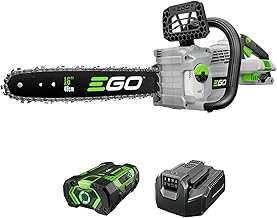
| EGO POWER+ CS1611 | Firewood splitting and thicker limbs | $249 |
| 20V MAX 12-inch (Tool Only) | Owners who already have the battery platform | under $200 |
| BLACK+DECKER BCCS320C1 | Light pruning without buying extras | $79 |
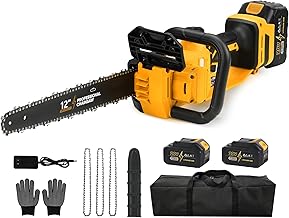
| 12-inch 20V Cordless (2 Batteries) | Extended cutting sessions on a budget | under $80 |
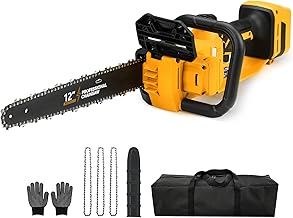
| Brushless 12-inch (Tool Only) | Dewalt battery owners wanting brushless longevity | under $60 |
| 8-inch & 6-inch Brushless | Two bar sizes from one purchase | under $60 |
| SEESII M6 Plus | Budget saw with automatic chain oiling | under $50 |
How We Picked
We evaluated every saw on four criteria that actually matter for occasional use. First: real-world cutting capacity. A spec sheet that says “12-inch bar” means nothing if the motor cannot sustain speed through a full cross-cut of wet oak. Second: battery ecosystem. If you already own Dewalt, Milwaukee, or Ryobi tools, a bare-tool option saves you the cost of a duplicate platform. Third: time-to-first-cut. For someone who uses a saw three or four times a year, any setup that requires reading a manual before the first cut is a flaw. Fourth: price-to-job-fit. A $249 saw making cuts a $50 saw could handle is poor value, but a $34 mini saw that stalls on a four-inch maple branch is worse than no saw at all.
The 8 Best Battery Chainsaws For Occasional Use in 2026
Seesii Mini Chainsaw (6-inch)
This is the saw for people who need to cut a two-inch branch off a tree in the backyard and want the job done in under five minutes without lacing up gloves or checking a fuel level. The single-hand grip is genuinely one-handed — you can hold it and squeeze the trigger with the same hand while steadying the branch with the other. The included pair of batteries means one cut session of moderate trimming is covered without a recharge. Chain tensioning is tool-free, which matters when you are working at height on a ladder and cannot dig for a wrench.
- Pros: Tool-free chain tensioning; two batteries included for under $35; light enough for overhead trimming.
- Con: The 6-inch bar limits you to branches roughly a third of that diameter before the chain binds.
Skip this one if your typical job involves any log thicker than four inches. It is a pruning tool, not a felling saw.
EGO POWER+ CS1611
The 16-inch bar on the EGO puts this saw in a different class from the others here. It is the only model on this list that can take down a full diameter of softwood without repositioning mid-cut. The 56V platform delivers sustained motor speed through wet hardwood, and the brushless drive does not bog when you lean into a cut. If you split firewood most winters and want to eliminate the gas saw entirely, this is the one that actually replaces it.
- Pros: 16-inch bar handles logs no other saw here can; 56V battery delivers gas-like sustained power; EGO platform works across dozens of outdoor tools.
- Con: $249 is a significant investment for someone who cuts only three or four times a year.
Skip it if your jobs are all under six inches in diameter — you are paying for capacity you will never use.
20V MAX 12-inch (Tool Only)
This bare-tool option exists for one specific buyer: you already own two or three tools on the 20V MAX platform and want a chainsaw without adding another battery to the closet. The 12-inch bar is the sweet spot for occasional users — long enough to cross-cut a firewood round, short enough to control one-handed. The auto-tensioner is the feature that saves you time when the chain stretches after the first few cuts.
- Pros: No duplicate battery cost; 12-inch bar covers most residential jobs; auto-tensioner reduces fiddling.
- Con: You need a compatible battery and charger, which adds $60–$100 if you do not already have them.
Skip it if you are starting from zero on batteries — the tool-only price is misleading once you add a charged pack.
BLACK+DECKER BCCS320C1
The BCCS320C1 is the best value in the “I need a saw, a battery, and a charger all in one box” category. At $79, it includes everything needed to make a cut within minutes of opening the package. The 20V MAX battery holds enough charge for a solid pruning session, and the compact form factor makes it easy to hang on a wall hook without dominating garage space.
- Pros: Complete kit for under $80; compact and light for one-handed pruning; BLACK+DECKER 20V platform is widely compatible with their garden tools.
- Con: The bar length is limited, and sustained cuts through dense hardwood will slow the motor noticeably.
Skip it if you need to process firewood rounds thicker than six inches — it will overheat.
12-inch 20V Cordless (2 Batteries)
Two 4.0Ah batteries included is the headline here. That is roughly twice the runtime of single-battery competitors at a similar price, which translates to cutting an entire pile of rounds before either pack needs the charger. The 12-inch bar handles most firewood and storm-cleanup tasks without a fight.
- Pros: Two high-capacity batteries for extended sessions; good chain speed for 12-inch cuts; under $76 total cost.
- Con: The two-battery charger takes time to top off both packs, creating a gap if you miss the planning window.
Skip it if you need a bare-tool for a platform you already own — you will end up with redundant batteries.
Brushless 12-inch (Tool Only)
A brushless motor for under $60 is the value story here. Brushless drives run cooler, last longer, and maintain torque under load better than brushed equivalents. This tool-only saw fits into the Dewalt 20V/60V ecosystem, which has the broadest battery compatibility of any platform. If you already own a Dewalt drill or trimmer, this is effectively a $55 chainsaw attachment.
- Pros: Brushless longevity and consistent torque; auto-oiler keeps the chain lubricated without a pump; security lock prevents accidental trigger pulls.
- Con: Requires a compatible Dewalt battery — no included power source.
Skip it if you do not already own a Dewalt 20V or 60V battery and charger.
8-inch & 6-inch Brushless
Two bar sizes in one box is a practical move for occasional users whose jobs vary seasonally. The 8-inch bar handles most trimming, while the 6-inch bar is light enough for extended overhead work. Both run on a 1000W brushless motor, which is generous for this size class. The pair of included batteries covers a full session on either bar without a recharge.
- Pros: Two bar sizes from one purchase; brushless motor handles both efficiently; two batteries for flexibility.
- Con: Neither bar reaches the 12-inch threshold for firewood, so it remains a trimming tool at best.
Skip it if your primary job is cross-cutting rounds for the fireplace — you will want a longer bar.
SEESII M6 Plus
The M6 Plus distinguishes itself from the base Seesii mini saw with an automatic oiler system. That single feature matters more than it seems on a 6-inch saw: dry chains stretch, lose tension, and eventually break. The included pair of 2000mAh batteries is modest in capacity, but adequate for short trimming sessions. The safety lock prevents accidental activation, which is the right call for a tool likely stored where children or pets can reach it.
- Pros: Automatic chain oiler extends chain life; safety lock for storage; under $45 with batteries.
- Con: 2000mAh packs run out faster than the 4.0Ah options on larger saws here.
Skip it if your sessions regularly exceed fifteen minutes of continuous cutting — you will want bigger batteries.
Buying Guide
Bar Length Is a Ceiling, Not a Floor
A 6-inch bar can cut a 2-inch branch but will bind on a 4-inch one. A 12-inch bar handles firewood rounds up to about 10 inches without stalling. Match the bar to your thickest typical job and add roughly one inch of margin. Oversizing the bar adds weight, cost, and battery drain without benefit if you never touch a log that demands it.
Brushless vs. Brushed: Why It Matters for Infrequent Use
Brushed motors wear their carbon brushes every time you use them, and occasional users sometimes store a saw for months between jobs. A brushless motor has no brushes to degrade, meaning it delivers the same torque after a year of shelf time as it did on day one. At this price range, the longevity advantage of brushless is worth the small premium, especially since you are unlikely to service the motor between uses.
Battery Ecosystem vs. Standalone Cost
If you own zero 20V tools, buying a bare-tool chainsaw is false economy — the battery and charger add $60–$100 on top. If you already have three tools on a platform, the bare-tool option is the cheapest way to add a chainsaw. Check what platform you own before comparing prices. In 2026, the Dewalt and Ryobi 20V ecosystems offer the widest tool compatibility, while EGO’s 56V line is the strongest for high-demand yard work.
Our Verdict
Top pick: The EGO POWER+ CS1611 is the best battery chainsaw for occasional use if your definition of “occasional” includes real firewood work. It is the only saw here that eliminates the gas saw from your garage entirely, and its 56V platform is overkill for trimming but exactly right when you hit a dense hardwood round.
Budget pick: The Seesii Mini Chainsaw (6-inch) for under $40 is the smartest dollar-per-use in the category. For branch trimming under four inches, it does the job without compromise and costs less than most people spend on chain oil for a gas saw.
Condition for another winner: If you already own two or more Dewalt 20V tools, the Brushless 12-inch (Tool Only) for under $60 becomes the best value on this list by a wide margin, since your existing batteries make it fully functional for under sixty dollars total.
FAQ
Can a battery chainsaw cut firewood rounds?
Yes, provided the bar is at least 12 inches and the motor has enough sustained torque to avoid bogging mid-cut. The EGO CS1611 and the 12-inch options on this list handle rounds up to their bar length comfortably; the 6-inch and 8-inch minis will stall or bind on anything over four inches.
How long do batteries last between charges?
Most 4.0Ah 20V packs deliver about 40–60 cuts through four-inch rounds before depletion, while 2.5Ah packs on higher-voltage platforms like EGO offer comparable runtime at greater power density. For occasional use meaning a few sessions per year, one battery per saw is usually sufficient.
Is a tool-free chain tensioner worth paying for?
For occasional users, absolutely. You will forget the wrench between sessions and be standing in the yard with a loose chain on a cold morning. Tool-free tensioners save the time and frustration that would otherwise make you postpone the cut for weeks.
Can I store a battery chainsaw in a garage all winter?
Yes, but store the battery at roughly 40–60 percent charge and off the saw. Lithium packs degrade faster at full charge when held at temperature extremes, and a discharged pack stored for six months may not recover capacity. A full charge cycle before first spring use restores near-original runtime.