Air purifier energy consumption shapes your actual utility bills far more than the initial retail price tag. Most households run filtration units continuously 24/7, turning minor wattage variances into major annual expenses. Evaluating CADR alongside motor wattage guarantees pure air without inflated monthly electric bills.
By Daniel Foster
As an Amazon Associate we earn from qualifying purchases.
Core Metrics That Determine Air Purifier Energy Consumption
Understanding the electrical footprint of home air cleaners requires analyzing how internal fan motors interact with dense filtration stages. Operating an appliance continuously creates ongoing power demands that hinge directly on mechanical resistance, motor engineering, and manufacturer airflow configurations.
Deciding Metrics: CADR Ratings and Continuous Motor Wattage
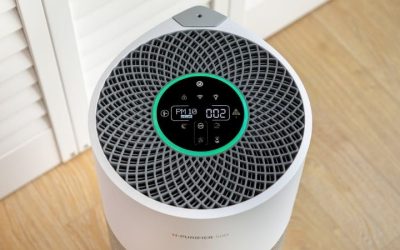
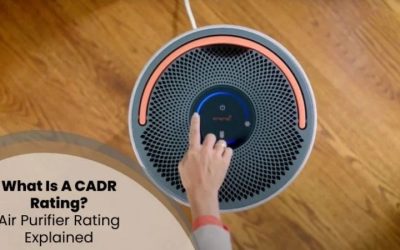
Evaluating baseline air purifier energy consumption requires balancing Clean Air Delivery Rate (CADR) against motor draw. CADR measures airflow output in cubic feet per minute (cfm) across smoke, dust, and pollen. Units certified by AHAM typically provide between 150 cfm and 350 cfm while consuming 25W to 75W at peak speeds.
Electrical efficiency is defined by clean airflow produced per watt of power consumed. High-efficiency purifiers deliver upwards of 4.0 CADR per watt, whereas outdated AC-motor platforms deliver fewer than 2.0 CADR per watt. Modern DC motors reduce baseline power draw, delivering superior volume using far less current.
Dense True HEPA media capturing 99.97% of airborne particles down to 0.3 microns adds mechanical drag across the fan. Choosing models with optimized airflow channels minimizes resistance. Always consult an allergist for serious respiratory guidance rather than relying solely on indoor air purification equipment.
Room Size and Spatial Fit: Balancing Square Footage with ACH
Always measure room dimensions with a tape measure before ordering any air treatment device online. An effective installation requires matching certified coverage in square feet (sq ft) or square meters ($m^2$) to your room volume, targeting four to five Air Changes per Hour (ACH) for thorough particulate reduction.
A purifier sized for 250 sq ft ($23.2\\text{ m}^2$) draws roughly 30W on medium speed, while a 600 sq ft ($55.7\\text{ m}^2$) living room unit draws 65W to 90W. Running an undersized machine on continuous maximum speed generates excess electrical strain, elevated acoustic disturbance, and premature internal motor wear.
Physical clearance around the intake grilles directly dictates real-world airflow resistance and power consumption. Compact models require at least 12 inches (30 cm) of open clearance from walls and furniture. Crowding intakes forces internal fans to work harder, degrading hourly air exchanges and wasting energy.
Fan Speed Dynamics: Standby Draw Versus Maximum Turbo Power
Every purification appliance features a fan curve where electrical consumption scales non-linearly. Low sleep settings typically require merely 3W to 8W with sound levels near 22 dB, whereas engaging maximum turbo speed increases electrical consumption up to 45W to 80W while generating noticeable noise above 52 dB.
Monitoring your machine’s fan curve keeps air purifier energy consumption predictable and manageable throughout daily operation. Most budget motors show significant acoustic vibration and rapid wattage jumps on the highest setting, whereas mid-range DC-inverter blowers maintain smoother electrical distribution.
Standby power draw represents a small but persistent factor in your household electrical baseline. Modern wireless smart chips and air sensors pull between 0.8W and 2.5W even when the main fan is powered off. Choosing units with hard cutoff switches or automatic display shutoffs minimizes continuous vampire draw.
Calculating Real-World Operating Costs and Long-Term Ownership
Projecting lifetime operational expense requires combining electrical consumption estimates with recurring replacement consumables. Rigorous buyers calculate annual air purifier energy consumption alongside maintenance cycles to prevent surprise ownership costs from undermining initial machine value.
Estimating Annual Electricity Expenses Across Different Utility Rates
Calculating annual power expense relies on a basic formula: operating wattage multiplied by daily hours, divided by 1000, then multiplied by regional electricity rates. In the United States, average residential electrical rates fluctuate from roughly $0.12 to $0.32 per kilowatt-hour (kWh) across various states.
Running a 40W purifier continuously 24 hours per day consumes 0.96 kWh daily, amounting to approximately 350 kWh annually. At $0.16 per kWh, yearly electricity costs equal roughly $55, whereas running an efficient 15W model at the same rate costs approximately $20 annually, generating noticeable savings.
The Hidden Subscription: Filter Replacement Cycles and Operational Costs
Replacement filters represent an unavoidable recurring subscription that frequently eclipses annual electricity expenditure. Standard True HEPA and activated carbon cartridges require replacement every 6 to 12 months, with OEM replacement filters ranging from budget under $30 options to premium under $90 assemblies.
Clogged filter media increases aerodynamic resistance against the fan, elevating internal motor strain and electricity consumption over time. When microscopic debris packs tightly into the filter fibers, clean airflow drops significantly. Vacuuming washable outer pre-filters monthly preserves consistent airflow.
Avoid questionable ozone generators that claim minimal wattage while releasing dangerous gas. Inhaling ozone triggers severe airway irritation and lung inflammation; these machines are hazardous and never recommended. Stick exclusively to mechanical HEPA filtration and certified carbon blocks for safe home purification.
Energy Star Certification and Smart Automation Savings
Energy Star certified air purifiers are roughly 25% to 40% more electrically efficient than standard production units. Earning this EPA rating mandates meeting strict clean air per watt benchmarks. Choosing verified models guarantees your home maintains healthy air exchange without wasting continuous grid power.
Integrating onboard particulate sensors with responsive eco-modes slashes daily air purifier energy consumption substantially. Automated purifiers downshift to low idle whenever PM2.5 levels register clean, accelerating only when cooking fumes or dust spikes appear, cutting unnecessary high-power operational hours.
However, infrared dust sensors experience calibration drift over twelve to twenty-four months if neglected. Accumulated lint coating optical lenses forces machines into persistent high-speed modes, wasting electricity. Gently cleaning sensor chambers with a cotton swab every three months prevents false readings.
Market Trends: Wildfire Smoke Spikes and Seasonal Power Surges
Seasonal air quality disruptions heavily dictate operational patterns and electrical loads across North America. Severe wildfire smoke surges between July and October regularly drive regional AQI numbers past 200, forcing households to run air cleaners on maximum speed around the clock during peak utility rate hours.
Similarly, closed-window winter conditions and viral illness seasons from December through February keep air cleaners running continuously for ventilation. If purchasing an upgrade, major events like Prime Day in late June or Black Friday in November represent prime windows where major appliances receive discounts.
Timing your purchase during major retail events yields valuable hardware savings, yet operational discipline delivers lasting utility value. Running units on smart auto settings rather than static turbo modes during extended seasonal smoke episodes protects internal blower bearings while curbing electrical waste.
Top Energy-Efficient Air Purifiers Compared for Smart Buyers
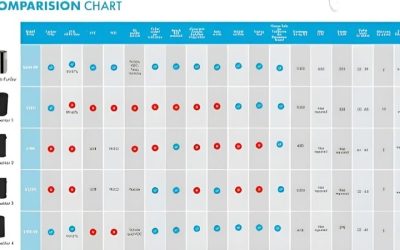
Selecting the ideal filtration platform involves assessing verified laboratory performance against continuous wattage, filter costs, and physical footprints. Below, we compare five leading energy-conscious purifiers spanning budget, mid-range, and premium tiers to help guide your continuous home air treatment.
| Model | Coverage (4 ACH) | Smoke CADR | Power Draw | Est. Annual Power Cost* | Filter Life & Cost |
|---|---|---|---|---|---|
| Levoit Core 300S | 219 sq ft (20.3 m²) | 141 cfm | 5W – 23W | under $20 | 6-12 mos / Budget |
| Coway Airmega AP-1512HH | 361 sq ft (33.5 m²) | 233 cfm | 4.9W – 77W | under $30 | 12 mos / Mid-range |
| Winix 5500-2 | 360 sq ft (33.4 m²) | 232 cfm | 11W – 70W | under $30 | 12 mos / Mid-range |
| Blueair Blue Pure 211+ Auto | 550 sq ft (51.1 m²) | 353 cfm | 4W – 38W | under $20 | 6 mos / Premium |
| Hathaspace Smart HSP001 | 350 sq ft (32.5 m²) | 160 cfm | 15W – 40W | under $30 | 4-6 mos / Mid-range |
Annual electricity estimates above assume continuous operation on medium fan speed using the average United States electricity benchmark of $0.16 per kWh. Actual household expenses fluctuate depending on local utility tariffs and selected fan profiles. Prices fluctuate, verify at time of purchase.
Compact Bedroom Contenders: Low-Wattage Continuous Air Cleaning
Benchmarking compact air purifier energy consumption reveals minimal motor strain across smaller living spaces. The Levoit Core 300S utilizes an efficient DC motor drawing merely 5W on sleep mode and 23W at top speed, delivering a smoke CADR of 141 cfm across spaces up to 219 sq ft ($20.3\\text{ m}^2$) at 4.8 ACH.
For bedroom installation, the Coway Airmega AP-1512HH remains an industry standard, featuring a rated draw of 4.9W on lowest speed up to 77W on maximum turbo. Its eco-mode powers down the fan entirely when air registers clean for thirty minutes, reducing continuous energy draw to negligible standby levels.
Both units present tangible trade-offs: the Levoit Core 300S lacks an automated pre-filter shutter, meaning frequent pre-vacuuming is required, while the Coway AP-1512HH features bright display LEDs that cannot be completely turned off in dark bedrooms without utilizing manual sticker covers. Prices fluctuate on Amazon.
Medium to Large Living Space Champions: High CADR Per Watt
Handling family living rooms demands substantial airflow while holding air purifier energy consumption steady. The Winix 5500-2 features certified CADR ratings of 232 smoke, 243 dust, and 246 pollen cfm, circulating rooms up to 360 sq ft ($33.4\\text{ m}^2$) at 4 ACH with power draw spanning 11W to 70W.
In contrast, the Blueair Blue Pure 211+ Auto delivers exceptional output, providing 353 smoke CADR across large rooms up to 550 sq ft ($51.1\\text{ m}^2$). Its innovative HEPASilent technology uses electrostatic charging alongside mechanical media, pulling merely 4W on low and 38W on maximum turbo speed.
Regarding physical drawbacks, the Winix washable carbon filter degrades in odor absorption capacity after 12 months, and its PlasmaWave feature creates mild ozone byproducts unless manually deactivated, whereas Blueair OEM folding filters sit at a premium replacement price tag. Always verify pricing before buying.
Whole-Room Smart Workhorses: Advanced Filtration and Sensor Efficiency
Larger connected purifiers like the Hathaspace Smart True HEPA HSP001 combine multi-stage protection with responsive automation. Drawing approximately 40W at full operational output, it purifies spaces up to 350 sq ft ($32.5\\text{ m}^2$) at 4 ACH with a particulate CADR rating of approximately 160 cfm.
Long-term feedback across 12 to 24 months shows that units with brushless DC blowers experience minimal bearing degradation and low heat buildup. However, multi-layer composite filters create higher static resistance as dust loads up, demanding regular outer mesh maintenance to prevent elevated electrical current.
A noticeable limitation of the Hathaspace HSP001 involves its optical laser sensor sensitivity, which requires quarterly cleaning to prevent fan speed oscillation, along with proprietary filter sets that can fluctuate in stock availability. Review your budget tier and verify current Amazon pricing prior to purchase.
See More:
- Best eyeshadow blender brush
- Best frozen foods for air fryer
- Best frozen food for air fryer
- Best way to reheat steak in air fryer
- Best air fryer recipes book
Strategic Takeaways for Long-Term Energy-Efficient Air Cleaning
Managing air purifier energy consumption effectively hinges on selecting certified CADR ratings matched to real room dimensions, rather than relying on unverified maximum marketing claims. Sizing your purifier accurately allows the motor to run comfortably on low, whisper-quiet settings while conserving grid power.
Factoring annual filter replacement cycles alongside baseline electrical draw protects your household budget from compounding operational expenses. By pairing Energy Star certified hardware with disciplined sensor maintenance, you enjoy purified indoor air without suffering burdensome monthly electricity additions.
Our top picks
 Levoit Air Purifier for Home Pets Hair
- Power Source: Corded Electric
- Control Method: Touch
- Filter Type: 3 in 1 Filtration
Covers up to 1073 square feet on one unit
Operates as quiet as 24 decibels in sleep mode
Captures 99.97 percent of particles down to 0.1 microns
Requires genuine Levoit replacement filters for proper performance
Corded electric design needs a nearby wall outlet


 VOOPNU Air Purifiers for Home
- Effortless Operation: Simplified control panel with intuitive design…
- Compact Yet Powerful: Covers up to 1,076 ft²…
- 360° Airflow & High Efficiency Filtration: The elegantly…
 LEVOIT Smart Air Purifiers for Home Large
- 𝐖𝐇𝐘 𝐂𝐇𝐎𝐎𝐒𝐄 𝐀𝐇𝐀𝐌 𝐕𝐄𝐑𝐈𝐅𝐈𝐃𝐄 𝐀𝐈𝐑 𝐏𝐔𝐑𝐈𝐅𝐈𝐄𝐑𝐒: AHAM (Association…
- 𝐀𝐇𝐀𝐌 𝐕𝐄𝐑𝐈𝐅𝐈𝐃𝐄 & 𝐓𝐑𝐔𝐒𝐓𝐄𝐃 𝐁𝐘 𝐄𝐗𝐏𝐄𝐑𝐓𝐒: Certified by…
- 𝐇𝐈𝐆𝐇-𝐄𝐅𝐅𝐈𝐂𝐈𝐄𝐍𝐂𝐘 𝐀𝐈𝐑 𝐏𝐔𝐑𝐈𝐅𝐈𝐂𝐀𝐓𝐈𝐎𝐍 𝐅𝐎𝐑 𝐋𝐀𝐑𝐆𝐄 𝐑𝐎𝐎𝐌𝐒: The LEVOIT…


As an Amazon Associate we earn from qualifying purchases at no extra cost to you.