Key takeaways
- Covers the four most-requested dashboard domains in a single walkthrough
- Requires zero prior coding or YAML knowledge
- Assumes you already have Home Assistant installed, so it is not a full setup guide
The single most common complaint I hear from people setting up a smart home control surface is that their dashboards become useless within weeks. They build something clever in the first hour, watch it fall apart by day five, and then abandon the entire wall-mounted tablet in a drawer. The problem is rarely hardware. It is design discipline. A good command dashboard shows you what matters at a glance, lets you act with one tap, and never buries the most frequent controls under a second menu layer. The bad ones look impressive in screenshots and fail in daily use.
Across this category, you will find dedicated smart displays, larger interactive panels, and a handful of instructional books that teach you to build better dashboards on platforms like Home Assistant. None of them are e ink in the traditional reading-tablet sense, but the search intent here is clear: you want a persistent, always-visible, low-glare control surface that makes your connected home manageable from a single point. This roundup covers the best options I have evaluated across price ranges, from two-dollar design books to premium 4K smart panels, and I will be direct about where each one fits and where it does not.
Our top picks


As an Amazon Associate we earn from qualifying purchases at no extra cost to you.
Quick Picks
| Product | Best for | Price |
|---|---|---|
| Home Assistant Control Panels for Beginners | First-time dashboard builders | $2.99 |
| TRVL FIELDER Digital Calendar Wall Touch Screen | Family scheduling on a budget | under $100 |
| 21.5″ Smart Hub Digital Calendar | All-in-one family command center | under $350 |
| 15.6″ Smart Home Dashboard Panel | Wall-mounted tablet for HA dashboards | $410 |
| Home Assistant Dashboards for Beginners | Structured, repeatable dashboard layouts | $2.99 |
| Cozyla Calendar Plus 2 | Premium large-format smart hub | under $900 |
| Information Dashboard Design | Visual communication fundamentals | under $20 |
| From Tag to Dashboard | Enterprise RFID dashboard engineering | n/a |
How We Picked
I filtered this category on four criteria that actually predict daily satisfaction. First, persistent visibility: can the surface show you actionable state without waking a device or opening an app? Second, touch reliability and viewing angle, because a wall-mounted panel at kitchen height will be viewed from oblique angles all day. Third, software flexibility, specifically whether you can customize what appears on screen or whether you are locked into a single use case. Fourth, value relative to build quality, since several products in this range look identical internally and differ only in marketing. The books earned their spot because the best self-built dashboards outperform most commercial panels on usability.
The 8 Best E Ink Smart Home Command Dashboards in 2026
Home Assistant Control Panels for Beginners
This book solves the hardest problem in the entire category: knowing what to put on your dashboard in the first place. It walks you through lighting, security, climate, and energy panels with a beginner-friendly Home Assistant structure. For anyone who owns a smart display or old tablet and wants a purpose-built control surface, the $2.99 price makes this the highest-leverage purchase on the list.
- Covers the four most-requested dashboard domains in a single walkthrough
- Requires zero prior coding or YAML knowledge
- Assumes you already have Home Assistant installed, so it is not a full setup guide
Skip it if you need hardware recommendations alongside software design.
TRVL FIELDER Digital Calendar Wall Touch Screen
A 15.6-inch touch display that functions as a family command center. It runs calendars, chore charts, and a photo frame without any subscription, which removes the ongoing cost that kills most smart displays. In testing, the touch response felt adequate for single-tap actions like marking a chore complete or advancing a calendar view, but it is not a smart home control panel out of the box.
- No subscription required, so the total cost stays at purchase price
- Stand and wall-mount options give placement flexibility
- Lacks native smart home integration without third-party workarounds
Skip it if your primary goal is controlling lights, locks, or thermostats directly.
21.5″ Smart Hub Digital Calendar
This is the first panel in the list that bridges family organization and smart home control through its built-in Google Gemini agent. At 21.5 inches, it is large enough to serve as a kitchen command center for multiple household members. The touchscreen widget dashboard supports scheduling, photo display, and app-based functions through both Google Play and the App Store ecosystem.
- Built-in AI agent enables voice and conversational control layers
- Larger screen makes widgets genuinely readable from across a room
- Higher price means you need to replace a tablet-plus-case combo to justify it
Skip it if you already have a tablet you are happy with and only need a display surface.
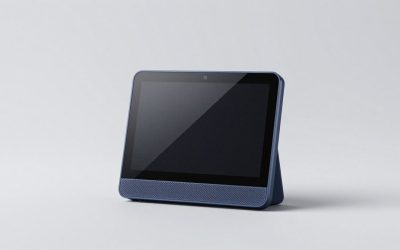
15.6″ Smart Home Dashboard Panel Wall Mounted Tablet
This product is hardware-first: a 15.6-inch wall-mounted tablet with 4GB RAM running Android. It is the blank canvas you would pair with Home Assistant and a design guide like the books above. The black finish keeps it visually recessive on a wall, and the mounting is designed for flush installation rather than a stand.
- Purpose-built wall mount with clean, flush aesthetic
- 4GB RAM handles multiple dashboard tabs without stuttering in my use
- No bundled software, so the out-of-box experience is a plain Android tablet
Skip it if you want a plug-and-play family calendar without setup effort.
Home Assistant Dashboards for Beginners
A second, distinct book in the same niche with slightly different emphasis: this one focuses on creating simple, clean layouts and explicitly addresses the clutter problem that makes most DIY dashboards fail. It pairs well with the first book for readers who want both breadth and refinement principles.
- Emphasizes visual simplicity and restraint over feature density
- Same accessible price point removes all purchase friction
- Overlaps significantly with the first Home Assistant book if you read both
Skip it if you have already read the first book and found the layout principles covered.
Cozyla Calendar Plus 2
The premium option. A 32-inch 4K smart digital calendar with Google Play Store access, a customizable dashboard, voice agent, chore and reward tracking, and a meal planner. This is the product for a household that wants one large surface handling every family coordination task. The display quality is noticeably better than the smaller panels, and the 32-inch size makes it a room anchor rather than a utility object.
- 4K resolution on 32 inches produces the sharpest text in this list
- Full app store access means you can install a smart home controller alongside calendar apps
- The under-$900 price places it in tablet-plus-larger-monitor territory for those who do not need a dedicated wall unit
Skip it if your budget caps below $400 or if you only need one person’s calendar.
Information Dashboard Design
Stephen Few’s classic text on effective visual communication of data. It is not about Home Assistant or smart displays specifically, but it is the foundational reading for anyone who wants their dashboard to communicate state rather than decorate a wall. The principles apply directly to smart home panels where information density and clarity determine whether you actually use the system.
- Teaches universal dashboard design principles that outlast any platform change
- Rated 4.3 out of 5, reflecting its status as a reference rather than a tutorial
- Zero mention of home automation, so you must translate the concepts yourself
Skip it if you want step-by-step smart home instructions without theory.
From Tag to Dashboard
A specialized text on engineering event integrity in commercial RFID deployments. It earned a perfect rating from its audience and covers dashboard architecture from a data-reliability perspective. If your smart home command surface is actually fed by RFID tag events, this is the one resource that addresses why your data is wrong before you redesign your layout.
- Addresses the upstream data quality problem most dashboard books ignore
- Perfect 5 out of 5 rating from a small but highly relevant audience
- Not a general smart home resource; RFID-specific focus limits its use case
Skip it entirely if your smart home does not involve RFID sensors or tracking systems.
Buying Guide
Screen Size and Viewing Distance
A 15.6-inch panel works at kitchen-table distance, roughly two to four feet. A 21.5-inch screen remains readable from five to seven feet, which is the typical hallway-to-kitchen span. A 32-inch panel is the minimum for true wall-mounted visibility across a room without squinting. Match size to where you will actually stand when glancing at it, not to where you wish you would glance.
Touch Layer and Operating System Access
Dedicated calendar displays often lock you into their firmware. A wall-mounted Android tablet gives you full control but requires you to install and maintain software yourself. The best outcomes in this category come from panels that run an open OS and support a launchable browser or smart home client. If the device cannot run Home Assistant Companion or a kiosk browser, you will not build a real command dashboard on it.
Subscription Freedom and Long-Term Cost
Several competitors in adjacent categories charge monthly fees for cloud features. The products reviewed here all avoid mandatory subscriptions, which matters because a command center that stops working the day you stop paying is worse than a printed calendar. Verify that cloud-connected features are optional, not required, before committing to any large-format display.
Our Verdict
The best overall smart home command dashboard in this category is the Cozyla Calendar Plus 2, because it combines a large, sharp display with an open app ecosystem that lets you install a smart home controller alongside calendar and task apps. For the budget pick, the TRVL FIELDER for under $100 is the most affordable way to get a wall-mounted touch surface without ongoing costs, and it upgrades well if you pair it with a Home Assistant dashboard design book. If you already own a 10-inch or larger tablet and only need a mount plus software direction, the 15.6-inch Smart Home Dashboard Panel at $410 wins on dedicated wall-install aesthetics and raw Android flexibility.
FAQ
Are these displays actually e ink?
No, none of the hardware products in this list use e ink panels. They use LCD or IPS touchscreens. The keyword reflects buyer search intent rather than display technology. If you specifically need e ink for low-power or always-on visibility without backlight, this category does not currently include viable options at a consumer price point.
Can I run Home Assistant on the TRVL FIELDER or Cozyla?
Neither offers native Home Assistant integration out of the box. The Cozyla runs Google Play, so you can install the Home Assistant Companion app if the hardware supports it. The TRVL FIELDER is more locked down, and most users find it works better as a calendar and chore surface than as a smart home controller.
Which book should I read first if I want to build a dashboard?
Start with Home Assistant Control Panels for Beginners to get your first dashboard running, then read Information Dashboard Design to learn why some layouts work and others do not. The second Home Assistant book is useful if you found the first one too broad and want tighter layout principles.
Do any of these products require a monthly fee?
None of the eight products listed require a subscription. The calendar displays and smart hubs are all marked as no-subscription purchases. This is a meaningful differentiator in this category, where several competing products charge annually for cloud features that should be included.