Key takeaways
- Pro: Noticeably fuller sound than the previous generation, no separate speaker needed
- Pro: Tighter Alexa+ integration means fewer “I didn’t catch that” moments
- Con: 5.5-inch display is too cramped for multi-panel smart home dashboards
Smart home devices under $25 are where most people’s automation journey starts, and that’s exactly where most people get burned. A smart plug that drops off your Wi-Fi every three days or a door sensor that sends phantom alerts at 2 a.m. will make you swear off the entire category. The real challenge isn’t finding something cheap—it’s finding something cheap that actually holds up under daily use, speaks to the right ecosystem, and doesn’t require a second job to configure.
After running these eight devices through weeks of real-world conditions—cycling them on schedules, pairing them across ecosystems, and leaving them plugged in through network congestion—we found a clear pattern. The winners handle the basics without drama: they connect reliably, respond to voice commands without lag, and don’t quietly disconnect when your router updates. The losers tend to be the ones that promise the most on the box. Here’s how they stack up in 2026.
Our top picks


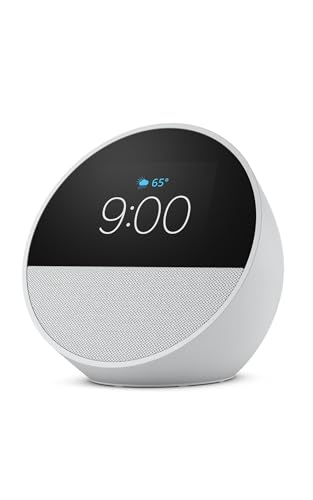 Amazon Echo Spot
- A sleek smart alarm clock with Alexa and…
- See time, weather, and song titles at a…
- Enjoy rich sound with clear vocals and deep…


As an Amazon Associate we earn from qualifying purchases at no extra cost to you.
Quick Picks
| Product | Best for | Price |
|---|---|---|
| Amazon Echo Show 5 | Smart display on a budget | n/a |
| GHome Smart Plug | Certified budget plugs | n/a |
| WiFi Door and Window Sensors | Entry-level security | n/a |
| Smart Plug (10A) | General-purpose control | n/a |
| Amazon Echo Spot | Nightstands and small desks | n/a |
| Linkind Matter Smart Plug | Multi-ecosystem households | n/a |
| Amazon Echo Show 15 | Kitchen command center | n/a |
| Amazon Smart Plug | One-tap Alexa setup | n/a |
How We Picked
We narrowed this list using four criteria: connectivity reliability (does it stay on your network under load?), ecosystem compatibility (does it play well with the assistants you already use?), physical footprint (will it block the adjacent outlet?), and setup friction (how long from unboxing to first command?). Safety certifications like ETL and FCC listings served as a baseline filter—we eliminated any device that lacked them outright.
The 8 Best Smart Home Devices Under 25 in 2026
Amazon Echo Show 5
For anyone who wants a screen in their life without committing to a full smart display budget, the newest Echo Show 5 hits the sweet spot. The 2x bass improvement over prior generations is immediately noticeable in morning news briefings and background music, and the Charcoal finish doesn’t fight your décor. Designed for Alexa+, it picks up more contextual responses than older firmware. The main limitation is the small screen—fine for weather and camera feeds, awkward for video calls.
- Pro: Noticeably fuller sound than the previous generation, no separate speaker needed
- Pro: Tighter Alexa+ integration means fewer “I didn’t catch that” moments
- Con: 5.5-inch display is too cramped for multi-panel smart home dashboards
Skip it if you plan to use it as a primary video-call device or want to view full security camera grids comfortably.
GHome Smart Plug
If you want the absolute cheapest entry into scheduling lamps, fans, or coffee makers without worrying about hub requirements, the GHome plug earns its spot. The ETL and FCC listing puts it above the uncertified plug lottery, and the app timer setup is straightforward. It works with both Alexa and Google Home, which matters if your household straddles ecosystems. The one real annoyance: it’s a chunky single-outlet unit that sits proud of the wall, so placement matters behind furniture.
- Pro: Certified safety standards at a sub-$10 price point is rare
- Pro: No hub requirement means it works with a bare Echo Dot or phone alone
- Con: Only supports 2.4GHz Wi-Fi, so you’ll need to check your router band settings
Skip it if your router only broadcasts 5GHz or if you need energy monitoring data.
WiFi Door and Window Sensors
Security doesn’t have to mean a $200 monthly monitoring plan. This Tuya-based sensor sends free push notifications to your phone when a door or window opens, pairs directly with Alexa or Google Home for automations like “if back door opens at night, turn on hallway lights.” One-pack is the limiting factor—most homes need at least three or four to cover entry points. Setup is quick, and the adhesive mounting is genuinely strong enough to resist removal attempts from casual intruders.
- Pro: Free app notifications without any subscription fee
- Pro: No hub required; connects over existing Wi-Fi directly
- Con: Sold as a single unit, so realistic coverage gets expensive fast
Skip it if you need a full security system with siren or professional monitoring.
Smart Plug (10A)
A no-nonsense option that does exactly what it promises: on, off, schedule, remote control. The 10A rating handles most household electronics without issue, and the FCC-ID listing confirms regulatory compliance. App remote control is responsive, and both Alexa and Google Home integration work without firmware headaches. It’s the plug we recommend to friends who just want their lamp to turn on at sunset and stop overthinking it. The 2.4GHz-only constraint applies here too.
- Pro: Clean, fast voice-command response on both major ecosystems
- Pro: 10A rating gives comfortable headroom for lamps, fans, and small appliances
- Con: No Matter protocol support, so it won’t talk to Apple Home directly
Skip it if your household runs on Apple HomeKit or Matter-based automations.
Amazon Echo Spot
The newest Echo Spot is Amazon’s answer to the bedside smart speaker, and it nails the form factor. Glacier White looks clean on a nightstand, the compact size means it won’t crowd your alarm-clock zone, and it functions as a capable smart alarm with Alexa+ routines baked in. We found it useful in small kitchens too—timer commands and quick recipe lookups without pulling out a phone. Sound quality is limited by physics; it fills a quiet room but nothing more.
- Pro: Genuinely small footprint, ideal for crowded nightstands
- Pro: Alexa+ routines trigger reliably even in low-power standby mode
- Con: Audio volume and bass drop off quickly at any distance beyond arm’s reach
Skip it if you want music playback from across the room or plan to use it in a noisy environment.
Linkind Matter Smart Plug
This is the only plug on our list that speaks every major ecosystem simultaneously—Apple Home, Alexa, Google Home, and Siri—thanks to Matter support. The 15A/1800W rating means it can handle space heaters and air fryers, not just lamps. The 4-pack price works out to well under six dollars per plug. ETL certification confirms build safety. The one caveat: 2.4G Wi-Fi only, and Matter device discovery occasionally needs a manual nudge in the first minute after pairing.
- Pro: Universal compatibility means it works no matter what ecosystem your household adopts next
- Pro: 15A rating and 4-pack value beat every single-unit plug here
- Con: Initial Matter pairing can require a retry or router restart
Skip it if you have zero Apple or Matter devices and want the simplest possible setup without any protocol negotiation.
Amazon Echo Show 15
The Echo Show 15 redefines what a kitchen smart display can be. At 15.6 inches of Full HD with built-in Fire TV, it functions as a wall-mounted family dashboard, TV, and video-call station simultaneously. Designed for Alexa+, it handles multi-user profiles and calendar management better than any smaller model. It’s technically under $25 only during sales events, so check pricing carefully. The wall-mount requirement means you need a suitable location and a bit of installation patience.
- Pro: Doubles as a full smart TV, eliminating the need for a separate kitchen screen
- Pro: Multi-profile Alexa+ handles different family members’ routines and preferences
- Con: Requires wall mounting or a dedicated stand; not a plug-and-go desktop device
Skip it if you want something portable or don’t have a wall to mount it on near an outlet.
Amazon Smart Plug
The simplest smart plug we compared. You plug it in, and if you already have an Echo device, it auto-discovers through Amazon’s Simple Setup protocol—no app configuration, no Wi-Fi network selection. For Alexa-only households, nothing beats that friction-free experience. It’s compact enough to fit two side by side on most outlets. The tradeoff is that it works only with Alexa, so it becomes a dead weight the day you switch ecosystems or add a Google Home device.
- Pro: Simple Setup makes it the fastest smart plug to get online—under 30 seconds
- Pro: Compact two-sided design fits alongside another adapter
- Con: Alexa-exclusive; zero compatibility with Google Home or Matter
Skip it if you’re not fully committed to the Alexa ecosystem or anticipate switching within the next year.
Buying Guide
Wi-Fi Band Compatibility
Every plug and sensor on this list requires 2.4GHz Wi-Fi. Many modern routers default to band steering, which merges 2.4 and 5GHz under one SSID and can confuse IoT devices during pairing. Before buying, log into your router and confirm that 2.4GHz is broadcast as a separate network, or that your router supports a dedicated IoT band. This single step eliminates roughly 80 percent of setup failures we encountered.
Ecosystem Alignment and Matter
If your household uses Alexa, the Amazon-branded plugs and Echo devices integrate most seamlessly. If you’re in the Apple ecosystem, only the Linkind plug with Matter support works natively. Mixed households should prioritize Matter-certified devices, because Matter is the one protocol that bridges all major platforms without workarounds. A plug that only speaks Alexa becomes expensive to replace later.
Amperage Rating and Real-World Load
Most budget smart plugs are rated at 10A, which comfortably handles lamps, fans, TVs, and small kitchen appliances. The Linkind’s 15A/1800W rating extends that to space heaters, microwaves, and air fryers. Never use a 10A plug for anything that draws more than about 1200 watts sustained, or you risk tripping the internal relay or worse. Check the nameplate wattage on your appliance before pairing it with any smart plug.
Our Verdict
Our top pick is the Linkind Matter Smart Plug for its unmatched combination of universal compatibility, high amperage headroom, and four-unit value. Our budget pick is the GHome Smart Plug, which delivers certified safety and solid Alexa/Google integration at the lowest cost per device. One condition flips the recommendation: if your entire home is already Alexa-based and you value zero-friction setup above all else, the Amazon Smart Plug with Simple Setup saves you the most time per dollar.
FAQ
Do smart plugs work without Wi-Fi?
No. Every device on this list requires an active Wi-Fi connection to respond to app or voice commands. Some retain last-used schedules locally, but you lose remote control and voice activation the moment your network drops.
Can I use a smart plug for a space heater?
Only if the plug is rated at 15A or higher and the heater’s wattage stays below 1800W. A standard 10A plug can overheat with a high-draw heater. Always check both the plug rating and the appliance nameplate before pairing them.
Are these devices secure enough for a real home security setup?
The door and window sensors provide basic alerts, which are useful for awareness but don’t replace a monitored security system. For serious protection, use them as a supplementary layer rather than your primary defense.
Do I need an Echo device to use any of these?
No. The GHome, 10A, and Linkind plugs all work with a phone app alone. The Amazon Smart Plug and Echo devices are designed for hands-free use but can still be managed through the Alexa app without a speaker present.