Key takeaways
- Pro: Rock-solid reliability in mission-critical installations where dropped commands mean a ruined movie night.
- Pro: Deep device library covering virtually every projector, receiver, and lighting controller on the market.
- Con: Requires a certified Crestron dealer for programming; the system is unusable out of the box without one.
Most people searching for the best premium smart home theater automation and control packages are trying to solve the same frustrating problem: a living room full of remotes, apps, and disconnected devices that never seem to talk to each other at the right moment. You want one command to dim the lights, lower the projector screen, start the playlist, and warm up the AV receiver without pulling out three different phones. The difference between a mediocre setup and a great one comes down to whether the controller can actually orchestrate those multi-step scenes reliably, day after day, without you troubleshooting Wi-Fi dropouts or firmware conflicts.
After comparing everything from dealer-installed Crestron systems to budget touchscreen panels, the real dividing line is ecosystem lock-in versus openness. Some platforms demand a professional installer and proprietary programming; others let you DIY with standard protocols like Matter, HomeKit, or Zigbee. This roundup covers both extremes so you can match the system to your budget, your willingness to call a technician, and how deeply you want every light, speaker, and projector in your home theater responding to a single touch.
Our top picks


As an Amazon Associate we earn from qualifying purchases at no extra cost to you.
Quick Picks
| Product | Best for | Price |
|---|---|---|
| Crestron 3-Series Control System | Large whole-home theater integrations | n/a |
| Crestron CP3 3-Series Control System | Compact high-end rooms on a tighter footprint | n/a |
| Shelly Wall Display XL | DIYers wanting a polished in-wall touchscreen | n/a |
| WS66i 6 Zone Amplifier | Multi-room audio paired with theater scenes | n/a |
| Tapo Smart IR Hub | Matter-native automation on a budget | n/a |
| Brilliant Smart Home Control | Retrofit in-wall control with Alexa built in | n/a |
| Control4 HC-800 Controller | Dealer-installed theater with proven track record | n/a |
| Broadlink RM4 Pro | DIY universal remote bridging IR and RF | n/a |
How We Picked
We evaluated each package on four criteria: scene orchestration depth (how many device actions a single trigger can run), protocol breadth (whether the system speaks Matter, Zigbee, IR, RF, or only its own language), installation realism (does it require a certified dealer, or can a competent homeowner wire it in an afternoon), and long-term reliability (firmware update cadence and community support). Systems that excelled at only one or two of these still made the list, but their ideal use case got narrower.
The 8 Best Premium Smart Home Theater Automation And Control Packages in 2026
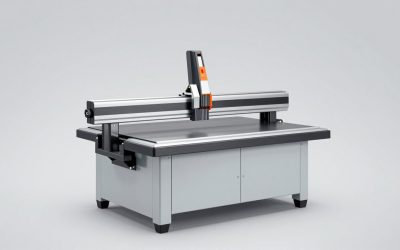
Crestron 3-Series Control System
For the homeowner who wants a single rack-mounted brain driving every light, motorized screen, AV component, and climate zone in a dedicated theater room. Crestron’s processor handles serial, IP, IR, and contact inputs with timing precision that consumer platforms simply cannot match. Scene programming is virtually unlimited because everything runs on custom code written by your integrator.
- Pro: Rock-solid reliability in mission-critical installations where dropped commands mean a ruined movie night.
- Pro: Deep device library covering virtually every projector, receiver, and lighting controller on the market.
- Con: Requires a certified Crestron dealer for programming; the system is unusable out of the box without one.
Skip it if your theater is a single room and you enjoy DIY tinkering over writing a check to an installer.
Crestron CP3 3-Series Control System
The CP3 delivers Crestron’s processor performance in a noticeably smaller chassis, making it the go-to for homeowners who want theater-quality automation without dedicating a full equipment rack to it. It still speaks the same programming language as its bigger sibling, so integrators can build complex multi-room scenes in a compact footprint.
- Pro: Same robust programming environment as larger Crestron processors in a space-saving form factor.
- Pro: Handles mixed-protocol rooms cleanly, bridging older serial AV gear with newer networked lighting.
- Con: Still locked behind dealer installation and proprietary tooling; no consumer-facing app setup wizard exists.
Pass if you need expandability beyond what the smaller hardware budget allows or you plan to add many more zones later.
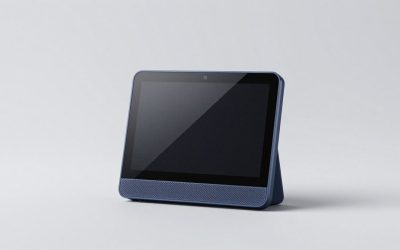
Shelly Wall Display XL Black 10.1 Inch Touchscreen
This wall-mounted panel targets the self-install homeowner who wants a sleek command center without a dealer invoice. The 10.1-inch touchscreen covers lights, scenes, and climate, and the built-in 5A relay lets it switch loads directly. Its broad ecosystem support—Alexa, Google, HomeKit, and Home Assistant—means it slots into almost any smart home topology.
- Pro: Multi-ecosystem compatibility removes lock-in concerns that plague closed platforms.
- Pro: Integrated lux sensor enables auto-dimming based on ambient light without extra sensors.
- Con: Requires a neutral wire at the switch box, which eliminates many older homes.
Not ideal if your house predates the 1990s and has no neutral at existing switch locations.
WS66i 6 Zone Amplifier with Wall Keypads
Audio is half the theater experience, and the WS66i handles whole-home distribution with 100 watts per zone across six channels. Wall keypads keep control in every room while the app and AirPlay/Spotify Connect let you pipe streaming audio through the same infrastructure that powers your theater’s surround bed.
- Pro: Six independent zones mean the theater can play a soundtrack while the kitchen streams a podcast.
- Pro: App plus in-wall keypads give family members who hate phones a physical interface.
- Con: Audio-only; it does not manage lights, screens, or AV source switching on its own.
Skip if you need a single controller for everything and your rooms are small enough for one zone.
Tapo Smart IR & IoT Hub with Chime
Matter certification is the headline here. The Tapo H110 acts as a universal remote supporting 8,000-plus infrared brands while also running IoT automations through the Tapo app or any Matter controller you already own. For a home theater with legacy IR-only gear, it bridges the gap to a modern automation stack without replacing anything.
- Pro: Matter-native design means it works with Apple Home, Google Home, or Alexa interchangeably.
- Pro: Built-in chime doubles as a room-occupied or doorbell trigger for theater-start scenes.
- Con: IR coverage is line-of-sight; it cannot reach equipment hidden behind closed cabinet doors.
Look elsewhere if your receiver, projector, and lighting all need RS-232 or TCP/IP control beyond simple IR.
Brilliant Smart Home Control 2-Switch Panel
Brilliant’s panel replaces your existing switch and adds a small touchscreen with Alexa built in, so you get voice and touch control in the same faceplate. It supports lights, music, and a wide list of compatible ecosystems including Ring, Sonos, Hue, and SmartThings, making it a practical upgrade for rooms that need in-wall automation without a central processor.
- Pro: Built-in Alexa means no separate echo device cluttering your side table.
- Pro: Wide compatibility list covers most popular smart lighting and speaker brands.
- Con: Two-switch capacity limits it to a handful of loads per panel; large theaters need multiple units.
Not the right fit if you need to control complex AV source switching or motorized screens from the wall.
Control4 HC-800 Controller
Control4 has built a strong reputation for dealer-installed home theater automation, and the HC-800 sits in that tradition. It handles IR, RF, serial, and IP control from a single box, with a mature programming environment that integrators use to build push-button theater scenes reliably. The ecosystem includes its own keypads, lighting modules, and a polished mobile interface.
- Pro: Proven track record in dedicated theaters; many dealers offer remote support and maintenance.
- Pro: Dedicated keypad line gives family members simple physical interfaces without opening apps.
- Con: Dealer-dependent pricing and programming make budget estimation difficult before the first site visit.
Avoid if you want full self-install control over every aspect of the system’s logic and firmware updates.
Broadlink RM4 Pro RF/IR Universal Remote
The RM4 Pro is the most affordable way to add universal remote capability to a DIY smart home. It pairs a 38 kHz IR blaster with 433 MHz RF transmission, covering both your TV remote’s language and older RF-based fans or blinds. Alexa and Google voice integration plus IFTTT hooks give you basic scene triggers without a hub.
- Pro: Dual-band RF and IR coverage handles equipment that IR-only hubs cannot reach.
- Pro: Low price and simple app setup make it the easiest entry point into home automation.
- Con: No native touchscreen interface and limited scene depth compared to dedicated controllers.
Outgrown quickly once your theater needs more than a few IR devices and sequential scene logic.
Buying Guide
Protocol Coverage Determines Your Hardware Ceiling
Before comparing brands, list every device in your theater: projectors often use RS-232 or TCP/IP, lighting uses Zigbee or DALI, audio receivers accept IR or serial, and motorized screens respond to dry-contact triggers. A controller that only speaks IR cannot drive your lighting. Match the processor’s protocol set to your actual gear inventory, not the marketing box.
Dealer-Installed versus Self-Installed Realistically
Crestron and Control4 systems perform brilliantly but are useless without a programmer on retainer. Budget for annual service calls and a two-to-three-week commissioning window. Self-installed options like Shelly, Tapo, or Brilliant demand network literacy from you but save thousands in labor and let you change scenes at midnight without emailing anyone.
Scene Execution Speed and Failure Modes
A good theater scene fires all sub-commands within two to three seconds of a single tap. Test latency in the showroom or on a review unit before committing. Also ask what happens when a Wi-Fi device drops off the network: robust systems queue the command and retry; weaker ones silently fail and you discover the lights are still on ten minutes into the film.
Our Verdict
Our top pick for a dedicated home theater is the Crestron 3-Series Control System—no other platform matches its scene precision, device library, and long-term reliability when installed by a competent dealer. For DIY enthusiasts on a real budget, the Broadlink RM4 Pro gets you surprisingly far with IR and RF control for a fraction of a processor system’s cost. However, if you already run Home Assistant as your automation backbone, the Shelly Wall Display XL wins outright because its multi-ecosystem support and built-in relay let you replace switch boxes with a single polished touchscreen without migrating platforms.
FAQ
Can a single controller run my theater, lights, and HVAC together?
Yes, but only systems with native HVAC integrations—Crestron and Control4 both support major mini-split and thermostat protocols through drivers or IR bridging. Consumer platforms like Brilliant or Shelly handle thermostats only through third-party ecosystem bridges, which adds latency and a potential failure point.
Do I need a dedicated router for my theater automation?
Not strictly, but separating smart-home traffic onto its own SSID or VLAN prevents a bandwidth-hungry streaming device from choking your control commands. A modest managed switch and a router that supports per-VLAN QoS cost very little and dramatically improve scene reliability.
Will Matter certification future-proof my investment?
Matter narrows compatibility gaps between ecosystems, but it does not replace protocol-level control for theater gear. A Matter-certified hub like the Tapo H110 still relies on IR or Zigbee under the hood; you gain portability across home platforms, not deeper RS-232 or serial access to projectors.
How long does a dealer-installed system take to commission?
Typical timelines run two to four weeks from the site survey through programming and final testing, depending on device count and room complexity. Rush jobs are possible but often mean fewer scene iterations before the installer closes the ticket and the support window starts.