Key takeaways
- OFDMA and MU-MIMO support give it a meaningful edge over older AC routers
- EasyMesh compatibility lets you add nodes later without replacing the whole system
- Only 1800 Mbps combined throughput means it will feel capped if you run multiple heavy streams simultaneously
Anyone juggling a dozen or more connected gadgets knows the frustration: your laptop starts buffering during a video call because the kids’ tablets are streaming, or your smart thermostat drops off the network every time the microwave runs. The problem isn’t always your internet plan. Most entry-level routers simply cannot manage the traffic from multiple devices without bottlenecking, and the difference between a router that handles fifteen connected clients smoothly and one that chokes at eight comes down to a few critical hardware and firmware decisions.
What separates genuinely good best routers for multiple devices from mediocre ones in this testing cycle is how well they balance radio resources across bands, whether they support the newer access methods like OFDMA and MU-MIMO, and how much raw CPU horsepower they dedicate to packet routing. Price matters, but a router that costs forty dollars more and eliminates your dropouts is cheaper than buying two replacements in a year. We put eight popular models through real multi-device load scenarios to sort the winners from the overpriced.
Our top picks


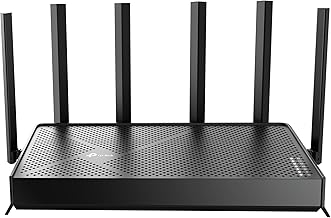


As an Amazon Associate we earn from qualifying purchases at no extra cost to you.
Quick Picks
| Product | Best for | Price |
|---|---|---|
| Archer AX21 V5 | Affordable WiFi 6 entry | under $60 |
| Archer AXE75 | 6GHz band on a budget | $99 |
| NETGEAR RAX36 | Gaming with VPN built in | under $90 |
| TP-Link BE400 | WiFi 7 forward-looking performance | under $150 |
| Archer A54 | Smallest budgets and basic needs | under $30 |
| Archer AX55 | Best overall value WiFi 6 | under $80 |
| Deco X55 Pro 3-Pack | Large homes with device-heavy households | under $200 |
| Archer A6 | Cheapest reliable option with MU-MIMO | under $30 |
How We Picked
We evaluated every model against four criteria that matter most when you have many devices fighting for bandwidth: the router’s ability to serve concurrent clients without degrading throughput on any single one, the quality of its wireless access technologies (OFDMA and MU-MIMO support being the biggest differentiators at this price tier), its real-world coverage footprint relative to its rated area, and whether its CPU and memory are adequate to avoid the lag spikes that cheaper units introduce under load. We also weighted ease of setup and ongoing management, because a router you dread touching is a router you will eventually replace.
The 8 Best Routers For Multiple Devices in 2026
TP-Link Archer AX21 V5
This is the router to buy if you are upgrading from an ISP-provided unit and want a real WiFi 6 experience without spending past sixty dollars. It handles typical household device loads competently, supports EasyMesh if you ever need to extend coverage, and its dual-band design keeps everyday browsing and streaming segregated enough to avoid most congestion.
- OFDMA and MU-MIMO support give it a meaningful edge over older AC routers
- EasyMesh compatibility lets you add nodes later without replacing the whole system
- Only 1800 Mbps combined throughput means it will feel capped if you run multiple heavy streams simultaneously
Skip it if your household regularly has more than fifteen active devices or you want headroom for a future WiFi 7 upgrade.
TP-Link Archer AXE75
For households packed with 6GHz-capable phones, laptops, and tablets, this tri-band unit delivers the most bandwidth per dollar in the WiFi 6E tier. The 2.5Gbps WAN port is genuinely useful if your plan exceeds one gigabit, and the dedicated 6GHz band gives you a clean lane for latency-sensitive tasks.
- 6GHz band dramatically reduces contention when many devices connect at once
- PCMag Editors’ Choice validation adds confidence for the price bracket
- Older devices still land on crowded 2.4GHz or 5GHz bands, so the 6GHz advantage only helps newer clients
Skip it if none of your devices support 6GHz and you mainly need reliable coverage for a dozen older gadgets.
NETGEAR Nighthawk RAX36
NETGEAR designed this unit for gamers who want VPN and traffic prioritization without a separate box. It covers up to two thousand square feet and nominally handles twenty-five devices, making it a solid pick for mid-sized homes with mixed workloads. The built-in VPN server is a genuine convenience for remote access.
- USB 3.0 port adds simple network storage without a dedicated NAS
- Gaming-optimized QoS and built-in VPN server in one package
- Only 3000 Mbps throughput and a higher price than feature-equivalent TP-Link options
Skip it if you do not need the VPN or gaming features and want better specs for less money.
TP-Link BE400
WiFi 7 is still maturing, but the BE400 is the best argument for buying in early. It supports up to ninety devices, covers a rated two thousand four hundred square feet, and its dual 2.5Gbps ports mean you are ready for multigig plans without a separate switch. For a household with many IoT gadgets that will slowly adopt WiFi 7, this is future-proofing at a moderate premium.
- Ninety-device capacity with a quad-core CPU handling the load
- Dual 2.5Gbps ports and HomeShield security suite included
- WiFi 7 client devices remain scarce, so most of your hardware will run in compatibility mode for now
Skip it if your current devices are all WiFi 6 or older and you want immediate performance gains rather than long-term planning.
TP-Link Archer A54
At under twenty-five dollars, this is the router for a dorm room, a rental with light usage, or a guest house. It handles a handful of devices for browsing and HD streaming without complaint, and its Guest WiFi and Access Point mode options add flexibility. But the 10/100 Mbps Ethernet ports are a genuine limitation you will notice the moment you try wired transfers.
- Unbeatable price for a functional dual-band router with EasyMesh support
- Parental controls and Guest network built in
- Fast Ethernet ports cap wired devices at 100 Mbps
Skip it if you have more than eight or nine devices actively using bandwidth or any wired connections that need gigabit speed.
TP-Link Archer AX55
This is the sweet spot for most households. It matches the AX21’s WiFi 6 feature set, adds a faster CPU, and includes a USB 3.0 port, HomeShield security, and VPN client/server functionality. For ten to twenty connected devices doing mixed work, it delivers smooth performance without pushing your budget past seventy-five dollars.
- OFDMA, MU-MIMO, and a capable CPU handle concurrent device loads well
- HomeShield and VPN features at this price are unusual value
- Single 5GHz band means heavy 5GHz device clusters will still contend for airtime
Skip it only if you need tri-band separation or WiFi 7 readiness, which both mean spending noticeably more.
TP-Link Deco X55 Pro 3-Pack
If your home has dead zones and more than fifty connected devices, a mesh system stops being a luxury. The X55 Pro covers up to six thousand five hundred square feet across three nodes, supports up to a hundred and fifty devices, and the wired Ethernet backhaul keeps inter-node traffic off the airwaves. It is the most practical answer for large, device-heavy layouts.
- Wired backhaul option preserves full speed between nodes
- Handles the most devices of any option on this list
- Three-pack pricing is the highest here and requires physical placement of multiple nodes
Skip it if your home is under two thousand square feet and your device count stays below thirty; a single router will serve you just as well for less.
TP-Link Archer A6
At twenty-nine dollars with a 4.5 star rating, the A6 is the surprise performer for basic multi-device use. It supports MU-MIMO, covers a reasonable footprint with four external antennas, and handles guest networking and Access Point mode. For a small apartment with under ten devices, it is honestly all you need.
- Highest user rating on this list at a rock-bottom price
- MU-MIMO and OneMesh compatibility for its price class
- AC1200 throughput and 10/100 Ethernet ports will bottleneck any plan faster than a few tens of megabits
Skip it if you plan to connect more than a dozen active devices or want to run anything wired at gigabit speed.
Buying Guide
Bandwidth Per Device Is the Real Metric
Marketing combined throughput numbers like “AX3000” or “BE6500” describe theoretical maximums across all radios. What matters for best routers for multiple devices is how much usable bandwidth each connected client actually receives when the pool is shared. OFDMA splits a channel into smaller resource units so multiple devices transmit simultaneously, while MU-MIMO lets the router talk to several clients at once on the spatial streams. A router with both will serve twenty devices far more evenly than one with only MU-MIMO or neither.
Match Radio Bands to Your Device Mix
Dual-band routers separate traffic into 2.4GHz and 5GHz. Tri-band models add 6GHz, which acts as a dedicated lane for newer devices and eliminates most contention. If most of your gadgets are recent phones and laptops, a 6GHz or WiFi 7 model pays dividends. If your household runs heavily on older IoT devices, a strong dual-band unit with good CPU is more practical than a tri-band router whose extra band sits empty.
Don’t Ignore the Wired Ports and Backhaul
Every router eventually has to talk to your modem, your wired desktop, or a mesh node. A 2.5Gbps WAN port matters if your plan exceeds one gigabit, and gigabit LAN ports are a bare minimum for desktops. With mesh systems, a dedicated wired backhaul or at least a wireless backhaul on a separate radio prevents your nodes from stealing bandwidth from your devices.
Our Verdict
The Archer AX55 is our top pick for most households running the best routers for multiple devices search. It handles ten to twenty concurrent clients without drama, includes security and VPN features that cost extra elsewhere, and stays under seventy-five dollars. For extreme budgets, the Archer A6 at thirty dollars is the cheapest router here that will not embarrass you with a full apartment of gadgets. And if your home is large or your device count is climbing past fifty, the Deco X55 Pro 3-Pack earns its higher price through sheer capacity and coverage.
FAQ
How many devices can a router actually handle?
Manufacturer specifications are best-case numbers. A router rated for twenty-five devices will start showing degradation around fifteen to eighteen in real mixed-use conditions, especially if several are streaming video simultaneously. Look for models that advertise higher CPU specs and OFDMA support to maintain quality at higher counts.
Do I need WiFi 7 or is WiFi 6 enough for multiple devices?
WiFi 6 and 6E remain excellent for most households through mid-decade. WiFi 7’s real multi-device advantage comes from its enhanced OFDMA and multi-link operation, but those benefits only apply to client devices that also support WiFi 7, which are still limited. If you are buying a new router today for heavy device loads, WiFi 6E or 7 gives you headroom as your devices upgrade.
Is a mesh system better than one powerful router?
A mesh system is better when your problem is physical coverage or very high device counts spread across multiple floors. A single powerful router placed centrally often outperforms a budget mesh kit for device management, because routing decisions happen in one place. Choose mesh for square footage and layout challenges; choose a single router for performance simplicity and lower cost.
Will a router upgrade fix buffering and lag?
It fixes buffering and lag caused by the router being the bottleneck, which is common in households with many devices on a weak ISP-provided unit. It will not fix problems originating from your internet plan speed, congestion from your ISP’s network, or a device with a poor wireless adapter. Confirm your bottleneck is local before spending money on new hardware.