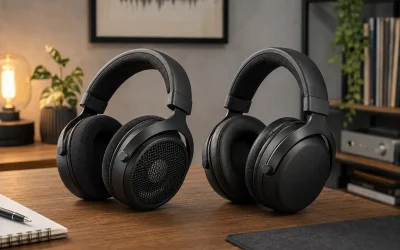
The reason most people buy an electronic kit is not tone. It is that they live in a building with neighbours. An acoustic snare hits well over a hundred decibels a metre away, which is not a volume problem you can negotiate around. Electronic kits move most of that energy into headphones, and mesh heads in particular reduce the remaining acoustic noise to a soft patter rather than a bang.
What you should understand before buying is that not all quiet is equal. Rubber pads are cheaper and louder, with a harder, less forgiving rebound. Mesh heads are tensionable, quieter and feel much closer to a real drum. The other thing that separates kits is the module: how many sounds it holds, whether the hi-hat controller is a proper pedal or a simple switch, and whether it sends USB MIDI so you can trigger drum software. Below, the kits, roll-up pads and practice options compared for apartments, kids and adult learners.
Our top picks


 Donner Electric Drum Set
- 【Premium 7-Piece Drum Set】The upgraded DED-70 electronic drum…
- 【More Powerful Sounds Attributes】With 150 built-in sounds, 15…
- 【Silent Yet Realistic Playing Experience】Use the included headphones…
 AODSK Electric Drum Set For Beginner 150
- [Complete Electric Drum Set for All Ages]:The AODSK…
- [Authentic Acoustic Drum Sound Samples]:Experience the realism of…
- [Lightweight and Portable Design]:Take your drumming anywhere with…
 Donner DED-80 Electronic Drum Set with 4
- 【The total Electric Drum Set】The Donner DED-80 drum…
- 【Industry Standard Mesh Heads】The DED-80 electric drum set…
- 【Powerful Educational Function】This beginner drum kit is loaded…


As an Amazon Associate we earn from qualifying purchases at no extra cost to you.
Quick Comparison
| Product | Best For | Standout Feature | Watch Out For |
|---|---|---|---|
| Sboet Roll-Up Drum Kit | Travel and desk practice | Rolls up flat with a headphone jack fitted | Flat pads give almost no rebound |
| 12-Inch Practice Pad and Stand | Rudiment work at any hour | Double-sided pad on an adjustable stand | Single surface; no kit coordination practice |
| Donner DED-70 | Quiet apartment practice | Four mesh pads with USB MIDI and lessons | Cymbal pads are smaller than real cymbals |
| AODSK AED-400 | Larger cymbal feel | Ten-inch cymbals with two pedals included | Module sounds are basic next to software |
| Donner DED-80 | Adult learners wanting more sounds | Expanded sound library with mesh heads | Assembly takes a couple of hours |
| Kids Electronic Drum Pad | Young children | Rechargeable with light-up drumsticks | A toy rather than a technique-building kit |
How to Choose
- Mesh over rubber if you can: Mesh heads are quieter, tensionable and much closer to the rebound of a real drum. Rubber pads are cheaper and harder on the wrists over long sessions.
- Check the hi-hat controller: A continuous pedal lets you play half-open hats and splashes. A simple on-off switch cannot, which limits everything from funk to jazz.
- USB MIDI matters more than module sounds: Built-in kit sounds age quickly. A module that sends MIDI lets you trigger far better drum software from a computer.
- Think about the kick: A pedal striking a beater pad transmits thumping through the floor. A rubber mat or riser under the kit is essential in a flat.
- Match the size to the player: Rack and pad positions need to reach the player’s arms and legs. Adult kits are uncomfortable for small children and vice versa.
Top Picks Reviewed
Best for Travel: Sboet Roll-Up Drum Kit
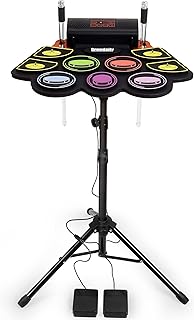
Nine pads, foot pedals, sticks and a headphone jack in something you can roll up and put in a bag. For keeping time and working on limb independence in a hotel room or at a desk, it does a job nothing else in this list does.
Flat silicone pads have essentially no rebound, so stick technique developed here will not translate cleanly to a real drum. Treat it as a coordination tool.
Best for Rudiments: 12-Inch Practice Pad and Stand
A double-sided pad on an adjustable stand gives you two rebound surfaces at proper playing height, which is where singles, doubles and paradiddles actually get built. It is silent enough for late nights and costs a fraction of a kit.
It teaches hands only. Kick and hi-hat coordination need a kit or at least a pedal, so most players end up owning both.
Best Apartment Kit: Donner DED-70
Four quiet mesh pads, nine-inch cymbals, two pedals, a throne, headphones and a lesson subscription make this a genuinely complete solution for someone learning in a shared building. The USB MIDI output means the module’s sounds are not a ceiling.
The cymbal pads are noticeably smaller than real cymbals, so the reach and swing you develop will need adjusting when you sit at an acoustic kit.
Best Cymbal Feel: AODSK AED-400
Ten-inch cymbal pads are closer to the diameter of a real hi-hat and crash, which makes the arm movements more transferable. Four quiet pads, two pedals, a throne and sticks complete the setup.
The module’s onboard sounds are functional rather than convincing. Routing MIDI into drum software is where this kit gets genuinely good.
Best Sound Library: Donner DED-80
An expanded sound set over the DED-70 with the same quiet mesh pads, two pedals, throne, headphones and lessons. For an adult learner who wants to practise across several styles, having more usable kit sounds keeps sessions interesting.
Assembly is a real job. Set aside an afternoon, follow the rack diagram carefully, and expect to adjust pad angles for a week before it feels right.
Best for Young Children: Kids Electronic Drum Pad
Nine pads, built-in speakers, a rechargeable battery and light-up sticks make this genuinely appealing to a young child, and appeal is what determines whether an instrument gets touched at all at that age.
It is a toy in the useful sense rather than a training instrument. Rebound and pad response will not build technique, but it will build enthusiasm.
Frequently Asked Questions
Are electronic drums quiet enough for an apartment?
Mesh-head kits are quiet through headphones, but the kick pedal still transmits vibration through the floor. A thick rubber mat or an isolation riser handles most of what neighbours below actually hear.
What is the difference between mesh and rubber pads?
Mesh heads are woven fabric under adjustable tension, giving quieter operation and rebound close to a real drum. Rubber pads are louder, harder and more tiring to play for long periods.
Do I need USB MIDI on the module?
It is the feature that keeps a kit useful longest. MIDI output lets you trigger drum software with far better samples than any budget module holds, and lets you record properly.
Can I learn on a practice pad instead of a kit?
For hand technique and rudiments, absolutely — most drummers spend more time on a pad than a kit. Foot and limb coordination still need pedals, so a pad complements a kit rather than replacing it.
Final Thoughts
Buy mesh heads if quiet practice is the point, check the hi-hat controller is a real pedal, and prioritise USB MIDI over the module’s sound count. Then put a mat under the kick, because that is the noise your neighbours will actually complain about, and keep a practice pad beside the kit for the hand work that never stops mattering.