The argument for a full 88-key board is not that you will use every key. Most repertoire lives within about five octaves, and plenty of players go years without touching the bottom A. The argument is that sheet music is written for a keyboard whose middle C sits in a specific physical position, and a shortened keyboard moves that reference point. Learn on 61 keys and your hands develop spatial habits that stop being true the moment you sit at a real piano.
The practical consequences show up quickly: left-hand octaves that run off the end of the board, pedal-heavy passages where the lowest note simply is not there, and the awkward experience of transposing on the fly during an exam piece. What you pay for that full range is size and weight — an 88-key board is roughly 130 centimetres wide and needs a stand and a plan for where it lives. This comparison looks at full-range boards from the perspective of range, action quality and how much room they demand.
Our top picks




As an Amazon Associate we earn from qualifying purchases at no extra cost to you.
Quick Comparison
| Product | Best For | Standout Feature | Watch Out For |
|---|---|---|---|
| Yamaha P71 | Reference-quality full-range action | Graded hammer bed with a slim footprint | Needs a stand and a better pedal bought separately |
| Weighted 88-Key with Wireless | Playing along to streamed audio | Dual 15W speakers with MP3 and wireless input | Wireless routing adds latency for live playing |
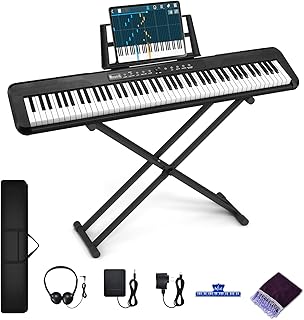
| Progressive Hammer Desk Piano | Buyers wanting a complete setup | Stand, pedal and music rest included | Desk format is fixed once positioned |
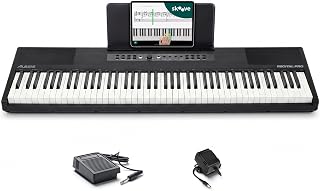
| Alesis Recital Pro | Teaching two people at once | Split lesson mode across the full range | Samples are workmanlike rather than lush |
| Donner DEP-20 | Carrying a full range to lessons | Complete 88-key bed in a light chassis | Lighter action than an acoustic upright |
| STRICH SDP-P7 | First full-size keyboard | Hammer action with pedal and music rest | Included key stickers become a crutch |
How to Choose
- Measure the space first: A full-size board is around 130cm wide before you add a stand. Confirm the wall or desk can take it, because returning one is a genuine hassle.
- Full range with weak action is a false economy: Eighty-eight unweighted keys will not prepare you for an acoustic. If you have to choose, take a shorter board with a better bed only if you never intend to play a real piano.
- Check the low end sounds right: Small speakers struggle to reproduce the bottom octave. Play the lowest notes through headphones to hear whether the sample or the drivers are the limitation.
- Think about transport: Slab boards go in a car; furniture and desk models do not. Decide whether the instrument travels before you compare anything else.
- Pedal and stand budget: Many full-range boards ship without either. Factor a stand, bench and continuous pedal into the total or the keyboard sits on a kitchen table.
Top Picks Reviewed
Best Action Across the Range: Yamaha P71
Graded weighting is what makes a full-size board worth having: the bass keys resist more than the treble, so your left hand builds the strength it will need on an acoustic while your right stays nimble. The slim chassis makes 88 keys manageable in a small room.
Nothing else is included. A stand, bench and a continuous sustain pedal are all separate purchases, and the supplied footswitch cannot do half-damper work.
Best for Backing Tracks: Weighted 88-Key with Wireless
Two 15-watt drivers and wireless audio input mean you can stream a track and play the full-range part over it without a separate speaker. For learning songs by ear across the whole keyboard, that convenience is real.
Wireless audio always carries delay. Use it for listening while you play, not for routing your own performance anywhere.
Most Complete Full-Size Setup: Progressive Hammer Desk Piano
Full range, progressive hammer action, sheet music stand, pedal, adapter, headphone mode and USB-MIDI in one delivery. The desk format also means the keyboard is not competing for table space with anything else.
Once assembled and positioned it stays there. This is furniture, not gear, and moving it is a two-person job.
Best for Teaching: Alesis Recital Pro
The lesson mode splits the 88 keys into two identical ranges so a teacher and student can play the same notes side by side. Combined with hammer action and 20-watt speakers, it is a practical classroom or home-tuition instrument.
The sample library is functional rather than beautiful. Through headphones the middle register sounds slightly flatter than the Yamaha at quiet dynamics.
Best Portable Full Range: Donner DEP-20
A complete 88-key weighted bed that one adult can carry, which is a genuinely useful combination when the same instrument has to work at home and at a teacher’s studio each week.
The keys return quicker and resist less than an acoustic upright. It is a fine practice instrument and it will not fully prepare you for a heavy grand action.
Best First Full-Size Board: STRICH SDP-P7
Hammer action across the full range with a sustain pedal and music rest supplied, aimed squarely at someone buying their first serious keyboard rather than a toy.
The included key stickers help for a fortnight and hinder after that. Peel them off once you can find middle C by the black-key groupings.
Frequently Asked Questions
Is 88 keys overkill for a beginner?
No. Beginners outgrow shorter boards faster than they expect, particularly once the left hand starts playing bass octaves. The extra width is the only real cost.
How wide is a full-size keyboard?
Around 130 centimetres for the instrument itself, plus clearance for a stand or bench. Measure before ordering, especially if it has to fit between furniture.
Do all 88-key boards have weighted keys?
No. Plenty of full-range keyboards use synth or semi-weighted actions. Key count and key weighting are separate specifications and need checking independently.
Can I practise on 61 keys and upgrade later?
You can, but middle C sits in a different physical position, so spatial habits have to be relearned. If the budget stretches, going straight to 88 avoids that reset.
Final Thoughts
Full range is worth having if you intend to read written music or ever sit at an acoustic piano, and the width is the price of admission. Confirm the action is genuinely graded rather than merely present, measure your space honestly, and budget for the stand and pedal that most slab boards leave out.