
Key takeaways
- Budget: Basic 2×2 in racks and half racks. Fine for moderate loads. Expect fewer accessories and lighter steel.
- Mid-range: Strong 2×3 or 3×3 in racks from value-focused makers with good accessory catalogs.
- Premium: Heavy 3×3 in racks with laser-cut numbering, wide attachment lines and long warranties.
For most home gyms, a 3×3-inch eleven-gauge steel power rack with a pull-up bar, J-hooks and safety bars from a maker such as Rogue, Rep Fitness or Titan is the best all-round choice, while buyers with limited space or lighter loads can choose a 2×2-inch or foldable rack. Match the rack to your ceiling height, floor area and the heaviest weight you plan to lift.
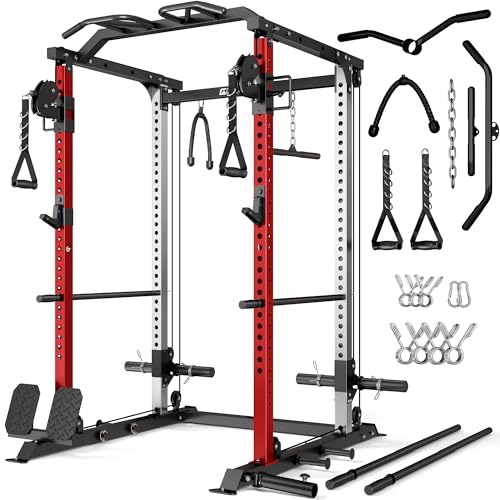
A power rack, sometimes called a power cage, is a four-post frame with adjustable safety catches that lets you squat, bench press and overhead press without a spotter. The safety catches are the main point of the design, so build quality, hole spacing and anchoring matter more than extras.
Our top picks



As an Amazon Associate we earn from qualifying purchases at no extra cost to you.
At a Glance
| Rack type | Best for | Key points | Limits |
|---|---|---|---|
| Heavy-duty 3×3 in rack (Rogue Monster and R-series lines, Rep PR-series, Titan T-series) | Serious lifters, long-term home gyms | Thicker steel, wide attachment ecosystems, high stated capacities | Large footprint, heavier to assemble |
| Mid-weight 2×3 in or 2×2 in rack | Home lifters on a budget | Lower cost, smaller size, decent capacity for moderate training | Fewer accessories, lower stated capacity |
| Half rack or squat stand | Small spaces, garage gyms | Compact, easy to move | Fewer safety options than a full cage |
| Foldable or wall-mounted rack | Shared rooms, apartments | Folds flat after use | Requires solid wall mounting and lower capacities |
| Short rack (low ceilings) | Basements with limited height | Sized for ceilings under standard height | Restricts pull-ups and overhead presses |
What Matters Most
Steel and frame size
Upright thickness and steel gauge determine rigidity. Heavier racks generally use 3×3 in uprights in eleven-gauge steel, which most makers describe as commercial-grade, while lighter home racks use 2×2 in uprights in a thinner gauge. For heavy squats, many reviewers prefer the larger tubing because it wobbles less. Check each maker’s stated capacity, and note whether the number refers to the static load of the J-hooks, the safeties or the pull-up bar.
Hole spacing and sizing
Wide-spaced holes give you fewer height choices, while narrow spacing around the bench zone gives you finer adjustment. Look for a rack with tight spacing in the bench-press range so you can set the bar precisely for your height and arm length.
Hardware and fasteners
Quality racks use bolt-together construction with thick hardware. A wobbly rack is often the result of loose bolts or poor assembly rather than weak steel, so re-tighten fasteners after the first few sessions.
Safeties
Strap safeties and pin-and-pipe safeties are the two common types. Straps are gentler on the bar and often quieter, while steel safeties are sturdy and usually have a high stated capacity. Always set safeties below the bottom of your lift range, and read the maker’s instructions.
Footprint and ceiling height
Most racks are about seven to eight feet tall, with versions for lower ceilings. Measure your ceiling, and allow enough overhead clearance to press and do pull-ups. Also allow bar length plus room to load plates on both sides.
Anchoring
Some makers recommend bolting the rack to the floor, especially for heavy racks or dynamic lifts like kipping pull-ups. Others offer a lower-profile design that is stable on its own. Follow the maker’s guidance, and respect concrete or subfloor requirements.
Ecosystem and Attachments
The accessories you can add matter as much as the rack. Common attachments include dip bars, landmine posts, band pegs, lat pulldown stations and plate storage. Rogue, Rep and Titan each publish a catalog that fits their own hole patterns, so you should confirm compatibility before assuming parts interchange between brands. Hole size and spacing differ across makers, and mixing parts is not always possible.
Budget Tiers
- Budget: Basic 2×2 in racks and half racks. Fine for moderate loads. Expect fewer accessories and lighter steel.
- Mid-range: Strong 2×3 or 3×3 in racks from value-focused makers with good accessory catalogs.
- Premium: Heavy 3×3 in racks with laser-cut numbering, wide attachment lines and long warranties.
Safety Notes
- Always set the safety bars to catch the bar below your lowest point in the lift.
- Learn how to bail from a squat or bench press before you need to.
- Check bolts and welds regularly and replace worn straps.
- Do not exceed the maker’s stated weight rating for the rack or its attachments.
- If you have a medical condition or injury, talk to a doctor or a qualified coach before starting heavy training.
Pick X If… Decision Table
| Pick this | If you… |
|---|---|
| 3×3 in eleven-gauge rack | Plan to lift heavy for years and want attachment options |
| 2×2 in power rack | Train at a moderate level and want to save space and cost |
| Half rack | Have limited floor space and mainly squat and press |
| Foldable wall rack | Need to reclaim floor space after sessions |
| Short rack | Have a ceiling under standard height |
What Reviewers Commonly Say
Fitness equipment reviewers often prioritize stability, hole numbering and compatibility with accessories. They note that heavier racks cost more but remain stable under demanding movements, and that entry racks are fine for beginners if bolted or weighed down. Always review the specification sheet of the exact model, since makers revise products over time.
Assembly and Setup
Allow time and a helper. Racks ship in heavy boxes, and assembly typically takes a couple of hours with basic tools. Level the rack on a firm floor, and use rubber mats under the feet to protect the surface. Re-check bolts after the first sessions as parts settle.
Alternatives
- Squat stands: Cheaper and smaller, suitable for lighter lifting.
- Smith machine: Guided bar path, but a different feel, and less versatile.
- Gym membership: If space or budget does not allow a rack, commercial racks are an option.
Planning a Home Gym Around the Rack
A rack is the centerpiece of many home gyms, so plan the rest of the space around it. You will need a barbell, plates, a bench and flooring. Rubber mats or horse stall mats protect the floor and reduce noise, and a platform made from plywood and mats helps with deadlifts and heavier lifts. Think about storage for plates and bars so the space stays tidy and safe.
Lighting and ventilation matter too. A garage or basement gym may need a fan, a dehumidifier or heating, depending on climate. Humidity encourages rust on steel and bars, so wipe down equipment and keep it dry. Leave clearance around the rack for walking, loading plates and spotting if you train with a partner.
Choosing Between a Rack and a Cage-Free Setup
Some lifters prefer a simple pair of stands because they take up less space and work well for a handful of movements. A full cage costs more but includes safeties on both sides, a pull-up bar and mounting points for many attachments. If you plan to train alone with heavy weights, a full cage with proper safeties is usually the safer path.
Beginner Considerations
Beginners benefit from learning technique under a qualified coach, whether in person or through reputable instructional material. A rack provides a safety net, but it does not replace good form, a sensible program and rest. Start with a light load, learn how to use the safeties and increase weight gradually. If you have health concerns, talk to a doctor before beginning a strength program.
Finally, set a realistic total budget that includes the rack, a barbell, plates, a bench and flooring. Buyers often focus on the rack price alone and are surprised by the extras, so list every item before you commit and compare complete packages from several makers.
Frequently Asked Questions
What is the difference between a power rack and a squat rack?
A power rack has four posts and safety catches on both sides, which allows solo training. A squat rack often has two posts or a half-frame layout and can be less protective. The cage design is generally considered safer for heavy solo lifts.
Do I need to bolt a power rack to the floor?
It depends on the rack and the exercises. Many makers say racks are stable when loaded with weight and used with common lifts, but bolting adds stability for kipping or heavy rack pulls. Follow the manual.
What ceiling height do I need?
Most racks stand around seven to eight feet tall, and pull-ups and overhead presses need extra clearance. Short-rack models are available for low ceilings. Measure before you buy.
Are 2×2 racks good enough?
For beginners and moderate loads they can be, and they cost less and take less space. Heavier lifters often prefer 3×3 uprights for added stability. Check the stated capacity.
Can I mix parts from different brands?
Not always. Hole sizes and spacing vary among makers, so confirm compatibility with the maker before buying attachments for another brand.
How much space should I leave around the rack?
Allow room for the full length of your barbell plus space to load plates and move safely. Check the footprint in the maker’s specification and add working clearance.
FAQ
What is the difference between a power rack and a squat rack?
Do I need to bolt a power rack to the floor?
What ceiling height do I need?
Are 2×2 racks good enough?
Can I mix parts from different brands?
How much space should I leave around the rack?
More from Amazon
Programs that pair well with the guide above. Offers and eligibility are set by Amazon and may change.
Free shipping on eligible items, Prime Video and more. Eligible new members can start with a free trial.
Start a Prime free trialAudiobooks and podcasts to listen to on the go. Eligible new members can start with a free trial.
Try Audible freeAd-free music streaming. Eligible new subscribers can start with a free trial.
Try Music Unlimited freeA free business account with business pricing and bulk-buying tools for work, shop or home office.
Create a business accountAs an Amazon Associate we earn from qualifying purchases.







