Key takeaways
- Width: Allow a small gap on each side so doors and drawers open cleanly.
- Height: Leave clearance for any light fixtures or ceiling vents; a taller unit offers more shelves but can look imposing in a small room.
- Depth: A depth around the size of a folded towel is usually enough for linens; deeper units hold bulk packs but use more floor.
- Door swing: Consider hinge side. Some makers allow the door to be reversed.
The best linen cabinet for most bathrooms is a slim, floor-standing unit with adjustable shelves and a closed door section, while small rooms often do better with a wall-mounted or over-the-toilet design and larger homes can justify a tall cabinet with drawers. Your choice should come down to available floor width, ceiling height, how much humidity the room sees, and whether you want to hide towels and supplies or display them.
Our top picks
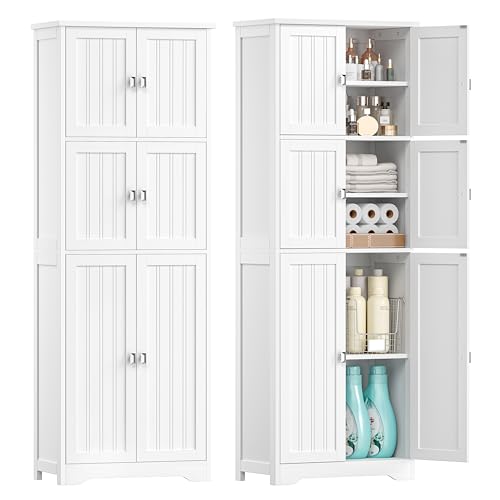

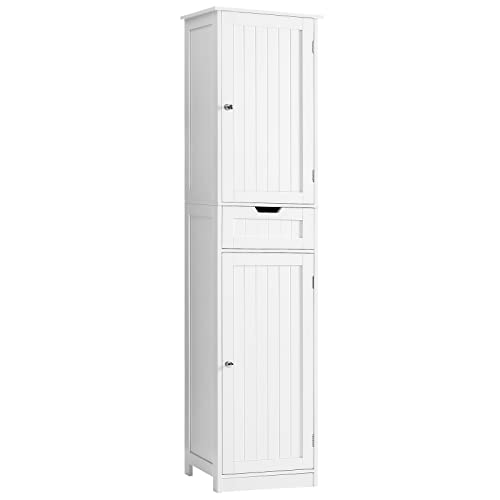

As an Amazon Associate we earn from qualifying purchases at no extra cost to you.
At a Glance: Linen Cabinet Types Compared
| Type | Best for | Typical stated features | Limits |
|---|---|---|---|
| Tall slim floor cabinet (narrow footprint) | Small bathrooms and hallways | Makers list widths often in the range of roughly a foot to a foot and a half, with 3 to 5 shelves | Limited depth; bulky items may not fit |
| Wide tall cabinet with doors and drawers | Larger bathrooms and primary suites | Combination of closed shelves and drawers for small items | Needs generous floor space and a solid wall anchor |
| Over-the-toilet storage unit | Rooms where floor space is scarce | Open and closed shelves above the tank, often with a cabinet door | Lower capacity; must clear the toilet tank and ceiling |
| Wall-mounted linen cabinet | Rooms where floor visibility matters | Hangs on the wall to keep the floor clear | Requires secure mounting into studs; weight limit set by the maker |
| Corner linen tower | Awkward corners | Triangular or quarter-round footprint using dead space | Smaller shelves and limited styles |
| Freestanding open-shelf ladder style | Display of rolled towels and baskets | Open frame with several tiers | No dust protection; contents are visible |
Measure Before You Browse
Measure the wall width, the available depth, and the ceiling height. Subtract door swing, baseboard, and any nearby fixtures. A cabinet that looks slim in photographs can still block a door or extend into a walkway. Many makers list overall dimensions and shelf dimensions separately, and the shelf depth is the figure that tells you whether a folded bath towel will actually fit.
- Width: Allow a small gap on each side so doors and drawers open cleanly.
- Height: Leave clearance for any light fixtures or ceiling vents; a taller unit offers more shelves but can look imposing in a small room.
- Depth: A depth around the size of a folded towel is usually enough for linens; deeper units hold bulk packs but use more floor.
- Door swing: Consider hinge side. Some makers allow the door to be reversed.
Materials and Humidity
Bathrooms are damp, and the material decides how long a cabinet lasts. Solid wood and plywood can handle humidity when sealed, though unsealed edges can swell. Engineered wood such as MDF is common at budget and mid-range tiers; manufacturers typically specify a laminate or painted finish to protect it, and reviewers advise wiping up splashes and keeping the room ventilated. Metal frames can resist moisture but may corrode if the coating is damaged. Bamboo is often promoted as water-resistant, but it still needs a good finish and should not stand in standing water.
Whatever the material, run an exhaust fan or open a window after showers. Humid air is hard on any furniture, and a cabinet with ventilated slats or a gap beneath the base tends to dry out better than a sealed box sitting flat on a damp floor.
Safety and Anchoring Notes
Tall, narrow furniture can tip, especially when shelves are loaded unevenly or a child climbs the drawers. Most makers supply a wall anchor kit and instruct buyers to secure the unit to a stud or use suitable wall fasteners. Follow the manual, use the hardware that fits your wall type, and place heavier items on lower shelves. Wall-mounted units must be mounted into studs or approved anchors rated for the weight the maker lists. If you are unsure about the wall structure, ask a qualified handyperson.
Picks by Need
Best for small bathrooms: slim tower with adjustable shelves
A narrow tower from a recognized furniture maker such as Zenna Home, Linon, or similar bath-storage brands is a practical starting point. These designs typically offer three to five shelves behind a door. Adjustable shelves let you tune spacing for towels, toilet paper, and toiletries. The compromise is shallow depth, so confirm shelf dimensions in the maker’s spec table.
Best for families: wider cabinet with drawers and doors
If several people share a bathroom, a wider cabinet with a closed lower section and a drawer for small items can reduce clutter. Brands such as Kleankin, Prepac, and similar mid-range manufacturers list models that combine shelves and drawers. These are heavier and need firm anchoring.
Best for tight floor space: over-the-toilet unit
Over-the-toilet cabinets use vertical space above the tank. Look for a maker-specified clearance over the tank and confirm that the lowest shelf will not hit the toilet lid when opened. They store fewer linens than a floor tower, so they fit best as supplementary storage.
Best for style flexibility: open-shelf ladder or rustic unit
Ladder-style or open-shelf units suit rolled towels and baskets and can look attractive in a spa-style bathroom. The trade-off is that dust and splashes reach the contents, so baskets help protect small items.
Budget Tiers and Trade-offs
| Tier | What you typically get | Trade-off |
|---|---|---|
| Budget | Engineered wood or metal frame, flat-pack, basic finish | Edges may swell if splashed; assembly can be fiddly; lower weight capacity |
| Mid-range | Better laminates or sealed wood, adjustable shelves, soft-close hardware on some models | Larger size and heavier weight; still needs anchoring |
| Premium | Solid wood, higher-grade finishes, pre-assembled or custom-fit options | Higher cost tier and longer lead times |
Pick X If You Want Y
| Pick this | If you want |
|---|---|
| Slim tower with doors | Hidden storage in a small bathroom |
| Wide cabinet with drawers | Organized storage for a shared family bathroom |
| Over-the-toilet unit | Extra storage without using floor space |
| Wall-mounted cabinet | A clear floor and easier cleaning |
| Corner tower | To use a dead corner |
| Open ladder shelf | A display look with baskets |
Alternatives Worth Considering
- Recessed wall niche: If you are renovating, a built-in niche between studs stores linens with no floor footprint. A contractor can advise on plumbing and wiring in the wall.
- Bathroom vanity tower: Many vanity makers sell matching tower units that coordinate with the sink cabinet.
- Hallway or bedroom cabinet: If the bathroom is tight, a slim cabinet in an adjacent hallway can hold spare towels and sheets without moisture exposure.
Assembly and Care Tips
Flat-pack cabinets rely on cam locks and dowels, so tighten fasteners gently and check them after a few weeks. Level the base to prevent doors from drifting open. Use a damp cloth with mild cleaner on finished surfaces, and avoid soaking edges. Put silica gel or a moisture absorber on a shelf if your bathroom lacks ventilation, and rotate towels so damp items do not sit against the back panel.
Frequently Asked Questions
How wide should a linen cabinet be?
Narrow cabinets of roughly a foot to a foot and a half wide suit small bathrooms, while wider units hold more but need clear wall space. Measure the wall and allow room for doors to swing. The shelf depth matters as much as width for towels.
Can a linen cabinet go in a humid bathroom?
Yes, if the material is suited to moisture and the room is ventilated. Sealed wood, laminated panels, and coated metal are common choices. Wipe away splashes and avoid placing the base in standing water.
Do I need to anchor a tall cabinet to the wall?
Makers generally advise it, especially for tall, narrow units, and most supply an anchor kit. Securing the cabinet to a stud reduces tipping risk, which is a particular concern in homes with children. Follow the manual for the right hardware.
What is the difference between a linen cabinet and a linen tower?
The terms overlap. A tower usually refers to a slim, tall unit, while a linen cabinet can be wider and may include drawers. Look at the specifications rather than the name.
How many shelves do I need?
Three to five shelves cover most households. Adjustable shelves help if you store bulky items such as spare toilet paper packs or hair dryers. Fewer, taller compartments suit large towels.
Are wall-mounted linen cabinets sturdy?
They can be if mounted into studs or with anchors rated for the load. The maker lists a weight limit, and you should stay within it. If you are unsure about your wall, ask a qualified installer.
FAQ
How wide should a linen cabinet be?
Can a linen cabinet go in a humid bathroom?
Do I need to anchor a tall cabinet to the wall?
What is the difference between a linen cabinet and a linen tower?
How many shelves do I need?
Are wall-mounted linen cabinets sturdy?
More from Amazon
Programs that pair well with the guide above. Offers and eligibility are set by Amazon and may change.
Free shipping on eligible items, Prime Video and more. Eligible new members can start with a free trial.
Start a Prime free trialAudiobooks and podcasts to listen to on the go. Eligible new members can start with a free trial.
Try Audible freeAd-free music streaming. Eligible new subscribers can start with a free trial.
Try Music Unlimited freeA free business account with business pricing and bulk-buying tools for work, shop or home office.
Create a business accountAs an Amazon Associate we earn from qualifying purchases.