
Best noise cancelling headphones for planes is rarely a single-product answer for people who fly often. Most frequent flyers end up with a primary pair, a compact backup and two adapters. This guide builds that kit, comparing seven options across over-ear and in-ear designs.
As an Amazon Associate we earn from qualifying purchases.
By Daniel Foster
🛒 Best Price Today on Amazon
Prime members get fast, free shipping on everything above, plus member-only deals. New members get a 30-day free trial — cancel anytime.
Building a Kit Rather Than Buying One Pair
The best noise cancelling headphones for planes change with the leg of the journey. A twelve-hour overnight flight, a two-hour hop and a noisy airport lounge each favour a different design, which is why one pair rarely covers a frequent flyer’s year.
Pack Weight, Charging and Redundancy: The Deciding Numbers
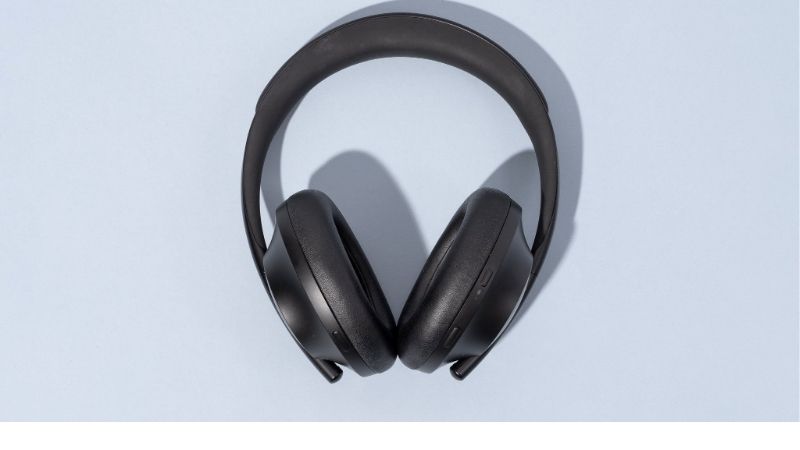
Four figures matter across a kit of best noise cancelling headphones for planes: total pack weight in grams, combined battery hours, charging connector, and how much bag volume the cases consume.
Over-ear models weigh 250 to 390 g plus a case of similar bulk, while earbuds weigh 50 to 70 g with case. Carrying both costs roughly 350 to 450 g, which is less than most travel adapters and far more useful.
Standardising on USB-C for everything removes the need for multiple cables. Combined battery across two devices usually exceeds 40 hours, which covers a long-haul return without any charging discipline at all.
Space and Fit: Carry-On Volume and Seat Pocket
Packing the best noise cancelling headphones for planes costs bag volume: a folding over-ear case takes roughly 8 by 7 by 3 in (20 by 18 by 8 cm); a non-folding case is noticeably larger. Earbud cases fit a jacket pocket, which is where they belong for boarding and disembarking.
In economy, the seat pocket holds one case at most. Frequent flyers usually keep earbuds in a pocket and the over-ear case in the overhead bag, swapping once at cruise altitude.
The Adapters Worth Carrying
Carry a 3.5 mm cable for entertainment systems, an adapter for older twin-pin sockets, and a USB-C cable. Together they weigh little and cover almost every aircraft you will board.
A small Bluetooth transmitter that plugs into the seat socket is the other common accessory, letting wireless-only headphones connect to the aircraft system. Airline rules on Bluetooth vary, so check the carrier’s policy.
Sleeping, Volume and Comfort Across Legs
Over-ear cups press against a headrest or window, which is why sleepers usually switch to earbuds or a dedicated sleep model. Trying to sleep in full-size cans is the most common complaint on overnight flights.
Neck pillows change the equation slightly, since a supportive pillow keeps the head off the window and takes pressure off the outer cup. It is a cheaper fix than a second pair for anyone who only occasionally sleeps in the air.
Keep volume moderate, particularly on legs where the battery is flat and cancellation is off. Cabin noise encourages people to raise levels, and most phones include an exposure warning worth leaving enabled.
Best Noise Cancelling Headphones for Planes: Seven Kit Options
This best noise cancelling headphones for planes list mixes primary over-ear models with compact backups. Specifications are manufacturer-stated and combined with recurring themes in owner reports rather than testing performed by us.
Apple AirPods Max
Strong cancellation, exceptional build quality and seamless switching across Apple devices, using USB-C for both charging and wired listening.
At roughly 385 g it is the heaviest here, the case protects poorly and an adapter is needed for aircraft sockets. Within an Apple household it is still the most convenient premium option.
Sony WF-1000XM5
The earbud backup of choice for many travellers, with hybrid cancellation, LDAC support and roughly 8 hours per charge in a pocketable case.
Battery per charge is shorter than any over-ear model, and the case adds top-ups rather than replacing them. Sleeping on a side is far easier than with cups.
Bose QuietComfort Earbuds II
Cancellation close to the brand’s over-ear models in an in-ear format, with stability bands that hold position against a pillow or headrest.
Case bulk is greater than rivals and battery life is modest. For overnight legs, cancellation depth in this size is the reason to carry them.
Jabra Elite 10 Gen 2
Uses a semi-open comfort design with adaptive cancellation, multipoint pairing and a high water resistance rating, suiting airports and transit as much as flights.
Cancellation is a step below Bose and Sony flagships. All-day comfort is what it trades for that.
JBL Tour One M2
A folding over-ear model with adaptive cancellation, a 3.5 mm cable included and long battery life, at a price below flagship pairs.
App settings do not apply when connected by analog cable. Folding plus an included cable makes it a practical travel primary.
Anker Soundcore Life Q30
The budget backup: multiple cancellation modes, roughly 40 hours of battery, a folding case and a 3.5 mm cable, at a fraction of flagship pricing.
Materials are basic and microphone quality is average. As a pair you would not mind losing in a seat pocket, that is part of the appeal.
Bowers and Wilkins PX7 S2e
A premium over-ear model with both USB-C and 3.5 mm wired options, aptX Adaptive support and a tuning aimed at listening rather than feature count.
It is expensive and the app is simpler than rivals. Dual wired options make it unusually adaptable across aircraft and hotel desks.
| Model | Type | Role in kit | Wired option | Main trade-off |
|---|---|---|---|---|
| Apple AirPods Max | Over-ear | Primary, Apple users | USB-C | Heavy, needs adapter |
| Sony WF-1000XM5 | Earbuds | Backup, sleeping | None | Short runtime |
| Bose QC Earbuds II | Earbuds | Overnight legs | None | Bulky case |
| Jabra Elite 10 Gen 2 | Earbuds | Airports, transit | None | Milder cancellation |
| JBL Tour One M2 | Over-ear | Primary, value | 3.5 mm | App off when wired |
| Soundcore Life Q30 | Over-ear | Budget backup | 3.5 mm | Basic build |
| B and W PX7 S2e | Over-ear | Primary, listening | USB-C and 3.5 mm | Price |
Stock and generations vary between sellers and change often, so confirm the exact model on the current Amazon listing before ordering.
Travelling With the Kit
Assembling the best noise cancelling headphones for planes is straightforward; keeping the kit charged, packed and working across a year of flying takes a little routine.
Charging Across Multi-Leg Trips
Charge everything the night before departure and carry one USB-C cable plus a small power bank. Most modern models deliver several hours of playback from a short gate top-up, so a full charge is rarely needed mid-trip.
Switch cancellation off rather than to transparency when you are not listening, since both modes draw power continuously. That single habit adds hours across a long journey.
Packing and Losing Things
Keep earbuds in a jacket pocket and the over-ear case in a bag rather than the seat pocket, which is where headphones are most often left behind. A quick check of the seat pocket before standing prevents most losses.
Do the same with the cable and adapters, which vanish more often than the headphones themselves. A small zip pouch that lives permanently in the carry-on solves it once rather than every trip.
Label cases with a contact detail or use a tracker if the model supports one. Airline lost property recovers far more items when there is a way to identify the owner.
Buying Timing
Audio is among the most heavily discounted categories late in the year. Amazon runs Prime Big Deal Days in early October, with Black Friday and Cyber Monday in late November as the peak window.
Building a kit over two events rather than one purchase is a practical approach, since the backup pair rarely needs to be current generation. Discounts vary by model and cannot be promised in advance.
Frequently Asked Questions
Questions from people who fly regularly.
Do I really need two pairs?
Not necessarily, but sleepers and short-haul flyers often find earbuds more practical while long-haul favours over-ear. Many people carry both for that reason.
Can I use Bluetooth on a plane?
Generally yes, though rules vary by airline and should be checked. A seat-socket Bluetooth transmitter connects wireless headphones to older entertainment systems.
Which adapters should I carry?
A 3.5 mm cable, a twin-pin adapter for older seats and a USB-C cable. Together they weigh very little and cover nearly every aircraft.
How do I stop losing headphones on flights?
Keep them in a bag rather than the seat pocket, and check the pocket before standing. A tracker or a contact label improves recovery when they are left behind.
See More:
- Best iced coffee maker
- Best single-serve coffee maker without pods
- Best coffee maker percolator
- Best rated pod coffee maker
- Best evaporative humidifier
Assembling Your Flying Kit
The best noise cancelling headphones for planes usually means one comfortable over-ear pair plus compact earbuds for sleeping. The AirPods Max and PX7 S2e lead the premium end, while the JBL Tour One M2 and Soundcore Life Q30 cover value.
Add Sony or Bose earbuds for overnight legs, carry a 3.5 mm cable and a twin-pin adapter, standardise on USB-C charging, and check the seat pocket before you stand up.
Our top picks


As an Amazon Associate we earn from qualifying purchases at no extra cost to you.

Write Your Review
No reviews yet. Be the first to share your experience!