
Best noise cancelling headphones for infants is a search that needs one correction before any comparison: infant hearing protection is passive earmuffs, not electronic active noise cancelling headphones. This guide compares six baby ear defenders on NRR rating, weight and headband fit.
As an Amazon Associate we earn from qualifying purchases.
By Daniel Foster
Passive Earmuffs, Not Electronic ANC
Searches for the best noise cancelling headphones for infants almost always mean ear defenders. Adult noise cancelling headphones use microphones and speakers to cancel steady low-frequency sound such as engine hum. They are not designed or sized for infants, they do not meaningfully reduce sudden loud sounds, and they are not marketed as hearing protection. Baby ear defenders work by physically sealing the ear instead.
The Decisive Numbers: NRR, Weight and Headband Pressure
Noise Reduction Rating is the figure printed on the packaging, typically 20-31 dB for infant earmuffs, with a European SNR equivalent in the low to mid twenties. Real-world reduction is generally lower than the label because a perfect seal is rare, which is worth assuming when planning any outing.
Weight matters more here than on adult products. Infant earmuffs run roughly 5-7 oz (140-200 g), and anything heavier tends to be pushed off or leaves marks. The best noise cancelling headphones for infants, in the sense parents mean, are the lightest pair that still seals properly.
Headband pressure is the specification nobody publishes and everybody notices. Too loose and the seal fails; too tight and the baby will not tolerate it or the skull is compressed uncomfortably. Adjustable headbands designed specifically for infant head circumference, usually around 15-19 in (38-48 cm), handle this better than scaled-down child sizes.
Space and Fit: Sizing to an Infant Head
With the best noise cancelling headphones for infants, meaning ear defenders, fit is the whole product. Cups must fully enclose the outer ear without pressing the ear flat, and the seal must sit on the skin around the ear rather than on hair or a hood. A pair that looks correct but sits on a hat provides much less reduction than the label suggests.
Check the manufacturer’s stated age range and head circumference rather than assuming. Most infant models cover roughly 3 to 24 months, with separate toddler versions above that, and using an oversized pair on a small head produces gaps at the jaw where sound enters.
Safety Rules That Come Before Features
Safety comes before any feature comparison. Never use earplugs on an infant or young child, as small inserts present a choking hazard. Never leave a baby wearing earmuffs unsupervised, and remove them if the child is asleep and unattended or if there is any sign of discomfort or skin marking.
Hearing protection is not a substitute for avoiding loud environments. Where an event is genuinely loud, shorter exposure and greater distance from speakers do more than any earmuff. Nothing here is medical guidance, and questions about a child’s hearing belong with a paediatrician or an audiologist rather than a product page.
6 Infant Ear Defenders Worth Comparing
Every option on this best noise cancelling headphones for infants list is a passive earmuff sized for babies, chosen on published NRR, weight and headband design. Amazon prices change frequently, so treat the tiers as approximate.
| Model | Rating (listed) | Stated age range | Price tier |
|---|---|---|---|
| Alpine Muffy Baby | SNR ~23 dB | 0-36 months | Mid |
| Baby Banz Earmuffs | SNR ~26 dB | 0-2 years | Mid |
| Em’s 4 Bubs | SNR ~22 dB | 0-18 months | Mid |
| Snug Kids Earmuffs | NRR ~25 dB | 6 months and up | Budget |
| ProCase Baby Ear Muffs | NRR ~22 dB | 3-24 months | Budget |
| Dr.meter Baby Ear Protection | NRR ~27 dB | 3-24 months | Budget |
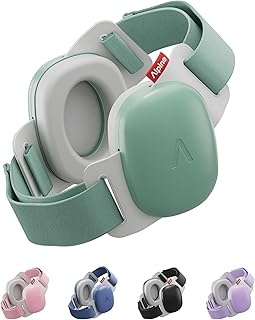
Alpine Muffy Baby: Adjustable Soft Headband
Alpine uses a soft, fully adjustable headband rather than a rigid arch, which distributes pressure and grows with the child. The cups are light and the design avoids the hard plastic band that sits awkwardly on a small skull.
The rating is moderate rather than maximum, so very loud environments still call for distance and short exposure. It costs more than the generic options, and the soft band can slip if not adjusted snugly.
Baby Banz Earmuffs: The Widely Used Standard
A higher published rating than most infant muffs with a padded band and deep cups. These are the pair most commonly seen at outdoor events, and the sizing range is generous enough to last well past the first year.
They are heavier than the softest options, which some infants resist, and the band is firmer. The cup depth means they sit prominently, so a hat over the top interferes with the seal rather than helping.
Em’s 4 Bubs: Lightweight and Flexible
Designed with a soft flexible band aimed at the youngest end of the range, these are among the lightest available, which matters when the wearer is a few months old and cannot reposition anything themselves.
The published rating is the lowest in this group, so they suit moderately loud settings rather than the loudest. The soft band offers less structure, which means checking the seal periodically during an event.
Snug Kids Earmuffs: Value With a Solid Band
A conventional adjustable arch with padded cups at a low price, with a rating comparable to more expensive options. For occasional use at a parade or a family event, the value is straightforward.
The stated age range starts later than the infant-specific models, so they are better suited to older babies and toddlers. The band is firmer plastic and can leave a mark after extended wear.
ProCase Baby Ear Muffs: Simple and Cheap
Basic construction with a padded adjustable band at the lowest price here, which makes them easy to keep in a changing bag as a just-in-case item rather than a considered purchase.
Build quality reflects the price, with thinner padding that flattens over time and hinges that are the most likely failure point. The published rating should be treated as an optimistic ceiling rather than a guarantee.
Dr.meter Baby Ear Protection: Higher Rating, Budget Price
A comparatively high published NRR at a low price, with a wide padded band and deep cups. On paper this offers the most reduction per dollar of the group.
Higher-rated muffs are generally bulkier and heavier, which is the trade here, and infants tolerate them for shorter periods. As with all budget options, real-world reduction depends far more on seal quality than on the printed figure.
Using Hearing Protection Sensibly
The best noise cancelling headphones for infants are one part of managing loud environments with a small child, and they are the least important part compared with the decisions around them.
Distance and Duration Do More Than Any Muff
Sound pressure drops sharply with distance, so standing further from a stage or a speaker stack achieves more than a few extra decibels of rating. Keeping visits short and stepping outside periodically has a bigger effect than any product choice.
Fireworks, concerts, motorsport and power tools are the common triggers for this purchase, and all of them are situations where leaving early is a legitimate option. If a baby is distressed by the environment, the muffs are not the solution to that distress.
Checking Fit and Comfort During Use
Check the seal every so often, particularly after the child has moved or been picked up, since a shifted cup provides almost no protection. Look for redness or marking on the scalp and cheeks, and remove the muffs periodically to let the skin breathe.
Do not use them for routine sleep or leave them on an unattended child. If a baby consistently pulls at or resists a pair, that is a fit problem rather than a behavioural one, and a lighter model with a softer band is usually the answer.
When These Sell and What to Avoid
Demand for infant ear defenders is event-driven, rising around summer festival season, national holidays with fireworks displays, and the run-up to New Year. Buying before those periods avoids inflated pricing and thin stock.
Avoid any listing that describes an infant product as active noise cancelling with electronics inside, since that is not how hearing protection for babies works and the claim suggests the seller does not understand the category. Look for a stated NRR or SNR figure and a specified head circumference range instead.
Frequently Asked Questions
These are the questions that follow once parents searching for the best noise cancelling headphones for infants realise electronic ANC is not the answer.
Can a baby wear adult noise cancelling headphones?
No. They are not sized for an infant head, do not seal correctly, are heavy, and are not certified as hearing protection. Active cancellation works on steady low-frequency sound and does little for the sudden loud noise that hearing protection is meant to address.
What NRR should I look for?
Most infant earmuffs sit between 20 and 27 dB, and within that range fit matters more than the number. A well-sealed 22 dB pair outperforms a poorly fitted 27 dB pair, so prioritise the size range and headband design.
Can they be worn during sleep?
Not unattended. If a child falls asleep during an event while wearing them, keep them under direct supervision and remove the muffs once you are away from the noise. For general safe sleep practice, follow your paediatrician’s guidance rather than any product recommendation.
See More:
- Best noise cancelling headphones Bose
- Best deal on air fryer
- Best buy Bella air fryer
- Best deals air fryer
- Best blender bottle
Final Thoughts on Infant Hearing Protection
What people mean by the best noise cancelling headphones for infants is a lightweight passive earmuff with a published NRR, an adjustable band sized for an infant head, and a proper seal around the ear. Prioritise weight and fit over the printed rating, never use earplugs on a baby, keep the child supervised while wearing them, and remember that distance and shorter exposure do more than any product.
Our top picks




As an Amazon Associate we earn from qualifying purchases at no extra cost to you.
Write Your Review
No reviews yet. Be the first to share your experience!