
Best noise cancelling headphones for plane use are judged on a narrow set of things: how well they kill low-frequency cabin drone, whether the battery survives a long-haul leg, and whether they are still comfortable at hour eight. This guide compares seven models on exactly that.
As an Amazon Associate we earn from qualifying purchases.
By Daniel Foster
🛒 Best Price Today on Amazon
Prime members get fast, free shipping on everything above, plus member-only deals. New members get a 30-day free trial — cancel anytime.
Cabin Noise Is a Specific Problem
The best noise cancelling headphones for plane use face a cabin sitting at roughly 75 to 85 dB in cruise, dominated by low-frequency engine and airflow noise. That is exactly the range active cancellation handles best, which is why the technology is far more effective on a plane than in an office.
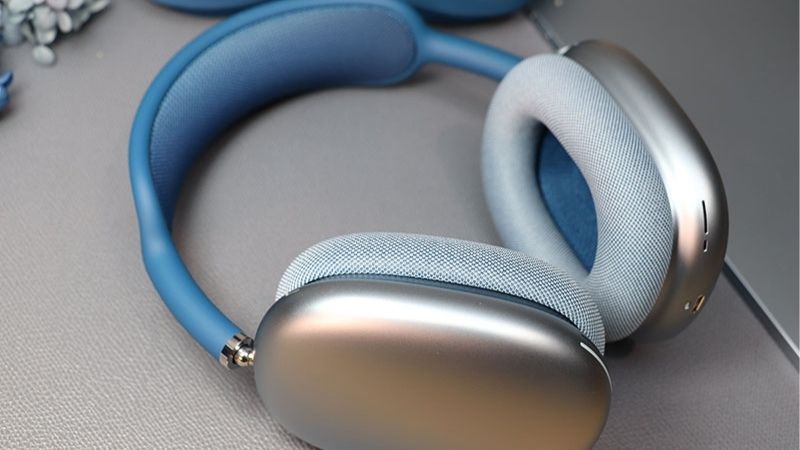
Cancellation Depth, Battery and Weight: The Deciding Numbers
Four figures decide the best noise cancelling headphones for plane journeys: cancellation performance on low frequencies, rated battery hours with ANC on, weight in grams, and whether the model folds for packing.
Battery ratings run 24 to 60 hours with cancellation active. A long-haul return trip with layovers can total 30 hours of use, so anything under 30 hours needs a charging plan or a USB-C top-up mid-journey.
Weight matters more on a plane than anywhere else. Over-ear models run 250 to 390 g, and anything above roughly 300 g becomes noticeable across a long flight, particularly when leaning against a headrest.
Space and Fit: Seat Space, Cases and Sleeping
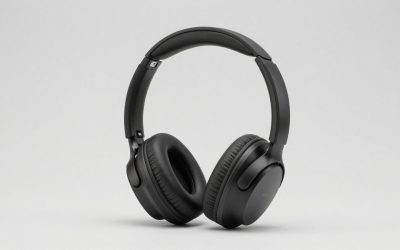
Folding designs among the best noise cancelling headphones for plane travel pack into a carry-on far better than rigid non-folding cases, which need 9 to 10 in (23 to 25 cm) of bag width. In economy, a case that fits the seat pocket is genuinely useful.
Sleeping in over-ear headphones is difficult against a window or headrest. If you plan to sleep, earbuds or a dedicated sleep model are more practical, and many frequent flyers carry both.
Comfort, Pressure and Long Legs
Clamping force determines comfort at hour six, not hour one. Softer memory foam pads that seal around glasses arms matter for both comfort and cancellation, since a broken seal reduces effectiveness immediately.
Headband padding matters almost as much on a long flight. A thin band concentrates weight on one point of the scalp, which becomes the reason people take headphones off long before their ears complain.
Some people experience a pressure sensation from strong cancellation, especially during climb and descent. Switching to transparency mode briefly usually resolves it, and it is a known effect rather than a fault.
Aircraft Sockets and Practicalities
Most entertainment systems still use a 3.5 mm socket, so a model with an analog cable option is more useful than one relying on USB-C alone. A few older seats use twin-pin sockets, for which inexpensive adapters exist.
Bluetooth is generally permitted in flight, though rules vary by airline. Bluetooth transmitters that plug into seat sockets are a common workaround for wireless-only headphones on older aircraft.
Best Noise Cancelling Headphones for Plane Journeys: Seven Picks
The best noise cancelling headphones for plane list below includes one earbud option, since economy sleepers often prefer them. Specifications are manufacturer-stated and combined with recurring themes in owner reports rather than testing carried out by us.
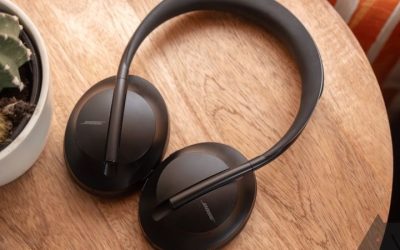
Bose QuietComfort Ultra Headphones
The reference for cancellation depth on low-frequency noise, with low clamping force, well-shaped pads and an immersive spatial mode, at roughly 24 hours of battery.
Battery life trails rivals and drops further with spatial audio active. For a single long-haul leg it is ample; for a multi-leg trip, plan a charge.
Sony WH-1000XM6
Multi-microphone hybrid cancellation, roughly 30 hours of battery, LDAC support and a folding design that returned in this generation for easier packing.
The app is dense and adaptive features need configuring to be useful. It is the most complete travel package here.
Sennheiser Momentum 4 Wireless
The endurance choice at roughly 60 hours per charge with cancellation on, enough for a return long-haul trip without touching a charger.
The earcups do not fold flat, making the case bulkier, and cancellation is a step behind Bose on engine noise. Battery life is unmatched here.
Soundcore Space One Pro
A budget travel model with adaptive cancellation, long battery life and a collapsing design that folds unusually flat for the price.
Call microphone quality and app polish sit below premium rivals. Cancellation on cabin drone is far closer to flagship performance than the price suggests.
Bose QuietComfort Ultra Earbuds
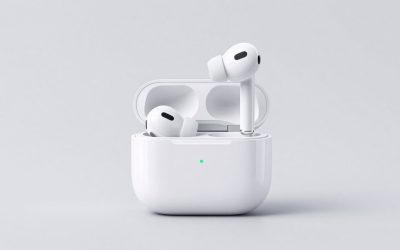
The earbud option for anyone who sleeps on flights, with strong cancellation for their size and stability bands that hold position against a pillow.
Battery life is shorter than over-ear models and the case adds bulk. Sleeping on a side against a headrest is far easier than with over-ear cups.
Sony WH-CH720N
A lightweight option at roughly 192 g with around 35 hours of battery and functional cancellation, aimed at occasional flyers rather than audiophiles.
Cancellation is clearly below flagship level and materials are plainly plastic. Low weight makes it comfortable across a long flight.
Beats Studio Pro
Roughly 24 hours with cancellation on, USB-C lossless audio, a folding design and one-touch pairing on both iOS and Android.
Clamping force is tighter than average, which suits movement but less so long flights. Folding plus USB-C audio makes it a practical travel option.
| Model | Battery (ANC on) | Weight | Folds | Main trade-off |
|---|---|---|---|---|
| Bose QC Ultra | ~24 hrs | ~250 g | Yes | Shorter battery |
| Sony WH-1000XM6 | ~30 hrs | ~254 g | Yes | Dense app |
| Sennheiser Momentum 4 | ~60 hrs | ~293 g | Partially | Bulky case |
| Soundcore Space One Pro | ~40 hrs | ~290 g | Yes, flat | Call mic quality |
| Bose QC Ultra Earbuds | ~6 hrs | Earbuds | Case | Short runtime |
| Sony WH-CH720N | ~35 hrs | ~192 g | No | Basic cancellation |
| Beats Studio Pro | ~24 hrs | ~260 g | Yes | Tight clamp |
Generations change quickly and stock differs between sellers, so confirm the exact model on the current Amazon listing before ordering.
Flying With Them and Buying at the Right Time
Getting the best noise cancelling headphones for plane travel is one thing; packing and using them well across a long trip is another.
Charging Strategy for Long Trips
Charge fully the night before and carry a USB-C cable, since most modern models take several hours of playback from a short top-up at a gate. A small power bank covers multi-leg journeys entirely.
Check whether your pair charges while playing. Some models continue working plugged into a power bank; others pause, which is worth discovering at home rather than four hours into a flight.
Turn cancellation off while reading or dozing without audio if battery is tight, since ANC alone draws power continuously. Transparency mode uses similar power, so switching off entirely is the saving.
Comfort Over Eight Hours
Adjust the headband before takeoff rather than mid-flight, and consider removing them for a few minutes each hour to relieve pressure points. Glasses wearers should check the seal, since arms break it easily.
Listening at moderate volume matters on a plane, where people instinctively raise levels against background noise. Good cancellation should reduce volume rather than encourage it, and most phones include an exposure warning worth leaving on.
Buying Timing
Headphones see their deepest discounts in the fourth quarter. Amazon runs Prime Big Deal Days in early October, with Black Friday and Cyber Monday in late November as the peak window for audio.
Previous-generation flagships drop furthest once a successor ships, and cabin noise performance rarely changes dramatically between generations. Discounts vary by model and cannot be promised.
Frequently Asked Questions
Questions frequent flyers ask before a long trip.
Do earbuds work as well as over-ear on a plane?
Top earbuds come close on engine noise but offer less passive isolation and shorter battery life. Over-ear remains better for long-haul, earbuds better for sleeping.
Will they work with the seat entertainment system?
With a 3.5 mm cable, yes. USB-C-only models need an adapter, and a few older aircraft still use twin-pin sockets.
Why do my ears feel pressure with ANC on?
Some people perceive a pressure sensation from strong cancellation, particularly during climb and descent. Switching to transparency briefly usually relieves it.
Is it worth buying last year’s model?
Often yes. Cancellation performance changes incrementally between generations, and previous flagships drop significantly once replaced.
See More:
- Best iced coffee maker
- Best single-serve coffee maker without pods
- Best coffee maker percolator
- Best rated pod coffee maker
- Best evaporative humidifier
Packing the Right Pair
The best noise cancelling headphones for plane journeys balance cancellation, battery and weight. The Bose QC Ultra leads on quiet, the Sony WH-1000XM6 on all-round travel value, and the Sennheiser Momentum 4 on battery for multi-leg trips.
Budget travellers give up surprisingly little with the Soundcore Space One Pro, and sleepers should consider earbuds instead. Carry a 3.5 mm cable, charge the night before, and keep the volume moderate.
Our top picks

 Soundcore by Anker Q20i Hybrid Active Noise
- Age Range Description: All
- Warranty Description: 18
- Customer Package Type: Rigid Box or Cushioned Box
Hybrid ANC with four mics cuts up to 90 percent noise
Up to 60 hours of playtime with ANC off
Dual-device connection switches audio sources instantly
Over-ear style takes up more bag space when packed
Listing does not clearly specify the warranty duration


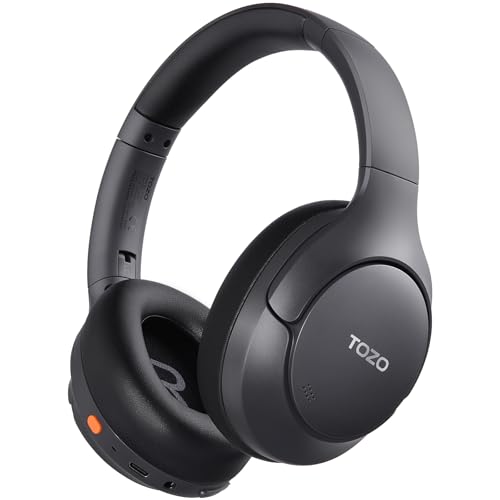 TOZO HT3 Hybrid Noise Cancelling Wireless Headphones
90 hours of battery life minimizes recharging on long trips
Connects via Bluetooth, 3.5mm AUX, or Type-C for flexibility
Removable ear pads support easy cleaning and replacement
Listing does not specify a manufacturer warranty length
Full-size over-ear design takes extra room in a bag


As an Amazon Associate we earn from qualifying purchases at no extra cost to you.
Write Your Review
No reviews yet. Be the first to share your experience!