
Key takeaways
What's inside
Best sd cards for dash cam setups often mean more than one card — a front camera, a rear channel, or a rotation you swap and archive — each judged by endurance, capacity and speed. This roundup of the best sd cards for dash cam compares high-endurance microSD from Samsung, SanDisk, Western Digital and Kingston so every channel records reliably.
As an Amazon Associate we earn from qualifying purchases.
As an Amazon Associate we earn from qualifying purchases.


By Daniel Foster
How to Choose the Best SD Cards for Dash Cams
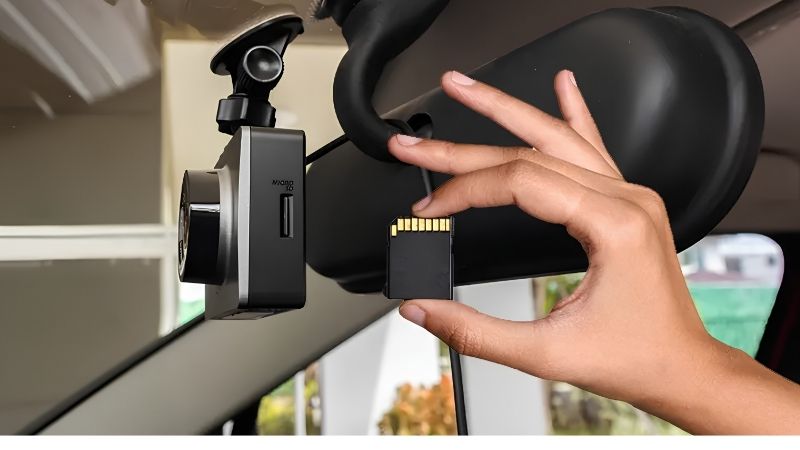
The best sd cards for dash cam picks below cover premium flagships for a main 4K camera, mid-tier value for a rear channel and budget surveillance-grade options for a spare, so a multi-camera kit is easy to fill. The table compares the deciding specs, and each pick adds the honest limitation to weigh.
| Card | Endurance | Speed Class | Role | Tier |
|---|---|---|---|---|
| Samsung PRO Endurance 256GB | up to ~140,000 hrs | U3 / V30 | Main 4K camera | Premium |
| SanDisk MAX Endurance 256GB | ~60,000+ hrs | U3 / V30 | Harsh climate main | Premium |
| SanDisk High Endurance 128GB | high value | U3 / V30 | Rear or everyday | Mid |
| Kingston High Endurance 128GB | solid mid | U1 / U3 | Rear 1080p | Mid |
| WD Purple SC QD101 | high TBW | U1 (slower) | Spare / security | Budget |
| Samsung PRO Endurance 128GB | high | U3 / V30 | Rotation card | Mid |
Samsung PRO Endurance 256GB — the main-camera flagship
Among the best sd cards for dash cam builds, the PRO Endurance 256GB is the natural main-camera choice: up to roughly 140,000 hours of continuous recording, U3 and V30 for 4K, and read/write near 100/40 MB/s. Its rugged, waterproof, temperature-resistant build handles daily road abuse.
The honest drawback is that the 40 MB/s write can be tight for the most demanding multi-channel 4K systems sharing one card. As the high-capacity card in your main front camera, though, its endurance headroom is the benchmark for long recording. In a multi-card kit it earns the main slot, where the most footage is written each day.
SanDisk MAX Endurance 256GB — the harsh-climate main
For a main camera in extreme heat or cold, the MAX Endurance 256GB rates over 60,000 hours, carries U3 and V30 speed and backs it with a 10-year warranty. It resists shock, water, temperature and X-rays, making it a confident pick for trucks and around-the-clock recording.
Its downside is a premium price, and a few users note format-loop quirks on specific cameras that appear batch-specific. For the most durable main-channel card with the longest warranty, it is the premium option in a multi-card kit.
SanDisk High Endurance 128GB — the rear-channel value
The High Endurance 128GB is an ideal rear-camera or everyday card, with U3 and V30 speed for smooth secondary 4K at a mid-tier price. In a two-camera kit it pairs well with a premium front card, keeping the total cost sensible without sacrificing reliability.
The catch is endurance below the flagships, and the small U1 versions should be avoided for 4K channels. At 128GB or larger U3, though, it is a dependable, affordable partner for the rear or a single everyday camera.
Kingston High Endurance 128GB — the 1080p rear pick
For a 1080p rear channel, Kingston’s High Endurance offers reasonable endurance and a fair warranty at a competitive price, a practical way to fill a second slot without overspending. It suits secondary cameras that record lower bitrates than the main 4K unit.
Its drawback is lower published endurance, so it is better as a rear or spare than a heavily used main card. For a modest 1080p secondary channel, though, it is a credible, budget-conscious name-brand option.
WD Purple SC QD101 — the spare and security card
The WD Purple SC QD101 brings surveillance-grade endurance and a high TBW at a low price, well suited to a spare card or a 1080p security-style channel. As the backup you keep in the glovebox or a rotation card for archiving, it is reliable and affordable.
The honest limit is its roughly 24 MB/s speed and U1 rating, which can be too slow for high-bitrate 4K and may trigger warnings. Reserve it for 1080p, spares or security use, and use faster cards for any 4K channel in the kit.
Samsung PRO Endurance 128GB — the rotation card
If you swap and archive cards, the 128GB PRO Endurance keeps Samsung’s rugged build and U3 and V30 speed at a lower price, making a handy rotation or backup card. Having a second card lets you pull footage while the camera keeps recording on a fresh one.
Its drawback is capacity-driven wear: a 128GB card cycles cells faster than a 256GB under equal use. As a rotation or secondary card rather than a sole main, though, it is a durable, well-priced addition to a multi-card setup.
What to Look For in Dash Cam Cards
Choosing the best sd cards for dash cam kits means weighing four things past price: the decisive specs, your cameras’ capacity and format fit, real durability, and the honest limits worth knowing when you run more than one card. Start here.
The decisive numbers: endurance, capacity, speed class
For the best sd cards for dash cam, endurance leads, measured in hours or TBW, because loop recording overwrites cells constantly across every channel. Speed class follows — U3 and V30 for 4K, less for 1080p — and capacity sets each card’s recording window, so match all three to the role each card plays.
In a multi-card kit you can mix tiers: a premium high-endurance card in the main 4K camera and a mid or budget card in a 1080p rear. Buy larger where it records most, and let each channel’s bitrate decide the speed class rather than buying identical cards everywhere.
Capacity and camera compatibility (fit)
Confirm each camera’s maximum supported card size before buying, since some cap at 128GB and reject a 256GB card, and check that both slots take microSD. The bundled adapters should fit the reader you use to offload footage from several cards on a computer.
Capacity shapes the loop window and lifespan per channel: a larger card in the main camera records longer and wears slower. Decide the recording span you want on each channel, then size every card to its role and the camera’s supported limit rather than buying one size for all.
Durability and reliability across channels
A hot parked car can exceed 140°F and cook standard cards, so endurance models add heat, cold, water, shock and X-ray resistance on top of high write ratings. That hardening keeps footage from every channel intact when it matters as evidence.
Warranty length signals confidence, from three years to ten on the SanDisk MAX, and formatting each card in-camera monthly clears its file table and manages weak blocks. Use endurance-branded cards throughout, since regular cards can void both card and camera warranties. Keeping a labeled spare in the glovebox also means a single failed card never leaves you without a recording.
The honest limits worth knowing
Every card can fail, so format each in-camera regularly, check footage occasionally, and retire cards near the end of their rated life before they die silently. Avoid tiny U1 cards on any 4K channel, where they stutter and drop frames under sustained writing.
Match each card to its channel’s bitrate: a slow surveillance card suits a 1080p rear but not a high-bitrate 4K front, and shared-card multi-channel rigs need the fastest sustained writes. Set each channel’s resolution and hours first, then choose cards that clear them comfortably.
See More:
- Best noise cancelling headphones Bose
- Best deal on air fryer
- Best buy Bella air fryer
- Best deals air fryer
- Best blender bottle
The Verdict on the Best SD Cards for Dash Cam
The best sd cards for dash cam kits mix tiers by role: the Samsung PRO Endurance for the main 4K camera, the SanDisk MAX Endurance for harsh-climate durability, the SanDisk High Endurance for a rear or everyday channel, and the WD Purple for a budget spare. Check each camera’s maximum supported capacity and buy larger where it records most, and since card prices move with sales, confirm the live price at checkout.






Write Your Review
No reviews yet. Be the first to share your experience!