
Best dash cam Best Buy comparisons rarely spend enough time on the two things that cause most complaints after purchase: how parking mode actually works, and what happens to footage once it is written to a card that lives in a hot car all summer.
As an Amazon Associate we earn from qualifying purchases.
Our top picks


As an Amazon Associate we earn from qualifying purchases at no extra cost to you.
By Daniel Foster
Specifications come from manufacturer documentation and long-term owner feedback rather than lab testing. Subscription terms and retailer pricing change frequently, so confirm current details before buying rather than relying on any figure quoted anywhere.
🛒 Best Price Today on Amazon
Prime members get fast, free shipping on everything above, plus member-only deals. New members get a 30-day free trial — cancel anytime.
Start 30-Day Prime Free Trial →See Today’s Amazon DealsParking Mode, Storage and Fees Decide Ownership
A camera that records while driving is easy to buy. One that reliably captures a hit-and-run in a car park is a different specification, and it is where a best dash cam Best Buy shortlist should be judged. Four factors determine whether you have it.
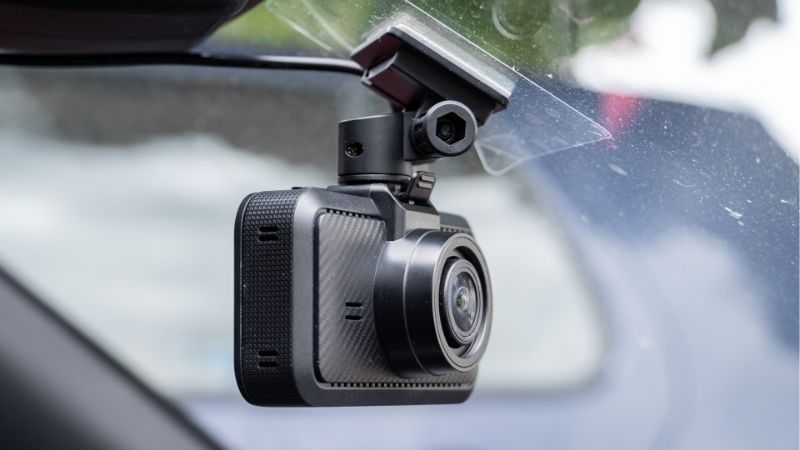
Channels, Power Storage and Parking Mode Type
These three are the decisive numbers in any best dash cam Best Buy comparison. Channel count means front only, front plus rear, or three-channel with a cabin view. Power storage means supercapacitor, which survives summer heat, or lithium battery, which does not survive it well.
Parking mode comes in three forms: motion or impact detection, which wakes the camera on an event; time lapse, which records continuously at low frame rates; and buffered recording, which keeps the seconds before an impact. Buffered is the most useful and the most demanding on power.
Hardwiring, Voltage Cutoff and Installation
Installation is the part that decides whether parking mode exists at all. It needs power with the ignition off, which means hardwiring to the fuse box with a kit that includes low-voltage cutoff, or using a battery pack. Without a cutoff, a camera can flatten the car battery overnight.
Measure the route from the fuse box to the mirror before starting, and be honest about whether you will do it yourself. Many drivers pay for installation, which is a service with its own terms and pricing that should be confirmed directly rather than assumed.
Memory Cards, Heat and Endurance
Storage is the quiet failure point in every parking setup. Loop recording writes continuously, so cards wear out. High-endurance microSD cards rated for surveillance duty are the minimum, and in a car that sits in summer sun even those need replacing roughly annually.
Card capacity of 128 to 256 GB is typical for two-channel systems, and three channels or 4K consume it far faster. Check the maximum supported size and format the card in the camera every month or two, since silent card failure is the leading cause of missing footage.
Cloud, LTE and What Costs Money Monthly
Some cameras offer cloud upload or LTE connectivity so you can see a parking event remotely. Those features carry recurring fees and often need a data plan, which turns a one-off purchase into a subscription.
Ask what the camera does with no plan. Most record locally exactly as before and lose only remote viewing, which is a reasonable trade. Establish that before buying rather than discovering it when a trial expires.
Six Cameras Compared on Parking and Storage
The best dash cam Best Buy or an online listing offers depends on whether you will hardwire it, so these cover capacitor and battery designs, plug-in and wired setups, and connected models with recurring fees. Each entry lists a genuine drawback.
| Model | Channels | Parking mode | Recurring cost |
|---|---|---|---|
| Viofo A229 Plus | Front and rear | Buffered, hardwire | None |
| BlackVue DR970X 2CH | Front and rear | Buffered, hardwire | Optional cloud |
| Garmin Dash Cam Mini 2 | Front only | Basic, needs power | Optional vault |
| Vantrue E3 | Front only | Buffered with hardwire kit | None |
| Nextbase iQ | Up to three channel | Connected guarding | Plan for most features |
| Redtiger F7N | Front and rear | Basic detection | None |
Viofo A229 Plus: Parking Done Properly Without Fees
Two channels with capacitor power, buffered parking recording when hardwired, and reliable low-light footage. There is no subscription of any kind, and the hardwiring kit with voltage cutoff is inexpensive and widely available.
The menus and app are functional rather than elegant, and setup assumes patience. Getting the best from it requires hardwiring, so factor in either an afternoon of work or an installation cost.
BlackVue DR970X 2CH: Premium Parking Surveillance
Strong build quality, capacitor power and a well-developed parking mode, with optional cloud connectivity that alerts you to impacts remotely. Installation accessories and battery packs are mature and well supported.
It is the most expensive camera here by a wide margin, and the cloud features carry recurring costs. The slim cylindrical body also needs careful positioning behind the mirror to avoid obstructing the view.
Garmin Dash Cam Mini 2: Discreet and Simple
Barely larger than a car key, this camera hides entirely behind a mirror and records clean 1080p footage. For drivers who want a camera nobody notices, nothing here is smaller.
It uses a battery rather than a capacitor, which is a real weakness for a car parked in summer heat, and parking mode requires constant power. The optional cloud vault is a further recurring cost if you want remote storage.
Vantrue E3: Compact With Serious Parking Support
A small three-lens-capable body with capacitor power, 24-hour parking surveillance when connected to a hardwire kit, and buffered recording that captures the moments before an impact.
Its parking features are only available with the separately sold hardwire kit, which is an extra purchase and an extra job. Menu navigation on the small body is also fiddlier than on cameras with larger screens.
Nextbase iQ: Connected, With a Plan Attached
A connected camera with built-in LTE, cabin monitoring and remote alerts, designed to act as a live security system for the vehicle rather than only a recorder. The app experience is the most polished here.
Most of the interesting features depend on a paid plan, and the camera needs hardwiring plus a data connection to deliver them. Without a plan it becomes a conventional dash cam at a premium price, which is a poor value proposition.
Redtiger F7N: Budget Two-Channel Coverage
A front and rear system at the lowest price in this group, with 4K front recording and basic motion-detection parking mode when powered continuously. For covering both directions cheaply, it does the job.
The battery rather than capacitor design limits its heat tolerance, and parking mode is detection-based rather than buffered, so the moments before an impact are lost. Night footage is average despite the 4K label.
Making Parking Mode Actually Work
Three practical realities separate a best dash cam Best Buy purchase that catches a car park incident from one that misses it entirely.
Battery Drain and Voltage Cutoff
A hardwired camera draws power constantly in parking mode, and a car left for several days can be left unable to start. Every hardwiring kit worth buying includes a low-voltage cutoff, usually adjustable, that shuts the camera down before the battery reaches a critical level.
Set that cutoff conservatively if the car sits unused for days at a time, or use a separate dash cam battery pack that charges while driving. Older car batteries have less reserve, which is exactly when drivers discover the setting was too aggressive.
Card Wear, Formatting and Verification
Cards fail silently and cameras rarely announce it clearly. Format in the camera every month or two and check that recent files play back, which takes two minutes and is the only reliable verification.
In hot climates, replace the card annually on a camera running daily and parking mode overnight. High-endurance cards cost more than standard ones and are still far cheaper than an uninsured claim without evidence.
Fees, Trials and Buying Timing
Connected cameras often ship with a trial period that expires quietly. Note the date and decide deliberately whether the remote features are worth a recurring cost, because most incidents are resolved with locally stored footage anyway.
Car electronics discounts cluster around the Amazon deal event in early October and the Black Friday to Cyber Monday window in late November, when hardwiring kits and cards are often bundled. Prices move constantly, so verify at the point of purchase.
Frequently Asked Questions
Three questions come up in nearly every message from readers pricing a best dash cam Best Buy or online listings offer with parking protection.
Will parking mode drain my car battery?
Not if the hardwire kit has a low-voltage cutoff set appropriately, or if you use a dedicated dash cam battery pack. Without a cutoff, yes, particularly on a car left standing for several days or with an older battery.
Is buffered parking recording worth it?
Yes, because detection-based modes start recording after the impact, missing the approach and often the vehicle responsible. Buffered recording keeps the seconds before the event, which is usually the footage that matters.
Do I need a cloud subscription?
No. Local recording covers almost every real-world claim. Cloud and LTE add remote alerts and off-site copies, which are genuinely useful for a fleet or a frequently targeted vehicle and unnecessary for most private drivers.
See More:
- Best low price dash cam
- Projector screens at Best Buy
- Best buy projector screens
- Best projector for games
- Best projector for gaming
Final Thoughts on Parking Protection
A best dash cam Best Buy or online comparison should be settled on parking mode type, power storage and whether recurring fees are involved, not on the resolution printed on the box. Capacitor power and buffered recording are the two features that matter most.
Budget for a hardwire kit with voltage cutoff and a high-endurance card in the same purchase, and measure the cable route before starting. Whichever best dash cam Best Buy or an online listing offers you choose, format the card monthly and verify the files, because silent card failure is what defeats most systems.


Write Your Review
No reviews yet. Be the first to share your experience!