Key takeaways
Wireless window alarms warn you the moment a window is opened or forced, without wiring or a landlord’s permission, so this wireless window alarms guide ranks picks by how they detect and how they alert. Below are six options with honest drawbacks, weighed on sensor type, alert method, and easy removal.
Our top picks


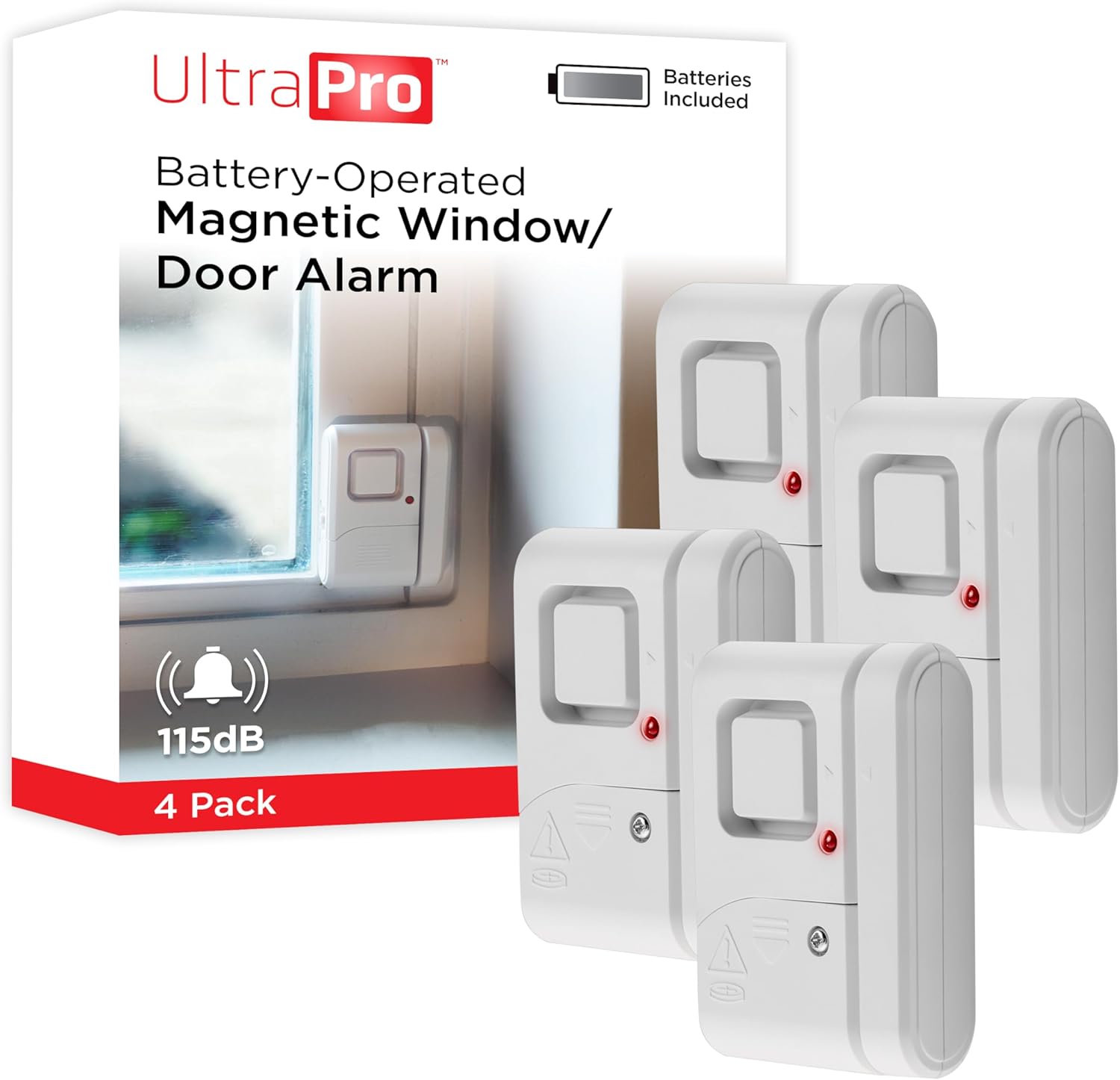 UltraPro Personal Security Window and Door Alarm
- Power Source: Battery Powered
- Compatible Devices: Home Security System
- Battery Description: Alkaline
120dB alarm or chime option covers four entry points
Double-sided tape mounts without any tools or wiring
No app or monthly fees required to operate
Not compatible with smart home systems
Runs on small LR44 batteries that will need replacing


As an Amazon Associate we earn from qualifying purchases at no extra cost to you.
As an Amazon Associate we earn from qualifying purchases.
By Daniel Foster
How Window Alarms Actually Protect You
Window alarms range from a standalone chime that shrieks on contact to a sensor that feeds a hub and your phone. Sorting the detection method, alert type, and power first keeps wireless window alarms from being either a toy that only startles you at home or a system that quietly misses the window you cared about.
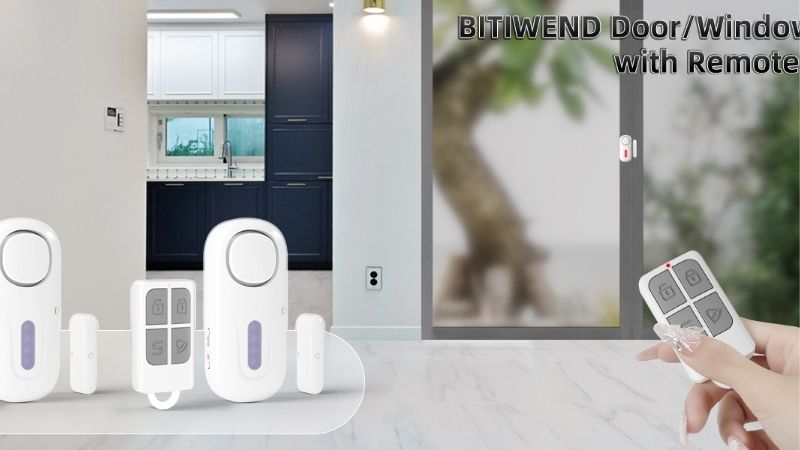
Wireless Window Alarm Decision Numbers
The deciding factors are sensor type (magnetic contact for opening, vibration or shock for prying, or glass-break for shattering), how you are alerted (local siren, phone push, or a hub chime), and whether a monitoring fee applies. Most standalone models are self-monitored with no recurring cost at all.
Then confirm the siren volume in decibels for a deterrent, the battery type and life, and whether the alarm links to a wider system. A contact sensor catches a slid-open window; a shock or glass-break sensor catches a smashed one, so match the sensor to how your windows would realistically be breached.
Check whether the alarm works entirely offline, since a purely local chime keeps sounding during an internet or power cut. If you want phone alerts while away, a hub-connected model is better, but confirm it still sirens locally so it protects you even when the network is down. The right wireless window alarms match this alert choice to whether you are usually home or often away.
Placement, Space, And Fit
Mount a contact sensor so the magnet and body align within the gap the maker specifies, usually a fraction of an inch, on the moving sash and frame. Clean the surface first, because adhesive on dusty or textured trim peels early, and a misaligned pair either false-triggers or fails to sense an opening.
Prioritize the windows an intruder can actually reach, ground-floor and accessible upper windows near flat roofs or fences, rather than every pane. A studio may need only two or three, while a house should cover the vulnerable openings first and expand from there as budget allows.
For renters, adhesive-mounted sensors that peel off cleanly are ideal, leaving no holes and traveling to the next place. Confirm the alarm’s body clears the window’s operation so it does not block the sash, and keep it high enough that a passerby cannot easily reach and disable it.
Sensor Type, Alerts, And Power
Magnetic contacts are cheap and reliable for opening windows, vibration or shock sensors catch prying and tampering, and glass-break detectors listen for the frequency of shattering. Combining a contact with a shock sensor covers both the slow open and the forced smash on a single vulnerable window.
Alerts split between a loud local siren that deters and warns anyone home, and phone or hub notifications that reach you while away. A deterrent siren is useless if you are out and nobody hears it, so pair local sound with connected alerts if you travel or leave the home empty often.
Battery life matters because a dead cell silently disables the alarm, so favor models with low-battery warnings and common battery types. Test each sensor after mounting and periodically afterward, since adhesive creep and battery drain are the two quiet failures that leave a window unguarded without you noticing.
Top Wireless Window Alarm Picks
These six span standalone chimes, connected sensors, and glass-break detectors, so you can match detection and alerting to your windows and budget. Each entry names a real drawback, because wireless window alarms trade off deterrence, remote alerts, and coverage in ways worth knowing before you buy. Reading each drawback closely helps you match a pick to how your home is actually breached.
| Pick | Sensor | Alert | Best for |
|---|---|---|---|
| GE/standalone chime | Contact | Local siren | Simple deterrent |
| SimpliSafe entry sensor | Contact | Hub + phone | System integration |
| Ring Alarm contact | Contact | Hub + phone | Alexa homes |
| eufy entry sensor | Contact | Hub + phone | Skip fees |
| Vibration/shock sensor | Vibration | Local/phone | Pry detection |
| Glass-break sensor | Audio | Local/phone | Shatter detection |
Standalone Chime For A Simple Deterrent
A standalone magnetic window alarm sticks on in minutes and shrieks when the window opens, needing no hub, app, or fee. For a renter or a quick fix on a vulnerable window, the loud local siren is a cheap, effective deterrent that works entirely offline.
The downside is no remote notification or logging, so you only benefit if you or a neighbor is in earshot. It also cannot tell you which window tripped from afar, making it a supplement to, rather than a replacement for, a connected system if you are frequently away.
As the simplest option, it excels at startling an intruder and alerting anyone home. Keep spare batteries on hand, test it regularly, and pair it with a connected sensor or camera at your main entry if you want alerts to reach your phone while out.
SimpliSafe Entry Sensor For System Integration
SimpliSafe’s slim entry sensors mount on windows and doors and report to its hub, which alerts your phone and can trigger optional professional dispatch. As part of a wider wireless system, they let one setup cover every vulnerable window and integrate with motion and glass-break sensors.
The trade-off is that the full experience, including dispatch and history, leans on a subscription, and the sensors are most useful within the SimpliSafe ecosystem. Component costs add up across many windows, so price the exact count you need before committing to a large sensor pack.
For buyers who want windows folded into a whole-home system, these integrate cleanly and install without tools. Confirm which features stay free without a plan, and prioritize a tier with cellular backup if you want alerts to survive a cut connection during a break-in. Pricing the exact sensor count you need first avoids paying for windows you will never actually cover.
Ring Alarm Contact For Alexa Homes
Ring Alarm contact sensors tie windows into the Ring app and Alexa, arming by routine and pushing phone alerts, with optional professional dispatch month to month. For a household already on Ring, adding window coverage is straightforward and unified with cameras and the alarm.
The downsides are ecosystem lock-in, fees for some features, and Ring’s data policies, which are worth reviewing. Heavy cloud reliance means confirming how alerts behave during an internet interruption, though cellular backup is available on the monitored tier to cover outages.
If you value voice control and a single app, Ring’s window sensors fit neatly. Just weigh the recurring costs across the system, and remember that voice and cloud convenience should not come at the expense of dependable local sounding when the network is down.
eufy Entry Sensor To Skip Fees
eufy’s entry sensors report to a hub with self-monitoring and no required subscription, sending phone alerts without a monthly fee. They install without drilling, suit renters, and integrate with eufy cameras so an opened window can trigger a recording for context.
The limitation is that professional dispatch is not the focus, so anyone wanting responders should look elsewhere, and some advanced features involve cloud services. Without dispatch, you rely on yourself or a neighbor to act on an alert, which is fine for many but not all households.
For fee-averse buyers who want window alerts on their phone, eufy is a strong pick. Confirm which functions stay free, keep the hub on reliable power, and pair the sensors with a local siren if you also want an audible deterrent that startles an intruder on the spot.
Vibration Or Shock Sensor For Pry Detection
Vibration and shock sensors detect the tampering and prying that a simple contact misses, sounding or alerting when a window is struck or forced. On a window an intruder is more likely to pry than slide open, they add a layer that catches the attempt earlier.
The drawback is sensitivity tuning: set too high and a slammed door or heavy traffic false-triggers, set too low and a careful pry slips by. They also do not detect a quietly opened window, so pairing one with a contact sensor covers both breach methods on the same pane.
For windows at risk of forced entry, a shock sensor is a smart complement rather than a standalone solution. Test and adjust the sensitivity after mounting, and combine it with a contact or glass-break sensor so no single method of entry goes unnoticed.
Glass-Break Sensor For Shatter Detection
Glass-break sensors listen for the specific frequency of breaking glass and can cover several nearby windows from one unit, alerting when a pane shatters. For rooms with many windows or large panes, one well-placed detector can guard the whole area against a smash-and-enter.
The trade-off is occasional false alarms from similar sounds like clattering dishes, and placement matters since the sensor must hear the windows it protects. It also will not catch a window quietly slid open, so it complements rather than replaces contact sensors on your entries.
For broad shatter coverage in a window-heavy room, a glass-break sensor is efficient. Mount it within the range the maker specifies, test it during setup, and pair it with contacts on the openings an intruder might simply unlatch and lift rather than break. Layering a contact with a glass-break sensor closes both the quiet-open and the smash-and-enter gaps.
See More:
- Best eyeshadow blender brush
- Best frozen foods for air fryer
- Best frozen food for air fryer
- Best way to reheat steak in air fryer
- Best air fryer recipes book
Choosing Your Wireless Window Alarms
The best wireless window alarms for you depend on how you would be breached and whether you need alerts while away. If you are mostly home, a loud standalone chime deters cheaply; if you travel, hub-connected sensors from SimpliSafe, Ring, or eufy push phone alerts, with shock or glass-break sensors covering forced entry.
Prioritize the windows an intruder can actually reach, align contacts carefully, and test each sensor after mounting and over time. Because security interest climbs around moving season and holiday travel, timing a purchase can help, but the goal is wireless window alarms that fit your windows, alert you the way you need, and keep working when the power or internet does not.