Key takeaways
What's inside
When to change HEPA filter units depends directly on fan runtime, indoor air quality, and physical airflow resistance. Knowing your maintenance timing prevents premature spending while protecting motor components from severe strain. Here are reliable replacement cues alongside top tested air cleaners for every room size.
By Daniel Foster
As an Amazon Associate we earn from qualifying purchases.
Essential Metrics: How CADR and Room Coverage Dictate Filter Lifespan
Selecting the right air purifier requires examining certified clean air delivery rates and room capacity metrics. Determining when to change HEPA filter media requires checking both runtime hours and visible dust build-up. These engineering factors dictate how efficiently the motor pulls dirty air through dense fibers.
Deciding Numbers: CADR Ratings, ACH, and True HEPA Standards
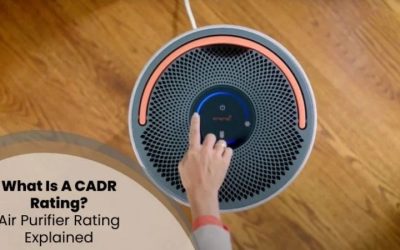
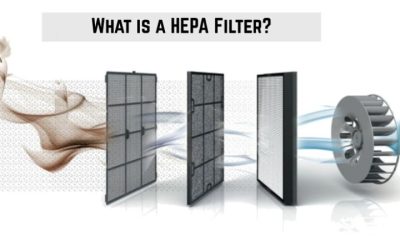
True HEPA certification requires capturing 99.97% of airborne particles down to 0.3 microns in diameter. Clean Air Delivery Rate measures smoke, dust, and pollen filtration volume in cubic feet per minute. A higher CADR rating ensures the device cycles air rapidly through dense microscopic fiberglass weaves.
Air changes per hour determine how often the room volume cycles through the internal filtration basket completely. Allergy sufferers generally require at least 4 to 5 air changes per hour for noticeable symptom relief. When cycling continuously at high speed, the physical media accumulates particulate mass quickly.
Standard fibrous filters create static pressure as trapped airborne particulate matter packs between the tight folds. Operating uncertified HEPA-type copies risks poor filtration performance while straining the internal induction fan. Investing in verified True HEPA media maintains airflow velocity and ensures clean air.
Space and Placement: Matching Square Footage and Airflow Clearance
Room sizing must match realistic manufacturer ratings measured at 4.8 air changes per hour rather than low-speed claims. A 300 sq ft (28 m²) master bedroom demands an appliance rated for at least 200 CFM CADR. Undersizing the machine causes the fan motor to run continuously on maximum, exhausting filters fast.
Placing your purifier requires at least 15 to 24 inches (38 to 61 cm) of open wall clearance for unobstructed air intake. Trapping an intake against curtains or tight sofa corners chokes inward flow and creates uneven media loading. Always measure real floor clearance before committing to a bulky cylindrical unit.
Large open-concept living rooms exceeding 600 sq ft (56 m²) necessitate dual units or heavy-duty commercial consoles. Positioning units near dominant airflow corridors collects suspended dander before it settles deep into rugs. Proper placement preserves media longevity by dispersing dust evenly across the surface.
Seasonal Smoke and Pollution Spikes: Impact on Replacement Cycles
Elevated outdoor AQI levels from summer wildfire smoke push particulate matter counts to dangerous historical highs. These fine PM2.5 particles saturate dense filter weaves much faster than typical household lint or dust. Wildfire seasons alter when to change HEPA filter cartridges dramatically.
Spring pollen surges between March and May burden intake stages with heavy microscopic botanical debris. Running continuous air filtration during peak pollination seasons loads outer pleat channels well ahead of baseline timers. Expect to replace or vacuum physical pre-filters monthly to protect the inner HEPA core.
Winter weather brings closed windows and stagnant indoor air along with seasonal viral transmission risks. High indoor occupancy concentrates pet dander, fireplace ash, and cooking grease into the purifier. Monitoring air quality warnings allows you to anticipate rapid filter saturation during cold months.
Top 6 Air Purifiers and Their HEPA Replacement Profiles
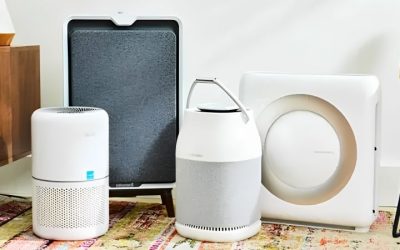
Modern purifiers employ distinct methods for monitoring, ranging from optical sensors to smart app timers. Comparing these models reveals that knowing when to change HEPA filter layers ensures continuous particle reduction. Here are six leading choices reviewed for longevity and running costs.
Levoit Core 400S: Real-Time Algorithm and App Life Tracking
The Levoit Core 400S delivers a balanced CADR of 260 CFM, suitable for spaces up to 403 sq ft (37 m²) at 4.8 ACH. Its cylindrical 3-stage filter combines a pre-filter, H13 True HEPA layer, and custom activated carbon pellets. Power consumption peaks around 38W on maximum turbo speed, maintaining modest operating costs.
Levoit tracks filter depletion via the VeSync app using laser dust readings and cumulative motor runtime. Rather than relying on a crude timer, this dynamic algorithm adjusts the replacement percentage based on pollution exposure. Genuine replacement filters sit in the budget tier and swap out in seconds.
On the downside, third-party knockoff filters frequently lack dense carbon pellets and may trigger app mismatch warnings. Furthermore, operating the unit in extremely dusty environments can dirty the optical PM2.5 sensor lens, requiring regular cotton swab cleaning to prevent distorted filter life calculations.
Coway Airmega AP-1512HH: Dual Sensor LED Alerts and Washable Pre-Filters
The Coway Airmega AP-1512HH Mighty provides a CADR of 233 CFM, purifying rooms up to 361 sq ft (34 m²). It relies on a multi-stage system comprising a washable mesh pre-filter, carbon mat, and True HEPA pleats. Maximum fan draw is 77W, though its intelligent Eco mode drops energy draw significantly.
Coway uses separate indicator LEDs for the carbon and HEPA media, illuminating based on operating hours. Owners frequently wonder when to change HEPA filter layers if the built-in reminder illuminates early. Rinsing the exterior mesh every two weeks extends internal True HEPA life to a full 12 months.
A notable drawback involves the thin carbon sheet, which saturates quickly against intense chemical odors and volatile organic compounds. In addition, the internal particle sensor sensitivity switch requires manual calibration during seasonal humidity shifts to prevent continuous high-speed fan cycling.
Winix 5500-2: Washable Carbon Protection and Check Filter Timer
The Winix 5500-2 produces a solid CADR of 243 CFM, handling enclosed family spaces up to 360 sq ft (33 m²) with ease. Its filtration stack uses an external mesh screen, a washable Advanced Odor Control carbon cassette, and True HEPA media. The unit operates at an ultra-quiet 28 dB on low, drawing 70W at turbo speed.
A physical ‘Check Filter’ LED illuminates after approximately 10,000 hours of continuous fan runtime. The washable carbon pellet frame captures larger cooking vapors, protecting the delicate HEPA microfibers. Replacement filter cassettes are widely available in the mid-range replacement price bracket.
The primary drawback centers on the controversial PlasmaWave bipolar ionizer feature, which some users prefer to deactivate manually. Furthermore, the unit lacks modern Wi-Fi connectivity, requiring manual button presses to reset the internal filter lifespan counter after installing fresh filtration media.
Blueair Blue Pure 311i Max: High-Efficiency Particle Trapping
The Blueair Blue Pure 311i Max delivers a CADR of 250 CFM, serving spaces up to 387 sq ft (36 m²). It utilizes proprietary HEPASilent technology alongside an interchangeable, washable fabric pre-filter. At peak fan velocity, acoustic output reaches 50 dB while pulling a modest 38W from the wall socket.
Filter tracking integrates through the Blueair app, calculating life via fan speed and sensor metrics. The external fabric stocking captures massive pet hair clusters, shielding the inner cylinder from coarse dust. Replacement main filters fall into the mid-to-premium replacement pricing category.
On the downside, genuine replacement cylinders represent a recurring expense that exceeds budget competitors over a three-year window. Furthermore, the fabric pre-filter gathers visible dust clumps on the outside of the machine, demanding weekly vacuuming to maintain an attractive living room aesthetic.
Honeywell HPA300: High-Capacity Workhorse for Heavy Particulates
The Honeywell HPA300 achieves a formidable CADR of 300 CFM for smoke, engineered for expansive rooms up to 465 sq ft (43 m²). The chassis houses an expansive front carbon pre-filter blanket backed by three separate Type-R True HEPA filter blocks. Power consumption is robust, drawing up to 130W on turbo clean setting.
Mechanical indicator lights signal replacement intervals for the outer wrap and inner HEPA blocks. Heavy dust loads force questions regarding when to change HEPA filter packs before CADR drops noticeably. Purchasing certified Type-R 3-packs in bulk helps stabilize your annual maintenance budget.
However, operating three individual HEPA cartridges means higher replacement costs than single cylindrical air cleaner configurations. Additionally, the AC motor generates significant low-frequency vibration and loud acoustic rush on high speed, making it less suitable for light sleepers during nighttime bedroom use.
Medify MA-40: H13 Certified Media for Strict Indoor Filtration
The Medify MA-40 provides a CADR rating of 224 CFM (380 m³/h), cycling air across rooms up to 420 sq ft (39 m²). It incorporates a certified H13 HEPA filter capable of capturing 99.9% of particles down to 0.1 microns. The compact, vertical tower chassis draws approximately 68W on its maximum fan speed.
A digital filter replacement icon illuminates on the glass touch panel after 2,500 hours of active motor use. The composite filter integrates a cleanable pre-filter, H13 fiberglass barrier, and substantial carbon chamber. Genuine replacement cartridges sit firmly in the premium-tier pricing category.
The chief limitation is the rigid factory timer, which counts elapsed hours irrespective of ambient room pollution levels. Running the purifier in a clean bedroom triggers the warning at 2,500 hours even if the H13 media remains physically unblocked, potentially prompting unnecessary filter disposal.
| Model | Smoke CADR | Coverage (4.8 ACH) | Filter Media Type | Replacement Lifecycle | Indicator Type | Filter Cost Tier |
|---|---|---|---|---|---|---|
| Levoit Core 400S | 260 CFM | 403 sq ft (37 m²) | H13 True HEPA + Pellets | 6 to 12 Months | VeSync App Algorithm | Budget |
| Coway AP-1512HH | 233 CFM | 361 sq ft (34 m²) | True HEPA + Carbon Mat | 12 Months (HEPA) | Dual LED Hours Timer | Budget to Mid |
| Winix 5500-2 | 243 CFM | 360 sq ft (33 m²) | True HEPA + AOC Carbon | 12 Months | Check Filter LED | Mid-range |
| Blueair 311i Max | 250 CFM | 387 sq ft (36 m²) | HEPASilent Particle Core | 6 to 9 Months | App Real-Time Tracker | Mid to Premium |
| Honeywell HPA300 | 300 CFM | 465 sq ft (43 m²) | 3x True HEPA Type-R | 12 Months (HEPA) | Dual Manual Button LEDs | Mid-range (3-Pack) |
| Medify MA-40 | 224 CFM | 420 sq ft (39 m²) | Medical H13 True HEPA | 2,500 Hours (~6 Mos) | Touch Panel Timer Icon | Premium |
Operational Wear, Sensor Drift, and Total Maintenance Costs
Maintaining an air purifier requires understanding mechanical degradation and recurring ownership expenses over three to five years. Understanding the mechanical symptoms of when to change HEPA filter frames protects your fan motor from burn-out. Regular inspection prevents expensive internal breakdowns.
Visual and Physical Warning Signs of a Clogged HEPA Media
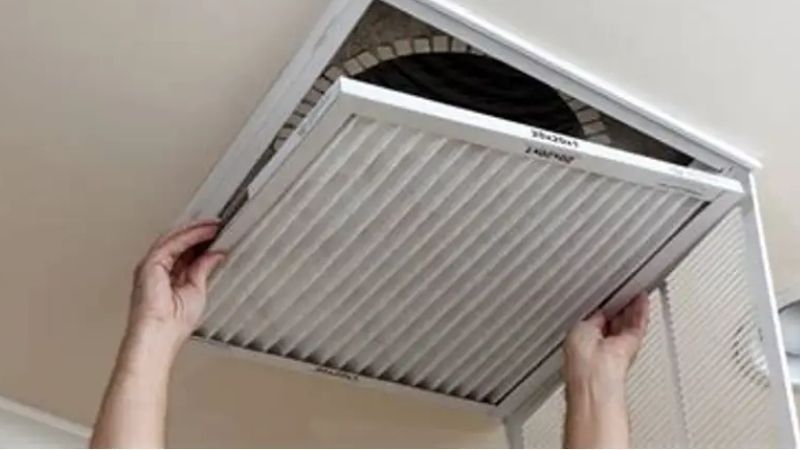
Opening the filter housing gives immediate physical evidence regarding the state of your internal particulate barriers. Fresh True HEPA media presents a crisp white appearance, while heavily saturated filters turn dark gray or charcoal black. Deep discoloration indicates packed fine dust wedged within the fiber depth.
Persistent sour or musty odors emanating from the exhaust reveal that volatile compounds have saturated the carbon. When trapped organic particles absorb ambient moisture, microbial colonies generate stale exhaust smells. Inspecting pleats helps identify when to change HEPA filter sets before airflow suffers.
Never attempt to wash fiberglass True HEPA media under running sink water or garden sprayers. Liquid moisture collapses microscopic fiber alignments, permanently ruining particle retention efficiency and breeding mold. Replace compromised cartridges immediately rather than attempting moist salvage.
Mechanical Strain, Motor Noise, and Escalating Energy Draw
As particulate matter embeds within HEPA fibers, static pressure against the fan impeller increases dramatically. The electric induction motor must work substantially harder to pull air through restricted filter pleats. Over time, restricted air pathways cause operating motor temperatures to rise.
Listen for subtle changes in acoustics, such as high-pitched whistling, air fluttering, or motor vibration. An induction motor laboring against an obstructed filter housing generates noticeable resonance through plastic seams. Operating in this choked state risks premature internal motor failure.
Restricted airflow lowers clean air delivery while increasing power consumption on continuous high settings. A struggling 50W air cleaner running 24/7 wastes electricity while failing to scrub suspended airborne particles. Swapping loaded filters restores clean air delivery rates and lowers monthly bills.
The True Cost of Replacement Media vs Generic Knockoffs
Budgeting for replacement filters is the essential recurring cost of indoor air quality management. Over a three-year lifespan, replacement cartridges can easily match or exceed the initial purchase price of the appliance. Smart buyers check filter availability and pricing before selecting a machine.
Third-party filters on online marketplaces often advertise attractive discounts compared to OEM units. However, many budget knockoffs utilize loosely woven paper that leaks sub-micron soot and fine allergens. Cheap imitation carbon sheets often contain minimal activated charcoal, failing odor tests.
Improper aftermarket frames cause air bypass, where dirty air flows around loose plastic edges instead of through fibers. Inspect foam perimeter gaskets to ensure an airtight seal when installing replacement packs. Genuine certified filters protect manufacturer warranty coverage and overall air cleanliness.
See More:
- Best eyeshadow blender brush
- Best frozen foods for air fryer
- Best frozen food for air fryer
- Best way to reheat steak in air fryer
- Best air fryer recipes book
Final Verdict on Maintaining Clean Indoor Air
Deciding when to change HEPA filter cartridges comes down to balancing airflow output, indoor air demands, and runtime alerts. In typical homes with minimal smoke or pets, quality True HEPA filters reliably endure six to twelve months of daily use. Inspecting pre-filters monthly prevents early media clogging.
For most households, the Levoit Core 400S offers the most intuitive balance of automated tracking and affordable filter media. Those managing heavy pet dander or large rooms will appreciate the rugged output of the Honeywell HPA300. Choose the purifier that matches your room volume and ongoing budget.
Always measure your room space and inspect intake clearance before purchasing any new air purifier. Routine maintenance, timely vacuuming of mesh pre-filters, and replacing spent media promptly keeps your living environment fresh. Reliable air quality starts with attentive, proactive filter care.