Key takeaways
What's inside
air purifier vs air cleaner terminology often confuses homeowners seeking clean indoor air. While the terms are frequently used as synonyms, true air cleaners capture airborne dust via physical filters, whereas dedicated purifiers neutralize pathogens and gases. Here is how both systems stack up in real rooms.
As an Amazon Associate we earn from qualifying purchases.
By Dniel Foster
Core Differences and the Deciding Numbers for Clean Air
Navigating the air purifier vs air cleaner distinction requires understanding how different standards measure airflow performance. While everyday consumers use the phrases interchangeably, technical specifications differentiate passive particulate filtration systems from comprehensive air sanitizing hardware.
Deciding Metrics: CADR Ratings and Air Changes per Hour
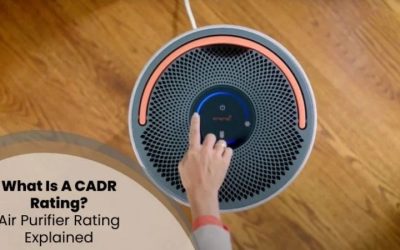
When evaluating an air purifier vs air cleaner, CADR provides an objective baseline across smoke, dust, and pollen. Established by the Association of Home Appliance Manufacturers, this metric indicates cubic feet per minute of clean air delivered. Higher numbers directly correlate to faster airborne clearing.
Air changes per hour, or ACH, dictate how many times an appliance cycles the entire room volume every sixty minutes. For general living spaces, two cycles per hour may suffice, but sensitive households require at least four or five cycles. Always calculate ceiling heights alongside floor dimensions before choosing.
According to EPA indoor air guidelines, unverified marketing claims cannot replace standardized CADR metrics. Mechanical air cleaners must achieve at least two-thirds of room area coverage in smoke CADR cfm (cubic feet per minute). Verifying these independent ratings prevents purchasing an undersized machine.
Physical Filtration vs Active Neutralization Mechanisms
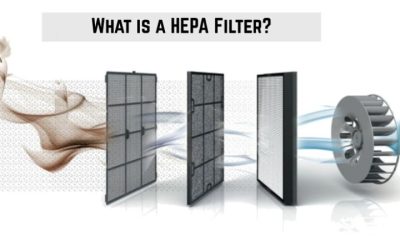
Traditional air cleaners utilize mechanical filtration, primarily True HEPA filters that capture 99.97% of airborne particles down to 0.3 microns. These dense glass fiber matrices trap pollen, mold spores, pet dander, and fine dust through impaction, interception, and diffusion without producing unwanted emissions.
Conversely, specialized purifiers often add active technologies such as photocatalytic oxidation, ultraviolet germicidal irradiation, or activated carbon beds. These mechanisms target volatile organic compounds, chemical fumes, and airborne pathogens that pass directly through standard particulate filtration mesh.
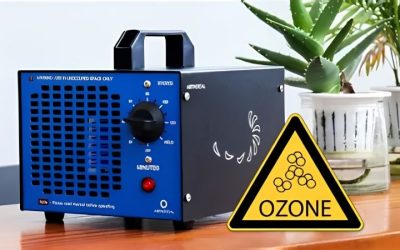
Consumers must remain cautious regarding intentional ozone generators. The EPA explicitly warns that ozone is a toxic lung irritant that damages respiratory tissue even at low concentrations. Responsible shoppers should verify CARB certification, which guarantees ozone emissions remain strictly below 0.050 ppm.
Space and Fit: Measuring Room Volume and Machine Clearance
In any air purifier vs air cleaner comparison, matching rated coverage to room cubic footage prevents premature motor wear. A machine rated for 400 sq ft (37.2 m²) assumes standard 8-foot (2.4-meter) ceilings. High vaulted ceilings expand air volume significantly, demanding a substantially higher CADR output.
Physical footprint dictates practical daily placement within living areas. Most tower units occupy roughly 1 sq ft (0.09 m²) of floor space but require 12 to 18 inches (30 to 45 cm) of perimeter clearance from walls and furniture to ensure unrestricted intake airflow across 360-degree cylindrical filter elements.
Always measure your room dimensions and calculate total cubic footage before ordering an air treatment device. Squeezing a bulky console into an obstructed corner chokes fan intake, increases motor strain, and drastically reduces effective air circulation throughout the intended living or sleeping quarters.
Top Tested Cleaners and Purifiers for Residential Spaces
Selecting between an air purifier vs air cleaner depends heavily on the specific air contaminants present in your household. We analyzed verified laboratory specifications, consumer long-term reliability reports, and functional CADR outputs to identify the most dependable units available on the market today.
| Model | Smoke CADR | Rated Coverage (5 ACH) | Primary Filter Media | Noise Range | Best Application |
|---|---|---|---|---|---|
| Levoit Core 400S | 260 cfm (442 m³/h) | 403 sq ft (37.4 m²) | H13 True HEPA + Carbon | 24 – 52 dB | Mid-Sized Smart Bedrooms |
| Coway AP-1512HH | 233 cfm (396 m³/h) | 361 sq ft (33.5 m²) | True HEPA + Ionizer | 24 – 54 dB | Energy-Efficient Nurseries |
| Blueair 211+ Max | 410 cfm (697 m³/h) | 635 sq ft (59.0 m²) | HEPASilent + Carbon | 23 – 50 dB | Open Concept Living Areas |
| Winix 5500-2 | 232 cfm (394 m³/h) | 360 sq ft (33.4 m²) | True HEPA + Carbon Pellets | 28 – 55 dB | Homes with Active Pets |
| Medify MA-40 | 224 cfm (380 m³/h) | 380 sq ft (35.3 m²) | Dual H13 True HEPA | 46 – 66 dB | Dense Particulate Filtration |
| Austin Air HealthMate | 250 cfm (425 m³/h) | 750 sq ft (69.7 m²) | 60 sq ft HEPA + 15 lbs Carbon | 50 – 66 dB | Heavy VOC and Fume Adsorption |
Levoit Core 400S: Smart Mechanical Air Cleaner for Mid-Sized Rooms
The Levoit Core 400S delivers a balanced smoke CADR of 260 cfm (442 m³/h), making it well-suited for rooms up to 403 sq ft (37.4 m²) at five complete air changes per hour. Its cylindrical three-stage filter combines a fabric pre-filter, an H13 True HEPA media, and an activated carbon pellet layer.
Operating sound levels span from an ultra-quiet 24 dB on sleep mode to 52 dB at maximum speed, drawing only 38 W of electricity. Smart app connectivity provides real-time PM2.5 readings, filter lifespan countdowns, and scheduled fan curves that integrate smoothly with Alexa and Google Assistant ecosystems.
However, long-term user feedback notes that the thin carbon sheet contains limited absorbent mass, meaning it saturates quickly in homes with heavy cooking fumes or tobacco smoke. While particulate removal remains exceptional, frequent filter replacements are required if gas-phase odor reduction is your main goal.
Coway Airmega AP-1512HH: Compact Efficiency for Bedrooms
The Coway Airmega AP-1512HH Mighty remains a legendary workhorse, boasting a smoke CADR of 233 cfm (396 m³/h) suited for spaces up to 361 sq ft (33.5 m²). Its four-stage setup includes a washable pre-filter, an odor carbon filter, a True HEPA layer, and an optional bipolar ionizer designed to settle particles.
The unit measures 16.8 x 18.3 x 9.6 inches (42.7 x 46.5 x 24.4 cm) and consumes 4.9 W on lowest fan up to 77 W on turbo. An intuitive onboard air quality indicator adjusts fan speeds dynamically, while an eco-mode automatically shuts the fan down if air remains pristine for thirty consecutive minutes.
A notable drawback involves the ionizer mode, which must be manually switched off by safety-conscious owners wishing to prevent trace ozone creation. Additionally, the glossy front exterior scratches easily during cleaning, and replacement HEPA filters represent an ongoing maintenance investment each year.
Blueair Blue Pure 211+ Max: High-Volume Airflow for Open Spaces
Engineered for expansive rooms, the Blueair Blue Pure 211+ Max generates a massive smoke CADR of 410 cfm (697 m³/h), servicing areas up to 635 sq ft (59 m²) at five air changes per hour. It employs HEPASilent dual filtration, pairing mechanical barriers with electrostatic charging to optimize air velocity.
Noise output ranges from 23 dB to 50 dB, supported by an energy-efficient motor consuming between 4 W and 38 W across regular settings. The washable fabric pre-filter catches large pet hair and dust blankets, extending the service life of the main barrel filter while adding customizable exterior aesthetic tones.
On the downside, proprietary replacement filter drums carry premium price tags that significantly raise annual operational expenditures. The interface also lacks an exact numerical PM2.5 display, relying instead on a five-color ambient LED bar that provides only approximate air cleanliness feedback.
Winix 5500-2: Hybrid Particle Filtration and PlasmaWave Tech
This model represents a classic air purifier vs air cleaner balance by combining mechanical trapping with bipolar ionization. Generating a smoke CADR of 232 cfm (394 m³/h), it manages spaces up to 360 sq ft (33.4 m²). Its standout feature is an activated carbon filter containing washable granular pellets.
Measuring 15 x 23.6 x 8.2 inches (38.1 x 59.9 x 20.8 cm), the machine weighs 15.4 lbs (7.0 kg) and utilizes a smart light sensor that dims displays at night. The True HEPA filter captures ultra-fine dander and soot, while PlasmaWave neutralizes odor-causing compounds without generating harmful ozone levels.
Nevertheless, some long-term owners report a faint electrical clicking sound emanating from the PlasmaWave emitter under high room humidity conditions. The wide rectangular chassis also demands greater wall clearance, restricting placement in cramped living rooms or narrow apartment hallway corridors.
Medify MA-40: High-Grade H13 Filtration for Dense Particulates
The Medify MA-40 features medical-grade H13 True HEPA media rated to capture 99.9% of particles down to 0.1 microns, exceeding standard consumer grade filters. With a smoke CADR rating of 224 cfm (380 m³/h), it provides effective particulate reduction across living areas up to 380 sq ft (35.3 m²).
Constructed with dual air intakes on opposing sides, it houses two individual composite filter cassettes that maximize surface contact. The sleek tempered glass touch panel includes an eight-hour timer, four fan speeds, child lock functions, and a dedicated filter replacement indicator for easy tracking.
A distinct disadvantage is fan noise on maximum output, where sound levels surge up to 66 dB, proving disruptive during bedtime or conference calls. Furthermore, replacing two filter cartridges concurrently doubles annual consumable costs compared to single-filter barrel architectures on competing platforms.
Austin Air HealthMate HM400: Robust Gas and VOC Adsorption
Designed for severe chemical and gas challenges, the Austin Air HealthMate HM400 packs 15 lbs (6.8 kg) of activated carbon and zeolite alongside 60 sq ft (5.6 m²) of True HEPA media. It cleans areas up to 750 sq ft (69.7 m²), processing heavy airborne VOCs and chemical vapors that cripple small plastic units.
The solid 22-gauge welded steel chassis measures 23 x 14.5 x 14.5 inches (58.4 x 36.8 x 36.8 cm) and houses a heavy-duty centrifugal fan motor. The massive internal filter drum is engineered to operate for up to five full years under regular household conditions before requiring a complete replacement cycle.
However, this heavy-duty unit weighs 47 lbs (21.3 kg), making relocation challenging despite installed bottom caster wheels. It completely lacks modern digital conveniences like Wi-Fi apps or auto-sensing modes, relying on a manual rotary dial while commanding a substantially higher initial purchase price.
Durability, Hidden Costs, and Operational Realities
The true lifetime cost of an air purifier vs air cleaner includes electricity usage and ongoing filter replacements. Hardware longevity depends on routine sensor care and motor stability. Evaluating these practical ownership factors prevents buyers from facing unexpected long-term financial commitments.
Filter Replacement Cycles and the Hidden Subscription Burden
Factoring consumable media expenses into the air purifier vs air cleaner formula protects your budget from sudden recurring traps. Standard True HEPA filters require replacement every 6 to 12 months, with branded cartridges ranging from budget-friendly thirty-dollar panels to premium ninety-dollar drums.
Neglecting clogged filters forces the fan motor to pull against elevated static pressure, reducing clean air output and driving up electricity bills. Vacuuming the permanent pre-filter every two to three weeks removes coarse pet fur, prolonging HEPA lifespan and preserving rated cubic-feet airflow metrics.
Third-party generic filters offer attractive initial savings but frequently lack airtight rubber gaskets or dense pleat counts. Unsealed frames permit particulate bypass, allowing fine dust to escape around the filter edge and coat internal fan impellers, steadily degrading overall air purification efficiency.
Long-Term Component Wear: Fan Motors and Sensor Drift
Over twelve to twenty-four months of continuous service, internal infrared optical dust sensors naturally collect soot. This sensor drift causes automatic modes to misread ambient air quality, either running fans needlessly on maximum or idling ineffectively when airborne pollutant spikes suddenly occur.
Maintaining sensor accuracy requires wiping optical lenses gently with a dry cotton swab every six months. In addition, sleeve-bearing fan motors in entry-level units tend to develop faint balance wobbles or high-pitched bearing whines after two years of round-the-clock operation in dusty environments.
Investing in appliances with brushless DC motors ensures durable thermal management and minimal vibration wear. Quality manufacturers back these motorized assemblies with three to five-year warranties, whereas budget alternatives frequently limit limited protection coverage to a single calendar year.
Seasonal Air Trends, Energy Demands, and Smart Shopping Windows
According to EPA air quality reports, late summer wildfire smoke events trigger sharp regional AQI spikes, creating sudden retail shortages. Securing high-CADR machines during spring allergy windows or Amazon Prime Day sales in late June ensures competitive pricing before urgent summer demand surges take hold.
Winter brings tightly sealed homes and stagnant heating cycles, making Black Friday and Cyber Monday in late November prime opportunities to acquire bedroom air units. While prices fluctuate across retail platforms, targeting these planned promotional events minimizes upfront capital expenditure significantly.
Daily energy consumption remains modest, with typical units drawing 30 W to 50 W, equating to a few dollars monthly under standard utility tariffs. Choosing an Energy Star certified appliance ensures the fan assembly delivers high CADR volume per watt, minimizing utility overhead across year-round service.
See More:
- Best eyeshadow blender brush
- Best frozen foods for air fryer
- Best frozen food for air fryer
- Best way to reheat steak in air fryer
- Best air fryer recipes book
Final Practical Advice for Pure Indoor Air
Ultimately, resolving the air purifier vs air cleaner debate comes down to whether your space demands basic particle filtering or active gas purification. For dust and dander, standard mechanical HEPA air cleaners excel, while persistent chemical odors or biological agents require dedicated purifier beds.
Always match verified CADR metrics to your specific room volume, maintain regular pre-filter vacuuming schedules, and ensure ample physical clearance from surrounding walls. These sensible steps guarantee reliable, quiet indoor air management that protects household air quality across every season.