Key takeaways
What's inside
best air purifier for mold units capture airborne fungal spores before they settle on damp household surfaces. Choosing the right machine requires assessing verified CADR airflow rates, sealed True HEPA filters, and long-term ownership costs to protect your indoor air quality during damp seasons.
As an Amazon Associate we earn from qualifying purchases at no extra cost to you. Product prices and availability are accurate as of the date shown and are subject to change.


As an Amazon Associate we earn from qualifying purchases.
By Daniel Foster
Understanding Mold Removal and Decisive Airflow Metrics
Evaluating the best air purifier for mold requires analyzing airflow volume and filter integrity rather than generic marketing claims. Fungal particles stay suspended indefinitely in still air, requiring continuous mechanical filtration to reduce airborne spore loads before colonies take hold indoors.
Decisive Category Metrics: CADR Ratings and Air Changes per Hour
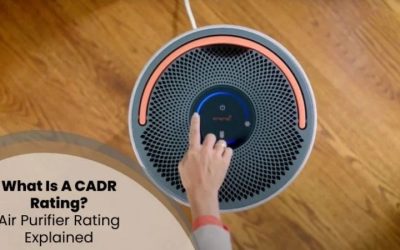
When searching for the best air purifier for mold, Clean Air Delivery Rate (CADR) measures the volume of filtered air delivered per minute in cubic feet per minute (cfm or m³/h). Pollen and dust CADR ratings matter most for airborne spores because fungal particles measure between 2 and 10 microns in width.
Air changes per hour, or ACH, dictate how frequently the entire volume of a room circulates through the mechanical filter every sixty minutes. While standard dust control requires two changes, targeting active spores demands four to five air changes per hour to prevent settling on damp home corners.
Calculating true capacity requires matching the unit CADR to your exact floor area. A room measuring 300 sq ft (27.9 m²) with standard eight-foot ceilings needs a minimum smoke CADR of 200 cfm (340 m³/h) to maintain four air changes every hour without running the internal fan at maximum volume.
Room Clearance, Space Fit, and Optimal Machine Placement
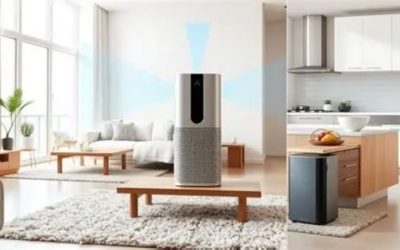
Physical placement determines whether an air cleaner captures airborne spores or merely recirculates stagnant dead zones. Every intake grille requires at least 12 to 18 in (30 to 46 cm) of clearance from walls, heavy drapes, and large wooden furniture to establish proper home air convection currents.
Machine dimensions and total footprint dictate placement options across crowded bedrooms, finished basements, or compact home offices. A typical tower purifier occupies approximately 1.2 sq ft (0.11 m²) of floor real estate, while wider console styles demand double that horizontal floor area.
Always measure your floor space and ceiling height before ordering any mechanical filtration system. Placing high-volume units near persistent moisture sources, like en-suite bathrooms or laundry alcoves, captures damp airborne spores before they travel into living rooms and carpeted hallways.
True HEPA Filtration Standards Versus Harmful Ozone Generators
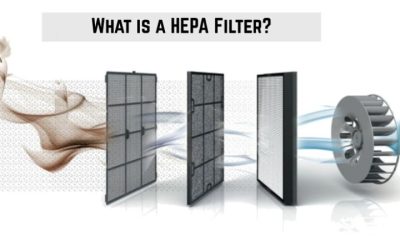
True HEPA filters are mechanically certified to capture at least 99.97% of airborne particles down to 0.3 microns in diameter. Because mold spores generally range from 2 to 10 microns, standard True HEPA media captures them effortlessly through mechanical impaction without harmful chemical outputs.
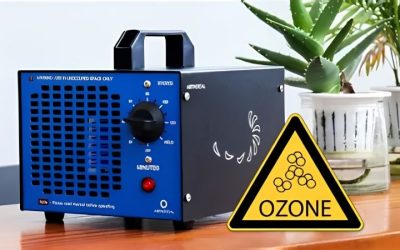
Beware of misleading HEPA-type marketing labels that fail strict mechanical efficiency tests on microscopic spores. Furthermore, avoid standalone ozone generators completely, as lung irritants like ozone damage delicate respiratory tissues while failing to sanitize embedded mold inside structural wood.
Bipolar ionization and electronic plasma features should include independent certifications verifying zero ozone emissions below federal safety limits. When managing mold sensitivities, completely inert mechanical filtration remains the safest, most dependable approach for continuous daily home operation.
Top 6 Air Purifiers for Mold Spores: Field Reviews and Analysis
Selecting the best air purifier for mold involves balancing motor durability, filter replacement expense, and verified cubic airflow volume. The following six models excel in capturing airborne spores across diverse room sizes, combining dense True HEPA media with sturdy long-term operational components.
Coway Airmega AP-1512HH: Reliable Efficiency for Medium Bedrooms
As a standout candidate for the best air purifier for mold, the Coway Airmega AP-1512HH delivers proven airflow across rooms up to 361 sq ft (33.5 m²). Four-stage filtration combines a washable pre-filter, deodorizing carbon, and True HEPA media rated for 99.97% particle capture down to 0.3 microns.
Operating noise remains remarkably quiet, measuring just 24.4 dB on low speed while consuming between 4.9 W and 77 W at full velocity. The particle sensor automatically shifts motor speeds, though the optional Vital Ionizer should be toggled off to avoid producing any incidental trace ozone.
Long-term field durability is outstanding, with fan motors consistently running past three years without bearing squeaks or vibration flaws. A primary drawback is the thin carbon sheet, which neutralizes mild musty smells but saturates quickly under severe chemical vapors or intense mildew environments.
Levoit Core 400S: Smart Connected Airflow for Basements and Living Rooms
The Levoit Core 400S utilizes a 360-degree cylindrical True HEPA filter capable of servicing spaces up to 403 sq ft (37.4 m²) at 4.8 ACH. Its verified smoke CADR of 260 cfm (442 m³/h) rapidly cycles stale basement air, pulling airborne fungal particles into dense, multi-layered fibrous filter media.
Smart capabilities include real-time PM2.5 monitoring, app scheduling, and hands-free voice integration via home automation ecosystems. Noise ranges from an ultra-faint 24 dB on sleep setting up to 52 dB at maximum power, drawing only 38 W of electricity during peak high-speed daily operation.
The barrel design fits cleanly into living room corners, yet replacement filters represent a recurring expense every six to twelve months. Long-term owners note that internal laser dust sensors require quarterly cotton-swab cleaning; otherwise, sensor drift triggers unnecessary high fan acceleration.
Winix 5500-2: Heavy-Duty Carbon and True HEPA for Musty Odors
The Winix 5500-2 shines in damp basements and living areas up to 360 sq ft (33.4 m²), generating a smoke CADR of 232 cfm (394 m³/h). Unlike basic units with thin carbon sheets, this machine features thick, washable activated carbon pellets that physically absorb intense musty household odors.
A certified True HEPA filter traps tiny spores, while PlasmaWave technology breaks down airborne pollutants at molecular levels without high ozone. Sleep mode dims ambient indicator lights and drops fan noise to a quiet 27.8 dB, consuming roughly 70 W when running continuously at top turbo speed.
Its rectangular cabinet measures 15.0 in wide (38.1 cm) and requires ample clearance from rear walls for balanced dual-side air intake. While mechanical reliability is solid, the optical dust sensor is prone to false readings in low light, requiring manual fan control override during nighttime.
Blueair Blue Pure 211+ Auto: High-CADR Air Movement for Open Concepts
Engineered for expansive family rooms and open layouts, the Blueair Blue Pure 211+ Auto covers areas up to 540 sq ft (50.2 m²) at 4.8 ACH. A robust smoke CADR of 353 cfm (600 m³/h) delivers immense air circulation, stripping suspended fungal particles quickly from indoor living air currents.
The system pairs a washable fabric pre-filter with proprietary HEPASilent media, combining electrostatic charge and mechanical filtration efficiency. It consumes between 4 W and 38 W, keeping energy overhead low while generating sound levels between 23 dB on low and 53 dB on highest settings.
While air throughput is exceptional, the HEPASilent technology relies partly on electrical charging, requiring genuine proprietary filter replacements. Furthermore, operating without smart phone connectivity means all automation depends exclusively on a single onboard particle sensor that drifts.
Medify MA-40: Medical-Grade H13 Filtration for Vulnerable Spaces
The Medify MA-40 upgrades filtration to medical-grade H13 True HEPA media, capturing 99.9% of airborne particles down to 0.1 microns. Designed to clean spaces up to 420 sq ft (39.0 m²) at 4.0 ACH, its 187 cfm (318 m³/h) CADR quickly extracts micro-spores from typical bedrooms and home offices.
A dual-sided intake structure pulls air through two modular filter cartridges, shortening the circulation cycle in stagnant, humid environments. Operating power spans 68 W across three fan settings, with sound output varying between 46 dB on lowest speed and 66 dB when operating at maximum speed.
The tempered glass control panel resists scratches and cleans effortlessly, but higher fan speeds generate noticeable motor whine in quiet rooms. Buying two replacement cartridges simultaneously increases ongoing ownership expenses, making off-brand filters tempting despite risking mechanical seals.
Hathaspace HSP002: Comprehensive Multi-Stage Defense for Dense Mold Areas
The Hathaspace HSP002 features a comprehensive five-stage composite filter engineered for large open areas up to 500 sq ft (46.5 m²). Operating with a CADR of 265 cfm (450 m³/h), this purifier utilizes H13 True HEPA alongside a dense cold catalyst filter to dismantle damp organic compounds.
A prominent digital front display reveals numerical PM2.5 readings, transitioning light rings from green to red during sudden air contamination. Sound levels span 30 dB to 60 dB across fan speeds, while energy consumption peaks at 100 W when running its heavy motorized impeller at maximum.
Long-term operation shows robust housing durability, though the composite filter pack represents a substantial financial investment every six months. The optical particulate sensor is sensitive to humid draft currents, occasionally accelerating fan speeds when ambient humidity shifts rapidly indoors.
| Model | Coverage (sq ft / m²) | Smoke CADR (cfm / m³/h) | Filter Grade | Noise Range (dB) | Price Tier |
|---|---|---|---|---|---|
| Coway Airmega AP-1512HH | 361 sq ft (33.5 m²) | 232 cfm (394 m³/h) | True HEPA (99.97%) | 24.4 – 53.8 dB | Mid-range |
| Levoit Core 400S | 403 sq ft (37.4 m²) | 260 cfm (442 m³/h) | H13 True HEPA | 24.0 – 52.0 dB | Mid-range |
| Winix 5500-2 | 360 sq ft (33.4 m²) | 232 cfm (394 m³/h) | True HEPA + Pellets | 27.8 – 54.8 dB | Budget to Mid |
| Blueair Blue Pure 211+ Auto | 540 sq ft (50.2 m²) | 353 cfm (600 m³/h) | HEPASilent Media | 23.0 – 53.0 dB | Premium |
| Medify MA-40 | 420 sq ft (39.0 m²) | 187 cfm (318 m³/h) | Medical-Grade H13 | 46.0 – 66.0 dB | Mid-range |
| Hathaspace HSP002 | 500 sq ft (46.5 m²) | 265 cfm (450 m³/h) | 5-Stage H13 Composite | 30.0 – 60.0 dB | Premium |
How to Select and Maintain a Purifier for Long-Term Mold Defense
Investing in the best air purifier for mold demands understanding operational trade-offs, ongoing filter costs, and humidity dynamics. A quality mechanical cleaner reduces airborne spores substantially, but long-term satisfaction requires disciplined maintenance and realistic home moisture control.
True Cost of Ownership: Replacement Filters and Energy Consumption
Evaluating purchase costs without calculating replacement filters creates an expensive surprise during your first year of ownership. A certified True HEPA filter cartridge costs between $40 and $90, requiring renewal every six to twelve months depending on ambient indoor dust and fungal spore density.
Electricity expenses remain modest for most modern direct-current brushless motors, typically averaging $15 to $40 annually when running continuously. Running purifiers on medium speeds consumes around 25 W to 45 W, balancing high electrical efficiency against consistent air cleaning performance.
Budgeting for filter replacements as an ongoing operational subscription protects air quality while preventing motor burnout from choked media. Opting for third-party uncertified generic filters often creates air bypass gaps, allowing micro-spores to slip straight past internal motor housing seals.
Critical Hardware Failure Points and Maintenance Signals Over Time
Continuous operation under damp environmental conditions exposes internal components to distinct mechanical and electrical stress points. Fan motor bearings can accumulate fine lint or suffer lubricant breakdown after eighteen months, producing low-frequency humming noises and elevated housing heat.
Optical and laser particulate sensors frequently drift over time as fine dust coats internal lenses, skewing automatic mode adjustments. Cleaning sensor apertures every three months with a dry cotton swab ensures accurate detection and prevents purifiers from running unnecessarily at high velocity.
Inspect perimeter rubber gaskets during every filter exchange to ensure a tight, airtight seal against incoming raw air currents. Even a millimeter gap between the filter frame and plastic chassis allows thousands of airborne fungal spores to bypass filtration media and recirculate across the room.
Seasonal Mold Spikes, High Humidity, and Prime Purchasing Windows
Mold spore counts spike dramatically during wet spring thaws and late-summer humidity surges, overwhelming unventilated basement rooms and bathrooms. In addition, autumn rains and early winter weather keep windows shut tight, trapping stagnant indoor air and compounding respiratory spore exposure.
Pairing a mechanical air cleaner with a dedicated compressor dehumidifier is essential, as air purifiers remove spores but cannot reduce moisture. Maintaining relative indoor humidity below fifty percent prevents remaining dormant spores on damp surfaces from germinating into active black colonies.
Major retail events like Amazon Prime Day in late June and Black Friday in late November offer ideal windows to purchase premium air purifiers. Significant promotions during these seasonal sales reduce upfront equipment costs, allowing homeowners to stock extra replacement filters at lower pricing.
Frequently Asked Questions About Air Purifiers and Mold
Homeowners frequently seek clarity regarding how mechanical filtration systems interact with indoor moisture and active fungal growth. Below are direct answers addressing common questions regarding filter maintenance, spore capture efficiency, and proper equipment operation in damp household environments.
Can an Air Purifier Stop Mold from Growing on Walls?
No, an air purifier captures airborne mold spores but cannot eliminate physical mold colonies growing on damp walls, wood, or tile grout. Eliminating structural growth requires cleaning surfaces with antimicrobial solutions, fixing plumbing leaks, and using a dehumidifier to keep indoor humidity under 50%.
How Often Must You Replace HEPA Filters in Mold-Heavy Rooms?
In mold-prone areas like basements, replace True HEPA filters every six months rather than waiting the standard full calendar year. Heavy moisture and dense spores load filter fibers quickly, reducing cubic airflow volume and creating potential musty odor buildup within stagnant carbon layers.
Should You Run an Air Purifier Continuously for Mold?
Yes, operating your air cleaner continuously on low or medium speed is necessary to maintain low airborne mold spore concentrations. Because mold spores are released intermittently and remain suspended for hours, intermittent fan usage allows spore concentrations to surge between runtime cycles.
See More:
- Best eyeshadow blender brush
- Best frozen foods for air fryer
- Best frozen food for air fryer
- Best way to reheat steak in air fryer
- Best air fryer recipes book
Final Verdict on the Best Air Purifier for Mold
Choosing the best air purifier for mold protects living spaces from circulating fungal spores, provided the unit features verified True HEPA filtration and appropriate CADR airflow. For medium bedrooms and offices, the Coway Airmega AP-1512HH remains the top recommendation due to its quiet motor and low energy use.
For expansive spaces or damp basements, units like the Levoit Core 400S or Winix 5500-2 provide the high airflow velocity and pelletized carbon needed to clear stale odors. Measure your room dimensions carefully, keep relative humidity below fifty percent, and change your filter media consistently each year.
Deploying the best air purifier for mold creates cleaner indoor breathing zones, but remember that mechanical filtration cannot substitute for structural moisture repair. Always address underlying water leaks, maintain proper air circulation, and consult medical professionals regarding persistent allergies.