Key takeaways
What's inside
Winix review articles often highlight how these popular air purification systems balance advanced filtration technology with everyday home usability. Finding a reliable appliance to manage indoor allergens, pet dander, and household odors requires a close look at verified specifications like CADR ratings and True HEPA filtration performance. This guide evaluates top models to help you choose the right air cleaning solution for your living space without falling for marketing hype or hidden subscription costs.
As an Amazon Associate we earn from qualifying purchases.
By Daniel Foster
Top Winix Air Purifier Models Compared
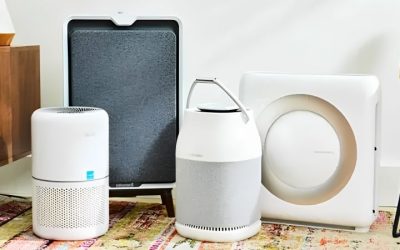
The market offers several variants designed for different room dimensions and user needs, making it essential to compare core specifications directly.
Winix 5500-2 Air Purifier
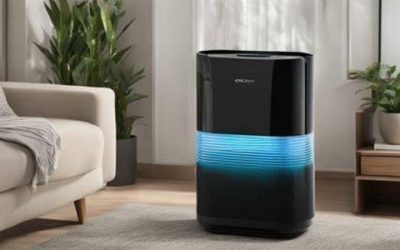
The Winix 5500-2 remains one of the more established options in the mid-range air purifier category because it combines relatively strong particle filtration with practical automatic controls and a multi-stage filtration architecture. Rather than relying on a single filter layer, the system is designed around several complementary stages that address different types of indoor contaminants.
At the center of the filtration system is a True HEPA filter designed to capture up to 99.97% of particles at 0.3 microns under the applicable test conditions. This makes the unit particularly relevant for households concerned about airborne dust, pollen, pet dander, and other fine particulate matter. A washable or reusable pre-filter helps intercept larger debris such as hair and visible dust before it reaches the HEPA layer. This preliminary stage is important because removing larger particles early can help reduce the loading rate of the more expensive primary filter.
Winix C545 Smart Air Purifier
The Winix C545 takes a slightly different approach by combining conventional particle filtration with smart-home connectivity. It is particularly attractive to users who want to monitor or control an air purifier without physically interacting with the device every time indoor conditions change.
Its filtration architecture is designed to handle common residential particles such as dust, pollen, and pet-related allergens. A pre-filter captures larger debris, while the primary particle filter handles finer airborne material. An activated-carbon component provides additional odor-control capability, making the C545 suitable for bedrooms, apartments, offices, and other medium-sized residential spaces.
Winix Zero-S Air Purifier
The Winix Zero-S is designed for consumers who need stronger airflow and broader room coverage than a compact bedroom purifier can provide. Its primary advantage is the combination of substantial air movement and multi-stage filtration, making it more appropriate for larger bedrooms, living rooms, family rooms, and other frequently occupied spaces.
Its filtration system is designed to address multiple categories of indoor contaminants. The pre-filter captures larger particles, the primary high-efficiency filter targets fine particulate matter, and the odor-control stage provides additional assistance with household smells and certain gaseous contaminants.
For larger rooms, airflow becomes just as important as filter efficiency. Even an extremely efficient filter cannot clean an entire room quickly if the purifier does not move enough air through that filter. This is why CADR is such an important specification when comparing models intended for larger spaces.
The Zero-S can be particularly useful in homes where occupants want relatively rapid circulation after cooking, cleaning, or other activities that temporarily increase airborne particles. Running the purifier at a higher setting can increase the volume of air processed per hour, while lower settings may be more appropriate for overnight use.
Winix 9800 Ultimate Air Purifier
The Winix 9800 occupies the higher-capacity end of the product range and is intended for consumers dealing with larger rooms or more demanding air-cleaning requirements. Its larger physical dimensions and stronger airflow system make it particularly relevant to open living spaces where a compact purifier may struggle to circulate sufficient air.
The filtration system combines multiple stages to address both particles and odors. The primary particle filter is designed to capture fine airborne material, while the pre-filter helps protect the main filter from larger debris. An odor-control layer adds another level of filtration for household smells and certain gaseous contaminants.
Winix T200 Compact Air Purifier
The Winix T200 focuses on portability and small-space operation. It is better suited to individual bedrooms, dormitories, compact home offices, and other areas where floor space is limited.
Its smaller housing makes placement easier, particularly in rooms where a full-sized floor purifier would occupy too much space. Users can position the unit in a convenient location while maintaining adequate clearance around the air intake and exhaust.
Despite its compact dimensions, the T200 uses a multi-stage filtration approach with a high-efficiency particle filtration layer. This allows it to target common indoor allergens and airborne particulate matter without requiring the physical footprint of a larger machine.
Winix Zero Pro Air Purifier
The Winix Zero Pro is designed for consumers who place greater emphasis on airflow capacity, sensor functionality, and robust construction. It can be particularly attractive in urban households where airborne particulate exposure may be elevated due to traffic, construction, cooking, or other environmental sources.
Its multi-stage filtration system is designed to separate different types of contaminants. Larger particles are intercepted before reaching the primary filtration layer, while the high-efficiency filter addresses finer particulate matter. Odor-control media provide additional support for households where smells and gaseous pollutants are a concern.
Sensor functionality is especially useful when the purifier operates in automatic mode. Rather than running continuously at a predetermined fan speed, the unit can respond to detected changes in indoor air conditions. This can help balance cleaning performance, noise, and energy consumption.
Essential Buying Criteria for Air Cleaners
Selecting the right air purifier requires more than comparing brand names or advertised room-size numbers. Real-world performance depends on a combination of airflow, filtration efficiency, room dimensions, operating speed, noise, maintenance requirements, and long-term ownership costs.
A useful purchasing process starts by identifying the primary indoor-air problem. A household primarily concerned with pollen and dust may prioritize high particle CADR and efficient particulate filtration. A home with persistent odors may require additional activated carbon. A large open-plan space may require considerably more airflow than a small enclosed bedroom.
CADR Ratings and Room Coverage
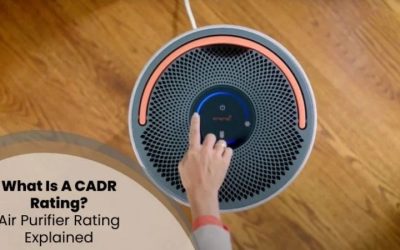
Clean Air Delivery Rate (CADR) is one of the most important specifications for comparing air purifiers because it combines airflow with filtration performance. In simple terms, a higher CADR generally means that the purifier can deliver a greater quantity of cleaned air within a given period.
Manufacturers commonly provide CADR values for different particle categories, such as smoke, dust, and pollen. These figures can help consumers compare models more objectively than relying on vague descriptions such as “powerful filtration” or “ideal for large rooms.”
Filtration Stages and True HEPA Standards
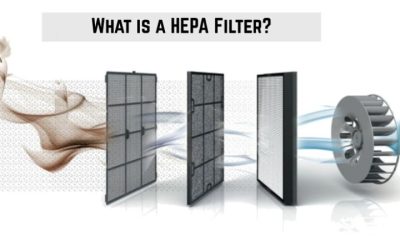
Filtration architecture is another fundamental consideration. A typical multi-stage purifier may use a pre-filter, high-efficiency particle filter, and activated-carbon layer, with each stage performing a different function.
The pre-filter is designed to capture larger material such as hair, lint, and coarse dust. Regular cleaning of this layer is important because excessive buildup can restrict airflow and place additional resistance on the system.
A True HEPA filter is designed to capture a very high percentage of particles at the specified test particle size. The commonly cited 99.97% figure refers to particles around 0.3 microns under standardized testing conditions. It should not be interpreted as meaning that every particle of every size is removed with exactly the same efficiency.
Operating Noise and Energy Consumption
Noise becomes particularly important when an air purifier operates in a bedroom, nursery, study area, or home office. A purifier that is technically powerful but unpleasantly loud may be used less frequently, reducing its real-world effectiveness.
Manufacturers may provide decibel ratings at different fan speeds, so consumers should examine the operating conditions behind the stated figure. The lowest fan setting may be extremely quiet while the maximum setting produces substantially more noise.
Filter Replacement and Long-Term Maintenance
Filter replacement is one of the most commonly overlooked costs when purchasing an air purifier. The initial device price represents only part of the total investment. Depending on the model and operating environment, users may need to purchase replacement filters periodically throughout the purifier’s service life.
Filter lifespan is affected by operating hours, indoor pollution, pets, smoking, cooking, outdoor particulate levels, and the effectiveness of the pre-filter. A household with multiple pets may load a filter substantially faster than a single-occupant home with minimal dust.
Before purchasing, check the availability and price of replacement filters. A purifier that is inexpensive to buy but expensive to maintain may become significantly more costly over several years.
Market Context & Seasonal Considerations
The air purifier market is strongly influenced by seasonal changes in outdoor air quality, allergy cycles, wildfire activity, consumer awareness, and major retail promotions. Understanding these patterns can help buyers choose the right equipment before demand peaks.
Seasonal Allergy Peaks and Wildfire Smoke
Spring and early summer can bring significant pollen exposure in many regions, while wildfire smoke can create severe particulate pollution during periods of elevated fire activity. These events often produce sudden increases in consumer demand for air purifiers.
Indoor air quality can deteriorate even when doors and windows remain closed because outdoor particles can enter through ventilation systems, gaps around doors and windows, and normal household activity. Fine smoke particles are particularly difficult to manage without adequate filtration and sufficient airflow.
Retail Sales Events and Total Cost of Ownership
Timing a purchase around major retail promotions can reduce the upfront cost of an air purifier. Large shopping events, seasonal promotions, back-to-school campaigns, and late-year holiday sales frequently generate discounts across home-electronics categories.
However, consumers should avoid choosing a purifier solely because it has the largest percentage discount. A lower-priced model that is poorly matched to the room may ultimately provide less value than a slightly more expensive purifier with substantially better airflow and lower long-term maintenance costs.
Total cost of ownership should include the purchase price, electricity consumption, replacement filters, and expected service life. If two models have similar upfront prices but one requires substantially more expensive filters, the difference can become significant over several years.
See More:
- Best eyeshadow blender brush
- Best frozen foods for air fryer
- Best frozen food for air fryer
- Best way to reheat steak in air fryer
- Best air fryer recipes book
Conclusion
Conducting a thorough Winix review highlights the importance of matching CADR specifications, filter types, and room dimensions to your specific living environment. Whether you choose a compact model like the T200 or a high-capacity unit like the 9800, evaluating real operational costs and filter lifecycles ensures clean air and lasting value. Always measure your space accurately and check current pricing on Amazon before finalizing your purchase.