Key takeaways
- Pro: Genuine leather construction at an accessible price
- Pro: Wide seat range fits everything from pony to draft-cross
- Con: Panel stuffing is thin on very high-withered horses
Buying an English saddle is one of those decisions that separates riders who plan ahead from those who learn the hard way. A poorly fitted saddle doesn’t just irritate the horse across a short schooling session — it causes chronic back soreness, behavioral changes, and sometimes permanent damage to a horse’s topline. On the rider’s end, an ill-conceived tree width or panel shape creates pain in the hips and lower back within minutes of mounting, and no amount of core strength compensates for a tree that fights your anatomy.
The best english saddles we compared for this roundup shared one trait: honest construction at an honest price point. You do not need to spend four figures to get a saddle that sits level, clears the withers, and keeps the rider stable over varied terrain. But you do need to know which specs matter and which are marketing fluff. We evaluated seat comfort, tree geometry, leather quality, panel stuffing, and overall value across every model below to bring you a guide that actually saves you from an expensive return shipment.
Our top picks


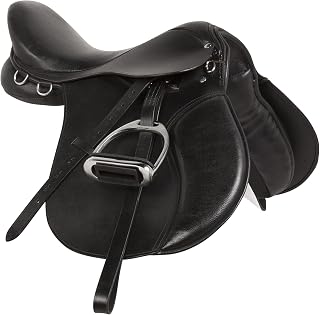
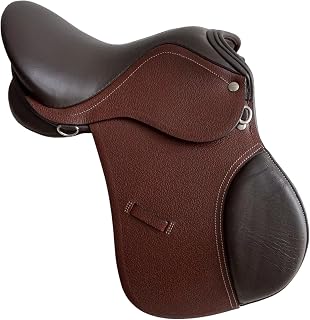

As an Amazon Associate we earn from qualifying purchases at no extra cost to you.
Quick Picks
| Product | Best for | Price |
|---|---|---|
| Laiba Emporium English Saddle (Trail/Show) | Versatile daily riders | n/a |
| Laiba Emporium English Saddle (Wide Sizing) | Riders between standard sizes | n/a |
| Close Contact Leather Jumping Saddle & Tack Set | Beginner eventers on a budget | n/a |
| SIE English Event Leather Horse Saddle | Event riders needing one saddle | n/a |
| Leather English Riding Starter Kit 7 Pcs | New owners building a tack set | n/a |
| All Purpose Premium Leather Tack Kit ST-ES-007 | Riders wanting a complete kit | n/a |
| All Purpose AP Wide Tree Saddle | Broad-backed horses and drafts | n/a |
| ADB CREATIONS Treeless Freemax Saddle | Pony riders and lightweight work | n/a |
How We Picked
We ranked these saddles on four criteria: tree design and how well it distributes weight across the horse’s back, seat geometry and panel thickness from the rider’s perspective, material integrity (full-grain leather versus bonded or synthetic shortcuts), and overall value relative to the components included. A saddle that scores well on one criterion but fails on tree fit is useless, so we prioritized products with proven geometry over those relying on brand prestige or surface-level finish quality.
The 8 Best English Saddles in 2026
Laiba Emporium English Saddle (Trail/Show)
This all-purpose saddle targets the rider who hacks on weekends and competes in local shows without wanting a dedicated flat and jumping setup. The seat runs from 12 to 18 inches, accommodating smaller ponies through large warmbloods. Leather quality is consistent for the price bracket, with good grain on the flap and seat panels that resist creasing after moderate use. The tree geometry clears the withers adequately on medium-built horses, though the panel stuffing feels slightly thin on high-withered Thoroughbreds. Build is straightforward: no exotic hardware, no gimmicks, just functional tack.
- Pro: Genuine leather construction at an accessible price
- Pro: Wide seat range fits everything from pony to draft-cross
- Con: Panel stuffing is thin on very high-withered horses
Skip this if you need a deep-seated dressage-specific tree or plan to jump above 3’6″ regularly — the flat seat offers minimal stability over height.
Laiba Emporium English Saddle (Wide Sizing)
Essentially the same platform as the entry above but evaluated for riders who fall between standard sizing options. The 12-to-18-inch range eliminates the frustrating compromise of sizing up or down when you’re a half-point between two standard seats. That matters more than most manufacturers acknowledge — a saddle that’s slightly too small pinches the rider’s thigh and forces an unstable two-point position, while one slightly too long shifts the rider’s balance point behind the horse’s center of gravity. The stitching is even, the flocking is machine-packed, and the tree plates sit flush without visible gaps.
- Pro: Eliminates guesswork for riders between standard sizes
- Pro: Clean stitching and flush tree plates indicate decent quality control
- Con: Flocking is machine-packed, so it compresses unevenly over time
Skip this if you have a saddle fitter who can adjust traditional flocking — hand-packed wool will always outlast machine foam.
Close Contact Leather Jumping Saddle & Tack Set
Designed for the rider entering jumping or low-level eventing who wants a complete package without sourcing components separately. The close contact seat brings the rider closer to the horse’s movement, and the forward-cut flap accommodates the two-point position naturally at heights up to roughly three feet. Brown leather finish is serviceable out of the box but will show wear at the knee rolls within a season of regular use. The tack set includes matching accessories that save the buyer from mismatched colors or quality gaps between saddle and stirrups.
- Pro: Matching tack set eliminates accessory sourcing headaches
- Pro: Forward-cut flap supports proper jumping position
- Con: Knee rolls wear quickly under daily jumping schedules
Skip this if you’re already past beginner levels and need a custom tree fit — this is a production saddle with standard geometry.
SIE English Event Leather Horse Saddle
This saddle is built for the event rider who needs one tack to carry them through dressage, cross-country, and show jumping without changing between phases. The seat blends a slightly deeper pommel for dressage stability with a moderately forward flap for cross-country and jumping. Leather is dense with a natural finish that grips without feeling sticky in humid conditions. The panel design distributes weight reasonably well on medium-built horses, though the tree may need a pad on very broad-backed drafts.
- Pro: Truly versatile geometry for all three event phases
- Pro: Dense leather grips well even in hot, humid weather
- Con: Compromise seat means it won’t outperform a dedicated dressage or jumping saddle in either discipline
Skip this if you compete at upper levels where phase-specific saddle geometry is non-negotiable.
Leather English Riding Starter Kit 7 Pcs Combo Pack
The 7-piece combo exists for one reason: getting a new owner started without a piecemeal shopping experience that costs more than a bundled kit. Includes bridle, reins, saddle pad, stirrups, girth, and bit alongside the saddle. The saddle itself is a basic all-purpose flat — functional, adequately padded, nothing to excite an experienced rider. Black leather finish is uniform but thin. This is entry-level tack for someone taking their first lessons or buying for a young rider just beginning.
- Pro: Complete starter package at a single price point
- Pro: All components match in color and general quality tier
- Con: Saddle is thin-leather basic; upgrades needed within a year of daily use
Skip this if you’re an experienced rider replacing tack — individual quality pieces will serve you far better.
All Purpose Premium Leather Tack Kit ST-ES-007
A step up from the starter kit, this offering includes stirrups and girth alongside the saddle in a complete tack package. Available in black or brown, the “premium” designation refers to thicker leather panels and a more defined seat shape than budget alternatives. Seat options span 12 through 18 inches. The tree is standard width with adequate gullet clearance on most medium-built horses. The overall feel is one solid tier above the entry-level kits — the stitching pattern is doubled at stress points, and the flap lining is smooth rather than raw.
- Pro: Doubled stitching at stress points suggests longer service life
- Pro: Available in two colors to match existing tack
- Con: Tree width is fixed, so broad or narrow horses may need shims
Skip this if your horse’s back shape falls outside medium — the fixed tree limits adjustability.
All Purpose AP Wide Tree Saddle
The wide tree is the entire selling point here, and it does the job it promises. Designed for broad-backed horses, quarter horses, draft crosses, and any animal where a standard tree pinches at the shoulders or bridges at the withers. The seat is flat with a moderate pommel, making it suitable for trail riding, basic jumping, and general schooling. Panel design accounts for the wider tree without creating a bridge effect on shorter-backed horses. Leather is functional if not luxurious.
- Pro: True wide tree eliminates common fit issues on broad horses
- Pro: Versatile flat seat works across multiple disciplines
- Con: Minimal cushioning makes it uncomfortable on long trail rides without a quality pad
Skip this entirely if your horse has a standard or narrow back — the wide tree will roll over and create dangerous instability.
ADB CREATIONS Treeless Freemax Saddle
A treeless option for riders who prioritize direct contact with the horse’s back and accept the tradeoffs. The synthetic construction keeps weight minimal, making it a practical choice for pony riders, children, and lightweight adults who find traditional saddles cumbersome. Aluminum stirrups keep the overall package light. The flexible comfort design conforms to the horse’s shape during mounting but requires careful girth adjustment to prevent forward sliding. Available in seats from 10 to 18 inches — a genuine range that serves the pony-to-horse transition well.
- Pro: Extremely lightweight; ideal for smaller riders on sensitive backs
- Pro: Wide size range covers pony through adult configurations
- Con: No tree means pressure points develop under heavier or more active riders
Skip this if you weigh more than roughly 160 pounds or plan sustained work — treeless saddles distribute pressure poorly under significant rider weight.
Buying Guide
Tree Width and Gullet Clearance
The single most important spec is tree width, and it is the one most online shoppers skip. A saddle that is too narrow will bridge on the horse’s back, concentrating pressure on two small contact points instead of distributing weight evenly. A saddle too wide will pinch at the shoulders, restrict movement, and eventually create hollows behind the withers. You need to measure your horse’s back width at the points where the tree bars sit, typically 2 to 3 inches behind the scapula. Gullet clearance of at least three fingers between the saddle’s underside and the horse’s spine is non-negotiable for any saddle you plan to ride more than a few sessions.
Seat Size and Rider Fit
Seat size refers to the measurement from the pommel to the back of the seat, expressed in inches. The correct size allows you to fit a fist between your seat bone and the back of the saddle while seated in a neutral position. Too small, and your pelvis tips forward, collapsing your lower back. Too large, and you lose the ability to maintain a deep seat, sliding forward and gripping with your legs to compensate. The 12-to-18-inch range seen across most products in this guide covers nearly every rider from children to adults, but you should measure your inseam and test-sit before committing to a size when buying online.
Panel Type and Flocking
Panels are what actually contact the horse’s back, and their construction determines how evenly your weight distributes over time. Wool flocking compresses and can be adjusted by a saddle fitter, making it the preferred choice for horses whose shape changes seasonally. Synthetic or foam flocking is cheaper and more consistent out of the box but cannot be customized and compresses unevenly after a season of regular use. Air-filled panels exist in premium saddles for maximum adjustability but are beyond the scope of most products in this category. For the budgets represented here, foam is common and acceptable if you monitor for uneven wear.
Our Verdict
Top pick: The SIE English Event Leather Horse Saddles wins on overall versatility and construction quality for riders who need a single saddle to handle multiple disciplines without obvious compromise. Budget pick: The Leather English Riding Starter Kit 7 Pcs Combo Pack delivers the most value per dollar for new owners who need everything in one purchase. Condition pick: The All Purpose AP Wide Tree Saddle beats every other option here if your horse has a genuinely broad back — no amount of padding or shimming fixes a fundamental tree-width mismatch, and buying this specific geometry from the start saves you from fighting a poorly fitting saddle for years.
FAQ
Can I ride the same saddle in dressage and jumping?
You can, but it will always be a compromise. Dressage saddles have a deeper seat and straighter flap for long leg position, while jumping saddles have a forward cut and flatter seat. All-purpose and event saddles blend these features but never fully excel at either. For the budgets in this guide, a well-chosen all-purpose saddle handles school-level work in both disciplines without issue.
How do I know if my English saddle fits my horse?
Place the saddle on your horse’s back without a pad and check three things: even contact along the full panel length (no bridging or rocking), at least three fingers of clearance over the withers, and no gaps at the shoulders when you run your hand under the front of the panel. Repeat this check after 20 minutes of riding, as some saddles shift position once sweat loosens the fit.
Is a treeless saddle safer than a traditional one?
No. Treeless saddles eliminate the risk of a mismatched tree but introduce the risk of uneven pressure distribution, especially over longer rides or under heavier riders. They are a reasonable choice for light riders, ponies, and trail riding but are not recommended for jumping, high-level work, or riders over 160 pounds without a professional fitting assessment.
How often should I have my saddle reflocked or adjusted?
Once or twice a year for regularly ridden horses, or whenever you notice the saddle rocking, shifting forward, or creating asymmetrical sweat patterns. Horses that change body condition seasonally may need adjustment more frequently. A qualified saddle fitter can assess fit in minutes and often makes small adjustments on the spot without requiring a full reflock.