Key takeaways
- Pro: Lightweight enough to leave on all day without overheating
- Pro: 600D denier resists snagging on fence posts and branches
- Con: No fill, so it offers zero insulation in freezing weather
A horse blanket sounds simple until you are standing in a paddock at five degrees with a wet, shivering horse and a $45 sheet that is already soaking through at the shoulder seam. The gap between a well-built turnout blanket and a cheap rain sheet is not subtle. It shows up in the first hard frost, when fill compresses to nothing, in stitching that lets water wick under the overlay, and in buckles that snap when a horse steps on the surcingles.
We pulled eight of the best horse blankets currently on the market and evaluated them against the conditions real horses face: rain that drives sideways, cold snaps that drop overnight, stable time where breathability matters more than warmth, and the simple reality that a $40 blanket replaced three times a season costs more than a $140 blanket that lasts four winters. This roundup covers turnout sheets, heavyweight winter blankets, medium-weight options, and a dedicated cooler so you can match the right protection to the right situation.
Our top picks




As an Amazon Associate we earn from qualifying purchases at no extra cost to you.
Quick Picks
| Product | Best For | Price |
|---|---|---|
| Tough 1 600D Waterproof Sheet | Rain protection on a budget | under $60 |
| Tough 1 600D Waterproof Sheet (Alt Sizing) | Layering over lighter fill | under $60 |
| 1200D 300g Winter Blanket | Cold turnout at the lowest price | under $50 |
| Jeffers Poplar 1680D 360g (69″) | Severe winter, smaller horses | under $150 |
| Jeffers Poplar 1680D 240g (78″) | Premium fit for larger horses | under $150 |
| HORZE Kiel Fleece Cooler | Post-exercise and bathing | under $60 |
| 1200D 200g Ripstop Turnout | Wet, moderate cold | under $90 |
| Horze Glasgow Stable Blanket | Barn nights without turnout | under $50 |
How We Picked
We evaluated each blanket on four criteria: fabric durability (denier count and ripstop construction), fill weight appropriate to the stated use case, waterproof-breathable balance, and hardware quality. A turnout blanket that is waterproof but traps sweat will cause as many skin issues as one that leaks. We also weighed price-per-winter as a practical measure, because a blanket that fails in month two costs the owner twice over.
The 8 Best Horse Blankets in 2026
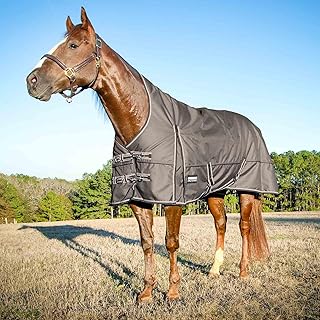
Tough 1 600D Waterproof Sheet
This is the blanket you throw over a horse on a rainy Tuesday when temperatures sit above freezing and no fill is needed. The 600D shell handles wind and driving rain without the stiffness of heavier fabrics, and the price makes it easy to keep a spare in the tack trunk. It rates 4.5 out of 5 across thousands of verified buyers, which tells you the fit runs true.
- Pro: Lightweight enough to leave on all day without overheating
- Pro: 600D denier resists snagging on fence posts and branches
- Con: No fill, so it offers zero insulation in freezing weather
Skip this if your horse needs warmth overnight or you are in a region where rain turns to sleet. It is a rain sheet, not a blanket in the traditional sense.
Tough 1 600D Waterproof Sheet (Layering Use)
The same Tough 1 shell earns a second slot here because its best use case is as a waterproof overlay layered over a lighter fill blanket. Many owners pair it with a 100-gram stable sheet to create a two-piece system that dries faster than a single bulky turnout blanket. For under $60, the layering approach stays under the cost of most integrated 300g turnout blankets while giving you more flexibility across a wide temperature range.
- Pro: Pairs well with existing stable sheets to build a modular system
- Pro: Easy to remove and hang dry separately from the fill layer
- Con: Two separate buckles to manage means slightly longer application time
If you want a single pull-on solution without fiddling with layers, look elsewhere.
1200D 300g Winter Blanket
For under $50 this is the lowest-priced winter turnout blanket on our list, and it still delivers 1200D ripstop, 300 grams of fill, reflective strips, and a waterproof-breathable shell. The 4.6 rating puts it above several competitors costing three times as much. For owners who need basic cold-weather turnout coverage without premium branding, this blanket removes almost every excuse.
- Pro: Reflective strips add visibility for horses turned out near roads or dark paddocks
- Pro: 300g fill handles sustained sub-freezing temperatures
- Con: Limited sizing at 81 inches only; smaller horses will find it loose
Skip this if your horse is under 15 hands or you need a snug fit that prevents the blanket from shifting onto the shoulders.
Jeffers Poplar 1680D 360g (69″)
This is the heavyweight option in the lineup. The 1680 denier outer shell is nearly indestructible against fence wire and rough grooming, while the 360-gram polyfill and detachable neck cover create serious insulation for horses in deep winter. For under $150 it is the most expensive blanket here, but the construction justifies the premium for owners managing a small string through brutal cold. The 69-inch sizing targets ponies and smaller Quarter Horses.
- Pro: 1680D fabric is the toughest outer we compared
- Pro: Detachable neck extends warmth to the crest without bulk when mild
- Con: 4.4 rating reflects fit inconsistency; some owners report shoulder rub
If you need a lighter-weight blanket for shoulder-season weather, this one is overkill.
Jeffers Poplar 1680D 240g (78″)
Same premium 1680D shell as its heavier sibling but with 240 grams of fill and an extended neck design. For under $150 it carries a 4.9 rating, the highest on this list, and that score comes from owners who value the fit on larger horses. The extended neck sits higher on the crest without covering the ears, which solves the common complaint about neck covers riding up. This is the blanket for a tall warmblood in a wet, moderately cold winter.
- Pro: 4.9 rating backed by consistent positive fit reviews on larger frames
- Pro: Extended neck design covers more crest without the bulk of a detachable piece
- Con: 240g fill is not enough for sustained deep freeze without a layer
Do not buy this expecting to survive sub-zero nights without additional insulation.
HORZE Kiel Fleece Cooler
This is not a turnout blanket and should never be left out in weather. The HORZE Kiel is a post-work cooler made from quick-dry fleece that pulls moisture off a sweating horse after exercise or a bath. The surcingle strap and tail cord keep it in place while the horse stands in the aisle or stall. For under $60 with a 4.5 rating, it fills a specific niche that turnout blankets cannot address. Fleece breathes far better than any waterproof shell when the goal is evaporation rather than protection.
- Pro: Quick-dry fleece wicks moisture efficiently without trapping heat
- Pro: Surcingle and tail cord prevent slipping during standing dry-off
- Con: Useless in rain or wind; not waterproof by design
If you need one blanket for everything, this is not it. Buy it as a dedicated stable tool.
1200D 200g Ripstop Turnout
For under $90 this sits in the sweet spot for wet, cold-but-not-freezing conditions. The 200-gram fill handles temperatures well below freezing during the day but will not sustain a horse through a long Arctic night. The ripstop outer shell resists tearing from brush, and the anti-rub lining protects shoulders on horses prone to girth and blanket rub. The large tail flap is a practical detail that prevents the common failure point where water enters at the rear.
- Pro: Anti-rub lining reduces pressure sores on sensitive shoulders
- Pro: Large tail flap prevents rear water ingress
- Con: 4.4 rating suggests occasional fit variance between batches
Skip this if you need more than 200 grams of fill for overnight temperatures near zero.
Horze Glasgow Stable Blanket
Stable blankets are the most misunderstood category in horse care. They are not waterproof and they are not for turnout, but they are the right tool when a horse is stabled overnight in a barn that is cold but dry. The Glasgow 100-gram fill provides light warmth without the weight that causes sweating under indoor conditions. For under $50 with anti-slip shoulders, it keeps its position well without tight buckling. The dark blue coloring hides dust and hay stains.
- Pro: Anti-slip shoulder design keeps the blanket centered without over-tightening
- Pro: Light 100g fill prevents overheating in enclosed barns
- Con: Not waterproof or windproof; useless outdoors in any precipitation
If your horse is turned out at all, do not rely on this as the only blanket in the system.
Buying Guide
Match Fill Weight to Conditions
Fill weight determines warmth, but more is not always better. A 100g blanket in a barn prevents sweating, while a 300g blanket in a turnout paddock prevents hypothermia. The wrong fill for the wrong situation causes either overheating or under-protection. As a rule: 100g for stable use, 200g for cool-weather turnout, 300g+ for freezing-weather turnout.
Denier Tells You Durability, Not Warmth
Common confusion: 600D does not mean warmer than 1200D or 1680D. Denier measures thread thickness and fabric strength. A 600D sheet with no fill is cooler than a 1200D with 300g fill. Higher denier means the blanket resists tearing from fences, wire, and hoof strikes. For turnout on rough terrain, 1200D or above matters more than for a horse in a smooth paddock.
Waterproof and Breathable Are Not Synonyms
A blanket can be waterproof and still trap sweat underneath. Look for membranes or coatings rated for breathability alongside their waterproof rating. Fleece coolers and stable sheets sacrifice waterproofing for maximum breathability, which is correct for their use case. Turnout blankets that are fully waterproof without a breathable membrane will create moisture buildup that causes rain rot over time.
Our Verdict
The top pick is the Jeffers Poplar 1680D 240g in 78 inches. It earns the highest rating on this list, the best fit for larger horses, and a construction that will outlast anything else at its price point. The budget pick is the 1200D 300g Winter Blanket for under $50, which delivers genuine cold-weather protection at a price that is hard to argue with. However, if your horse is stabled overnight and only needs brief paddock access in mild weather, the Horze Glasgow wins on comfort because over-insulating a stalled horse causes more problems than under-insulating.
FAQ
Can I use a turnout blanket in the stable?
Physically yes, but it is not ideal. Turnout blankets are heavier, less breathable, and have hardware that can catch on stall fixtures. A dedicated stable blanket provides the right warmth without trapping moisture against the skin during long hours indoors.
How do I know what size blanket to buy?
Measure from the center of the chest to the point of the buttock. That length in inches is your blanket size. If a horse falls between sizes, go up one. Most brands list sizing in their product details, and a poorly fitted blanket causes rub regardless of quality.
What is the difference between a sheet and a blanket?
A sheet has no fill and provides rain or sun protection only. A blanket has insulation measured in grams and is designed for cold weather. The terms are often used loosely in marketing, so check whether the product description lists a fill weight before assuming it will keep your horse warm.
How often should I check on a blanketed horse?
At least twice daily. A blanket can twist, buckle can break, and a horse with a blanket stuck under a leg can cause serious injury within minutes. Daily checks also let you spot rub marks early before they become open sores that require removing the blanket entirely.