Best gaming monitor decisions hinge on three numbers most listings bury: refresh rate, response time and panel type. Choosing the best gaming monitor for your setup means balancing those against resolution, your GPU and your desk depth, so this roundup keeps the focus on the specs that change how a game actually feels in your hands.
As an Amazon Associate we earn from qualifying purchases.
Our top picks


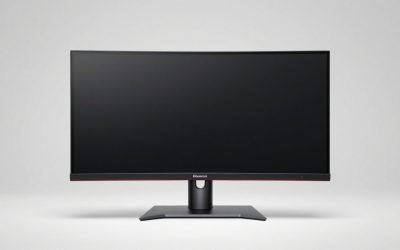
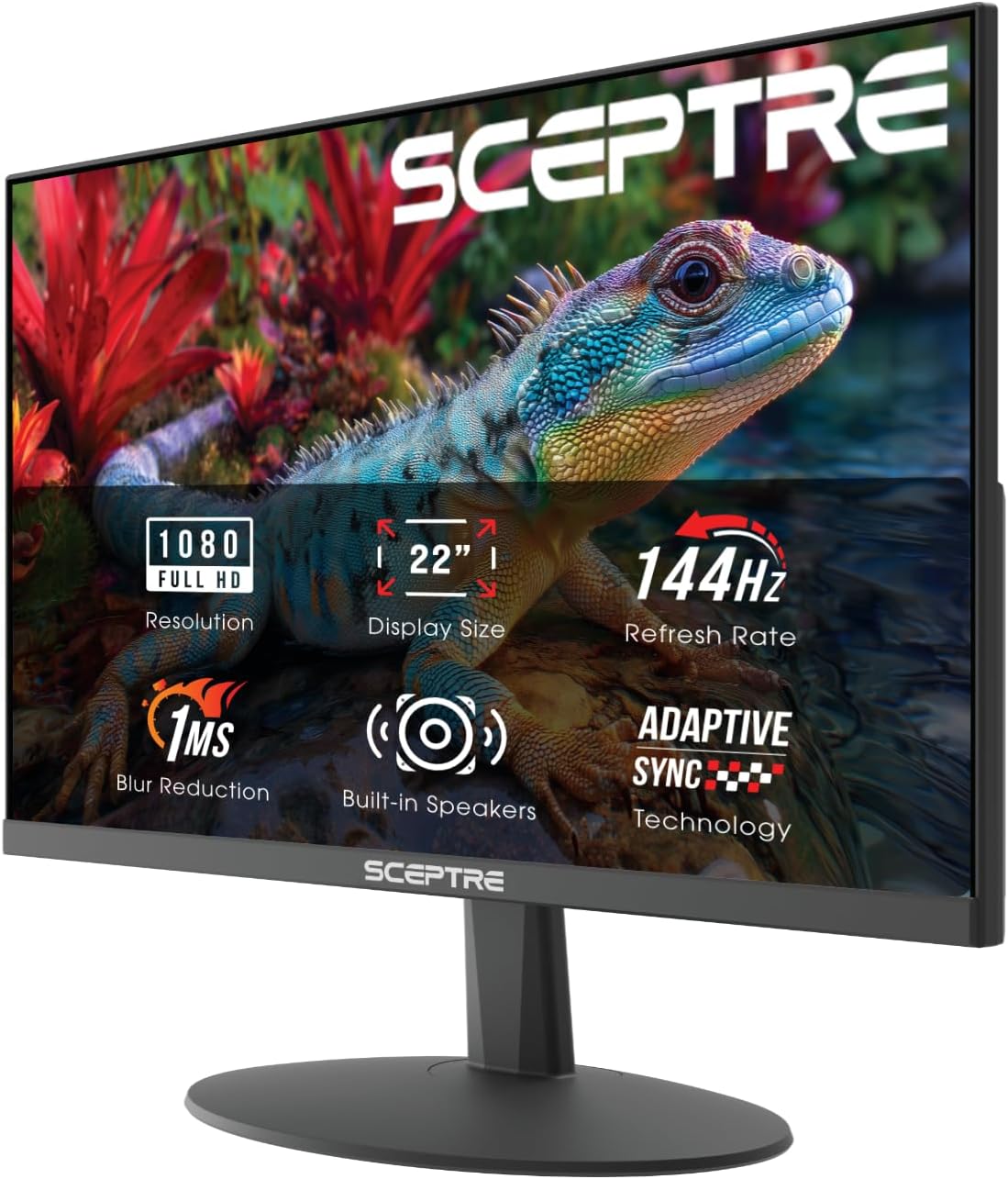 Sceptre New 22-Inch Gaming Monitor
- Aspect Ratio: 16:9
- Screen Finish: Matte
- Contrast Ratio: 2000:1
Up to 144Hz refresh rate smooths fast-motion gaming
Built-in speakers skip the need for external ones
Blue-Light Shift technology eases long-session eye strain
22-inch size may feel small for multitasking setups
Resolution caps at 1080p despite the high refresh rate


 Acer 27in FHD 1920x1080 IPS 120Hz Gaming
- Aspect Ratio: 16:9
- Screen Finish: Matte
- Contrast Ratio: 100000000:1
99% sRGB coverage keeps colors accurate for creative work
Adaptive-Sync support reduces screen tearing during gaming
1ms response time cuts down on motion blur
Resolution is limited to 1920x1080 at 27 inches
Brightness is rated at 250 nits, a modest level

As an Amazon Associate we earn from qualifying purchases at no extra cost to you.
By Daniel Foster
Top Best Gaming Monitor Picks for Every Budget
These seven screens span competitive 1080p speed demons to premium 4K OLED panels. Each entry names the real trade-off, since no monitor maxes out speed, resolution and price at once. Amazon pricing swings often, so confirm the live listing before buying any model in the table below.
| Model | Size / Res | Refresh | Panel | Best for |
|---|---|---|---|---|
| LG UltraGear 27GP850 | 27″ / 1440p | 165-180Hz | Nano IPS | All-round |
| Samsung Odyssey G7 | 27-32″ / 1440p | 240Hz | Curved VA | Immersion |
| ASUS ROG Swift OLED PG27AQDM | 27″ / 1440p | 240Hz | OLED | Premium |
| Gigabyte M27Q | 27″ / 1440p | 170Hz | IPS | Value all-round |
| AOC 24G4 (24″ class) | 24″ / 1080p | 180Hz | Fast IPS | Competitive budget |
| Alienware AW3423DWF | 34″ / UWQHD | 165Hz | QD-OLED | Ultrawide |
| Gigabyte M28U | 28″ / 4K | 144Hz | IPS | 4K gaming |
LG UltraGear 27GP850
This 27-inch 1440p Nano IPS panel is the sweet-spot answer for the best gaming monitor at mainstream money. It combines a high refresh rate around 165-180Hz with a fast response time, so competitive shooters and single-player epics both look sharp and fluid without demanding a top-tier graphics card.
Color and viewing angles are strong for an IPS gaming screen, and it drives cleanly from a modern mid-range GPU. The honest drawback is IPS contrast, which cannot match VA or OLED blacks, so the darkest scenes look a touch grayer than they would on a panel built for deep shadows.
Long-term owner reports are reassuring on panel consistency, and the 1440p resolution hits a practical balance of sharpness and GPU load. If you want one screen that handles competitive shooters, story games and everyday desktop work without compromise, this is the safe, sensible starting point.
Samsung Odyssey G7
The Odyssey G7 pairs a steep 1000R curve with a 240Hz VA panel, delivering immersion and contrast that flat IPS screens cannot match. For racing, sims and single-player worlds, the wrap-around feel and deep blacks are a genuine draw at 1440p and a high refresh rate.
VA response can smear slightly in the darkest transitions compared with IPS or OLED, and the aggressive curve is polarizing for spreadsheet or document work. If you value contrast and immersion over the last word in motion clarity, though, it is a compelling and fast pick.
ASUS ROG Swift OLED PG27AQDM
OLED brings per-pixel lighting, so this 27-inch 1440p 240Hz panel shows perfect blacks and near-instant response. It is arguably the best gaming monitor here for pure image quality, with vivid color and motion clarity that even the fastest LCD panels struggle to fully equal.
The premium price is the first catch. The second is burn-in risk from static HUDs and taskbars over long sessions, so it suits gaming-first use more than all-day desktop work where fixed elements sit on screen for hours and can gradually leave a faint permanent mark.
Gigabyte M27Q
The M27Q delivers a 27-inch 1440p IPS panel at 170Hz for noticeably less than premium rivals, making it a standout value all-rounder. It even includes a built-in KVM switch, handy if you regularly move between a gaming PC and a work laptop on the same single screen.
Its subpixel layout is unconventional, which can slightly soften text on some setups, and the bundled stand is basic. For gaming and general use, though, the speed-to-price ratio is hard to beat in this class, and a monitor arm easily solves the stand limitation.
AOC 24G4 (24″ class)
For competitive players, a 24-inch 1080p fast-IPS panel around 180Hz keeps the whole frame in your field of view and pushes very high frame rates on modest hardware. That combination is why esports-focused gamers still favor this smaller, faster size over larger, denser screens.
The lower resolution looks less crisp than 1440p on a larger panel, and it is not the pick for cinematic single-player visuals. As a pure competitive tool at a low price, though, it does exactly what it sets out to do and leaves budget for a better GPU.
Alienware AW3423DWF
This 34-inch ultrawide QD-OLED at 165Hz brings cinematic width, rich color and OLED contrast to one panel. The extra horizontal space is transformative for immersive and sim games, and it doubles nicely as a productivity screen for spreadsheets or timelines during the working day.
Ultrawide demands a deep desk and a capable GPU to fill the resolution at a high frame rate. As with any OLED there is some burn-in caution for static content, so if your desk and graphics card can handle it, the immersive payoff is genuinely large.
Gigabyte M28U
The M28U is a 28-inch 4K IPS panel at 144Hz, aimed at players who want ultra-sharp detail without stepping up to OLED prices. It also carries HDMI 2.1 for current consoles, making it a flexible pick across both PC and living-room play from a single display.
Driving 4K at high frame rates needs a strong GPU, so budget your hardware accordingly before buying. IPS contrast is the usual limitation versus VA or OLED, but for crisp, detailed 4K gaming with modern console support it remains a well-rounded value option.
It is also a natural fit for a shared desk, since 4K sharpness makes text and timelines easy on the eyes during the working day before you switch to games at night. That dual-purpose flexibility is a big part of why it keeps appearing on best gaming monitor shortlists.
How to Choose the Best Gaming Monitor
The right screen depends on your GPU, your games and your desk more than any single spec sheet. Work through the criteria below, starting with the numbers that define gaming feel, so the best gaming monitor for you emerges from your actual setup rather than a bold marketing headline.
The decision numbers: refresh, response and panel
Refresh rate and response time set how smooth and clear motion looks, while panel type decides contrast and color. For competitive play, prioritize a high refresh rate; for visuals, weigh OLED or VA contrast, and let resolution follow what your GPU can actually drive at a playable frame rate.
Do not chase a spec your hardware cannot feed. A 240Hz panel only helps if your frame rate approaches it, and 4K at high refresh demands a powerful GPU, so match the best gaming monitor to your graphics card rather than buying a number you will never reach in practice.
Balance the mix to your genre. Shooter and esports players should weight refresh and response first, while story and sim fans get more from contrast, resolution and color, so decide what you play most before you let any single specification dominate the whole decision.
Space and fit: desk depth and mounting
Bigger and curved panels need real desk depth to sit at a comfortable viewing distance. Measure from where you sit to the wall, and for ultrawide or 32-inch screens confirm you have the room before the box arrives and forces an awkward, too-close setup on a shallow desk.
Check the stand and VESA support too. Many bundled stands are basic, so if you plan to use a monitor arm, verify the VESA pattern and the arm’s weight rating, then reclaim desk space and dial in the height and tilt that keep you comfortable through long sessions.
Placement affects performance and comfort together. Position the screen so the top sits near eye level and glare from windows or lamps is minimized, since a well-placed panel reduces neck strain and lets you see dark scenes clearly without cranking the brightness up.
Connectivity and console compatibility
Ports decide flexibility. HDMI 2.1 unlocks 4K high-refresh on current consoles, while DisplayPort is the norm for PC, and USB-C with power delivery is a bonus if you also dock a laptop to the same screen for work during the day and gaming at night.
Confirm the panel’s advertised refresh rate is available over the port you will use, since some monitors cap higher rates to DisplayPort only. Adaptive sync support, whether FreeSync or G-Sync compatible, is worth having to eliminate the tearing that ruins fast, competitive motion.
Count the downstream ports if the monitor will act as a hub. Built-in USB and a KVM can cut desk clutter and let one screen serve two machines, which is a real convenience for anyone splitting time between a work laptop and a dedicated gaming rig.
Value, timing and everyday use
Think beyond gaming if the screen lives on a work desk. IPS suits mixed use and long hours better than OLED, which carries burn-in risk from static toolbars, so weigh how many daytime hours the panel will spend showing fixed elements before you pay the OLED premium.
On timing, gaming monitors see their steepest discounts around Prime Day in late June and Black Friday in November, and the back-to-school window is another good stretch. Waiting for one of these events can move you up a tier or into a larger size for the same overall spend.
Frequently Asked Questions
Here are quick answers to the questions players ask most before choosing a screen, so you can match the specs to your rig without second-guessing the decision.
What refresh rate do I actually need?
For casual and single-player games, 120 to 144Hz feels smooth and is easy to drive. Competitive shooter players benefit from 240Hz, but only if the frame rate gets close to it, so match the panel to what your graphics card can realistically push in your games.
Is 1440p or 4K the better choice?
1440p is the mainstream sweet spot, balancing sharpness with a GPU load most cards can handle at high frame rates. 4K looks crisper but demands far more power, so choose it only if your graphics card can drive 4K at the frame rate you want to play at.
Should I worry about OLED burn-in?
OLED delivers the best contrast and motion clarity, but static elements like HUDs and taskbars can leave a faint permanent mark over long hours. If the screen doubles as an all-day work display, an IPS panel is the safer long-term pick than OLED.
Final Thoughts on the Best Gaming Monitor
The best gaming monitor is the one whose refresh rate, response time and panel suit your games and whose resolution your GPU can genuinely drive. Match the size to your desk, check the ports for your console or dock, and weigh OLED’s stunning image against its burn-in caution for all-day use. Nail those fundamentals, time the buy around a major sale, and the best gaming monitor for your setup will feel like an upgrade every single session.