Key takeaways
PFAS water filter shopping demands certification, because only certain carbon, RO, and ion-exchange filters reduce these forever chemicals, so this pfas water filter guide ranks only certified picks. Below are six options with honest drawbacks, weighed on method, NSF 53 or P473, capacity, and form here.
Our top picks



As an Amazon Associate we earn from qualifying purchases at no extra cost to you.
As an Amazon Associate we earn from qualifying purchases.
By Daniel Foster
Why PFAS Filtration Needs Certification
PFAS are a large family of synthetic chemicals that resist breakdown, and only specific filter media reduce them, so a purity claim without certification means little. Sorting the method, the PFAS-specific certification, and capacity first keeps a PFAS water filter grounded in tested performance rather than marketing, since not every carbon filter reduces these compounds.
PFAS Filter Decision Numbers
The deciding factors are the reduction method (activated carbon, reverse osmosis, or ion exchange, all shown to reduce PFAS to varying degrees), the certification (NSF/ANSI 53 or the P473 protocol addressing PFOA and PFOS specifically), the capacity before media exhausts, and the form factor from pitcher to under-sink.
Then confirm the certification names PFAS, PFOA, or PFOS, since a filter certified only for taste is not a PFAS filter. Reverse osmosis and certified activated carbon are the common home approaches, with RO reducing a broad range and quality carbon blocks reducing PFAS when specifically certified for it.
Check the realistic capacity and replacement schedule, since PFAS reduction can shorten media life, and a spent filter stops protecting. This guide focuses on choosing an effective, certified filter; for guidance on your local water and any advisories, a certified water test and official reports are the right sources. The right PFAS water filter is one certified for PFOA and PFOS, not merely marketed as pure. Awareness has grown as rules tighten, but certification remains the only proof that a filter helps.
Placement, Space, And Fit
Pitchers and countertop units need no install and suit renters, while under-sink carbon blocks and RO systems mount in the cabinet with a dedicated faucet, and RO adds a drain. Match the form to whether you want plumbing-free simplicity or the higher capacity and flow of a fixed-tap system.
Under-sink RO occupies cabinet space with a tank or tankless unit and needs a drain and adequate pressure, while a certified carbon block is more compact and wastes no water. Confirm the footprint and any drain, since PFAS reduction via RO carries the same install considerations as any RO system.
For renters, a certified PFAS pitcher or countertop unit avoids plumbing entirely. Homeowners wanting higher flow and capacity should favor an under-sink carbon block or RO, keeping the cartridge or membrane accessible so the PFAS-reduction stage is replaced on schedule to stay effective. Keeping the cartridge or membrane accessible is what lets you replace the PFAS stage on time.
Method, Certification, And Capacity
Certified activated carbon blocks reduce PFAS when specifically tested for it, keeping high flow and minerals while avoiding wastewater, making them a simple option where the certification covers PFAS. Not all carbon qualifies, so the certification, not the material alone, is what confirms PFAS reduction.
Reverse osmosis reduces a broad contaminant range including PFAS, delivering very clean water at the cost of a drain, slower flow, and wastewater. Ion exchange resins designed for PFAS are another approach, sometimes combined with carbon, so match the method to your capacity needs and install situation.
Certification and capacity are the deciding checks: look for an NSF/ANSI 53 or P473 listing naming PFOA and PFOS, and confirm the realistic gallon capacity before replacement. Because PFAS reduction can exhaust media, track the schedule and replacement cost, since an expired filter no longer reduces these chemicals. Because PFAS reduction shortens media life, the replacement schedule matters as much as the method.
Top PFAS Filter Picks
These six span certified pitchers, carbon blocks, and RO systems, so this PFAS water filter guide points only to options tested to reduce PFAS. Each entry names a real drawback, because the right pick depends on your form-factor preference and whether you want a certified carbon block or the broad removal of reverse osmosis. Reading each drawback closely helps you match certification, form, and capacity to your water.
| Pick | Method | Form | Best for |
|---|---|---|---|
| Clearly Filtered | Multi-stage | Pitcher | No-install pitcher |
| Epic pitcher | Multi-stage | Pitcher | Everyday use |
| Travel Berkey | Gravity | Gravity | Off-grid reliability |
| AquaTru | Reverse osmosis | Countertop | Broad removal |
| Aquasana OptimH2O | RO + Claryum | Under-sink | Carbon + RO |
| Waterdrop RO | Reverse osmosis | Under-sink | Compact RO |
Clearly Filtered For A No-Install Pitcher
Clearly Filtered’s pitcher uses multi-stage media with claimed reduction of PFAS and a broad contaminant list, offering a plumbing-free option for renters. For buyers who want a pitcher tested to reduce PFAS, it is a convenient, no-install choice for drinking water.
The drawback is a higher price, slower filtration, and regular filter replacement, and you should confirm the specific PFAS certification. Capacity suits drinking water rather than whole-home volumes, and media exhausts faster with higher contaminant loads.
For a no-install PFAS pitcher, Clearly Filtered leads this guide. Verify the PFAS-specific certification, budget for replacement filters, and treat it as a drinking-water solution, choosing it when zero plumbing matters more than the capacity and flow of an under-sink system.
Epic Pitcher For Everyday Use
Epic’s pitchers use multi-stage media with claimed PFAS reduction and a broad contaminant list, offering an everyday no-install option. For households wanting a simple PFAS-reducing pitcher for daily drinking water, it balances convenience and targeted reduction.
The drawback is regular replacement, slower filtration, and modest capacity, plus you should confirm the PFAS certification. Like any pitcher, it covers drinking water rather than whole-home use, and high contaminant levels shorten filter life.
For everyday PFAS reduction, the Epic pitcher is a practical pick here. Verify the certification, keep replacement filters on hand, and treat it as a drinking-water solution, choosing it when a plumbing-free pitcher fits your household better than installing an RO system. For daily drinking water, a certified pitcher is the simplest way to target these compounds.
Travel Berkey For Off-Grid Reliability
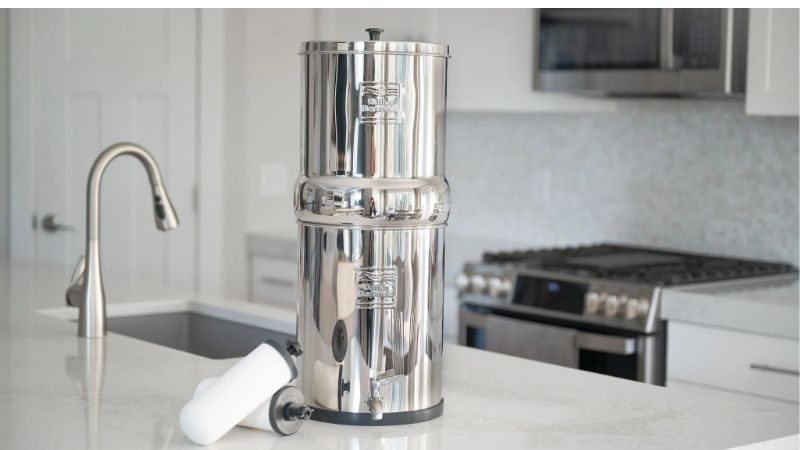
Gravity systems like Travel Berkey filter water through elements that manufacturers say reduce PFAS, with no power or plumbing, storing filtered water for pouring. For off-grid reliability or outages, the gravity approach offers independence from infrastructure. For outages, that independence is the whole reason to keep a gravity filter on hand.
The drawback is a tall footprint, slow filtration, and reduction claims some buyers want independently verified for PFAS specifically. Refilling and element care are the main routines, and it stands taller than a pitcher on the counter.
For off-grid PFAS reduction, Travel Berkey fits this guide. Confirm the PFAS reduction claims and element details, keep it refilled, and verify certification where you can, choosing it when powerless, portable filtration matters more than certified on-demand performance at a fixed tap. Verifying the PFAS-specific claims is important, since gravity elements vary in what they reduce.
AquaTru For Broad Removal
AquaTru is a countertop RO purifier that reduces PFAS along with a broad contaminant range, needing no under-sink plumbing. For renters who want RO-level PFAS reduction plus wide removal without installing a system, it is a strong, flexible option.
The drawback is a larger footprint, power, tank refilling, and proprietary filters, and RO removes minerals along with contaminants. Confirm the certifications for PFAS and your other concerns, and factor the ongoing filter cost typical of RO.
For broad removal including PFAS, AquaTru is a standout here. Confirm counter space, verify the certifications, and budget for filters, choosing it when RO-level reduction with no plumbing matters, and add remineralization if you prefer mineral taste over very pure water.
Aquasana OptimH2O For Carbon Plus RO
Aquasana’s OptimH2O pairs RO with the brand’s Claryum filtration, claiming reduction of PFAS, lead, and a broad range through combined stages. For buyers who want RO plus additional carbon-based polishing certified for PFAS, it combines two approaches under the sink. For a thorough household, pairing carbon with RO covers the widest tested contaminant list.
The drawback is a higher cost, the usual under-sink space and drain, and proprietary filters. Verify the specific PFAS certification and factor ongoing replacement cost, since combined stages add maintenance alongside broad reduction.
For carbon-plus-RO PFAS reduction, OptimH2O suits this guide’s thorough buyer. Confirm cabinet space, verify PFAS certification, and budget for proprietary filters, choosing it when broad reduction with added polishing outweighs the simplicity of a pitcher or a single-stage carbon block. Combining carbon and RO broadens reduction, though it adds stages and cost to maintain.
Waterdrop RO For Compact RO
Waterdrop’s RO systems reduce PFAS and a broad contaminant range in compact, often tankless designs with quick-change filters. For small cabinets wanting under-sink PFAS reduction without a bulky tank, the space-saving design is a practical advantage. For a small cabinet, the tankless footprint keeps under-sink RO from crowding the space.
The drawback is that certification varies by model, so confirm the PFAS listing, plus the usual RO drain, wastewater, and proprietary filters. Verify the specific ratings rather than assuming all Waterdrop models carry the same PFAS certification.
For compact RO PFAS reduction, Waterdrop is a flexible pick here. Confirm the PFAS-specific certification for the exact model, plan cabinet space and the drain, and keep replacement filters on hand, choosing it when a small tankless footprint matters alongside broad reduction. Confirming the exact model’s certification avoids assuming every Waterdrop unit reduces PFAS.
See More:
- Best eyeshadow blender brush
- Best frozen foods for air fryer
- Best frozen food for air fryer
- Best way to reheat steak in air fryer
- Best air fryer recipes book
Choosing Your PFAS Water Filter
The best PFAS water filter for you starts with certification: certified pitchers from Clearly Filtered or Epic and gravity units for no-install use, or RO and carbon-plus-RO systems from AquaTru, Aquasana OptimH2O, or Waterdrop for broad, higher-capacity reduction. Always confirm an NSF/ANSI 53 or P473 listing naming PFOA and PFOS. Verify the listing in a certifier’s database rather than trusting the language on the box.
Match the form to your space and volume, track the replacement schedule since PFAS reduction exhausts media, and rely on a water test and official reports for your local situation. Because rules around PFAS in drinking water have been tightening and awareness is rising, interest is growing, but the goal of this PFAS water filter guide is a filter certified to reduce these chemicals. Confirm the standard, pick the form, and replace media on time so PFAS reduction actually holds.