
Best mattress for heavier people advice tends to stop at buy something firm, which is only half right. Sleep position decides where a body needs to sink and where it needs holding up, and at higher body weights getting that direction wrong produces worse results than at lighter weights.
As an Amazon Associate we earn from qualifying purchases.
Our top picks


As an Amazon Associate we earn from qualifying purchases at no extra cost to you.
By Daniel Foster
🛒 Best Price Today on Amazon
Prime members get fast, free shipping on everything above, plus member-only deals. New members get a 30-day free trial — cancel anytime.
Start 30-Day Prime Free Trial →See Today’s Amazon DealsMatching the Best Mattress for Heavier People to Sleep Position
The best mattress for heavier people balances firmness against position, and body weight shifts the whole scale. A heavier side sleeper and a heavier stomach sleeper need genuinely different beds, and buying the same firm hybrid for both leaves one of them uncomfortable within a fortnight.
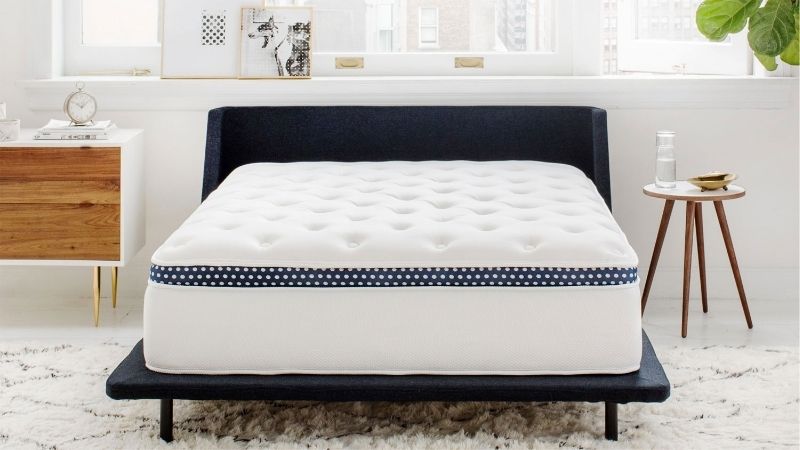
Position, Firmness and the Weight Adjustment
Standard advice puts side sleepers at 4-6 on the 1-10 scale, back sleepers at 5-7 and stomach sleepers at 6-8. Above roughly 230 lb (104 kg) every layer compresses further, so add one to two steps: side sleepers 6-7, back sleepers 7-8, stomach sleepers 8. Those are starting points rather than rules, and a trial period is what confirms them.
Weight capacity still needs checking, since a firm surface on an underspecified coil unit sags anyway. Quality hybrids commonly state 400-500 lb (181-227 kg) per side, and that figure should be confirmed on the listing rather than assumed from the firmness rating. A firm surface on a weak coil unit still sags in the middle within two years.
Comfort Layer Depth by Position
Heavier side sleepers need the most comfort material, usually 3-4 in (7.6-10 cm) above the coils, because the shoulder and hip have to sink without reaching the spring unit. A firm bed with a thin top layer creates pressure points within an hour. Shoulder numbness on waking is the usual sign that the comfort layer is too thin.
Back and stomach sleepers need the opposite: a shallower comfort layer over a strong coil unit so the hips stay lifted. Total profile of 12-14 in (30-36 cm) works for both, but how that depth is divided is what changes with position. Two beds of the same profile can therefore suit completely different sleepers, which is why profile alone is a poor comparison.
Space and Fit: Profile, Frame and Bed Height
Thicker beds need deep-pocket sheets rated for the full profile, and a 14 in mattress on a tall frame produces a bed height that is awkward to get into. Measure the frame height and add the mattress before ordering rather than after. Anything above about 28 in (71 cm) to the top of the mattress is awkward for most people.
Slats must sit no more than about 3 in (7.6 cm) apart, and Queen and King frames need a centre support leg reaching the floor. Under a heavier load an unsupported frame flexes, and the resulting dip is usually blamed on the mattress.
Motion, Edges and Shared Beds
Heavier bodies generate more motion transfer, so pocketed coils rather than continuous springs matter on a shared bed. Foam comfort layers absorb movement better than latex, which is a genuine consideration when one partner is a light sleeper. Pocketed coils cost slightly more and solve most of that complaint.
Reinforced edges keep the perimeter usable and make sitting on the side to dress safer. Edge collapse is classed as normal wear by most warranties, so choosing a bed with a strengthened perimeter is the only real protection against it. Reinforcement is usually described as an edge support system on the listing.
Top Picks: Six Hybrids Sorted by Position
Each bed below is placed by which sleeping position it suits at higher body weights, with a genuine drawback listed for every entry. Specifications come from manufacturer documentation and aggregated owner reports rather than testing of our own, and capacity claims should be verified on the listing. Which best mattress for heavier people fits is decided by position and comfort layer depth together.
| Model | Profile | Firmness (1-10) | Comfort layer | Best position |
|---|---|---|---|---|
| Olee Sleep Galaxy Hybrid | 13 in / 33 cm | 6-7 | Generous | Side |
| Novilla Hybrid | 14 in / 36 cm | 6 | Deep | Side |
| Best Price Mattress Premium Hybrid | 14 in / 36 cm | 6-7 | Medium | Side and back |
| Serta Perfect Sleeper Hybrid | 12 in / 30 cm | 7 | Medium | Back |
| Vibe Quilted Gel Hybrid | 12 in / 30 cm | 6-7 | Quilted, shallow | Back |
| Linenspa Hybrid | 12 in / 30 cm | 7-8 | Shallow | Stomach |
Olee Sleep Galaxy Hybrid – Depth for Side Sleepers
Thirteen inches with a substantial foam stack over pocketed coils, which gives a heavier side sleeper enough material for the shoulder and hip to sink into. The best mattress for heavier people who sleep on their side is almost always the one with the deepest comfort layer.
A deep soft layer is also the part that develops impressions first under concentrated load. It runs warmer than shallower builds, and the bed is heavy enough that rotating it requires two people every time.
Novilla Hybrid – Fourteen Inches of Layering
A 14 in build combining gel memory foam, transition foam and a coil base, which is the layering structure that distributes higher loads best. Side sleepers who found 12 in hybrids too firm at the shoulder usually get on better with this profile.
Foam density is mid-range rather than premium, so realistic service life under a heavier sleeper is five to six years rather than a decade. Deep-pocket sheets are mandatory at this profile, which is an additional cost to budget for.
Best Price Mattress Premium Hybrid – Balanced Middle
Fourteen inches with a medium comfort layer over a reinforced coil unit, which suits sleepers who alternate between side and back. The balance means neither position is optimised, but neither is badly served, which is the right trade for a genuine combination sleeper.
Edge support is average, and the perimeter compresses noticeably where someone sits daily. The quilted cover is not removable, so cleaning is limited to spot treatment and a protector is effectively required from the first night.
Serta Perfect Sleeper Hybrid – Firm Lift for Back Sleepers
A firmer 12 in hybrid with a reinforced centre third, the section carrying the heaviest load. Back sleepers at higher body weights need the hips held level with the shoulders, and a firm coil unit with a moderate comfort layer does that job.
Side sleepers will find it too firm at the shoulder, which is the direct consequence of the design. Buying it for the wrong position produces a fast return rather than a slow disappointment. It is also heavy and awkward to manoeuvre, and model naming varies between retailers, so confirm the firmness on the exact listing.
Vibe Quilted Gel Hybrid – Shallow Comfort, Strong Base
A quilted surface over a thin foam layer and pocketed coils, which keeps the hips high while adding just enough surface cushioning. For back sleepers who dislike the sinking sensation of thicker foam, this is the more comfortable configuration.
The shallow comfort layer means coil tops become perceptible once the quilting compresses, typically after two or three years. Weight capacity is standard rather than reinforced, so it suits the lower end of the heavier range rather than the upper.
Linenspa Hybrid – Firmest Option for Stomach Sleepers
A firm 12 in hybrid that keeps the pelvis from dropping below the ribcage, which is the specific requirement for stomach sleepers at higher body weights. The shallow comfort layer is intentional here rather than a cost saving.
It is uncomfortably firm for side sleepers and for most back sleepers too. Coil gauge is lighter than the specialist heavy-duty beds, so sleepers well above 300 lb (136 kg) should look at a reinforced model instead of this one.
Setup, Support and Long-Term Wear
At higher body weights everything under and around the mattress works harder, and the best mattress for heavier people still fails early on a frame that flexes. Getting those elements right is what determines whether a well-chosen bed lasts eight years or develops a visible dip in the third.
Frames That Actually Carry the Load
Slat spacing over about 3 in (7.6 cm) allows sagging between the slats, and a Queen or King without a centre support leg will flex in the middle. Metal frames sold with beds are frequently the weak point rather than the mattress itself.
Test the frame by pressing down hard in the centre with the mattress off. Any visible flex means it needs replacing or reinforcing, and doing that at the same time as buying the bed avoids attributing a foundation problem to the new mattress.
Rotation Schedule and Early Warning Signs
Rotate head to foot every three months rather than every six, since impressions form faster under concentrated load. Marking one corner with a laundry pen makes it easy to track which way round the bed last sat.
The first sign of trouble is usually waking with a different discomfort pattern rather than a visible dip. Check with a straight edge across the unloaded bed every few months, since a developing depression is easier to document early than to argue about later. Dated measurements are what manufacturers accept as evidence.
Sheets, Protectors and Bed Height
Deep-pocket sheets rated for 14-16 in (36-41 cm) are needed on the thicker beds here, and a sheet that is slightly short will pull off the corners nightly. Buy one depth category larger than the mattress rather than matching exactly.
A breathable waterproof protector keeps the bed within warranty condition, since staining voids most claims. Mattress discounts follow the federal holiday calendar, so Presidents Day, Memorial Day and Labor Day are the windows worth timing a purchase around. Outside those periods, discounting here is largely nominal.
See More:
- Best low price dash cam
- Projector screens at Best Buy
- Best buy projector screens
- Best projector for games
- Best projector for gaming
Final Thoughts on the Best Mattress for Heavier People
Set the firmness from your position, then add one to two steps for body weight, then check that the comfort layer depth matches what that position needs. Capacity and frame support are the two checks that stop a good choice failing early.
The best mattress for heavier people is a hybrid whose comfort layer depth suits how you sleep, on a frame specified to carry it. Measure the frame and slat spacing before ordering, and confirm capacity figures on the listing at the time of purchase.



Write Your Review
No reviews yet. Be the first to share your experience!