
Best mattress heavy people comparisons usually skip the only number that matters: the stated weight capacity per side. Most beds sold online are engineered around a sleeper under 230 lb (104 kg), and above that figure firmness ratings, foam density and coil gauge all behave differently than the listing suggests.
As an Amazon Associate we earn from qualifying purchases.
Our top picks




As an Amazon Associate we earn from qualifying purchases at no extra cost to you.
By Daniel Foster
🛒 Best Price Today on Amazon
Prime members get fast, free shipping on everything above, plus member-only deals. New members get a 30-day free trial — cancel anytime.
Start 30-Day Prime Free Trial →See Today’s Amazon DealsWhat Makes the Best Mattress Heavy People Can Use Different
The best mattress heavy people can use is a structure specified for a load, which most beds are not. Under a heavier body every layer compresses further, which changes the effective firmness, the support geometry and how quickly the bed wears out. Four specifications explain nearly all of that.
Weight Capacity, Coil Gauge and Foam Density
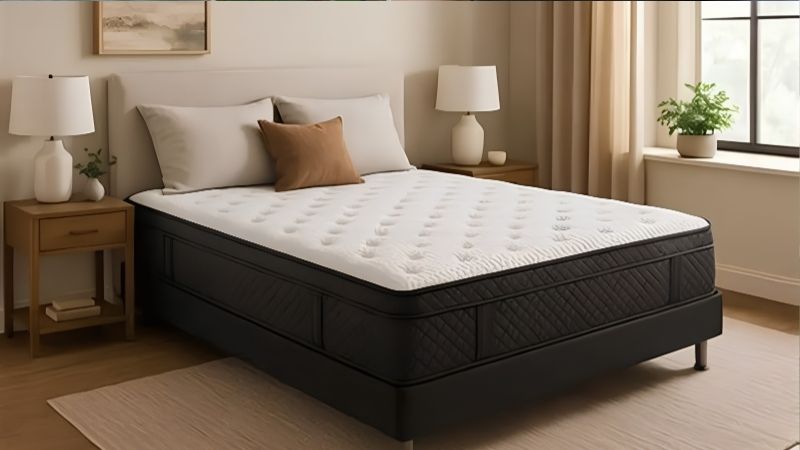
Capacity is stated per side or combined, and a well-built hybrid commonly rates 400-500 lb (181-227 kg) per side. All-foam beds usually rate lower because there is no spring unit carrying the load, which is why coils dominate this part of the market. All-foam beds can still work below about 250 lb (113 kg) per side if the base foam is dense.
Coil gauge runs roughly 12 to 15, and a lower number means thicker, stronger wire. Comfort foam density below about 4 lb/ft3 will take a permanent impression under a heavier body within a couple of years, so density matters more here than for anyone else. Where density is not published, shipping weight for the size is the usable proxy.
Firmness Shifts With Body Weight
A bed feels softer the more you weigh. A model rated 6 on the 1-10 scale often behaves like a 4 or 5 under a sleeper above 230 lb (104 kg), which is why the standard advice to buy medium-firm produces a bed that sinks too far.
The practical adjustment is one to two steps firmer than the position-based recommendation. Side sleepers who would normally want 4-6 should look at 6-7, and back sleepers at 7-8, with enough comfort layer above the coils to stop the shoulder hitting the support core. That balance is what makes a firm bed tolerable rather than punishing.
Space and Fit: Profile, Frame and Slat Support
Profiles of 12-14 in (30-36 cm) give the layering needed to distribute a heavier load, and thicker beds need deep-pocket sheets. Standard US sizes are Queen 60 x 80 in (152 x 203 cm) and King 76 x 80 in (193 x 203 cm), so measure the room and the doorway first.
The frame matters as much as the mattress. Slats must sit no more than about 3 in (7.6 cm) apart, and a Queen or King needs a centre support leg reaching the floor. A frame that flexes will produce a sag the mattress gets blamed for and the warranty will not cover. Testing the frame takes a minute with the mattress off.
Edge Support, Trials and Warranty Language
Edge support decides how much of the bed is usable and how safely you can sit on the side to put shoes on. Reinforced perimeter coils or firmer edge foam are worth prioritising, since weak edges collapse first under concentrated load. Edge failure also shrinks the usable width of a shared bed noticeably.
Warranties define a defect as a permanent sag of roughly 0.75-1.5 in measured unloaded, and many exclude improper support. Read that threshold and the frame requirements before buying, because both are where claims from heavier sleepers are most often refused. Photographing the frame at delivery is a small piece of insurance.
Top Picks: Six Beds Built for Higher Loads
The list favours hybrids with published capacity figures and reinforced perimeters, with a genuine drawback listed for each. Specifications come from manufacturer documentation and aggregated long-term owner reports rather than testing of our own, and capacity claims should be verified on the listing. Which best mattress heavy people should choose depends on stated capacity before anything else.
| Model | Type | Profile | Firmness (1-10) | Capacity note |
|---|---|---|---|---|
| Brooklyn Bedding Titan Plus | Hybrid | 11 in / 28 cm | 7-8 | Built specifically for higher loads |
| Zinus Support Plus Hybrid | Hybrid | 14 in / 36 cm | 6-7 | Reinforced coil unit |
| Classic Brands Mercer Hybrid | Hybrid | 12 in / 30 cm | 6 | Standard hybrid capacity |
| LUCID Hybrid | Hybrid | 14 in / 36 cm | 5-6 | Thick comfort layer |
| Ashley Chime Hybrid | Hybrid | 12 in / 30 cm | 6 | Budget coil support |
| Sweetnight Prime Hybrid | Hybrid | 12 in / 30 cm | 6-7 | Zoned coil layout |
Brooklyn Bedding Titan Plus – Engineered for the Load
Built around a firmer coil unit and higher-density foams specifically for heavier sleepers, with a firmness that sits genuinely at 7-8 rather than softening under load. This is one of the few beds where the design brief matches the search, rather than a standard model marketed toward it.
It is firmer than most people expect on the first night, and the break-in period is real. Side sleepers at the lower end of the heavier range may find it too rigid at the shoulder, and the price sits above the mainstream hybrid market.
Zinus Support Plus Hybrid – Reinforced at a Fair Price
A 14 in (36 cm) build with a strengthened coil unit and a thicker foam stack than the brand’s standard line. The extra profile matters, since a heavier body needs more material between it and the springs to avoid feeling the coil tops.
Comfort foam density is mid-range rather than premium, so impressions form faster than on the specialist beds above. Edge support is adequate rather than strong, and the bed is heavy enough that rotating it is a two-person job.
Classic Brands Mercer Hybrid – Straightforward Coil Support
A conventional 12 in (30 cm) hybrid with pocketed coils under a memory foam comfort layer at a mid-tier price. For a sleeper in the 230-280 lb (104-127 kg) range, a standard well-built hybrid is often sufficient without moving to a specialist bed.
Above roughly 300 lb (136 kg) the comfort layer compresses enough that the coils become perceptible. The perimeter is not reinforced, so sitting on the edge daily will compress it visibly within the first year of ownership.
LUCID Hybrid – Thicker Comfort Layer
Fourteen inches with a generous foam layer over the coils, which suits side sleepers who need shoulder and hip relief without dropping onto the spring unit. The best mattress heavy people choose is often the one with the most material above the coils rather than the firmest surface.
A thick soft comfort layer is also the part that fails first under load, so expect impressions sooner than on a firmer build. It runs warm for the same reason, since more foam means less airflow reaching the sleeper.
Ashley Chime Hybrid – Budget Coils
A 12 in hybrid at the budget end, shipped compressed, with a coil base that does more useful work than an all-foam bed at the same price. For a guest room or a short-term situation it covers the requirement without a large outlay.
Coil count and gauge are at the lower end, and the comfort layer is thin. Realistic service life under a heavier sleeper is three to four years rather than a decade, so treat the warranty length as optimistic rather than predictive. Ten-year cover on a budget build rarely means ten years of support.
Sweetnight Prime Hybrid – Zoned Coil Layout
Zoned coils place firmer support under the hips and lumbar region, where a heavier body concentrates load, with softer zones at the shoulder. Zoning does more for a heavier sleeper than for a light one, because there is more weight to redistribute.
Zoning only works if the bed is oriented correctly, and the labelling is subtle. The comfort layer is moderate in thickness, so sleepers above 300 lb (136 kg) who prefer a plusher surface may want a firm topper rather than this alone.
Setup, Frames and Long-Term Ownership
A bed rated for higher loads still fails early if what sits underneath it is not, so the best mattress heavy people buy is only as good as the frame carrying it. Getting the foundation right, and rotating on schedule, is what turns a suitable mattress into one that lasts its warranty period.
The Foundation Is Half the Purchase
Slats spaced wider than about 3 in (7.6 cm) let foam and coils sag between them, and a Queen or King needs a centre rail with legs reaching the floor. Metal frames without centre support are the single most common cause of a bed that dips in the middle.
Old box springs transfer their own failures upward. If the base is more than a few years old and flexes when pressed, replace it at the same time as the mattress, since a new bed on a tired foundation will develop the same fault within months.
Rotation and What Wears First
Impressions form under the hips first, where load concentrates most. Rotating head to foot every three months rather than every six is the sensible schedule for a heavier sleeper, and it costs five minutes each time.
Edges fail next, particularly where someone sits daily to dress. Varying where you sit, or using a bench instead, extends perimeter life noticeably, and edge collapse is rarely covered by a warranty because it is classed as normal wear.
Judging a Warranty Claim Honestly
Measure any suspected sag with the bed unloaded, using a straight edge and a tape. Most warranties require 0.75-1.5 in of permanent depression before a claim qualifies, and photographs with a measurement visible are what manufacturers actually ask for.
Keep the original receipt and the law tag, since both are usually required. Mattress prices move around the federal holiday sale calendar rather than the electronics cycle, so Presidents Day, Memorial Day and Labor Day are the periods worth planning a replacement around.
See More:
- Best low price dash cam
- Projector screens at Best Buy
- Best buy projector screens
- Best projector for games
- Best projector for gaming
Final Thoughts on the Best Mattress Heavy People Should Buy
Start with the stated capacity, then coil gauge and foam density, then adjust firmness one to two steps up from the standard position-based advice. That sequence eliminates most of the beds that generate complaints within the first two years.
The best mattress heavy people can buy is a hybrid with published capacity, reinforced edges and a foundation specified to match. Measure your room and check the slat spacing before ordering, and confirm capacity figures and warranty terms on the listing at purchase.


Write Your Review
No reviews yet. Be the first to share your experience!