
Best mattress topper for back problems options are usually a single uniform slab of foam, which treats the shoulders and the hips as if they carry the same load. Zoned and multi-layer constructions do not, and that structural difference is what separates the useful products from the merely soft ones.
As an Amazon Associate we earn from qualifying purchases.
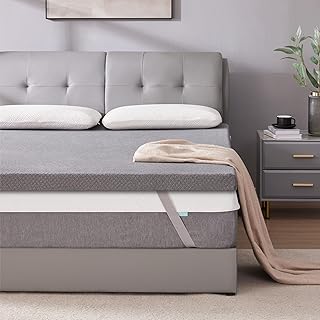
Our top picks


As an Amazon Associate we earn from qualifying purchases at no extra cost to you.
By Daniel Foster
🛒 Best Price Today on Amazon
Prime members get fast, free shipping on everything above, plus member-only deals. New members get a 30-day free trial — cancel anytime.
Start 30-Day Prime Free Trial →See Today’s Amazon DealsHow the Best Mattress Topper for Back Problems Is Constructed
The best mattress topper for back problems has to account for the fact that a body is not evenly weighted. Hips and shoulders concentrate load while the lumbar area needs filling rather than sinking, and a uniform layer responds identically everywhere. Construction is where the meaningful differences in this category actually live.
Zoning, Layering and Convoluted Surfaces
Zoned toppers vary firmness along their length, typically softer at the shoulder, firmer under the hips and lumbar region. Layered toppers stack two materials, usually a softer surface over a supportive base, which achieves a similar effect through depth instead of position.
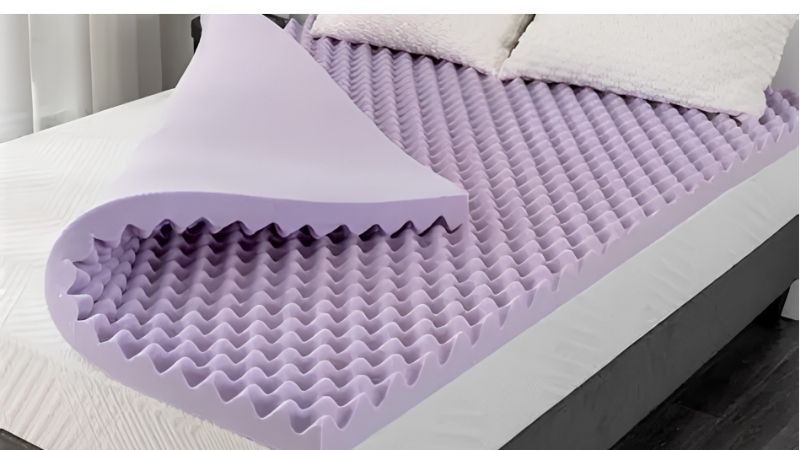
Convoluted or egg-crate surfaces cut peaks and valleys into the foam, which lets the peaks compress locally under pressure points while the valleys allow airflow. It is the cheapest form of structural variation available and genuinely works better than flat foam of the same density. It also costs almost nothing extra to manufacture, which is why it appears at every price point.
Getting Depth and Density Right
Structure only helps if there is enough material for it to act on. Below 2 in (5 cm) any zoning is essentially decorative, 3 in (7.6 cm) is where it starts working properly, and 4 in (10 cm) gives layered constructions room for two distinct roles.
Density still governs lifespan. Comfort foam below roughly 3 lb/ft3 compresses permanently under the hips within a couple of years, which flattens the zoning along with everything else. Weight per size is the usable proxy, since density is rarely printed on listings. Two toppers of the same depth can differ by several pounds in Queen, and the heavier one lasts longer.
Space and Fit: Orientation, Depth and Sheets
Zoned toppers have a head end and a foot end, and installing one backwards puts the firm section under the shoulders. Check the labelling before making the bed, and mark the head end yourself so it goes back correctly after cleaning or rotation. A laundry pen mark on the underside survives longer than the printed label does.
Measure the mattress rather than the label, and add the topper depth when buying sheets: anything over 2 in needs deep-pocket sheets rated for the combined height. Corner straps or a fitted cover keep a zoned layer aligned so the zones stay where they belong.
Certifications, Break-In and Limits
Look for CertiPUR-US on foam and equivalent certification on latex products. Compressed items need 24-48 hours to reach full loft, with mild off-gassing that clears in the same period, and zoned products in particular can look uneven until fully expanded. Judging the zones before 48 hours have passed produces a lot of unnecessary returns.
Structure changes how weight is distributed on the surface; it does not repair a support core that has failed. Back pain that persists, worsens or radiates is a matter for a doctor or physiotherapist rather than a bedding purchase of any kind. Structure helps with distribution; it does not treat anything.
Top Picks: Six Structured Toppers
The list covers zoned latex, layered foam and convoluted constructions rather than six versions of the same flat slab. Each entry lists a genuine drawback, and specifications come from manufacturer documentation and aggregated owner reports rather than testing of our own. Which best mattress topper for back problems applies depends on whether your issue is placement or simply depth.
| Model | Construction | Thickness | Orientation matters | Best for |
|---|---|---|---|---|
| Turmerry Zoned Latex Topper | Zoned latex | 2-3 in / 5-7.6 cm | Yes | Targeted support |
| Sleep Innovations Dual Layer | Foam plus fibre | 4 in / 10 cm | No | Maximum softening with base |
| Linenspa Convoluted Gel Swirl | Egg crate foam | 3 in / 7.6 cm | No | Airflow on a budget |
| Best Price Mattress Egg Crate | Egg crate memory foam | 4 in / 10 cm | No | Depth plus ventilation |
| Milliard Egg Crate Foam | Egg crate foam | 2 in / 5 cm | No | Light surface change |
| ViscoSoft Select High Density | Dense uniform foam | 3 in / 7.6 cm | No | Durability benchmark |
Turmerry Zoned Latex Topper – Firmness That Varies by Position
Zoned natural latex with softer sections at the shoulder and firmer support under the hips and lumbar region. This is the most literal implementation of the idea, and it is the option that most directly addresses uneven load distribution across the body.
It costs more than any foam option here, and orientation matters, so installing it backwards produces the opposite of the intended effect. Latex is heavy, covers are usually separate, and the natural rubber odour takes about a week to clear.
Sleep Innovations Dual Layer – Two Materials, Two Jobs
Four inches combining gel memory foam beneath a quilted fibre pillow top, so the fibre handles surface softness while the foam manages pressure distribution. The best mattress topper for back problems is often a layered one, because the two requirements really are different.
Four inches raises the bed noticeably and requires deep-pocket sheets rated for the full height. The fibre layer also compresses faster than the foam beneath it, so the surface flattens before the supportive part of the topper is worn out.
Linenspa Convoluted Gel Swirl – Cheap Structure That Works
Three inches of gel swirl foam with an egg-crate surface, which lets the peaks compress under pressure points while the channels between them allow air to move. For a budget product, the structural variation delivers a real improvement over flat foam.
Density is at the lower end, so the peaks compress permanently within a couple of years of nightly use, taking the structure with them. There is no cover or strap system, so a deep-pocket fitted sheet has to hold it in place.
Best Price Mattress Egg Crate – Depth and Airflow Together
Four inches of memory foam with a convoluted surface, combining enough depth for genuine pressure redistribution with channels that keep the layer from insulating completely. It is a sensible middle path for a warm sleeper who needs substantial cushioning.
The convoluted surface removes material, so it feels slightly less substantial than a flat 4 in slab. At this depth the bed also sits noticeably higher, which changes both sheet requirements and how easy the bed is to get in and out of.
Milliard Egg Crate Foam – Minimal Layer With Structure
Two inches of convoluted foam at a low price, which suits a bed that is only slightly unforgiving. The egg-crate surface means it does more than a flat 2 in layer would, particularly for airflow, without raising the bed height meaningfully.
Two inches compresses close to fully under heavier bodies, so the mattress underneath still comes through. Low density also means a realistic life of two to three years in a main bedroom, less if it carries the heavier partner in a shared bed.
ViscoSoft Select High Density – The Uniform Comparison
A dense, flat 3 in layer in a removable washable cover with corner straps, included here as the benchmark that structured products have to beat. On durability it beats most of them, because density outlasts clever construction almost every time.
It has no zoning or convolution, so pressure distribution is even rather than targeted, and it sleeps warmer than any of the ventilated options above. Slow response also makes repositioning harder for anyone who changes sleeping position frequently.
Installation, Orientation and Long-Term Care
Structured toppers reward correct installation more than flat ones do, because a zone in the wrong place is worse than no zoning at all. The best mattress topper for back problems can be ruined simply by installing it the wrong way round. A few checks at setup and a simple rotation habit cover almost everything that goes wrong later.
Getting the Orientation Right
Zoned products label the head end, though the marking is often subtle. Identify it before the sheet goes on and add your own mark with a laundry pen, because after the first wash or rotation nobody remembers which way it was facing.
Layered and convoluted toppers are directionally neutral end to end but not top to bottom. The convoluted surface faces upward on egg-crate products, and putting it face down flattens the peaks against the mattress, which removes the entire benefit. It is a surprisingly common mistake on toppers shipped rolled in a bag.
Rotation Without Losing the Structure
Flat toppers rotate head to foot to spread wear. Zoned toppers cannot, since that would move the firm section under the shoulders, so they should be flipped side to side instead if the construction allows, or simply left in place and replaced sooner.
Check the zones periodically by pressing each section, because uneven compression is what ends a zoned topper’s useful life. Once the firm section no longer feels firmer than the soft one, the structural advantage has gone and replacement is due.
Cleaning and Realistic Lifespan
Foam and latex cannot be washed or soaked, so a breathable waterproof protector is what keeps them serviceable. Spot clean with mild detergent and minimal moisture, and allow complete drying before bedding goes back on, since trapped moisture causes odour and breakdown.
Latex realistically lasts eight years or more, mid-density foam four to six, and budget convoluted foam two to three. Bedding prices move around the federal holiday sale periods, so Presidents Day, Memorial Day and Labor Day are the windows worth waiting for. Outside those periods, prices here stay broadly flat through the year.
See More:
- Best low price dash cam
- Projector screens at Best Buy
- Best buy projector screens
- Best projector for games
- Best projector for gaming
Final Thoughts on the Best Mattress Topper for Back Problems
Decide whether you want targeted support, layered depth or simply better airflow, because those three constructions solve different problems. Zoning is worth paying for when load distribution is the issue and irrelevant when the bed is just too hard everywhere.
The best mattress topper for back problems is the one whose structure matches where your body actually carries weight. Measure your mattress and sheet depth before ordering, and speak to a doctor or physiotherapist about pain that continues regardless of what you sleep on.

Write Your Review
No reviews yet. Be the first to share your experience!