
Best blender for protein powder is really a question about clumping, and clumping is caused by dry powder hitting still liquid rather than by insufficient power. This guide compares seven devices, including blenders, an immersion stick and electric shakers, on how completely each one wets and disperses powder.
As an Amazon Associate we earn from qualifying purchases.
By Daniel Foster
🛒 Best Price Today on Amazon
Prime members get fast, free shipping on everything above, plus member-only deals. New members get a 30-day free trial — cancel anytime.
Why Powder Clumps and What Fixes It
The best blender for protein powder has one job, because powders form a gel skin on contact with liquid. Once that skin forms around a dry pocket, extra blending time rarely breaks it up. The fix is wetting the powder gradually while the liquid is already moving, which is a design problem more than a horsepower problem.
Vortex Quality, Start Speed and Vessel Shape: The Deciding Numbers
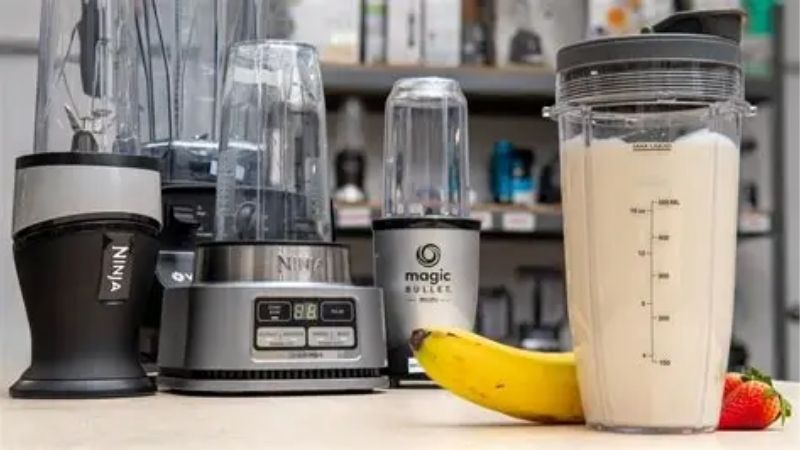
Three factors decide the best blender for protein powder: whether the machine offers a low start speed, the vessel shape and its diameter, and blade or agitator geometry. Narrow vessels of 3 to 4 in (7.6 to 10 cm) diameter form a tighter vortex than wide jars at the same volume.
Motor rating is the least useful number when judging the best blender for protein powder. A 175 W agitator that starts slowly can dissolve powder more completely than a 1,500 W blender that jumps to full speed and blasts dry powder onto the jar walls above the liquid.
Liquid ratio is the specification you control: roughly 8 to 12 oz (235 to 355 mL) per scoop gives the blade enough fluid to work with. Below that, no machine on this list produces a fully smooth result.
Space and Fit: Countertop Versus Drawer
Full-size blenders need 15 to 20 in (38 to 51 cm) of height under a cabinet and permanent counter space, while immersion blenders and electric shakers store in a drawer and travel in a bag.
That difference decides more purchases than performance does. A stick blender or shaker that lives in a drawer gets used at the office and on holiday, while a countertop machine only ever works in one room of one building.
If the machine will live in an office or a gym locker rather than a kitchen, size and charging method matter more than power. USB-C rechargeable shakers occupy roughly the footprint of a water bottle at 3 in (7.6 cm) across.
Technique That Beats Hardware
Technique beats hardware here, even with the best blender for protein powder on the counter: liquid first, powder second, then blend. Adding powder to a running low-speed vortex disperses it far better than dumping it into still liquid and starting on high.
A brief rest helps too. Letting the mixture stand for 20 to 30 seconds after blending allows entrained air to escape and any remaining lumps to hydrate, which a second five-second pulse then clears completely.
Cleaning and Odor
Whatever device you choose, rinse immediately. Protein residue that dries in a blade collar or on an agitator ball needs soaking, and the smell that follows is the main reason these devices get replaced.
Silicone gaskets and rubber seals hold odor longest. Remove and wash them weekly, and confirm replacements are available for the model before buying, since a saturated gasket makes an otherwise fine device unpleasant.
Best Blender for Protein Powder: Seven Devices Compared
The list deliberately mixes categories, because the most effective tool for powder alone is not always a countertop blender. Specifications are manufacturer-stated and combined with themes from long-term owner reports.
NutriBullet Ultra
A personal blender with variable speed and a pulse function, which is unusual in the bullet format and directly addresses the dry-powder problem by allowing a slow start.
It costs more than the standard NutriBullet models and the cups remain proprietary. The added speed control is the reason it heads this list for powder specifically.
Ninja Detect Duo Power Blender Pro
Pairs a full-size jar with a single-serve cup and uses sensing technology to adjust blend time to the load, which prevents both under-mixing and needlessly long runs.
It is large, expensive and has two vessel systems to store. The dual format suits households that want family batches and single shakes from one base.
Ninja TWISTi Blender Duo
Uses a twist-to-start cup system with a strong vortex in a narrow vessel, plus a full-size jar option, giving good dispersion of powder without a separate low-speed setting.
The twist mechanism adds a wear point and cups are proprietary. Vortex quality in the single-serve vessel is the strong point.
Vitamix Immersion Blender
A stick blender that goes directly into a glass or bottle, letting you start slow, keep the head submerged and move it through the liquid as powder is added.
It requires holding the device throughout and can splash if lifted while running. Control over the wetting process is the best of any tool here.
Braun MultiQuick 9
An immersion blender with a smooth-start function and a bell-shaped head designed to reduce suction, which prevents powder from being pinned against the vessel wall.
It is more expensive than basic stick blenders and the head must be washed immediately. Smooth start is exactly the feature powder dispersion needs.
VOLTRX Premium Electric Shaker Bottle
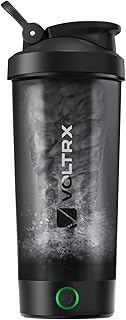
A USB-C rechargeable bottle with a small agitator in the base, holding roughly 24 oz (710 mL) and mixing powder in about 20 seconds with no jar to wash.
It cannot handle frozen fruit or anything solid, and mixing is agitation rather than blending. For powder and liquid alone, it is the lowest-effort option.
BlenderBottle Classic With BlenderBall
The fully manual option: a wire ball that breaks up powder as you shake, with no battery, no motor and nothing to fail, in 20 to 28 oz (590 to 830 mL) sizes.
Results depend on how vigorously you shake, and very thick mixtures stay lumpy. As a backup at the gym or in a bag, nothing is more reliable.
| Device | Type | Low-speed start | Handles frozen | Main trade-off |
|---|---|---|---|---|
| NutriBullet Ultra | Personal blender | Yes, variable | Yes | Proprietary cups |
| Ninja Detect Duo Pro | Full size + cup | Auto-sensing | Yes | Large, costly |
| Ninja TWISTi Duo | Twist cup + jar | No | Yes | Twist mechanism wear |
| Vitamix Immersion | Stick blender | Yes | Limited | Hands-on |
| Braun MultiQuick 9 | Stick blender | Smooth start | Limited | Price, wash at once |
| VOLTRX Premium | Electric shaker | Agitation only | No | Powder and liquid only |
| BlenderBottle Classic | Manual shaker | Manual | No | Depends on effort |
Prices across these categories vary widely on Amazon and change often, so compare current listings and included accessories before deciding.
Getting Consistently Smooth Results
Once you have the best blender for protein powder in your kitchen, technique and maintenance decide whether every drink comes out smooth or only most of them.
The Order That Eliminates Lumps
Pour liquid, start the machine on low, add powder into the moving vortex, then increase speed for 15 to 20 seconds. That sequence removes the dry pocket problem entirely on every device here except a manual shaker.
With a shaker bottle, add liquid first and shake immediately rather than letting powder settle. Powder resting at the bottom of a still bottle forms exactly the gel skin that shaking then has to break.
Different Powders Behave Differently
Whey isolate generally disperses more readily than casein or blended plant proteins, which absorb more liquid and thicken quickly. Thicker powders need more liquid and benefit most from a low-speed start.
Powder age matters too. An open tub that has absorbed humidity clumps in the scoop before it ever reaches the liquid, so breaking those lumps with the scoop first removes a problem no machine can solve afterwards.
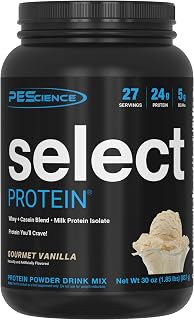
Powders with added fiber or creamer thicken further as they stand, so blend and drink rather than mixing well in advance. Questions about which product suits you belong with a dietitian or your physician rather than an appliance guide.
Buying Timing
Demand across blenders, shakers and stick blenders rises in January and during the fourth-quarter gift season. Amazon runs Prime Big Deal Days in early October, with Black Friday and Cyber Monday in late November.
Electric shakers and manual bottles are inexpensive enough that waiting rarely pays; blenders are where promotional windows matter. Discount levels vary by model and cannot be promised in advance.
Frequently Asked Questions
Common questions about mixing powder cleanly.
Do I need a blender at all?
For powder and water or milk, an electric or manual shaker is usually enough. A blender earns its place once frozen fruit, oats, nut butters or greens are involved.
Why is my shake foamy?
Blending too long or too fast whips air into the mixture. Blend for 15 to 20 seconds, then let it rest briefly before drinking to let the foam settle.
Does warm liquid dissolve powder better?
Room-temperature liquid disperses powder more easily than very cold, but heat can cause some proteins to clump or change texture. Cool rather than hot is the practical compromise.
How do I stop the smell in my bottle?
Rinse immediately after use, wash the lid gasket and any agitator weekly, and dry everything fully with the lid off. Sealed damp bottles are what cause the odor.
See More:
- Best low price dash cam
- Projector screens at Best Buy
- Best buy projector screens
- Best projector for games
- Best projector for gaming
Choosing the Right Tool for Powder
The best blender for protein powder is the one that lets you start slow and add powder to moving liquid. The NutriBullet Ultra and the Braun and Vitamix immersion blenders do that directly; the Ninja Detect Duo automates it.
If frozen fruit is never involved, an electric shaker like the VOLTRX or a BlenderBottle covers the job with almost no cleanup. Match liquid to powder, blend briefly, rest, pulse once more, and rinse straight away.
Our top picks




As an Amazon Associate we earn from qualifying purchases at no extra cost to you.
Write Your Review
No reviews yet. Be the first to share your experience!