Key takeaways
- Whole home air purifier systems clean indoor air across expansive floor plans using high-volume airflow. Selecting the right setup requires balancing CADR ratings, duct compatibility, sound levels, and ongoing filter costs for your family. We evaluate top units to maintain…
What's inside
Whole home air purifier systems clean indoor air across expansive floor plans using high-volume airflow. Selecting the right setup requires balancing CADR ratings, duct compatibility, sound levels, and ongoing filter costs for your family. We evaluate top units to maintain pristine residential airflow year-round.
As an Amazon Associate we earn from qualifying purchases.
By Daniel Foster
Decisive Technical Benchmarks and Spatial Sizing
Selecting an effective whole home air purifier requires examining certified mechanical performance rather than relying on marketing slogans. Air cleaner units must process thousands of cubic feet of ambient air daily to extract microscopic debris, making verifiable air exchange rates essential for long-term health.
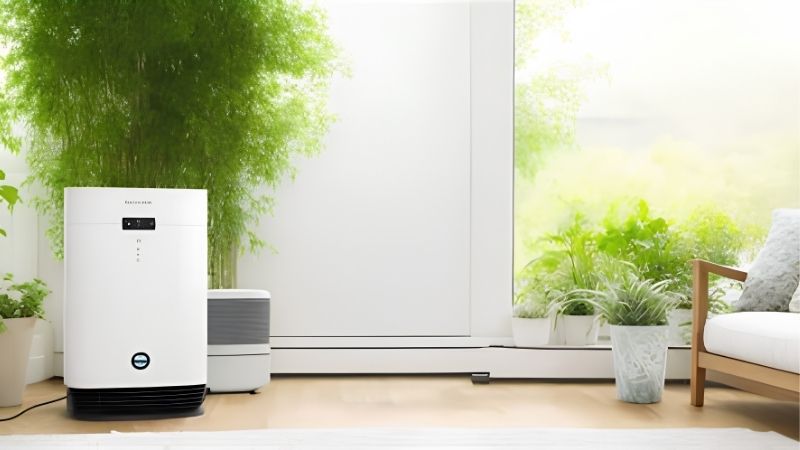
Decisive Performance Metrics: CADR and Air Changes
Evaluating any whole home air purifier starts with Clean Air Delivery Rate numbers verified under ANSI/AHAM AC-1 standards. These metrics quantify volumetric cleaning performance across smoke, dust, and pollen particulates, revealing real-world speed rather than empty fan power claims from equipment brochures.
True HEPA filtration captures at least 99.97% of airborne particles down to 0.3 microns, providing reliable mechanical capture for indoor spaces. You must distinguish true certified media from vague HEPA-type alternatives that fail to capture tiny combustion residues or fine microscopic combustion particles.
Air changes per hour determine cleaning effectiveness across your floor plan, with 4 to 5 ACH recommended for active allergy seasons. A unit moving 450 cfm (765 m³/h) processes large air masses rapidly, while inferior blowers allow heavy particulate settling before indoor air ever cycles across the internal media.
Space and Sizing Fit Across Residential Floor Plans
Determining appropriate space and sizing fit demands calculating precise square footage alongside standard ceiling heights of 8 ft (2.44 m). A device rated for 1,500 sq ft (139 m²) assumes unobstructed single-zone air circulation, whereas fragmented multi-room architecture restricts balanced air delivery.
Physical cabinet footprint dictates placement options, requiring at least 15 to 20 inches (38 to 51 cm) of perimeter clearance for intake grilles. Placing heavy upright units in cramped entry corridors chokes intake velocity, forcing blower motors to draw excessive electrical wattage while starving rooms of clean air.
Always measure actual room dimensions and doorway openings before ordering any system to avoid frustrating installation bottlenecks. For ducted configurations, confirm your return-air drop matches cabinet dimensions exactly, as modifying sheet metal plenum transitions adds unexpected labor expenses during setup.
In-Duct HVAC Integration Versus Standalone Floor Consoles
Central ducted purifiers integrate directly into existing HVAC air handlers, utilizing existing ductwork networks to clean whole properties invisibly. These units run in tandem with your furnace blower, demanding MERV 11 to MERV 16 rated deep-pleat media that cleans without inflicting damaging static pressure drops.
Standalone multi-room floor consoles operate independently of furnace machinery, circulating airflow through targeted open living zones on demand. Renters and homeowners lacking ducted forced-air networks depend on these portable designs, deploying them strategically near primary pollution sources or bedrooms.
Ducted systems deliver whole-house uniformity but require professional sheet metal cutting, whereas standalone consoles offer instant plug-in flexibility. Note that standalone units cannot distribute clean air through closed bedroom doors, requiring calculated placement along primary interior circulation paths.
| Model | System Type | Coverage / Airflow | Filtration Grade | Sound Output (dB) | Price Tier |
|---|---|---|---|---|---|
| AprilAire 5000 | In-Duct Central HVAC | Up to 3,000 sq ft (279 m²) | MERV 16 / Electrostatic | Silent (Duct Mounted) | Premium Tier |
| Honeywell Home F100 | In-Duct Central Media | Up to 2,000 cfm (3,398 m³/h) | MERV 11 Deep Pleat | Passive (Zero Motor Noise) | Budget Tier |
| Medify MA-112 | Standalone Floor Console | Up to 2,500 sq ft (232 m²) | Dual H13 True HEPA | 21 to 70 dB | Mid-Range Tier |
| IQAir HealthPro Plus | Standalone Multi-Room | Up to 1,125 sq ft (105 m²) | HyperHEPA Medical Grade | 32 to 69 dB | Premium Tier |
| Levoit Core 600S | Standalone Smart Console | Up to 1,588 sq ft (147 m²) | H13 True HEPA + Carbon | 26 to 55 dB | Mid-Range Tier |
| Coway Airmega 400S | Standalone Dual-Intake | Up to 1,560 sq ft (145 m²) | Dual Max2 True HEPA | 22 to 52 dB | Upper-Mid Tier |
Top Whole Home Air Purifiers for Modern Living Spaces
Our lineup highlights each whole home air purifier built for sustained residential performance across diverse architecture and budget parameters. We inspect physical build quality, certified particulate capture, noise output curves, and recurring operational costs so you invest with complete buying confidence.
AprilAire 5000 Whole Home Electronic Air Cleaner
The AprilAire 5000 permanently mounts into central HVAC return ducts, combining electro-static charging with patented mechanical media. This whole home air purifier captures 89% of airborne particles down to 0.3 microns, maintaining residential airflow across homes spanning up to 3,000 sq ft (279 m²) without strain.
However, installation requires sheet metal cutting and dedicated 120 V wiring, placing initial setup in the premium bracket where prices fluctuate on Amazon. The internal ionizing control wires also need periodic annual dusting to stop particulate carbonization from causing annoying snapping electrical noises.
Honeywell Home F100 Media Air Cleaner
The Honeywell Home F100 delivers passive in-duct filtration using robust MERV 11 pleated media housed in heavy-gauge zinc-coated steel. Designed for airflow up to 2,000 cfm (3,398 m³/h), it captures pollen and pet dander across properties measuring up to 2,500 sq ft (232 m²) without active electrical draw.
Its passive MERV 11 rating misses fine smoke particulates below 1.0 micron, while the 7-inch (18 cm) cabinet often requires duct transitions during installation. Replacement media lasts 6 to 12 months, keeping lifetime operating costs firmly in the budget range though retail pricing varies over time on Amazon.
Medify MA-112 Extra-Large Floor Console
The Medify MA-112 operates as a standalone whole home air purifier for large spaces, processing up to 2,500 sq ft (232 m²) in one hour. Armed with a certified Smoke CADR of 560 cfm (950 m³/h), its dual-sided intake draws high air volumes across dual Medical Grade H13 True HEPA filters with verifiable efficiency.
Weighing a heavy 32 lbs (14.5 kg), this mid-range console demands 20 inches (51 cm) of clearance, while filter sets require replacing every 4 to 6 months in busy homes. Running its centrifugal fan at peak setting pushes power to 95 W and noise to 70 dB, with ongoing replacement cartridge prices shifting on Amazon.
IQAir HealthPro Plus Heavy-Duty Air System
Constructed in Switzerland with non-offgassing ABS plastics, the IQAir HealthPro Plus delivers hospital-grade multi-room particulate control. Its HyperHEPA filtration media is certified to capture airborne particles down to 0.003 microns at 99.5% efficiency, cycling 1,125 sq ft (105 m²) spaces up to four times hourly.
Positioned in the premium tier, both the initial unit and modular replacement filters demand significant capital, with prices shifting regularly on Amazon. The unit lacks smartphone app connectivity or automated air quality sensing, requiring manual fan adjustments across its 32 to 69 dB acoustic operating scale.
Levoit Core 600S Smart Multi-Room Purifier
The Levoit Core 600S brings automated smart management to wide open floor plans, rated for spaces up to 1,588 sq ft (147 m²) in 30 minutes. Its cylindrical vortex engineering achieves a Smoke CADR of 410 cfm (697 m³/h), combining a fine nylon pre-filter, H13 True HEPA media, and custom carbon pellets inside one drum.
Its thin granular carbon layer saturates quickly when countering heavy chemical vapors or stubborn smoke, requiring frequent full drum replacements. This mid-range unit maintains low 49 W peak power, though app features depend entirely on steady 2.4 GHz Wi-Fi, with seasonal discounts altering pricing on Amazon.
Coway Airmega 400S Connected Air Cleaner
Featuring dual Max2 filtration cassettes, the Coway Airmega 400S sweeps airborne debris across open residential layouts up to 1,560 sq ft (145 m²). Its dual-intake turbine generates 328 cfm (557 m³/h) CADR performance, capturing fine particulates down to 0.3 microns alongside volatile organic household compounds.
The wide 22.8-inch (58 cm) cabinet prevents tight corner placement, and internal optical dust sensors require cleaning every two months to avoid drifting readings. Falling into the upper-mid tier, its permanent washable pre-filters help extend cartridge life, though replacement media costs fluctuate on Amazon.
Long-Term Operation, Operating Costs, and Reliability
Operating a whole home air purifier involves tracking energy loads, routine maintenance schedules, and mechanical wear over multi-year lifespans. Anticipating common degradation points and component servicing prevents costly downtime and keeps residential breathing zones clear of accumulating seasonal contaminants.
True Annual Filter Replacement Costs and Cartridge Subscriptions
The true cost of owning air purification hardware lies within recurring replacement filters rather than initial checkout pricing at Amazon. Standard True HEPA cartridges require replacement every 6 to 12 months, creating recurring operational expenditures ranging from 60 to over 220 dollars annually per machine.
HVAC media filters like MERV 11 deep-pleats offer greater surface area, often lasting up to 12 months before experiencing air velocity restriction. Failing to swap clogged cartridges forces blowers to work against elevated static resistance, driving up monthly utility bills while allowing bypass air leakage.
Beware of third-party knockoff filters sold online that lack proper perimeter foam gaskets, allowing dirty bypass air around media pleats. We recommend verifying OEM manufacturer certifications and setting calendar alerts to replace media promptly before internal dust cake layers trigger motor strain or odors.
Motor Durability, Continuous Noise, and Electric Draw
Air cleaner reliability depends directly on motor bearing construction, where sealed ball bearings far outlast cheap sleeve bearing assemblies. Units running continuously at high speeds accumulate internal friction heat, which can lead to dry bearings and annoying motor buzzing over two to three years of run time.
Noise ratings present a crucial operational factor, as high-decibel blowers frequently get turned down by owners during evening hours. When a purifier operates at 55 dB or louder, occupants often lower fan speeds to sleep, inadvertently reducing CADR airflow precisely when closed bedroom doors trap nightly indoor debris.
Electrical power consumption varies from 25 W on modest brushless DC units to over 200 W on heavy-duty alternating current motor assemblies. Running an efficient 50 W unit continuously at national average electricity tariffs adds roughly 5 to 7 dollars monthly, representing a modest ongoing operating expense.
Seasonal Demands, Wildfire Smoke Surges, and Safety Warnings
Running your whole home air purifier during peak smoke seasons requires maintaining continuous air exchange to counter outdoor particulate spikes. Wildfire plumes drive local Air Quality Index measurements past 300, depositing dense oily soot that exhausts carbon beds and clogs HEPA media within weeks instead of months.
Retail sales events like late-June Prime Day and late-November Black Friday represent ideal opportunities to buy replacement filters in bulk at discount. Equipping your home with spare filter sets ahead of late-summer wildfire seasons or spring pollen blooms prevents supply shortages during emergency smog events.
Never operate intentional ozone generators in occupied residences, as ozone is a severe lung irritant according to EPA safety guidelines. Furthermore, while physical filtration captures particulate irritants, air cleaners do not replace ventilation or cure medical conditions; consult a physician for asthma treatment.
Selecting the Ideal Air Cleaning System for Your Household
Investing in the right whole home air purifier delivers balanced residential air quality when matched to your floor plan dimensions and ductwork setup. Whether opting for an in-duct HVAC cleaner or powerful standalone consoles, prioritizing verified CADR ratings and true mechanical filtration ensures reliable protection.
Take time to calculate your overall square footage, verify return drop measurements, and evaluate annual replacement filter budgets before purchasing. Selecting proven equipment with readily available parts protects your family from indoor irritants, keeping residential breathing spaces fresh through every season.