Key takeaways
What's inside
Air purifier buying guide research demonstrates that cleaner indoor air requires matching room square footage with verified clean air delivery rates. Choosing an efficient system captures fine wildfire smoke, allergens, and persistent pet dander reliably while keeping recurring filter replacements and noise levels manageable.
By Daniel Foster
As an Amazon Associate we earn from qualifying purchases.
Evaluating Essential Specifications Before You Buy
Selecting an air cleaner requires looking beyond aesthetic outer housings to examine certified mechanical performance. Comparing standardized airflow benchmarks and physical spatial requirements ensures your chosen machine cleans indoor living areas without consuming excessive wattage or producing harsh motor hums.
Understanding CADR Ratings and Verified Air Changes per Hour
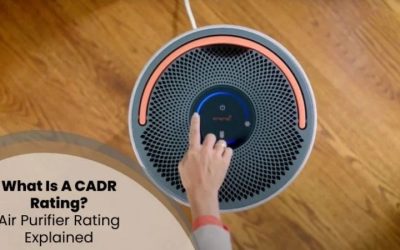
Clean Air Delivery Rate, or CADR, measures cubic feet per minute of filtered air delivered at maximum fan speed. Established by AHAM, this benchmark evaluates separate values for smoke, dust, and pollen. Reliable units provide at least 200 CFM (340 m³/h) to ensure rapid removal of airborne pollutants across target rooms.
Air changes per hour dictate how often an entire room’s air volume circulates through filter media. Following this air purifier buying guide rule ensures at least 4.8 to 5 ACH for allergy or smoke relief, preventing undersized blowers from running constantly on noisy maximum speeds during heavy seasonal pollution.
Room Dimensions, Placement Clearances, and Footprint Constraints
Carefully calculate your floor area in square feet (sq ft) or square meters (m²) alongside ceiling height before purchasing any appliance. A compact chassis designed for 200 sq ft (18.5 m²) will struggle in open-concept living rooms spanning 600 sq ft (55.7 m²), leaving contaminants suspended in uncirculated dead zones.
Physical placement requires leaving 15 to 20 inches (38 to 51 cm) of clearance between air intakes and walls. Always measure your room dimensions and available clearance before ordering to ensure adequate airflow, preventing dead zones while keeping primary walkways unobstructed by the vertical floor chassis.
True HEPA Filtration Standards Versus Running Filter Costs
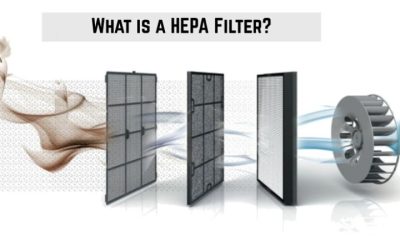
Authentic True HEPA filters capture 99.97% of airborne particles down to 0.3 microns, including fine dust, pet dander, and mold spores. Be wary of ambiguous marketing phrases like ‘HEPA-type’ or ‘HEPA-style’, which lack strict testing certifications and allow sub-micron particulate matter to bypass filter fibers entirely.
Budget for recurring filter replacements, which represent a mandatory operational subscription ranging from $40 to $120 each year. Replacing dense multi-stage cartridges every 6 to 12 months prevents restricted air intake, protecting centrifugal fan assemblies from premature burnout while sustaining rated air turnover.
Market Dynamics, Seasonal Wildfire Surges, and Annual Sales
Seasonal wildfire events between August and October frequently drive regional Air Quality Index (AQI) values well into unhealthy categories. During these sudden pollution spikes, consumer demand surges rapidly, leading to temporary retail stock shortages and unexpected price spikes across high-capacity mechanical units.
Winter months bring closed windows and elevated flu virus circulation, highlighting the need for continuous indoor air circulation and purification. According to EPA air quality reports, indoor particulate concentrations often climb substantially when residential ventilation decreases during sustained freezing periods.
Consulting an air purifier buying guide ahead of major promotional periods like Prime Day or late fall savings events offers financial advantages. Major home appliances experience significant price adjustments during these retail windows, providing an ideal opportunity to secure replacement filter bundles at lower cost.
| Model | Coverage (4.8 ACH) | Smoke CADR | Noise Level | Power Draw | Filter Cost Tier |
|---|---|---|---|---|---|
| Levoit Core 400S | 403 sq ft (37.4 m²) | 260 CFM (442 m³/h) | 24–52 dB(A) | 38 W | Budget-Friendly |
| Coway Airmega AP-1512HH | 361 sq ft (33.5 m²) | 233 CFM (396 m³/h) | 24.4–53.8 dB(A) | 77 W | Budget-Friendly |
| Winix 5500-2 | 360 sq ft (33.4 m²) | 232 CFM (394 m³/h) | 27.8–54.8 dB(A) | 70 W | Moderate |
| Blueair Blue Pure 311i Max | 387 sq ft (36.0 m²) | 250 CFM (425 m³/h) | 23–50 dB(A) | 38 W | Mid-to-Premium |
| Medify MA-50 | 550 sq ft (51.1 m²) | 306 CFM (520 m³/h) | 35–56 dB(A) | 70 W | Premium (Dual) |
| Honeywell HPA300 | 465 sq ft (43.2 m²) | 300 CFM (510 m³/h) | 38–60 dB(A) | 130 W | Moderate (Multi) |
Top Performing Air Purifiers for Residential Spaces
This air purifier buying guide highlights top-tier residential options evaluated through verified aerodynamic specifications, sound tests, and user durability feedback. Each selected system addresses specific household layouts, balancing mechanical throughput with long-term operating costs and functional ease.
Levoit Core 400S: Best Smart Performer for Mid-Sized Living Rooms
The Levoit Core 400S delivers a certified smoke CADR of 260 CFM (442 m³/h), cleaning spaces up to 403 sq ft (37.4 m²) at 4.8 air changes per hour. Its 360-degree cylindrical intake draws airborne contaminants from all directions, utilizing an authentic True HEPA layer combined with an activated carbon pellet chamber.
Operating sound ranges from 24 to 52 dB(A) drawing 38 watts, with onboard PM2.5 laser sensors adjusting speeds smoothly. However, the companion mobile application occasionally loses connection after Wi-Fi restarts, and authentic replacement filter sets add a moderate recurring cost every 6 to 12 months of daily use.
Coway Airmega AP-1512HH Mighty: Compact Reliability for Bedrooms
The Coway Airmega AP-1512HH Mighty features an iconic square profile, delivering a smoke CADR of 233 CFM (396 m³/h) suitable for rooms measuring 361 sq ft (33.5 m²) at 4.8 ACH. Its multi-stage system pairs a washable pre-filter with a True HEPA layer and an odor-trapping carbon sheet to trap particulate debris.
Noise levels span 24.4 to 53.8 dB(A) with an automated eco mode that cuts energy draw when air stays clean. A distinct drawback is its built-in ionizer, which must be manually switched off by sensitive individuals, while the thin carbon sheet saturates rapidly when handling continuous heavy cooking grease and smoke.
Winix 5500-2: Heavy-Duty Odor and Pet Dander Neutralizer
Designed specifically for households with multiple pets, the Winix 5500-2 outputs a smoke CADR of 232 CFM (394 m³/h), covering 360 sq ft (33.4 m²) at 4.8 ACH. Unlike budget options, it houses a washable granular carbon filter that absorbs stubborn animal odors far more effectively than flat paper alternatives.
Sound output registers at a whisper-quiet 27.8 dB(A) on sleep mode, aided by ambient light sensors that dim LED displays. As a notable drawback, the bulky 15 by 23.6-inch (38 by 60 cm) chassis occupies noticeable floor space, while its PlasmaWave ionization generator creates a subtle clicking noise during night hours.
Blueair Blue Pure 311i Max: Whisper-Quiet Aerodynamic Air Circulation
The Blueair Blue Pure 311i Max utilizes proprietary HEPASilent technology to deliver 250 CFM (425 m³/h) of smoke CADR, treating up to 387 sq ft (36.0 m²) at 4.8 ACH. Its cylindrical body features a washable Scandinavian fabric pre-filter that traps large pet hair and extends internal filter longevity.
This air purifier buying guide selection pairs whisper-quiet 23 to 50 dB(A) operation with low 4 to 38-watt power consumption. However, the proprietary electrostatic filter media requires genuine brand replacements to prevent airflow loss, placing ongoing annual cartridge expenses into a somewhat steeper price tier.
Medify MA-50: Medical-Grade Filtration for Expansive Spaces
Engineered for expansive rooms and finished basements, the Medify MA-50 generates an impressive smoke CADR of 306 CFM (520 m³/h), purifying 550 sq ft (51.1 m²) at 4.8 ACH. It incorporates dual True HEPA filters with medical-grade H13 media, capturing microscopic particles down to 0.1 microns with 99.9% efficiency.
Its dual-sided air intake neutralizes heavy VOC concentrations, utilizing a tempered glass panel with child lock controls. The main drawback is fan volume on high speed, reaching 56 dB(A), while replacing two distinct filter cartridges simultaneously doubles ongoing maintenance costs over typical single-filter units.
Honeywell HPA300: Rugged Mechanical Power for High Particle Loads
The Honeywell HPA300 remains a benchmark mechanical workhorse, producing an authoritative smoke CADR of 300 CFM (510 m³/h) to service 465 sq ft (43.2 m²) at 4.8 ACH. It avoids complex electronic sensors and microprocessors in favor of robust capacitive touch buttons and heavy-duty centrifugal blower fan motors.
Three separate True HEPA filters capture pollen and dust, backed by a rugged plastic chassis that withstands years of use. However, power draw reaches a high 130 watts on turbo setting, and the lack of automatic particle sensors forces homeowners to monitor indoor pollution and toggle fan speeds manually every day.
Long-Term Maintenance, Acoustic Thresholds, and Ownership Costs
Maintaining indoor air quality involves understanding continuous equipment upkeep and mechanical wear factors over extended ownership periods. Following this air purifier buying guide reveals how motor acoustics, sensor drift, and electrical draw influence overall satisfaction long after initial retail unboxing.
Acoustic Benchmarks and Fan Motor Wear Over Extended Lifespans
Operating noise represents the most common reason homeowners deactivate air cleaning systems, particularly inside quiet sleeping environments. Decibel measurements range from a whisper-level 22 dB(A) on low speeds to over 58 dB(A) on maximum turbo, where aerodynamic turbulence sounds similar to a humming dishwasher.
Over 12 to 24 months of continuous operation, low-grade sleeve bearing motors often develop dry friction rattles, high-pitched whines, and subtle chassis vibrations. Selecting appliances equipped with brushless DC motors and precision ball bearings ensures quieter rotational performance and sustained mechanical life.
To maintain quiet resting spaces, size your air cleaner roughly 30% larger than your room’s minimum square footage requirement. This extra headroom allows you to run the device continuously on medium or low fan speeds while still achieving the recommended 4.8 air changes per hour without intrusive background noise.
Particle Sensor Drift and Necessary Diagnostic Maintenance
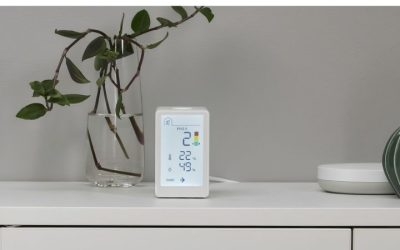
Integrated optical and infrared dust sensors accumulate stray lint and oily residues over months of continuous household monitoring. This physical contamination causes sensor drift, leading automated modes to either run excessively on turbo or fail to detect rising particulate pollution caused by cooking or smoke.
Routine maintenance requires cleaning the sensor window every three months using a soft cotton swab lightly moistened with isopropyl alcohol. Ensuring the optical lens remains clear allows onboard microprocessors to calibrate baseline ambient readings accurately, restoring responsive fan speed automation when needed.
Similarly, vacuuming external mesh pre-filters every two to four weeks removes coarse pet hair and carpet fuzz before it embeds in fine HEPA pleats. This simple preventative habit reduces static airflow resistance, lowering power consumption while prolonging the working service life of your primary filter cartridge.
Ozone Emission Hazards and Electrical Safety Certifications
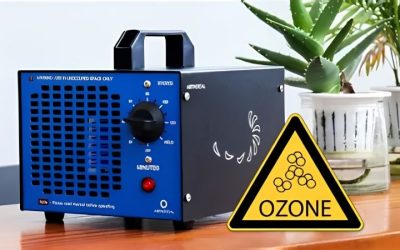
Consumer safety authorities caution strongly against dedicated ozone generators, which intentionally produce reactive gas molecules that irritate lung tissues. Ground-level ozone triggers respiratory discomfort and worsens bronchial sensitivities; therefore, choose certified mechanical filtration units for indoor use.
Referencing an air purifier buying guide confirms that standard mechanical True HEPA filters produce zero ozone byproducts during operation. Always verify electrical compliance markings like UL 867 or ETL listings to ensure safe power supply construction, surge resilience, and dependable long-term household operation.
See More:
- Best eyeshadow blender brush
- Best frozen foods for air fryer
- Best frozen food for air fryer
- Best way to reheat steak in air fryer
- Best air fryer recipes book
Final Recommendations for Clean and Healthy Indoor Air
Selecting the right air cleaning system requires balancing certified clean air delivery rates against realistic room coverage, noise tolerances, and annual filter upkeep costs. Prioritizing certified True HEPA filtration and substantial activated carbon ensures dependable extraction of airborne dander, dust, and smoke.
Always measure your room dimensions and ceiling height carefully before making a final purchase, ensuring proper clearance from adjacent walls for unimpeded circulation. Running an appropriately sized model on moderate fan speeds achieves superior air quality while keeping sound levels comfortable for daily living.
Use this air purifier buying guide to identify an efficient appliance matching your specific square footage, budget, and lifestyle requirements. Investing in dependable mechanical filtration creates a noticeably fresher, healthier home environment for your entire family across every season of the year.