Clarinet has a specific early hurdle that no other woodwind shares: the break. Crossing from A to B above the staff means changing almost every finger at once while the register key opens, and if the instrument has a leaking pad or a badly fitted register vent, that crossing squeaks no matter how good the player is. Beginners blame themselves. Teachers check the horn. Getting an instrument that seals properly is worth more than any other specification on the box.
The material question is simpler than it looks. Professional clarinets are grenadilla wood, which sounds superb and cracks if you take it from a cold car into a warm room. Student clarinets are ABS resin or ebonite, which sound perfectly good, survive school transport and never crack. For a beginner, resin is not a compromise — it is the sensible choice. What actually varies between student clarinets is key plating quality, pad seating and whether the barrel and mouthpiece let the instrument play in tune. This guide compares practical options for school band and self-teaching.
Our top picks





As an Amazon Associate we earn from qualifying purchases at no extra cost to you.
Quick Comparison
| Product | Best For | Standout Feature | Watch Out For |
|---|---|---|---|
| Glory GLY-PBK Ebonite | Best value complete kit | Ebonite body with ten reeds and a stand | Stock mouthpiece is basic |
| Jean Paul CL-300 | School band reliability | Consistent key action and pad sealing | Fewer accessories than bundled kits |
| Mendini by Cecilio Ebonite | First instrument for children | Full kit with case, stand and care items | Key plating wears at contact points |
| 17-Key ABS Resin Clarinet | Students needing two barrels | Spare barrel allows tuning adjustment | Resin body has less warmth than wood |
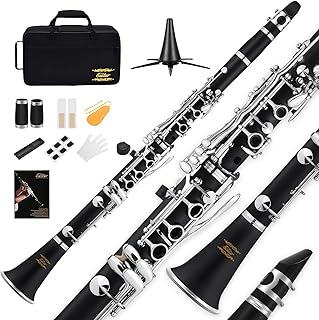
| Eastar ECL-300 | Durable everyday student horn | Nickel keys on an ebonite body with hard case | Reeds supplied are entry level |
| Essential Elements Clarinet Book 1 | Learning alongside a band | Graded method matched to school programmes | Assumes a teacher-led classroom pace |
How to Choose
- Resin over wood for beginners: ABS and ebonite bodies never crack from temperature changes and sound perfectly good. Grenadilla is for advanced players who can care for it properly.
- Test across the break: Play from A to B above the staff. If it squeaks or refuses to speak, suspect a leaking pad or misaligned register key rather than the player.
- Mouthpiece before anything else: Student mouthpieces are functional. Upgrading is the cheapest way to improve tone, response and intonation on any beginner clarinet.
- Start with soft reeds: Strength two to two and a half suits a developing embouchure. Harder reeds choke the sound and exhaust the player.
- Check the case and stand: A hard case protects the keywork in a school bag, and a stand stops the instrument being laid on a chair where it gets sat on.
Top Picks Reviewed
Best Complete Package: Glory GLY-PBK Ebonite
An ebonite body with ten reeds, a stand, hard case, cork grease and cleaning tools covers everything a beginner needs, and the ebonite gives a slightly warmer tone than plain ABS resin.
The included mouthpiece is basic. Replacing it with a decent student mouthpiece transforms how easily the instrument responds, particularly across the break.
Most Reliable: Jean Paul CL-300
Jean Paul’s student horns are the ones repair technicians tend to speak well of, because the pads generally seat properly and the key action is consistent. In a school band that means fewer weeks lost to a squeaking instrument.
It ships with fewer extras than bundled kits. A stand, spare reeds and cleaning gear are separate purchases.
Best for Children: Mendini by Cecilio Ebonite Kit
Ten reeds, a mouthpiece, cork grease, hard case, stand, cleaning cloth and gloves means a child arrives at their first lesson with everything the teacher will ask for.
The key plating shows wear at the points where fingers rest most. It is cosmetic and typical at this price, but it will not stay pristine.
Best Tuning Flexibility: 17-Key ABS Resin Clarinet
Including two barrels is a genuinely thoughtful inclusion, because barrel length changes the instrument’s overall pitch. In a cold rehearsal room where the clarinet runs flat, swapping to the shorter barrel fixes it.
ABS resin is bright and durable rather than warm. It is entirely appropriate for a student and audibly different from wood.
Best Build for School Use: Eastar ECL-300
Nickel-plated keys on an ebonite body with a hard case is a combination that survives being carried between home and school several times a week without developing bent keywork.
The supplied reeds are entry level. A box of properly cut reeds is the fastest tone improvement available and costs very little.
Best Learning Material: Essential Elements Clarinet Book 1
The method book most school band programmes are built around, so a student working through it stays aligned with what their ensemble is playing. The sequencing introduces the break at a sensible point rather than early.
It assumes a teacher is present. Working through it alone leaves gaps around embouchure and air support that a book cannot demonstrate.
Frequently Asked Questions
Why does my clarinet squeak?
Usually embouchure — too much lower lip pressure or too little air. But persistent squeaking across the break often means a leaking pad or a misaligned register key, which needs a technician rather than more practice.
Wood or plastic for a beginner?
Plastic, meaning ABS resin or ebonite. It never cracks from temperature swings, survives school transport, and sounds good. Wood is for advanced players who can control its environment.
What reed strength should I start with?
Two or two and a half. Softer reeds vibrate more easily while your embouchure develops. Move up gradually as your tone stabilises and starts to sound thin on softer reeds.
How do I stop the corks drying out?
Apply a small amount of cork grease every few weeks, not every session. Over-greasing attracts grit; under-greasing makes joints stiff and risks damaging the tenons when assembling.
Final Thoughts
Buy a resin or ebonite clarinet that seals cleanly across the break, upgrade the mouthpiece early, and start on softer reeds while the embouchure develops. A properly sealed student clarinet with a decent mouthpiece will let a beginner cross the break without drama, and that is the moment most people decide whether they enjoy this instrument.