Trumpet is unusual among beginner instruments because the hardest part is not the instrument at all — it is the buzz. Sound is produced by your lips vibrating into the mouthpiece, and the horn merely amplifies and shapes it. That is why a good teacher spends the first weeks on mouthpiece buzzing and long tones, and why buying an expensive trumpet does very little for a student who has not yet built an embouchure.
What the instrument does need to do is work mechanically. Valves must move freely and seal, because a sluggish or leaking valve makes fast passages impossible and quiet playing airy. Slides need to move so you can tune, and the third valve slide in particular needs a working ring or saddle, because certain notes are sharp on every trumpet and are corrected by pushing that slide out while playing. This guide covers student horns and the method books that get a beginner buzzing properly, for school band players and self-teachers.
Our top picks




As an Amazon Associate we earn from qualifying purchases at no extra cost to you.
Quick Comparison
| Product | Best For | Standout Feature | Watch Out For |
|---|---|---|---|
| Habits of a Successful Beginner Trumpet | Building daily practice routines | Structured warm-ups and fundamentals | Routine book rather than a song collection |
| Eastar ETR-380 | Complete beginner kit | Full set with case, mouthpiece and gloves | Valves need breaking in and regular oiling |
| Jean Paul TR-330 | Most reliable student horn | Stainless valves and a play-tested setup | Costs more than budget starter kits |
| Kmise Bb Standard Trumpet | Kits including a practice mute | Mute and beginner guide bundled in | Lacquer finish marks easily |
| Easy Trumpet Lessons for Beginners | Self-teaching adults | Online audio and accompaniment included | No teacher to correct embouchure faults |
| Best Beginning Trumpet Book for Kids | Young learners | Gentle pacing aimed at children | Progresses more slowly than band methods |
How to Choose
- Test the valves first: They should drop freely under their own weight and return crisply. Sticky valves make fast passages impossible and are the most common fault on cheap horns.
- Check the slides move: The tuning slide and third valve slide must move by hand. A frozen third slide means you cannot correct the notes that are sharp on every trumpet.
- A 7C mouthpiece is the standard start: It suits most beginners’ lips and is what teachers assume. Explore other sizes only once your embouchure is established.
- Yellow brass is the norm: It gives a bright, projecting sound suited to school bands. Finish and lacquer are cosmetic, not tonal, at this level.
- Get a practice mute if you live in a flat: Trumpet is loud. A practice mute makes daily long tones possible without a neighbour dispute.
Top Picks Reviewed
Best Practice Structure: Habits of a Successful Beginner Trumpet
This is a routine book rather than a tune collection, which is exactly what a beginner brass player needs. Daily long tones, lip slurs and articulation exercises are what build the embouchure, and having them sequenced removes the guesswork.
There are few actual songs. Pair it with repertoire material so practice has a reward at the end of the fundamentals.
Best Starter Kit: Eastar ETR-380
A brass Bb trumpet with a hard case, 7C mouthpiece, cleaning kit and gloves covers a student’s first term without any additional orders. The gold lacquer finish is standard school band fare.
New valves are tight and need breaking in. Oil them regularly for the first few weeks, and expect them to loosen up considerably as the surfaces bed in.
Most Reliable: Jean Paul TR-330
Stainless steel valves and a two-piece yellow brass bell, play-tested before shipping. That testing is the difference between a horn that works out of the box and one that needs a technician before a student can use it.
It costs more than the cheapest bundles. What you are paying for is that the valves seal and the slides move, which is not guaranteed at the bottom of the market.
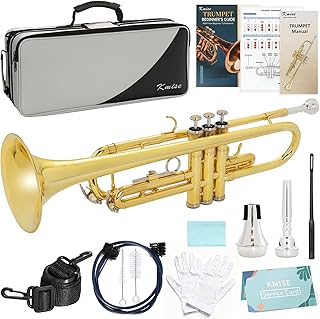
Best Bundled Extras: Kmise Bb Standard Trumpet
Including a mute alongside the case, 7C mouthpiece, beginner guide and cleaning kit is genuinely useful, because a mute is what makes daily practice possible in a shared building.
The gold lacquer marks readily where hands and the case interior make contact. It is cosmetic and typical of student horns.
Best for Adult Self-Teachers: Easy Trumpet Lessons for Beginners
A step-by-step method with online audio and accompaniment tracks, which matters enormously for brass because playing along with a reference helps you hear whether your pitch is centred.
Nobody is watching your embouchure. Recording yourself and comparing to the audio examples is the closest substitute for a teacher’s eye.
Best for Children: Best Beginning Trumpet Book for Kids
Paced for younger players with simple material and gradual introduction of range, which prevents the common failure of pushing a child into high notes before their embouchure can support them.
It moves slower than a school band method. A student in an ensemble may need to work through this alongside their band book rather than instead of it.
Frequently Asked Questions
Why can I not get a sound from the trumpet?
The sound comes from your lips buzzing, not the horn. Practise buzzing on the mouthpiece alone until you get a steady tone, then add the instrument. Most beginners need a few sessions.
What mouthpiece should a beginner use?
A 7C is the standard starting point and suits the majority of players. It is what most method books and teachers assume you are using, which keeps their advice relevant.
How often should I oil the valves?
Every few days with regular playing, and immediately if a valve starts feeling sluggish. Valve oil is cheap and sticky valves are the most common reason a student horn stops working properly.
How do I practise trumpet in an apartment?
A practice mute drops the volume substantially while letting you work on air, articulation and fingering. Buzzing on the mouthpiece alone is also nearly silent and builds the embouchure directly.
Final Thoughts
Check the valves and slides before anything else, start on a 7C mouthpiece, and spend the first weeks on buzzing and long tones rather than trying to play tunes. A student trumpet that works mechanically plus a structured daily routine will build an embouchure faster than any upgrade, and the embouchure is what actually makes the sound.