
Key takeaways
- Best for year-round variety: FLITI 19-slide holiday projector – 19 slides, 11 themes.
- Best for large homes: Star Shower Ultra 9 – 9 patterns, up to 3,200 sq ft listed.
- Best smart pick: Govee outdoor projector – app control, scene modes, voice assistants.
Best holiday light projector value comes from year-round use, so beyond coverage, light source and weatherproofing, pattern variety matters too. This roundup of the best holiday light projector compares laser, LED and multi-slide units from Star Shower, BlissLights and others so one device covers Halloween through Christmas and beyond.
As an Amazon Associate we earn from qualifying purchases.
Our top picks
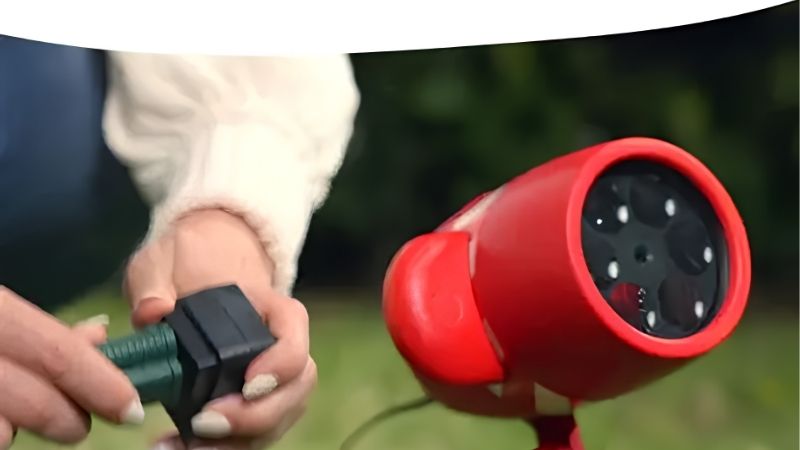
 Outdoor RGB Laser Projector Lights 3 Color
- 【Dynamic RGB Firefly Laser Projector - 7 Colors…
- 【Wireless Remote & Smart Timer - Energy-Saving Automation】:…
- 【Versatile Installation - 270° Adjustable & All-Weather Durability】:…
 2026 Upgraded Halloween Projector
- 【Brighter and Clearer Easter Projector Light】This is the…
- 【Display 8 Patterns at A Time】Most of the…
- 【80 Patterns & Wide Application】The holiday projector lights…
 Govee Outdoor Projector Light
- Diverse Lighting Effects: Try using RGBW aurora and…
- Note: To enhance your lighting experience, it is…
- Clear visual effects: Govee outdoor projector achieves beautiful…
| Product | Key specs | |
|---|---|---|
| Outdoor RGB Laser Projector Lights 3 Color | 【Dynamic RGB Firefly Laser Projector - 7 Colors… 【Wireless Remote & Smart Timer - Energy-Saving Automation】:… 【Versatile Installation - 270° Adjustable & All-Weather Durability】:… | Check price |
| 2026 Upgraded Halloween Projector | 【Brighter and Clearer Easter Projector Light】This is the… 【Display 8 Patterns at A Time】Most of the… 【80 Patterns & Wide Application】The holiday projector lights… | Check price |
| Govee Outdoor Projector Light | Diverse Lighting Effects: Try using RGBW aurora and… Note: To enhance your lighting experience, it is… Clear visual effects: Govee outdoor projector achieves beautiful… | Check price |
 Laser Christmas Projector Lights Outdoor | RGB Moving Firefly Lights Effect: Red Green Blue… Outdoor Garden Decorative Lights Christmas Decor: Outdoor laser… Outdoor Christmas Projector: This outdoor Christmas Laser Show… | Check price |
 Halloween Christmas Projector Lights Outdoor | Upgraded Brighter and Clearer 2 in 1 Projector… Waterproof Indoor Outdoor Projector Light: The holiday projector… Large Coverage & Remote Control with Timer: The… | Check price |
 Brighter Halloween Decorations Projector Lights | 【Brighter and Clearer Halloween Projector Light】This is the… 【19 Slides Can Be Used Throughout The Year】Accompanies… 【Projection Animation That Won't Fade】FLITI Halloween projection light… | Check price |
 Christmas Laser Lights | Christmas Laser Lights with 5 Patterns, Snowflake, Jingling… Ip65 Weatherproof, Professional grade aluminum alloy housing is… Easy To Install, with 16ft Cable long enough… | Check price |
 Star Shower Ultra 9 Outdoor Laser Light | The new 2024 Star Shower Ultra 9 showers… Fast, Easy Holiday Decorations: Holiday decorating with string… The EASIEST way to decorate the outside of… | Check price |
As an Amazon Associate we earn from qualifying purchases at no extra cost to you.
By Daniel Foster
Updated October 2026 – picks rechecked against current listings and recent roundups.
Quick Answer: Best Holiday Light Projector in 2026
The best holiday light projector depends on the job: a multi-slide LED projector such as the ENJOY PET 14-slide or FLITI 19-slide covers Halloween through Christmas, a laser firefly unit such as the VanSmaGo or YINUO LIGHT covers trees and walls in winter, and the Star Shower Ultra 9 covers a large facade. Roundups from Talk of the House and others agree that a multi-slide unit is the safest all-year buy.
Top 3 Picks at a Glance
- Best for year-round variety: FLITI 19-slide holiday projector – 19 slides, 11 themes.
- Best for large homes: Star Shower Ultra 9 – 9 patterns, up to 3,200 sq ft listed.
- Best smart pick: Govee outdoor projector – app control, scene modes, voice assistants.
How We Chose
This list comes from comparing manufacturer specifications, published listings and recurring buyer feedback. We do not claim personal use of any projector. We weighed coverage, light source, weatherproof rating, pattern range, controls and price tier.
How to Choose the Best Holiday Light Projector
The best holiday light projector picks below span wide-coverage lasers, rugged weatherproof units, multi-holiday slide projectors and budget single-effect models, so a Christmas-only or an all-year setup can each be covered. The table compares the deciding specs, and each pick adds the honest drawback owners notice.
| Model | Light Source | Holiday Range | Weatherproofing | Tier |
|---|---|---|---|---|
| Multi-Holiday Slide Projector | LED / laser slides | Many holidays | Waterproof | Mid |
| Star Shower Motion Laser | Laser (star dots) | Winter holidays | Outdoor-rated | Mid |
| Poeland Laser Projector | Laser (patterns) | Year-round outdoor | IP67, metal build | Mid |
| BlissLights StarPort | Laser + LED nebula | Any occasion | Weather-rated model | Premium |
| Double-Head Snowflake LED | LED (snowflakes) | Winter only | IP65 | Budget |
| 3D Dynamic Santa LED | LED animation | Christmas only | Waterproof | Budget |
Multi-Holiday Slide Projector — the year-round pick
A multi-holiday slide projector is often the best holiday light projector for value, shipping with many interchangeable patterns — Halloween ghosts, Christmas trees, birthday and New Year themes — plus effects like an ocean wave, so one unit decorates all year. It is typically waterproof with a remote and timer.
The honest drawback is that swapping slides is a manual step and HD patterns can soften on textured surfaces. For buyers who want a single projector to cover every occasion rather than one holiday, though, the pattern range is the standout feature. It also spares you buying a separate projector for every occasion, which is where the real year-round value quietly adds up over time.
Star Shower Motion Laser — the wide winter pick
The Star Shower Motion Laser blankets a facade with thousands of moving star points, covering up to about 3,200 square feet from as far as 100 yards, with a remote, timer and daylight sensor. For winter holidays across a large home, its wide, effortless coverage leads.
The drawback is limited pattern variety — mostly stars — so it is a winter-focused unit rather than a multi-holiday one. For big-house coverage during the Christmas and New Year stretch, though, it remains a dependable choice. Pair it with a themed slide unit if you also want Halloween or other non-winter holidays covered.
Poeland Laser Projector — the rugged year-round outdoor pick
The Poeland’s IP67 rating and metal build make it a year-round outdoor performer, with a ground stake and tabletop base, a 2-to-8-hour timer and a security lock cable. Its durability suits leaving a projector out across seasons and multiple holidays.
Its drawback is a limited head tilt range and occasional remote failures. For an outdoor unit meant to survive many seasons of holiday use rather than a single December, though, its rugged build is a real advantage.
BlissLights StarPort — the refined any-occasion pick
BlissLights’ layered laser-and-nebula effect suits any occasion, from a holiday party to everyday ambiance, with a stake, remote and weather-rated models. As a projector you will use beyond a single holiday, its polished look earns its keep year-round.
The trade is price and scale: it costs more and the indoor Sky Lite version is not for large exteriors. For a refined, any-time display over a defined area, though, it is the versatile premium pick.
Double-Head Snowflake LED — the budget winter pick
This double-head snowflake projector spreads drifting snowflakes across a wide wall from two rotating LED heads, with IP65 weatherproofing and a timer at a budget price. For a wintry look across the holidays, it is affordable and quick to set up.
The drawback is that it does one seasonal effect — snowflakes — so it is not a year-round unit, and its no-name build is less proven. As an inexpensive winter-holiday option, though, it delivers wide coverage for the money.
3D Dynamic Santa LED — the Christmas novelty pick
The 3D Dynamic Santa projector casts an animated reindeer-sleigh scene with a “Merry Christmas” message via an upgraded LED chip, and it is waterproof for window, wall or yard use. As a fun, targeted Christmas accent, it adds playful character to a display.
Its limit is that it is Christmas-only and its animation softens on textured brick. For a single-holiday novelty on a window or smooth wall, though, it brings a story-like touch that other units do not.
More Holiday Light Projectors to Consider
Star Shower Ultra 9 – Best for a Large Home Facade
The Star Shower Ultra 9 is the single-unit laser from the same family as the Motion Laser. It lists 9 patterns, three color combinations, motion or still modes and coverage up to 3,200 square feet. It suits big exteriors in winter.
- 9 patterns, motion or still
- 3 color combinations
- Up to 3,200 sq ft listed coverage
Pros: wide coverage; simple setup; budget tier. Cons: laser dots only; weak for themed images. Skip it if you want Halloween ghosts or themed slides.
Star Shower Slide Show – Best Simple Multi-Holiday Slides

This slide projector ships with 4 Christmas and 2 Halloween slides and is described as weather-resistant. It is a small, simple way to cover two holidays.
Pros: easy setup; two holidays covered. Cons: only six slides. Skip it if you want many themes.
Kitloo Double-Head Snowflake Projector – Best Budget Winter Pick

A double-head snowflake projector with a timer, an IP65 waterproof rating and 360-degree rotating heads, aimed at houses, garage doors and lawns. It does one winter effect well.
Pros: two rotating heads; timer; budget tier. Cons: snowflakes only. Skip it if you need Halloween or year-round patterns.
Govee Outdoor Snowflake Projector – Best Smart Snowflake Pick

The Govee outdoor decoration projector uses LED snowflakes with an IP67 rating, 180-degree rotation, 20 HD effects and 58 scene modes, with app control and Alexa, Google Assistant and Matter support.
Pros: app and voice control; high IP67 rating; many scenes. Cons: higher price tier; needs Wi-Fi setup. Skip it if you want a plug-and-play budget unit.
AIRIVO 3-Color Firefly Laser Projector – Best Budget Laser
A waterproof motion firefly laser in red, green and blue with a remote. It lights trees, walls and gardens at a low price tier.
Pros: low cost; three colors; remote. Cons: single laser look. Skip it if you want themed images.
Best Holiday Light Projector Comparison by Use
| Use case | Best type | One spec to check |
|---|---|---|
| Halloween through Christmas | Multi-slide LED | Number of slides and themes |
| Trees and shrubs | Laser firefly | Colors and IP rating |
| Large facade | Wide laser | Listed coverage area |
| Smart home display | App-controlled LED | IP rating and app support |
| Small apartment balcony | Slide LED | Throw distance |
Best Holiday Light Projector by Budget
What to Look For in a Holiday Projector
Choosing the best holiday light projector means weighing four things beyond the box: the decisive specs, where it mounts and aims, the pattern range and light source you want, and the honest limits plus seasonal timing worth knowing. Start here.
The decisive numbers: coverage, light source, weatherproofing
Coverage area leads for the best holiday light projector: a whole facade needs a wide-throw laser rated for thousands of square feet, while a porch needs less. Light source follows — laser reaches farther, LED suits themed images — and an IP rating decides whether it survives being left outdoors across seasons.
Match the trio to the job, and add pattern range if you want year-round use. A single-effect unit suits one holiday, while a multi-slide projector covers many. Size coverage to your wall, pick laser for reach or LED slides for variety, and confirm an outdoor IP rating for exterior installs.
Space, fit and mounting
Placement matters year-round: check whether the unit uses a ground stake, a tabletop base or wall screws, and confirm the throw distance suits how far it sits from the surface. Measure that gap before buying so the pattern lands where you want across each holiday.
Outdoor use needs a stake in reachable ground and a weatherproof cord, while indoor projection needs a stable base and an outlet. A limited head tilt can struggle with a high eave, so plan the spot and aim before ordering, especially for a unit you will reuse all year.
Pattern range, light source and controls
For multi-holiday value, pattern range is key: slide projectors swap in different themes, while single-effect lasers and snowflake units do one look. Decide whether you want one versatile device or a dedicated seasonal one, since that choice shapes both cost and convenience. A versatile slide projector costs a little more upfront but earns it back across several holidays in a single year.
Controls add ease: a remote, a timer and a dusk-to-dawn daylight sensor let the display run itself, and a lock cable helps outdoors. Weigh the controls and pattern options you will actually use against the effect, since unused slides and features only add cost.
The honest limits and seasonal timing
No projector matches the crisp detail of hung strings up close, and bright ambient light washes out any display, so aim at a darker surface. A quick reminder: check the throw distance and outlet placement before choosing, and confirm slide patterns suit your surface.
Holiday-projector demand peaks in the fall and winter, so the best selection and prices tend to land around Black Friday and Cyber Monday. Decide your coverage and pattern needs first, then let a seasonal sale time the purchase before stock thins.
The Verdict on the Best Holiday Light Projector
The best holiday light projector matches coverage and pattern range to your plans: a multi-holiday slide projector for year-round variety, the Star Shower Motion Laser for wide winter coverage, the rugged IP67 Poeland for all-season outdoor use, and BlissLights StarPort for a refined, any-occasion look you will keep using well beyond a single season. Check the throw distance and outlet placement before ordering, and since holiday lighting sells out and swings in price late in the season, confirm the live price at checkout.
What to Look For in a Holiday Light Projector
Most holiday light projector listings lead with pattern count and color options, but four specs decide whether the unit actually looks good on your specific house and survives a winter outdoors. Check these before pattern variety.
Brightness in Lumens
Brightness requirements scale with how much ambient light the display competes against. As a rough threshold, 200 lumens is a workable floor for a shaded porch or a small area close to a streetlight, 500+ lumens suits most average front yards, and laser-based units pushing into the thousands of lumens are built for large facades or properties with significant light pollution nearby. Laser and LED brightness ratings are not directly comparable on paper, since a laser’s light is concentrated into thin beams rather than spread evenly, so a 500-lumen laser pattern can look brighter at a distance than an LED unit rated higher.
IP Rating and Weatherproofing
The single most important spec on any outdoor holiday projector is its IP rating, not its pattern count. An IP65 rating means the housing is dust-tight and protected against water jets from any direction, which is the realistic minimum for a unit that will sit outside through rain and snow for weeks at a time; IP44 units are splash-resistant at best and belong under a covered porch, not out in open weather. It is also worth checking whether the rating covers the full unit or only part of it — some projector systems ship with an IP65 main housing but an IP44 power adapter, which means the adapter itself still needs sheltered placement even if the light head can handle open exposure.
Throw Distance and Coverage Area
Coverage area and throw distance should be matched to the actual size of the surface you are lighting, not treated as a single universal number. Compact units designed for a 10-20 foot throw cover a few thousand square feet and suit a single-story home or a modest yard feature, while units rated for a 30-40 foot throw and several thousand square feet of coverage are built for two-story homes or wider facades. Buying more throw distance than your yard needs usually means a wider, dimmer spread rather than a wasted feature, so matching the spec to your actual space pays off more than chasing the largest number on the box.
Cold-Weather Operating Range
Which One Should You Buy?
Match the row below to your actual yard and holiday habits rather than picking by pattern count alone.
| If you… | Choose… | Why |
|---|---|---|
| Want one projector that works from Halloween through Valentine’s Day | Multi-Holiday Slide Projector | Slide-based units swap themes without buying a new fixture each season |
| Have a large yard and want wide motion coverage | Star Shower Motion Laser | Motion-pattern lasers are built to spread coverage across a bigger area than a static beam |
| Need a unit that can stay outside in rough winter weather | Poeland Laser Projector | Positioned as a rugged year-round outdoor option rather than a seasonal-only fixture |
| Want a refined look that is not obviously a “holiday” decoration | BlissLights StarPort | Designed for any-occasion ambient use rather than a single holiday theme |
| Are decorating on a tight budget for winter only | Double-Head Snowflake LED | Lower-cost LED snowflake pattern aimed specifically at the winter season |
| Want a playful, single-character display | 3D Dynamic Santa LED | Novelty character pattern built for a specific Christmas look rather than broad coverage |
Common Mistakes When Buying a Holiday Light Projector
- Buying on lumens alone. A laser and an LED unit with the same lumen number do not look equally bright, since laser light is concentrated rather than spread; compare within the same technology type.
- Ignoring the power adapter’s separate rating. A main unit rated IP65 can still ship with an IP44 adapter that needs to stay dry and sheltered, which some buyers only discover after the first storm.
- Oversizing or undersizing the throw distance. A short-throw unit on a two-story facade leaves the upper half dark, while an oversized throw on a small yard just spreads the same light thinner.
- Skipping the cold-weather spec. An IP65 rating says nothing about how a unit performs at freezing temperatures; check for a published operating range if you live somewhere with hard winters.
- Assuming more patterns means better value. A unit with twenty built-in patterns is not necessarily better than one with three if the three are sharper, brighter, and better suited to your actual house.
- Running a long extension cord without checking its outdoor rating. Indoor-rated cords are not built for outdoor temperature swings or ground moisture, and this is one of the more common safety oversights in holiday lighting setups generally, not just with projectors.
Placement and Power Considerations
Mounting Options and Stake Stability
Most holiday projectors ship with either a ground stake, a small tripod, or both, and the right choice depends on the surface you are working with. A stake works well in soft lawn soil but offers little resistance in frozen or compacted ground, which is a real concern for anyone setting up after the first hard freeze; a tripod or weighted base is the more reliable option once the ground has hardened for the season. Wind is the other factor worth planning for — a lightweight unit on a thin stake can shift or tip in a steady breeze, throwing the pattern off the intended target, so a model with a wider base footprint or the option to add sandbags or extra weight is worth prioritizing for an exposed yard.
Extension Cord and Outlet Planning
Distance from the nearest outdoor-rated outlet should factor into the buying decision just as much as the projector’s own specs. An outdoor-rated extension cord, rated for the distance and wattage involved, is a separate purchase many buyers forget until setup day, and running an indoor cord outside even briefly is a recognized fire and shock hazard in cold, damp conditions. If the planned placement is more than the length of a single standard outdoor cord from the nearest GFCI-protected outlet, plan that cord purchase and the outlet’s amperage capacity before committing to a specific projector’s placement.
Weatherproofing Ratings: What IP44 vs. IP65 Actually Means Outdoors
Outdoor light projectors are commonly labeled with an IP rating, and the two digits in that rating describe two different kinds of protection rather than one overall toughness score. The first digit covers solid intrusion, such as dust and insects, while the second covers water, and the digits increase as protection increases. An IP44 rating means a unit is protected against solid objects larger than roughly one millimeter and against water splashing from any direction, which is enough for a covered porch or an eave with some rain exposure. An IP65 rating adds dust-tight protection and resistance to low-pressure water jets from any direction, which holds up better in open, unprotected yard placement through a full winter of rain and snow.
The practical gap between these two ratings shows up during driving rain or when a sprinkler head is aimed anywhere near the unit, conditions an IP44 housing is not built to shrug off repeatedly. Checking the IP rating alongside the recommended placement in the manual, rather than assuming “outdoor safe” marketing language implies the higher rating, avoids a projector failing partway through its first storm.
Laser Safety Classes and Why They Matter for Yard and Window Use
Laser-based holiday projectors are classified under the same international laser safety standard used for other consumer laser products, and the class listed on the packaging indicates how much caution the placement actually needs. Class 1 lasers are considered safe under all normal use conditions, including direct viewing, because the output power is low enough that the eye’s natural blink reflex is not even a relevant protection. Class 2 lasers are still considered low-risk for brief, accidental exposure, relying on that same blink reflex to limit how long the eye is exposed, but they are not intended for deliberately staring into the beam.
Because these projectors throw a wide, moving pattern rather than a single fixed beam, momentary line-of-sight exposure is the realistic scenario rather than sustained direct viewing, which is why most consumer units fall into the lower safety classes rather than higher ones restricted to industrial or medical use. Positioning a unit so its beam path does not cross directly at eye level toward windows, doorways, or a neighbor’s line of sight is still good practice regardless of class, since the rating describes the laser itself, not the specific angle it happens to be aimed at in your yard.
Static, Rotating, and Multi-Pattern Modes Compared
The projection mechanism behind the pattern matters more for buying decisions than the pattern’s name alone suggests. Static slide projectors shine a single fixed image, such as a wreath or a silhouette scene, using a lens and a physical or printed slide, which produces a sharp, defined shape but requires swapping a physical slide to change scenes. Rotating laser projectors spin a diffraction lens or mirror to scatter points of light across a wide area, producing the drifting, twinkling field effect common on house facades, with motion speed and density usually adjustable but the shapes themselves limited to dots or simple patterns rather than defined pictures.
Multi-pattern or multi-slide units combine several fixed images on a rotating wheel or cartridge, letting one unit cycle through a handful of scenes without manual swapping, which suits buyers who want variety across different holidays without buying separate projectors for each one. Matching the mechanism to the goal avoids a common letdown: buyers expecting a sharp defined image often end up disappointed by a laser’s dot-field effect, while buyers wanting broad coverage across a whole facade can find a single static slide projector too narrow in throw.
Off-Season Storage and Why Projectors Fail Early
Holiday projectors spend most of the year in storage, and how they are stored has more influence on next-season reliability than almost anything about how they were used. Coiling cords tightly or leaving a unit stacked under heavier decorations can stress internal wiring at the strain-relief point where the cord enters the housing, which is a common failure point reported after a season or two of careless storage. Moisture trapped inside a housing that was packed away before fully drying, especially for units that were outdoors during a wet teardown, can corrode internal connections slowly over months in storage rather than causing an immediate failure.
Keeping a projector in a dry, temperature-stable space rather than an attic or uninsulated shed protects both the lens coatings and the internal driver electronics from repeated expansion and contraction across seasonal temperature swings. A brief function check at the start of each season, before mounting a unit back outside, catches a degraded connection while it is still an easy fix rather than mid-display during the first cold night.
Common Myths About Laser Projectors Damaging Plants or Siding
A persistent myth is that laser holiday projectors generate enough heat or intensity at the point of projection to damage plants, paint, or siding they shine onto. The light-emitting diodes or low-power laser diodes used in these consumer units are designed to be eye-safe at normal viewing distances, and the energy delivered to any single point on a surface from a wide, moving pattern is far too dilute to cause thermal damage, unlike a focused industrial laser. The actual risks to plants and siding come from the physical housing and mounting, not the light itself: a heavy unit staked too close to a shrub can crush it, and metal stakes or screws driven into siding for mounting can cause the same damage any outdoor fixture would.
A related myth is that leaving a projector running continuously overnight accelerates this supposed heat damage. In reality, continuous overnight operation is more likely to shorten the unit’s own component lifespan through extended run-time and heat buildup inside the housing than to affect anything it is projecting onto, which is why some owners choose a timer less to protect their yard and more to extend the projector’s own service life.
Placement Height and Throw Distance for Even Coverage
Coverage area for both laser and slide-style projectors scales with mounting height and distance from the surface being lit, but not in the simple straight-line way the marketing distance figure suggests. A laser projector mounted low to the ground spreads its pattern across a narrow, close band of lawn or low shrubs, while the same unit raised higher on a stake or eave throws the pattern across a wider area of a house facade, since the beams are diverging outward from a single point rather than traveling in a fixed-width column. Static slide projectors behave differently again, since their image size is set by the lens and the distance to the wall, meaning moving the unit closer produces a smaller, sharper image and moving it farther produces a larger but dimmer one.
Manufacturer-stated maximum coverage distances typically describe ideal conditions on a flat, unobstructed surface in full darkness, so a yard with trees, fences, or uneven elevation between the projector and the target area will usually show a smaller effective coverage area than the number on the box. Testing placement at dusk before fully committing to a mounting spot, rather than guessing from the stated maximum range, avoids discovering after a permanent mount that the pattern only partially reaches the intended wall or facade.
Matching Projector Coverage to Yard Size and Facade Width
The single biggest mismatch in holiday projector shopping is buying based on pattern variety rather than actual throw distance versus facade width. A unit mounted close to a small townhouse front door covers a different area than the same projector staked thirty feet back on a deep suburban lawn, and the spread of a beam widens with distance in a way that can leave a two-story facade only partially lit if the projector sits too close, or leave patterns looking thin and sparse if it sits too far back from a narrow single-story front.
A practical way to plan coverage is to walk the intended distance from the mounting point to the wall or roofline being lit, then compare that distance against a projector’s effective range rather than its maximum range, since maximum figures are usually measured for raw brightness rather than a clearly legible pattern. Wide facades spanning multiple garage bays or a long ranch-style front are generally better served by two units covering overlapping halves than by a single projector pushed to the edge of its range, where coverage thins out and dims unevenly compared with the center of the beam. Corner lots and houses set back from the street benefit from measuring twice: once from a likely stake position near the walkway, and once from further back near the curb, since holiday displays are usually judged from the street rather than from the yard itself.
Timers, Remotes, and Smart Plugs: Automating On and Off Schedules
Few holiday projectors include a true onboard weekly schedule, so most automation comes from an external timer or a smart plug placed between the projector and the outlet. A basic mechanical or digital timer handles a fixed nightly on and off window well, which covers most households, but it cannot adjust automatically as sunset time shifts through the holiday season the way a smart plug with astronomical scheduling can, since that feature calculates sunset based on location and date rather than a fixed clock time.
A remote control bundled with a projector, where one is included, typically governs pattern selection, rotation speed, or color combinations rather than a full schedule, and its usefulness drops quickly once the unit is mounted somewhere high or distant such as a roofline or a tall tree, since infrared remotes rely on direct line of sight and stop working past a certain distance or around an obstruction. Pairing a basic remote-equipped unit with a separate outdoor-rated smart plug for power scheduling, while reserving the remote for occasional pattern changes made from close range, tends to cover both needs without asking either accessory to do a job it was not designed for.
Color Rendering: RGB LED Blending vs. Single-Color Laser Diodes
LED-based projectors, including multi-slide units, typically blend red, green, and blue LEDs or use pre-printed color slides to build a full-color image, similar in principle to a classic photo projector. This approach renders solid shapes, characters, and gradients well, but image sharpness depends heavily on focus adjustment and throw distance, and colors can shift slightly warmer or cooler depending on how the blend is calibrated inside a given unit.
Laser projectors, like the firefly or galaxy-style diode arrays built into compact outdoor units, generally use a small number of fixed laser wavelengths, most often red and green, sometimes supplemented with blue, which are diffracted into a field of moving dots rather than a solid picture. This produces the signature swirling, twinkling field effect but cannot reproduce a defined shape such as a snowflake outline or a character silhouette the way an LED slide projector can. Choosing between the two is less about which produces a better picture overall and more about matching an effect to intent: pick LED or slide-based units for recognizable shapes and scenes, and laser units for a dense, moving field of colored light across a lawn or tree line.
Extension Cords, GFCI Outlets, and Outdoor Electrical Safety
Every outdoor outlet used for holiday lighting, including one running a projector, should already carry ground-fault circuit interrupter protection under residential electrical code, since GFCI coverage for outdoor receptacles has been a baseline safety requirement for decades and has since expanded to cover outdoor outlets more broadly, not just plug-in receptacles. A projector drawing power through an extension cord rated for indoor use only, or through a cord with worn or cracked insulation, defeats that protection regardless of whether the outlet itself is GFCI-equipped, since a fault can occur anywhere along the cord’s length rather than only at the outlet.
Extension cords used outdoors should carry an outdoor rating printed on the jacket, be kept off wet ground where possible using a cord cover or a simple loop, and be sized so the cord itself does not become the weak point in the circuit. A cord run that is too thin for its length can cause voltage drop that leaves a projector flickering or underpowered even when the outlet supplying it is working correctly, which is sometimes mistaken for a projector defect rather than a cord gauge problem.
Combining a Projector With String Lights and Inflatables Without Overloading a Circuit
A single projector draws relatively little power on its own, but holiday displays rarely stop at one device, and a typical 15-amp residential circuit delivering 120 volts has a practical continuous load limit well under its full rating once standard safety headroom is factored in. Stacking a projector alongside strings of lights, an inflatable with a built-in blower, and a few spotlights on the same outdoor circuit can approach that ceiling faster than any single device’s listed draw would suggest, especially once everything is plugged into one multi-outlet adapter fed from a single extension cord.
Spreading a display across more than one circuit, confirmed by checking which outlets actually share a breaker rather than assuming based on location, keeps any one circuit from carrying the full load of a projector, an inflatable blower, and string lighting at once. Blowers used to inflate yard decorations draw meaningfully more continuous current than most LED string lights, which makes them worth placing on their own circuit, or at minimum accounting for first, when adding a projector and other lighting to the same outdoor layout.
Mounting Methods: Stakes, Eave Clips, Tripods, and Wall Brackets Compared
How a projector gets mounted changes both the coverage it achieves and how much wind and weather it has to withstand over a season. Ground stakes are the simplest option and work well for lighting a facade from a front lawn, but a staked unit sitting at ankle height throws its beam at a steep upward angle, which can distort pattern shapes compared with a mount placed higher and aimed more level at the target wall. Eave clips and wall brackets solve the angle problem by lifting the projector closer to roofline height, at the cost of needing a ladder for both installation and any seasonal adjustment.
A compact tripod splits the difference, giving adjustable height without permanent hardware, which suits renters or anyone who wants to reposition a display between Halloween and Christmas without re-drilling anything. Whatever the mount, wind resistance matters more than most buyers expect: a lightweight stake-mounted unit in an exposed yard can tilt or rotate off target after a single windy night, so a model with a wide or weighted base, or one guyed down with extra stakes, holds its aim far more reliably through a full season outdoors than one relying on the stake alone.
Seasonal Transition: Reusing a Multi-Pattern Projector From Halloween Through Valentine’s Day
Buying a holiday projector that only covers one occasion is a common regret once a household realizes the same mounting spot, the same outdoor outlet, and often the same unit could cover Halloween, Christmas, and Valentine’s Day with nothing more than a slide or pattern swap. Multi-slide units built around interchangeable discs, such as the Multi-Holiday Slide Projector or the Star Shower Slide Show, are built specifically around this kind of year-round reuse, while single-purpose Christmas-only units, including most dedicated snowflake projectors like the Double-Head Snowflake LED, are not designed to swap in a pumpkin or a heart pattern at all.
The trade-off is image complexity versus flexibility. A dedicated single-occasion unit generally renders its one pattern more crisply, since the optics and diode layout are tuned around that specific design, while a multi-slide system spreads its engineering across many interchangeable discs and can show more softness or color drift on any individual slide. A household planning to decorate for more than one holiday each year gets more total value from a slide-based system purchased once, while a household focused purely on a single peak occasion, most often Christmas, is better served by a unit built around that one effect alone.
Operating Temperature Range and Late-Season Cold Snaps
Most outdoor projectors list an operating temperature range in their manual or on the packaging, and that range matters more in January cold snaps than during the milder weather of a typical late-November setup. Plastic housings and internal fans behave differently once temperatures drop well below freezing, and a unit rated only down to a moderate winter minimum can struggle to start reliably, run its internal fan at reduced effectiveness, or show condensation inside the lens housing when it is brought from a warm garage straight into freezing outdoor air.
Letting a projector acclimate gradually, rather than moving it directly from indoor storage into a hard freeze, reduces the condensation risk that fogs a lens from the inside and can take hours to clear on its own. Households in colder climates that plan to keep a display running past New Year’s into the coldest part of winter get more reliable results from a model with a wider stated cold-weather range than one that only promises performance through a typical early-winter night.
Troubleshooting Flicker, Dim Patterns, and Early Failure
A projector that flickers intermittently rather than staying steady is more often a power or connection issue than a failing light source. Loose connections at an extension cord junction, a worn outlet contact, or voltage drop across an undersized or overly long cord run can all produce a flicker that looks identical to a failing diode from a distance. Testing the same projector on a short, heavy-gauge indoor cord plugged directly into a nearby outlet is a quick way to separate a power-delivery problem from an actual hardware fault before assuming the unit itself is defective.
Patterns that look dim or washed out compared with when the unit was new are frequently a lens or casing problem rather than a diminishing light source, since outdoor dust, pollen, and moisture residue build up on the lens or pattern wheel over a season of unprotected use and scatter light before it reaches the wall or lawn. A simple wipe with a dry or lightly dampened microfiber cloth on the lens, done before each season rather than after problems appear, resolves a surprising share of reported dimming complaints. True early diode or laser failure, as opposed to a dirty lens, usually shows up as a dead color channel or a dark section of the pattern that a lens cleaning does not fix, which is the point at which replacement rather than cleaning becomes the reasonable next step.
Holiday Light Projector FAQ
What is the best holiday light projector for Halloween and Christmas?
A multi-slide LED projector, such as the FLITI 19-slide or ENJOY PET 14-slide, because it swaps themes between holidays.
Are laser or LED holiday projectors better?
Laser reaches farther and suits trees and big walls, while LED slides show themed images. Choose by the effect you want.
Do holiday projectors work in rain?
Models rated IP65 or higher are made for outdoor weather, though the power adapter often has a lower rating, so keep it sheltered.
How far away should I place the projector?
Check the listed throw distance. Slide units usually need to sit several feet from the surface, while lasers cover a wall from much farther.
Can a holiday projector damage trees or roofs?
No, it only projects light, but a ground stake can scar a lawn, and moving lights can disturb sleep if aimed at neighbors.
When should I buy a holiday light projector?
Selection is best in fall, and sales usually cluster around Black Friday and Cyber Monday.
FAQ
Which One Should You Buy?
What is the best holiday light projector for Halloween and Christmas?
Are laser or LED holiday projectors better?
Do holiday projectors work in rain?
How far away should I place the projector?
Can a holiday projector damage trees or roofs?
When should I buy a holiday light projector?
More from Amazon
Programs that pair well with the guide above. Offers and eligibility are set by Amazon and may change.
Send a Prime gift membership to someone who would use free shipping and Prime Video.
Gift Amazon PrimeGive audiobooks to someone who loves to listen. Plans and prices are set by Amazon.
Gift AudibleFree shipping on eligible items, Prime Video and more. Eligible new members can start with a free trial.
Start a Prime free trialAudiobooks and podcasts to listen to on the go. Eligible new members can start with a free trial.
Try Audible freeAs an Amazon Associate we earn from qualifying purchases.

Write Your Review
No reviews yet. Be the first to share your experience!