Nobody plans to spend an evening trying to unwind a bridge pin with a pair of kitchen pliers, and yet it happens to almost every guitarist eventually. Accessory kits exist because guitars need small, specific tools that you only discover you need at the worst moment: a winder when your wrist gives out halfway through restringing, a cutter for the string ends poking out of the headstock, a set of hex keys when the truss rod needs a quarter turn.
The difficulty is that these kits vary wildly in intent. Some are gift sets built around presentation, some are genuine maintenance rolls with radius gauges and truss rod wrenches, and some are just a pile of picks with a capo thrown in. Comparing them by piece count is meaningless — twelve picks and a fret sticker inflate the number without adding capability. What follows sorts them by who they are actually for: the beginner who needs the basics, the gift buyer, and the player who has decided to do their own setups.
Our top picks




As an Amazon Associate we earn from qualifying purchases at no extra cost to you.
Quick Comparison
| Product | Best For | Standout Feature | Watch Out For |
|---|---|---|---|
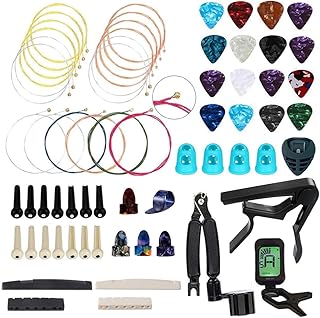
| NERECNDENS 66-Piece Kit | Acoustic players restringing at home | Full string set plus winder, cutter and spare bones | Piece count inflated by picks and small parts |
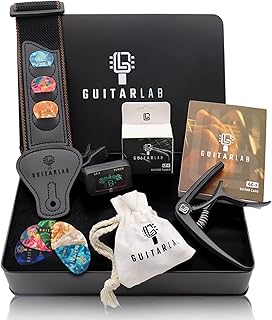
| Guitar Lab Gift Set | Presentation and gifting | Strap, capo, tuner and picks in a metal tin | Fewer maintenance tools than a tech kit |
| TIMDAM 28-Piece Tool Kit | Multi-instrument households | Works across guitar, bass, ukulele and banjo | Carry bag rather than a structured roll |
| Acoustic Accessories Kit | Everyday playing essentials | USB-C rechargeable tuner and denim strap | Light on repair and adjustment tools |
| Essential Acoustic Guitar Kit | Best value string-change bundle | Eighteen strings with a 3-in-1 winder and cutter | Fret stickers are a crutch worth outgrowing |
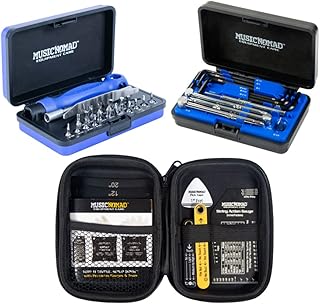
| MusicNomad KISS Tool Kit | Players doing full setups | Radius gauges and truss rod wrenches included | Overkill and pricier for casual owners |
How to Choose
- Separate playing gear from tech tools: Tuners, capos, straps and picks are things you use every session. Gauges, wrenches and files are things you use twice a year. Decide which problem you are solving.
- Check for a real winder and cutter: A peg winder that fits your tuner buttons and a cutter that handles wound low E are the two items that make restringing painless.
- Truss rod wrench compatibility: Neck relief adjustment needs the right size. Multi-size wrench sets save you a trip out when you discover your guitar uses an unusual hex.
- Ignore inflated piece counts: Twelve picks and two pick holders count as fourteen pieces. Judge the kit by its distinct capabilities, not the number on the box.
- Consider what you play: Bridge pin pullers matter for acoustics and are useless on most electrics. Buy for the instruments actually in your house.
Top Picks Reviewed
Best for Acoustic Owners: NERECNDENS 66-Piece Kit
The genuinely useful contents here are a complete acoustic string set, a string winder with an integrated cutter, a capo, a tuner and spare bone nut and saddle blanks. That combination covers the two jobs an acoustic owner actually faces: restringing and replacing a chipped saddle.
The headline count comes largely from picks and small consumables. Judge it on the winder, the strings and the bones, all of which are perfectly serviceable.
Best Gift Option: Guitar Lab Accessories Set
Packaged in a metal tin with a strap, capo, tuner and picks, this is designed to be given rather than ordered for yourself. Everything in it works across electric, acoustic and bass, so it suits a recipient whose setup you do not know precisely.
There are no maintenance tools. It is a playing kit, and a player who already owns a tuner and capo will find little new here.
Best for Mixed Instruments: TIMDAM 28-Piece Tool Kit
If your house contains a guitar, a bass and a ukulele belonging to different people, this covers all of them from one bag. The tool selection leans toward setup and repair rather than accessories, which is the harder gap to fill.
The soft carry bag keeps everything together but not organised. Items shift around, and finding a specific hex key means tipping the bag out.
Best Everyday Kit: Acoustic Guitar Accessories Kit
A USB-C rechargeable clip-on tuner is the standout, because coin cells always die at the worst time and this one charges from the same cable as your phone. Add a capo and a denim strap and you have the three things you reach for every session.
Repair capability is thin. This keeps you playing; it will not help when the action drifts or a saddle needs shaping.
Best Value String Bundle: Essential Acoustic Guitar Kit
Eighteen strings, a 3-in-1 winder, cutter and bridge pin puller, a capo, twelve picks with holders and spare nut and saddle parts. Per dollar it is the most restringing capability on this list.
The included fret stickers are worth ignoring after the first month. They help absolute beginners locate positions and then actively prevent you from learning the fretboard by feel.
Best for Serious Setups: MusicNomad KISS Tool Kit
This is the kit for someone who wants to measure rather than guess. Radius gauges, string action gauges and a set of truss rod wrenches let you set relief and string height to actual numbers instead of eyeballing it, which is exactly how a technician works.
It is more tool than most owners will ever use, and priced accordingly. If you have one guitar and no interest in adjusting it, this is the wrong purchase.
Frequently Asked Questions
What tools do I genuinely need as a beginner?
A clip-on chromatic tuner, a capo, a string winder with a cutter, and a spare set of strings. Everything else can wait until you know what you actually want to adjust.
Can I adjust my own truss rod?
Yes, carefully. Small movements — a quarter turn at a time, then let the neck settle — solve most relief problems. If the rod feels seized or the neck does not respond, stop and take it to a technician.
Do I need a bridge pin puller?
Only for acoustics with pin bridges, but on those it saves the finish. Prying pins out with pliers or a screwdriver is how bridges get chipped and pins get crushed.
Are fret stickers worth using?
They shorten the first few weeks and then hold you back. Use them briefly if position finding is genuinely blocking progress, then peel them off so your eyes and hands learn the real fretboard.
Final Thoughts
Decide whether you are buying playing accessories or technician tools, because very few kits do both well. Most players want a tuner, capo, winder and spare strings on the shelf and nothing more. If you enjoy the mechanical side, a proper gauge-and-wrench kit will earn back its price the first time you dial in your own action instead of booking a shop visit.