Strings are the cheapest thing that changes how your guitar sounds and the thing most players neglect the longest. A set that has gone dead does not just lose brightness — it loses intonation, because corrosion and finger oils build unevenly along the winding and the string no longer vibrates at a consistent mass per inch. That is why old strings make chords sound faintly sour even when the tuner says every open string is perfect.
Choosing replacements comes down to three decisions that people conflate: gauge, which sets tension and feel; core and winding material, which sets tone; and whether you want a coating, which trades a small amount of brightness for a much longer life. Heavier gauges hold up better under drop tunings and hurt more to bend. Coated sets cost more per packet and less per month if your sweat kills strings quickly. This guide covers acoustic and electric sets across those tradeoffs, for players who want to know what they are actually buying.
Our top picks





As an Amazon Associate we earn from qualifying purchases at no extra cost to you.
Quick Comparison
| Product | Best For | Standout Feature | Watch Out For |
|---|---|---|---|
| Ernie Ball Regular Slinky | The default electric set | Balanced 10-46 tension that suits most styles | Uncoated nickel dulls fast on sweaty hands |
| D’Addario XL Nickel 3-Pack | Buying in bulk | Three sets at a lower cost per pack | Bright attack can feel thin on dark amps |
| Martin Jason Isbell Signature | Acoustic players chasing a specific voice | Signature gauge and winding blend | Niche set; not a general-purpose choice |
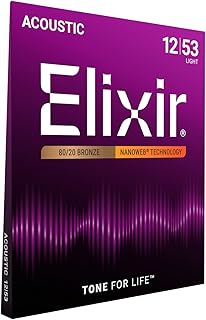
| Elixir Acoustic 80/20 Bronze | Long life on acoustic guitars | Nanoweb coating that resists finger corrosion | Highest price per set on the list |
| Elixir Electric Nickel 4-Pack | Players who kill strings quickly | Coated electric strings in a multi-pack | Slightly slicker feel takes adjustment |
| D’Addario NYXL 10-46 | Heavy benders and drop tunings | Improved tuning stability under bending | Costs more than standard nickel-wound sets |
How to Choose
- Gauge sets the feel: A 10-46 electric set is the standard middle ground. Nines bend easily and feel loose; elevens hold up in drop tunings and demand more grip strength.
- Match winding to the instrument: Nickel-plated steel is the electric norm. Acoustics use bronze — 80/20 is brighter and more scooped, phosphor bronze is warmer and lasts longer before dulling.
- Coated or uncoated: Coatings extend life dramatically for players with acidic sweat, at the cost of a slightly softer top end and a slicker feel under the fingers.
- Check tension against your setup: Jumping gauge changes neck relief and intonation. If you move from tens to elevens, expect to adjust the truss rod and saddles afterwards.
- Buy multi-packs if you play daily: Cost per set drops substantially, and having a spare set in the case is the difference between finishing a session and abandoning it.
Top Picks Reviewed
Best All-Round Electric: Ernie Ball Regular Slinky
The 10-46 Regular Slinky is the industry default for a reason. The tension balance across the set feels even, bends on the high strings are effortless without going floppy, and the wound low E has enough mass to stay tight under gain. If you do not know what gauge you want, start here.
Uncoated nickel wound strings are at the mercy of your hands. If you sweat heavily, expect the top end to fade within a couple of weeks of daily playing.
Best Bulk Buy: D’Addario XL Nickel 3-Pack
Same 10-46 gauge, sold three sets at a time, which is how any regularly gigging or practising player should buy strings. The XL formulation is bright and articulate with reliable intonation, and the hexagonal core keeps the winding gripped so the strings settle quickly after stretching.
That brightness can tip into thin on already-bright amps or single-coil bridge positions. It is easily managed with the tone control.
Best Acoustic Character: Martin Jason Isbell Signature
Signature sets exist because a particular player wanted a particular tension and voicing rather than a stock gauge, and this one delivers a defined, slightly punchy acoustic response suited to strong strumming and flatpicking.
It is a specific answer to a specific question. If you have not identified what you want changed about your current strings, a standard set is the more sensible starting point.
Longest Acoustic Life: Elixir 80/20 Bronze Light
Nanoweb coating over 80/20 bronze in a 12-53 light gauge gives you the bright, focused acoustic tone that flatters recording, and it holds that tone for months rather than weeks. For anyone who dreads restringing, the maths works out strongly in its favour.
The upfront price is the highest here, and the coating gives a slightly smoother, less grippy feel that some fingerstyle players notice immediately.
Best Coated Electric: Elixir Nickel Plated Steel 4-Pack
Four sets of coated 10-46 electric strings solves the sweaty-hands problem at a sensible cost per set. Bright attack, comfortable feel and a lifespan that makes daily practice far less expensive over a year.
The coating reduces string squeak, which most players like, and slightly softens pick attack, which a few do not. Try one set before committing to a habit.
Best for Bending: D’Addario NYXL 10-46
NYXL strings are built around a reworked steel core that resists going flat after aggressive bends, which is exactly the problem that ruins solos in drop tunings and on guitars with vibrato bridges. The extra strength also means fewer breakages at the ball end.
You pay a premium over standard nickel-wound sets. If you play gently in standard tuning, the benefit is real but small.
Frequently Asked Questions
How often should I change strings?
Uncoated sets last two to six weeks of regular playing before the top end goes; coated sets often stretch to several months. Change them when they look dull, feel gritty under the fingers or stop holding pitch across the neck.
Will heavier strings damage my guitar?
Not if the setup is adjusted. Heavier gauges pull the neck forward, so the truss rod needs a small counter-adjustment and the intonation resetting. Fitting them and ignoring the setup is what causes buzzing and high action.
What is the difference between 80/20 and phosphor bronze?
80/20 bronze is brighter and more scooped in the mids, which records well and cuts through a mix. Phosphor bronze is warmer, with more midrange body, and resists corrosion slightly longer.
Do coated strings really sound worse?
Fractionally duller at the very top end when brand new, and considerably better than an uncoated set at three weeks old. For most players the average tone over the life of the set is better with a coating.
Final Thoughts
Pick the gauge that matches your tuning and hand strength first, then decide whether coating is worth it based on how quickly your current strings die. Stretch new strings properly, reset intonation after any gauge change, and buy in multi-packs if you play often. Fresh strings are the closest thing to a free upgrade any guitar has.