There is a well-worn piece of advice among teachers: the guitar you leave out is the guitar you practise. A case is where instruments go to be forgotten, and the ten seconds of friction involved in unzipping one is genuinely enough to stop a tired person from playing. A stand removes that friction, and it also stops the far more expensive habit of leaning a guitar against the sofa where the cat, the vacuum cleaner or a passing shin will eventually find it.
Beyond that, stands split into two jobs that buyers often conflate: holding the instrument and holding your music. An A-frame supports the guitar by its lower bout and folds flat for transport. A tripod cradles the neck and takes up less floor area. A music stand is a separate purchase entirely, and getting sheet music or a tablet at eye level does more for posture than any ergonomic accessory. This guide covers both categories, including furniture-style options for people who want the guitar visible rather than merely stored.
Our top picks


As an Amazon Associate we earn from qualifying purchases at no extra cost to you.
Quick Comparison
| Product | Best For | Standout Feature | Watch Out For |
|---|---|---|---|
| GLEAM Sheet Music Stand | Reading music and tablets | Full metal desk with phone holder and carry bag | Holds music, not instruments |
| Amazon Basics Adjustable Stand | Mixed instrument collections | Height adjustable with padded non-slip contact points | Light frame can tip on deep carpet |
| GUITTO GGS-01 Tripod | Tight practice corners | Small footprint A-frame that folds for travel | Single guitar only; no multi-slot option |
| Amazon Basics A-Frame | Simple everyday storage | Arrives assembled with padded foam contact | Fixed height suits standard body sizes only |
| Mdvora Sheet Music Stand | Multi-player households | Available in multi-packs with carrying bags | Lighter build than a full metal desk |
| YAKANJ Guitar End Table | Living rooms and music rooms | Three-tier furniture with turntable and vinyl storage | Large footprint and permanent placement |
How to Choose
- Decide what you are actually storing: A music stand and a guitar stand solve different problems. Most home players eventually need both, but buy the one blocking you now.
- Check the finish contact points: Some rubber and foam compounds react with nitrocellulose lacquer over months. Look for stands that specify finish-safe padding, or slip a cloth between guitar and cradle.
- A-frame versus tripod: A-frames support the lower bout and fold flat for gigs. Tripods cradle the neck, occupy less floor and hold the instrument more upright in a corner.
- Match it to the body shape: A stand sized for a dreadnought may not hold a small-bodied parlour or a headless electric securely. Adjustable height and width solve this.
- Stability on your floor: Thick carpet defeats narrow feet. If your practice space is carpeted, favour wider bases or furniture-style stands that spread the load.
Top Picks Reviewed
Best Music Stand: GLEAM Full Metal Desk
A solid metal desk holds a heavy songbook open without sagging, which cheap folding wire stands never manage. The integrated phone holder is genuinely useful now that most players read chord charts and run backing tracks from a screen, and the carry bag makes it portable for lessons.
It does not hold your guitar. Buy it alongside an instrument stand rather than instead of one.
Most Versatile Instrument Stand: Amazon Basics Adjustable Stand
Height adjustment is the feature that makes one stand work across an acoustic, an electric, a bass and a banjo. The padded non-slip contact points hold securely without gripping the finish, and it folds down small enough to throw in a car boot.
The frame is light. On deep pile carpet the feet sink unevenly and the whole thing becomes less confidence-inspiring than it is on a hard floor.
Best for Small Spaces: GUITTO GGS-01
The classic A-frame geometry in a compact folding form takes up almost no floor area, which matters in a bedroom where the guitar has to live between a desk and a wall. It packs flat enough to travel to rehearsals.
It holds one instrument, and only one. If you own three guitars you will end up buying three of these or moving to a rack.
Simplest Setup: Amazon Basics A-Frame
Fully assembled out of the box with padded foam where the guitar rests. There is nothing to build, adjust or misunderstand, which is exactly right for a first stand or a gift.
The fixed height suits standard dreadnought and solid-body dimensions. Very small bodies sit awkwardly, and a headless electric has nothing conventional for the yoke to hold.
Best Multi-Pack: Mdvora Sheet Music Stand
Sold singly or in multiples with carrying bags, this makes sense for a family, a school room or a teacher who runs group lessons and needs three stands out at once. It handles guitar, ukulele and violin parts equally well.
The build is lighter than a full metal desk. A thick hardback method book will make it flex, so it favours single sheets and tablets.
Best Furniture Option: YAKANJ Guitar End Table
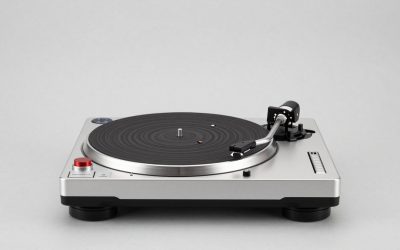
This treats the instrument as part of the room rather than clutter to be hidden. Three tiers hold guitars, a turntable and vinyl storage, so the music corner becomes a piece of furniture instead of a pile of stands.
It has a real footprint and is not something you move casually. Measure the space and commit before ordering.
Frequently Asked Questions
Can a stand damage my guitar’s finish?
Some rubber compounds react with nitrocellulose lacquer over long contact. Modern polyurethane finishes are generally unaffected. If your guitar has a vintage-style finish, place a soft cloth between the instrument and the cradle.
Is it bad to leave a guitar out of its case?
Not in a stable room. Cases matter for transport and for extreme humidity swings. A guitar left on a stand in a normally heated home is fine and gets played far more often.
A-frame or tripod stand?
A-frames are more compact when folded and support the body low down, which suits gigging. Tripods with neck cradles hold the instrument more securely upright and are better for a permanent corner at home.
Do I really need a music stand?
If you read anything while playing, yes. Music on a table forces you to look down, which wrecks posture and makes long practice sessions uncomfortable. Eye level is the whole point.
Final Thoughts
Get the guitar out of its case and onto something stable, then get your music up to eye level. Those two changes cost very little and reliably increase how much people practise. Choose based on your floor, your body shape and whether the instrument is meant to be hidden or displayed.