
Best mattress topper for bad back advice falls apart when it ignores sleep position, because a side sleeper and a stomach sleeper need opposite things from the same bed. Thickness, firmness direction and body weight together decide which topper helps and which one makes the morning worse.
As an Amazon Associate we earn from qualifying purchases.
Our top picks


As an Amazon Associate we earn from qualifying purchases at no extra cost to you.
By Daniel Foster
🛒 Best Price Today on Amazon
Prime members get fast, free shipping on everything above, plus member-only deals. New members get a 30-day free trial — cancel anytime.
Start 30-Day Prime Free Trial →See Today’s Amazon DealsMatching the Best Mattress Topper for Bad Back Support to How You Sleep
The best mattress topper for bad back support starts from sleep position, which determines where your body needs to sink and where it needs to be held up. Get that direction right and the topper does useful work; get it backwards and you have paid to make an existing problem more pronounced across every night of the week.
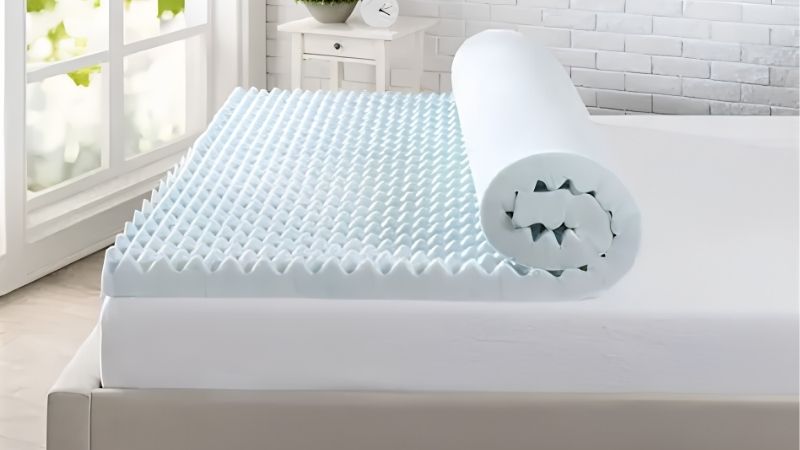
Side, Back and Stomach: Three Different Requirements
Side sleepers carry load on the shoulder and hip, so they generally need a surface that allows those points to sink while the waist stays supported. That usually means 3 in (7.6 cm) or more of contouring foam, and a bed that is currently too firm is the classic case where a topper works well. On a bed that is already soft, the same choice lets the shoulder drop further still.
Back sleepers need the lumbar curve filled without the hips dropping, which points to 2-3 in (5-7.6 cm) of medium foam or latex. Stomach sleepers need the pelvis held high, so extra softness is usually the wrong direction entirely and a thin, firm layer is the safer choice.
Thickness Against Body Weight
Body weight changes what a given thickness does. Under roughly 130 lb (59 kg), 2 in of foam already alters the surface noticeably; above 230 lb (104 kg), the same 2 in compresses almost fully and you feel the mattress underneath, which is why heavier sleepers usually need 3-4 in with higher density.
Density is the number that survives the first year, and it is rarely printed on listings, so shipping weight per size is the practical proxy. A heavy 3 in topper will outlast a light 4 in one under the same person, every time, without exception.
Space and Fit: Bed Height, Sheets and Anchoring
Measure the mattress rather than trusting the label: Queen is 60 x 80 in (152 x 203 cm) and King is 76 x 80 in (193 x 203 cm), but pillow-top beds often measure larger. Adding 3-4 in of foam means deep-pocket sheets rated for the combined height are part of the purchase.
Foam migrates on slick protectors, so corner straps, a fitted cover or a tight deep-pocket sheet are all worth having. Check the finished bed height too, since a tall frame plus a thick topper can make getting in and out noticeably higher than before.
Temperature, Certifications and Honest Limits
Every added layer reduces airflow, so a bed that already sleeps warm will sleep warmer. Latex and ventilated foam handle heat better than solid memory foam, and breathable cotton sheets do more than most cooling claims printed on the packaging.
Look for CertiPUR-US on foam, allow 24-48 hours of expansion and mild off-gassing, and keep expectations realistic. A topper changes the surface, not the support core, and persistent or worsening back pain is a question for a doctor or physiotherapist rather than a bedding purchase.
Top Picks: Six Toppers Sorted by Position
The lineup below is grouped by what each topper does to the surface rather than by price, and every entry lists a genuine drawback. Specifications come from manufacturer documentation and aggregated long-term owner reports rather than testing of our own, and prices should be checked at purchase.
| Model | Material | Thickness | Direction | Best position |
|---|---|---|---|---|
| TEMPUR-Adapt Topper | Memory foam | 3 in / 7.6 cm | Softer | Side |
| ViscoSoft Pillow Top Serene | Foam plus fibre | 4 in / 10 cm | Softer | Side |
| Malouf Isolus Gel Memory Foam | Gel memory foam | 3 in / 7.6 cm | Softer | Side and back |
| Sure2Sleep Gel Swirl Foam | Gel memory foam | 3 in / 7.6 cm | Neutral | Back |
| Beautyrest Silver Gel Foam | Gel memory foam | 2 in / 5 cm | Neutral | Back |
| Milliard Memory Foam Topper | Memory foam | 2 in / 5 cm | Minimal | Stomach |
TEMPUR-Adapt Topper – Dense Contouring for Side Sleepers
Three inches of the brand’s proprietary foam, which is considerably denser than commodity memory foam at the same thickness. Density is why it still holds shape under the hip after several years, and why it weighs noticeably more than competing 3 in toppers in the same size.
It is the most expensive option here by a wide margin and it sleeps warm, because dense viscoelastic foam restricts airflow by design. Slow response also makes turning over harder, so combination sleepers who change position frequently should look at latex or a faster foam instead.
ViscoSoft Pillow Top Serene – Four Inches With a Fibre Top
A memory foam base under a quilted fibre pillow top, in a removable washable cover with corner straps. The fibre layer gives immediate surface softness while the foam underneath handles pressure at the shoulder, which suits side sleepers on a mattress that is genuinely too hard.
Four inches raises the bed considerably and needs deep-pocket sheets rated for the full height. The fibre top also compresses faster than the foam does, so the surface will flatten before the layer beneath it wears out, typically within the first couple of years.
Malouf Isolus Gel Memory Foam – Balanced Middle Ground
Three inches of gel-infused memory foam that contours without the fully enveloped feel of denser formulations, which makes it workable for people who alternate between side and back. Gel infusion moderates heat build-up rather than eliminating it, which is the honest description of what infusion does. In a bedroom that runs cool, the difference is barely noticeable either way.
It ships compressed and needs a full 48 hours to reach stated thickness, longer in a cool room. There is no strap system on most versions, so a deep-pocket fitted sheet is required to keep it from creeping toward the foot of the bed.
Sure2Sleep Gel Swirl Foam – Neutral Support for Back Sleepers
A 3 in gel swirl memory foam layer that adds cushioning without letting the hips drop, which is the specific requirement for back sleepers. The best mattress topper for bad back complaints in this position fills the lumbar gap without changing where the pelvis sits.
Because it holds the hips higher, side sleepers may find the shoulder does not sink enough and pressure builds at that point. Density is mid-range rather than premium, so expect gradual softening under the heaviest part of the body after a few years.
Beautyrest Silver Gel Foam – Two Inches, Modest Change
Two inches of gel memory foam for a bed that is close to right but slightly unforgiving. On a mattress with good support and a harsh surface, 2 in is often the correct amount of change and avoids raising the bed height in a way that affects sheets.
Two inches will not rescue a genuinely hard bed and it will not disguise a dip in the core. Under heavier sleepers it compresses close to fully, which means the mattress characteristics come through much as they did before.
Milliard Memory Foam Topper – Minimal Layer for Stomach Sleepers
A thin 2 in memory foam layer at a budget price, which is usually as much as a stomach sleeper should add. Extra softness lets the pelvis drop below the ribcage, so the goal here is a slightly kinder surface rather than meaningful sinkage.
Low density means it compresses faster under nightly use than the mid-tier options above, realistically lasting two to three years in a main bedroom. For a guest room used a few weeks a year, that lifespan stretches considerably. There is no cover included, so a protector or a tight fitted sheet is needed from day one.
Setup, Trial Periods and Long-Term Use
A topper that suits your position can still disappoint if it is judged too early or fitted badly. The best mattress topper for bad back support only performs once it has fully expanded, is anchored properly and sits on a mattress that is still flat.
Expansion and the First Two Weeks
Compressed foam needs 24-48 hours flat and unwrapped to reach full loft, and cold rooms slow that further. A corner that looks thinner on day one has usually levelled by day three; a layer still visibly uneven after that is a defect rather than a settling issue.
Your body also adapts to a new pressure distribution over one to two weeks, so first-night impressions are unreliable. Give it a fortnight before deciding, and note the return window on the listing, since foam products often have shorter windows than mattresses do.
Keeping It Anchored and Clean
Corner straps, a fitted cover or a deep-pocket sheet all stop foam migrating, and straps are worth rechecking after the first week because they loosen as the layer settles. Combining straps with a properly sized sheet is the most reliable arrangement for restless sleepers. The best mattress topper for bad back support cannot do its job once it has slid several inches toward the footboard.
Foam cannot be machine washed or soaked, so spot clean with minimal moisture and allow complete drying before bedding goes back on. A breathable waterproof protector over the top handles spills without adding the softness that would change how the layer performs.
When the Mattress Is the Real Problem
If the topper helped for a few weeks and then stopped, or if you can feel a dip through 3 in of foam, the support core has failed and no surface layer will correct it. Adding depth over a sagging bed usually makes the low spot feel deeper.
Bedding discounts follow the federal holiday calendar rather than the electronics cycle, so Presidents Day, Memorial Day and Labor Day are the periods worth waiting for if a mattress replacement is on the horizon and the purchase is not urgent.
See More:
- Best low price dash cam
- Projector screens at Best Buy
- Best buy projector screens
- Best projector for games
- Best projector for gaming
Final Thoughts on the Best Mattress Topper for Bad Back Support
Start from your sleeping position, then set thickness against your body weight, then check sheet depth and anchoring. That order gets most people to the right product in one purchase rather than two, which is the usual outcome when thickness is chosen first.
The best mattress topper for bad back support is the one that moves the surface in the correct direction for how you sleep. Measure the mattress and your sheets before ordering, and speak to a doctor or physiotherapist about pain that persists regardless of bedding.


Write Your Review
No reviews yet. Be the first to share your experience!