
Best mattress for overweight person shortlists usually get comfort right and durability wrong. A bed that feels correct in week one can develop a visible depression by month eighteen, and the specifications that predict that outcome are printed on the listing if you know which ones to read.
As an Amazon Associate we earn from qualifying purchases.
Our top picks


As an Amazon Associate we earn from qualifying purchases at no extra cost to you.
By Daniel Foster
🛒 Best Price Today on Amazon
Prime members get fast, free shipping on everything above, plus member-only deals. New members get a 30-day free trial — cancel anytime.
Start 30-Day Prime Free Trial →See Today’s Amazon DealsJudging the Best Mattress for Overweight Person Use on Durability
The best mattress for overweight person use degrades under load like any other, and the rate depends on materials rather than brand. At higher body weights that degradation happens faster, so the specifications that govern longevity deserve more weight than the ones that govern first impressions.
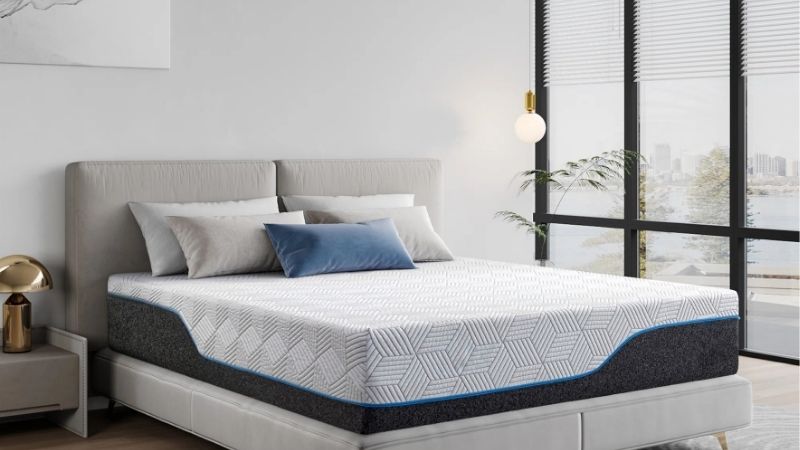
Foam Density, Coil Gauge and Stated Capacity
Comfort foam below about 4 lb/ft3 takes a permanent impression under a heavier body within one to two years. Base foam should be 1.8 lb/ft3 or higher and thick enough to carry the load, though many listings omit density entirely, in which case shipping weight is the usable proxy. Two beds of identical dimensions can differ by 20 lb (9 kg), and the heavier one lasts longer.
Coil gauge runs 12 to 15, with lower numbers meaning thicker wire. Capacity is typically stated as 400-500 lb (181-227 kg) per side on well-built hybrids, and a bed with no published figure at all should be treated as designed for average loads. Silence on capacity is itself an answer in this category.
Where Beds Fail First Under Load
Impressions appear under the hips before anywhere else, because that is where weight concentrates. Shoulders follow, then the edges where someone sits daily to dress, which is why perimeter reinforcement is worth prioritising rather than treating as a luxury feature. Edge collapse also reduces the usable width of a shared bed.
On hybrids the coils rarely fail before the comfort layer does, so the foam above the springs determines how long the bed still feels supportive. On all-foam beds the transition layer is the weak point, and it is the layer budget builds thin out most. Transition foam is rarely mentioned on listings, which is precisely why it gets cut first.
Space and Fit: Profile, Frame and Centre Support
Profiles of 12-14 in (30-36 cm) provide the layering that spreads load properly, and thicker beds need deep-pocket sheets rated for the full height. Measure the room, the doorway and the finished bed height before ordering rather than after delivery. A 14 in bed on a tall frame can reach an awkward height to climb into.
Slats must sit no more than about 3 in (7.6 cm) apart, and Queen and King frames need a centre support leg reaching the floor. An inadequate frame produces a dip that looks exactly like mattress failure and is excluded from almost every warranty. Frames sold with bed sets are frequently the weakest link in the whole setup.
Reading the Warranty Before You Need It
Most warranties define a defect as a permanent sag of roughly 0.75-1.5 in measured with the bed unloaded. Anything less is classed as normal settling, so knowing the threshold tells you what is actually claimable rather than what feels unacceptable. Settling of half an inch is normal and not claimable, however uncomfortable it becomes.
Improper support, staining and edge compression are the three most common exclusions. A protector from night one and a compliant frame protect the claim, and keeping the receipt and law tag matters because both are usually required when one is made. Storing them with the delivery photographs takes a minute at the outset.
Top Picks: Six Beds Built to Last Under Load
The list favours beds with published capacity figures, denser foams and reinforced perimeters, with a genuine drawback for each. Specifications come from manufacturer documentation and aggregated long-term owner reports rather than testing of our own, and availability varies by retailer. Which best mattress for overweight person use fits depends on how firm a surface you can comfortably sleep on.
| Model | Type | Profile | Firmness (1-10) | Durability note |
|---|---|---|---|---|
| Big Fig Mattress | Hybrid | 13 in / 33 cm | 7 | Designed around higher combined loads |
| WinkBeds Plus | Hybrid | 13.5 in / 34 cm | 7-8 | Latex layer resists impressions |
| Helix Plus | Hybrid | 13 in / 33 cm | 6-7 | Higher-density comfort foams |
| DreamCloud Premier Rest | Hybrid | 14 in / 36 cm | 5-6 | Deep layering, plusher surface |
| Nectar Premier Hybrid | Hybrid | 14 in / 36 cm | 6 | Long trial and warranty |
| Sealy Posturepedic Plus Hybrid | Hybrid | 13 in / 33 cm | 6-7 | Reinforced centre third |
Big Fig Mattress – Built for the Job
Designed specifically around higher combined loads, with a firmer coil unit, denser foams and a reinforced perimeter rather than a standard bed marketed toward heavier sleepers. The manufacturer states a combined capacity well above most competitors, which should be confirmed on the listing.
It is firm, and side sleepers at the lighter end of the range may find the shoulder unsupported. Price sits at the premium end, and the bed is extremely heavy, so delivery and rotation both need two people every time. Plan the route into the bedroom before it arrives.
WinkBeds Plus – Latex Where It Matters
A latex comfort layer over a reinforced coil unit, which matters because latex resists permanent impressions far better than memory foam does. For a durability-first purchase, the material choice above the springs is the single most predictive specification.
Latex hybrids are heavy and expensive, and the firm surface is not what a plush-preferring sleeper wants. There is also a mild natural rubber odour in the first week, which clears with ventilation but surprises people expecting nothing.
Helix Plus – Denser Foams Throughout
A hybrid using higher-density comfort foams and a strengthened coil base, aimed directly at heavier sleepers rather than adapted from a standard model. The best mattress for overweight person use is usually one where density was specified upward at every layer.
It is less firm than the specialist options above, which suits side sleepers but means slightly faster impression formation. Delivery is compressed, and a bed this dense takes the full 72 hours to reach its proper height and feel.
DreamCloud Premier Rest – Depth With a Softer Surface
Fourteen inches of layering with a plusher top, for heavier sleepers who want cushioning without dropping to the coils. The additional depth is what makes a soft surface viable at higher body weights, since there is enough material beneath it to carry the load.
Soft surfaces show impressions first, so this trades some longevity for comfort compared with the firmer beds here. The profile also requires deep-pocket sheets and produces a tall bed once a frame is added underneath.
Nectar Premier Hybrid – Trial Length as Insurance
A 14 in hybrid with a 365-night trial and a long warranty, which functions as practical protection when you cannot test a bed under your own weight in a shop. The layering is generous and the coil unit competent for mainstream heavier use.
Comfort foam density is good rather than exceptional, so it sits below the specialist beds on expected service life. Above roughly 300 lb (136 kg) per side, the purpose-built options above will hold their shape measurably longer.
Sealy Posturepedic Plus Hybrid – Reinforced Centre
Pocketed coils with a reinforced centre third, the section that carries the heaviest load, plus a firmer perimeter that holds shape when you sit on the edge. Widely stocked, which makes warranty handling more straightforward than with smaller brands.
Model naming changes frequently across retailers, so confirm coil count and firmness on the exact listing. It sits at the premium end for a mainstream bed, and the weight makes rotating it awkward for one person.
Extending Service Life in Practice
Materials set the ceiling; handling determines whether you reach it, and the best mattress for overweight person use still needs rotating on schedule. Three habits make a measurable difference to how long a bed holds its shape under higher load, and none of them cost anything beyond a few minutes.
Rotation on a Tighter Schedule
Rotate head to foot every three months rather than every six, since impressions form faster under concentrated load. Mark one corner with a laundry pen so you can track the sequence without relying on memory between rotations.
Avoid sitting on the same edge every day where practical, since concentrated perimeter loading compresses foam faster than sleeping does. A bedroom chair or bench for dressing genuinely extends the usable edge life of a mattress.
Documenting a Developing Sag
Check the unloaded bed with a straight edge and a tape every few months. Recording measurements with dates turns a vague complaint into a documented progression, which is what manufacturers ask for when a claim is submitted.
Photograph the straight edge and the tape together so the depth is visible in the image. Dating each photograph makes the progression easy to demonstrate. Claims are usually refused for lack of evidence or for an unsuitable frame rather than because the sag was genuinely within tolerance.
Budgeting for Replacement
A realistic service life under a heavier sleeper is six to eight years for a purpose-built hybrid and three to five for a budget one, which changes the cost per year calculation considerably. That figure is more useful than the sticker price when comparing tiers, especially across a decade of ownership. The cheaper bed is frequently the more expensive choice over a decade.
Mattress prices follow the federal holiday sale calendar rather than the electronics cycle, so Presidents Day, Memorial Day and Labor Day are the windows worth planning around. Outside those periods, discounting in this category is largely nominal.
See More:
- Best low price dash cam
- Projector screens at Best Buy
- Best buy projector screens
- Best projector for games
- Best projector for gaming
Final Thoughts on the Best Mattress for Overweight Person Use
Read density, coil gauge and stated capacity before firmness, because those three figures decide how long the bed stays as good as it felt on the first night. Comfort is easy to assess in a trial; durability has to be inferred from the specification.
The best mattress for overweight person use is one specified upward at every layer and supported by a frame that can carry it. Measure your frame and slat spacing before ordering, and confirm capacity and warranty thresholds on the listing at the time of purchase.


Write Your Review
No reviews yet. Be the first to share your experience!