
Best mattress for larger person decisions usually come down to a construction question before a brand one. All-foam, hybrid and latex beds behave differently under higher loads, and choosing the wrong family produces a bed that feels fine for six months and then does not.
As an Amazon Associate we earn from qualifying purchases.
Our top picks


As an Amazon Associate we earn from qualifying purchases at no extra cost to you.
By Daniel Foster
🛒 Best Price Today on Amazon
Prime members get fast, free shipping on everything above, plus member-only deals. New members get a 30-day free trial — cancel anytime.
Start 30-Day Prime Free Trial →See Today’s Amazon DealsChoosing the Best Mattress for Larger Person Use by Construction
The best mattress for larger person use comes from one of three constructions, and they fail in different ways under weight. Understanding how each carries a load makes the shortlist much shorter, because two of the three usually turn out to be wrong for a given sleeper.
Capacity, Firmness and How Load Is Carried
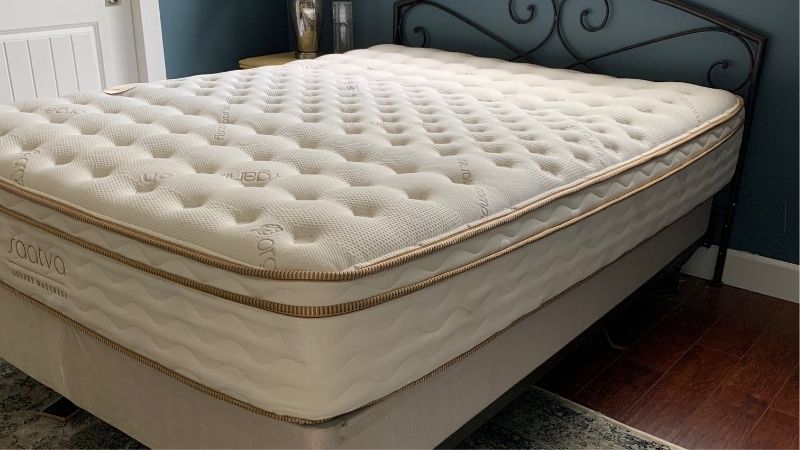
In an all-foam bed the base foam carries everything, so density is the whole story and capacity is typically lower. In a hybrid the coil unit carries the load and the foam only provides comfort, which is why hybrids commonly rate 400-500 lb (181-227 kg) per side.
Latex sits between the two: it is denser and more resilient than polyfoam, so it resists impressions far better, but a full latex bed is heavy and expensive. Firmness in all three should be set one to two steps above the standard position-based recommendation. Firmness ratings are set for average weights and behave differently above them.
Durability Differences That Show Up in Year Three
Memory foam takes permanent impressions under concentrated load, and the rate depends almost entirely on density. Below about 4 lb/ft3 a heavier sleeper will see a visible depression within one to two years, regardless of how the bed felt at the start. Density is rarely printed, so shipping weight per size is the usable proxy.
Coils rarely fail before the foam above them does, which is why a hybrid’s comfort layer determines its usable life. Latex resists impressions best of the three, which is why it appears in the comfort layers of most purpose-built heavy-duty beds. That is also why the best mattress for larger person use is judged on the comfort layer rather than the springs.
Space and Fit: Profile, Weight and Handling
Latex hybrids can weigh 120-150 lb (54-68 kg) in Queen, which makes delivery, rotation and any future move a genuine two-person operation. Stairwell turns are where heavy beds most often become a problem. All-foam beds are the lightest to handle, and hybrids sit in between depending on coil count and profile.
Profiles of 12-15 in (30-38 cm) are typical for higher-capacity beds, so deep-pocket sheets are required. Measure the room, the doorway and the stairwell turn, and check the finished bed height once a frame is added, since 28 in (71 cm) upward becomes awkward. Pairing a thick mattress with a low platform frame keeps that total manageable.
Temperature and Airflow by Construction
All-foam beds insulate, and a larger body contacts more surface area, so heat is a predictable complaint. Hybrids move air through the coil layer, which is a structural advantage no foam infusion matches, and latex breathes better than polyfoam through its open cell structure.
If a warm bedroom is already a known problem, that alone argues for a hybrid or latex construction rather than a memory foam bed with cooling claims. Bedding choices then matter too, since cotton and linen move moisture far better than polyester blends. Changing sheets is a great deal cheaper than changing mattress construction.
Top Picks: Six Beds Across Three Constructions
The list covers all-foam, latex hybrid and conventional hybrid builds so the comparison is between families rather than six versions of one. Each entry names a genuine drawback, and specifications come from manufacturer documentation and aggregated owner reports rather than testing of our own. Which best mattress for larger person use suits you follows from the construction family you pick.
| Model | Construction | Profile | Firmness (1-10) | Strength |
|---|---|---|---|---|
| TEMPUR-ProAdapt | All-foam, high density | 12 in / 30 cm | 5-8 options | Density and longevity |
| Avocado Green | Latex hybrid | 11-13 in / 28-33 cm | 6-7 | Latex resists impressions |
| Birch Natural | Latex hybrid | 11 in / 28 cm | 6-7 | Breathable natural materials |
| Awara Premier | Latex hybrid | 13 in / 33 cm | 6-7 | Latex depth at lower cost |
| Casper Nova Hybrid | Foam over coils | 12 in / 30 cm | 5-6 | Zoned comfort layer |
| Puffy Lux Hybrid | Foam over coils | 12 in / 30 cm | 5-6 | Plusher surface with coil base |
TEMPUR-ProAdapt – All-Foam That Actually Lasts
The proprietary foam here is far denser than commodity memory foam, which is the reason an all-foam bed can be a sensible choice at higher body weights at all. Multiple firmness options mean the same construction covers side and back sleepers.
It sleeps warm, because dense foam and airflow are fundamentally opposed, and slow response makes turning over harder. It is also the most expensive route to an all-foam bed, and capacity is not published as prominently as on purpose-built hybrids. That omission matters more at the top of the weight range than at the bottom.
Avocado Green – Latex Over Coils
Natural latex above a pocketed coil unit gives the impression resistance of latex with the load-bearing of springs, which is the combination most purpose-built heavy-duty beds use. The optional pillow top adds cushioning without a soft polyfoam layer that would compress.
It is heavy, expensive and firm out of the box, and the break-in period is real. There is a mild natural rubber odour for the first week, and latex sensitivity, while uncommon, should be ruled out before ordering. A night on a borrowed latex pillow is a cheap way to check.
Birch Natural – Breathable Latex Hybrid
Wool, cotton and latex over coils, which produces one of the better temperature results available in a supportive bed. For a larger sleeper in a warm bedroom, the material choice does more than any cooling treatment applied to a cover.
At 11 in it is thinner than the specialist heavy-duty beds, so sleepers well above 300 lb (136 kg) will find less material between them and the coils. The natural materials also carry a premium price relative to the profile you get.
Awara Premier – Latex Depth for Less
Thirteen inches of latex over coils at a lower price than most natural-material competitors, which makes latex construction accessible without a premium outlay. The extra profile suits side sleepers who need shoulder relief on a firm supportive base.
Latex quality varies between grades, and lower-cost latex beds usually use a thinner latex layer over polyfoam. Confirm what proportion of the comfort layer is actually latex, since that determines whether the durability advantage is real. Latex over polyfoam behaves much like a conventional foam bed after a few years of use.
Casper Nova Hybrid – Zoned Foam Over Coils
Zoned foam places firmer support under the hips and softer at the shoulders, over a pocketed coil base. Zoning does more for a heavier sleeper than a lighter one, since there is more weight to redistribute across the surface.
The comfort layer is soft, which shows impressions sooner under concentrated load. It is also on the thinner side for this category, so sleepers at the upper end should look at the deeper latex hybrids or a purpose-built model instead.
Puffy Lux Hybrid – Plusher Surface, Coil Support
A softer surface over a coil unit, aimed at larger sleepers who dislike firm beds but still need the load-bearing of springs. The coil base does the structural work while the foam handles comfort, which is the right division of labour here.
Soft comfort foam is the layer that fails first, so expect impressions sooner than on the latex options. Edge support is moderate, and the bed runs warmer than a latex hybrid despite the airflow the coils provide.
Setup, Rotation and Getting the Construction to Perform
Each construction needs slightly different handling to reach its expected life, and the best mattress for larger person use still needs the right foundation under it. Matching the routine to the bed is what turns a well-chosen construction into one that still feels right in year five.
Foundations for Each Type
All-foam beds are the most sensitive to slat spacing, since foam sags between gaps wider than about 3 in (7.6 cm). Hybrids tolerate slightly more, but a Queen or King of any construction still needs a centre support leg reaching the floor.
Latex hybrids are heavy enough that the frame itself has to be rated for the combined weight of bed and sleepers. Test any frame by pressing hard in the centre with the mattress off, and replace it rather than hoping it holds. A failed frame damages the mattress rather than merely feeling wrong.
Rotation and Impression Monitoring
Rotate every three months regardless of construction, since impressions form fastest under the hips at higher body weights. Latex resists this best, foam worst, and hybrids depend entirely on what sits above the coils rather than on the coils themselves.
Check the unloaded bed with a straight edge every few months and photograph any depression with a tape and a date visible. Most warranties require 0.75-1.5 in of permanent sag before a claim qualifies, and evidence is what determines the outcome.
Bedding, Heat and Long-Term Costs
Deep-pocket sheets rated above the mattress profile are needed on 13-15 in beds, and a breathable waterproof protector keeps the bed within warranty condition. Cotton or linen sheets do more for temperature than any infusion inside the mattress.
Latex costs more up front and lasts longest, foam costs least and lasts shortest, and hybrids sit between. Mattress prices follow the federal holiday sale calendar, so Presidents Day, Memorial Day and Labor Day are the windows where the gap between tiers narrows.
See More:
- Best low price dash cam
- Projector screens at Best Buy
- Best buy projector screens
- Best projector for games
- Best projector for gaming
Final Thoughts on the Best Mattress for Larger Person Use
Pick the construction family first, because that decision governs capacity, durability and temperature together. Within a family the differences between models are far smaller than the differences between foam, hybrid and latex under a higher load.
The best mattress for larger person use is usually a hybrid, with latex in the comfort layer if the budget allows. Measure the room and check the frame before ordering, and confirm capacity figures and latex content on the listing at purchase.


Write Your Review
No reviews yet. Be the first to share your experience!