
Best air purifier for smoker shopping has one rule that ordinary purifier guides skip: HEPA media alone does almost nothing for smoke odor, because odor is gas rather than particles. This roundup compares seven machines by activated carbon capacity, smoke CADR and coverage, and is honest about what filtration cannot fix.
As an Amazon Associate we earn from qualifying purchases.
By Daniel Foster
🛒 Best Price Today on Amazon
Prime members get fast, free shipping on everything above, plus member-only deals. New members get a 30-day free trial — cancel anytime.
Why Smoke Needs a Different Machine
The best air purifier for smoker use has to handle two problems: tobacco and cannabis smoke is a mixture of fine particles and gas-phase compounds. HEPA handles the first half; only adsorbent media handles the second. Choosing on HEPA specifications alone is the single most common mistake in this category.
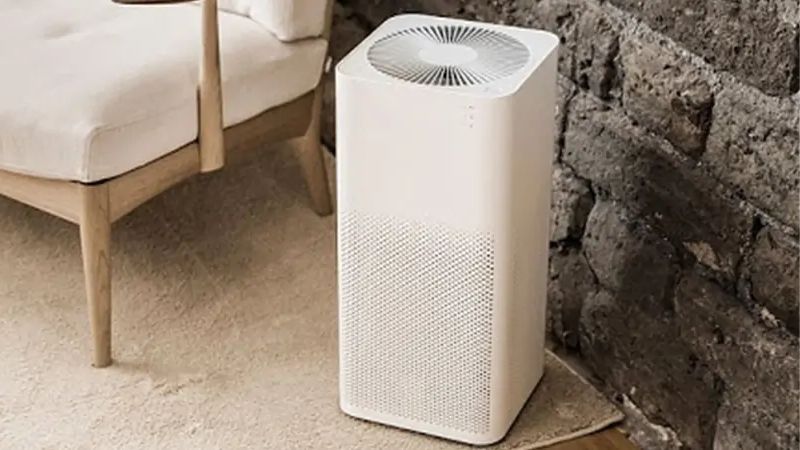
Carbon Weight, Smoke CADR and Coverage: The Deciding Numbers
Three numbers decide the best air purifier for smoker households: the weight of activated carbon in pounds or kilograms, the smoke CADR in cubic feet per minute, and rated coverage in square feet or square meters. Thin carbon-coated fabric sheets weigh ounces; serious gas-phase units carry several pounds.
Smoke CADR is the relevant AHAM figure rather than dust or pollen. As a sizing rule, aim for a smoke CADR of at least two thirds of the room area in square feet, so a 300 sq ft (28 m2) room wants roughly 200 cfm or more.
True HEPA at 99.97 percent efficiency for 0.3 micron particles is standard across these machines, so it is a baseline. The differences that matter are carbon mass, how long that carbon lasts and how much air the fan actually moves.
Space and Fit: Room Size, Placement and Airflow
Place the unit in the room where smoking happens rather than a hallway, with 6 to 12 in (15 to 30 cm) of clearance around the intake. Air does not travel through closed doors, so one machine cannot cover a whole apartment.
Heavy carbon units are physically large: steel-bodied models can weigh 45 to 50 lb (20 to 23 kg) and occupy a 15 in (38 cm) square of floor. Measure the space and check whether you will need to move it, since most have no handles and only some have casters.
Filter Cost and Replacement Reality
Carbon saturates, and that is the recurring cost of the best air purifier for smoker use. Once its surface is loaded, odor removal stops even though the machine still sounds fine, and there is no indicator light that measures gas capacity. Thin carbon sheets in a smoking household can be spent in as little as one to three months.
Thick-bed units with multi-pound carbon canisters typically run one to five years before replacement, at a higher one-time cost. Over three years, a heavy-carbon machine is often cheaper than a light one whose filters you replace constantly.
Noise and Whether You Will Run It on High
Smoke removal happens at high fan speeds, which is where noise lives. Mid-size units reach roughly 50 to 60 dB on maximum, so run the machine on high during and after smoking, then drop it to medium.
Power consumption remains modest at 5 to 100 W depending on the model and speed. Continuous medium-speed operation with periodic bursts on high is far more effective than switching the unit on only when the room already smells.
Best Air Purifier for Smoker Households: Seven Picks
The list prioritizes gas-phase capacity over smart features. Figures are manufacturer-stated and combined with recurring themes in long-term owner reports rather than testing conducted by us.
Austin Air HealthMate Plus
Built around a deep bed of activated carbon and zeolite, several pounds of it, in a steel housing with a filter rated for years of service. Zeolite adds capacity for certain gases that plain carbon handles poorly.
It is heavy, plain-looking and offers only a three-speed dial. It is also the closest thing here to a purpose-built odor machine, which is why it dominates smoker recommendations.
Alen BreatheSmart 75i With Smoke Filter
Covers large rooms, with manufacturer-stated coverage up to roughly 1,300 sq ft (121 m2) at lower turnover, and accepts a dedicated smoke-oriented filter with additional carbon over the standard media.
Filters cost more than mainstream equivalents and the machine is large. The advantage is a single chassis you can retune later by swapping to a different media type.
IQAir GC MultiGas
A gas-phase specialist carrying roughly 12 lb (5.4 kg) of granular media across four cartridges, aimed at chemical and odor removal rather than particles alone.
It is the most expensive option here by a wide margin and it is bulky. For heavy indoor smoking in a large room, no other machine on this list carries comparable adsorption capacity.
Coway Airmega 400
A mainstream unit with a smoke CADR near 350 cfm and coverage around 1,560 sq ft (145 m2) at two air changes per hour, using dual filters that pull air from both sides.
Its carbon layer is a coated sheet rather than a deep bed, so odor performance fades before particle performance does. Expect more frequent filter purchases in a smoking home than the stated interval suggests.
Winix 5500-2
The budget-tier choice, with roughly 232 cfm smoke CADR, 360 sq ft (33 m2) coverage and a washable carbon pre-filter that can be rinsed rather than replaced monthly.
Washable carbon regenerates only partially, so odor capacity declines over time regardless. For light or occasional smoking in a bedroom it is a reasonable value; for heavy daily use it is undersized.
Rabbit Air MinusA2
A wall-mountable unit with a customizable filter slot, including an odor-focused option, covering roughly 700 sq ft (65 m2) at two air changes per hour and running quietly on low.
Mounting it on a wall saves floor space in small apartments, but carbon volume is limited by the slim body. It suits moderate odor control rather than a heavy-smoking room.
Levoit Core 400S
A widely available tower with roughly 260 cfm airflow and 403 sq ft (37 m2) coverage, using a combined HEPA and carbon cartridge with app control and auto mode.
The single cartridge means carbon and HEPA are replaced together, which raises running cost when carbon saturates first. It is best treated as a secondary unit in an adjacent room rather than the primary smoke machine.
| Model | Carbon type | Smoke CADR | Coverage | Main trade-off |
|---|---|---|---|---|
| Austin Air HealthMate Plus | Deep bed, carbon + zeolite | Gas-focused design | Whole room | Heavy, basic controls |
| Alen BreatheSmart 75i | Smoke media option | Large-room rated | Up to ~1,300 sq ft | Filter cost |
| IQAir GC MultiGas | ~12 lb granular media | Gas-phase specialist | Large room | Very expensive |
| Coway Airmega 400 | Coated sheet | ~350 cfm | ~1,560 sq ft / 145 m2 | Odor capacity fades |
| Winix 5500-2 | Washable carbon | ~232 cfm | ~360 sq ft / 33 m2 | Undersized for heavy use |
| Rabbit Air MinusA2 | Customizable odor slot | Moderate | ~700 sq ft / 65 m2 | Slim carbon volume |
| Levoit Core 400S | Combined cartridge | ~260 cfm airflow | ~403 sq ft / 37 m2 | Replace both layers |
Prices for machines and replacement media change frequently on Amazon, so check the current cost of both before deciding; filter spending dominates the three-year total in a smoking household.
Realistic Expectations, Upkeep and Timing
The best air purifier for smoker use is a mitigation tool, not a solution. Being clear about that boundary is what separates a useful guide from a sales pitch.
What Filtration Cannot Do
No purifier makes indoor smoke safe, and none removes residue that has already settled into fabric, walls and carpet. Third-hand residue is a surface problem that requires cleaning rather than filtration.
Health authorities are consistent that ventilation and source reduction are the only measures that address exposure meaningfully. A purifier can lower airborne particle counts in the room while it runs, which is a physical effect; any question about health impact belongs with a physician.
Maintenance and Failure Points
In a smoking home, filters load faster than the manual assumes. Pre-filters clog with tar and particulates, airflow drops, and odor breakthrough returns. Vacuum the pre-filter every two to four weeks and treat the stated filter life as an optimistic ceiling.
Carbon media also releases adsorbed compounds when it is fully saturated and the room warms, which owners notice as a stale smell on hot days. That is the clearest signal that replacement is overdue, since no sensor measures gas capacity.
Buying Timing and Filter Stock
Purifier demand rises with wildfire smoke episodes in late summer and again when homes are sealed in winter, and popular filters can go out of stock during those spikes. Ordering replacement media ahead of the season avoids paying premiums later.
Amazon runs Prime Big Deal Days in early October, with Black Friday and Cyber Monday in late November, the usual window for home appliance promotions. Discount levels vary by model and cannot be predicted, so stock up on filters when the price is reasonable rather than waiting for an event.
Frequently Asked Questions
Common questions from households dealing with indoor smoke.
Will a HEPA purifier remove the smell?
Not by itself, and this is why the best air purifier for smoker homes is chosen on carbon. HEPA captures particles, while odor comes from gas-phase compounds that require activated carbon. A machine with minimal carbon will clear haze but leave the smell.
How often do carbon filters need replacing?
Thin carbon sheets can saturate in one to three months of daily smoking; deep-bed carbon units run one to five years. There is no indicator, so track it by calendar and by whether odor returns.
Does an ozone generator work better?
Ozone generators are not recommended for occupied spaces; ozone is a lung irritant. Stick to mechanical filtration plus adsorption, and ventilate the room.
Where should the unit sit?
In the room where smoking happens, away from walls and furniture, running on high during and after smoking. Cracking a window and using an exhaust fan alongside it does more than any single machine.
See More:
- Best low price dash cam
- Projector screens at Best Buy
- Best buy projector screens
- Best projector for games
- Best projector for gaming
Choosing a Machine for a Smoking Household
The best air purifier for smoker homes is chosen by carbon weight first, smoke CADR second and smart features last. Heavy daily smoking in a large room points to the Austin Air HealthMate Plus, IQAir GC MultiGas or Alen 75i with smoke media.
Occasional smoking in a bedroom is served adequately by the Winix 5500-2 or Rabbit Air MinusA2. Whatever you choose, ventilate the room, run the machine on high during and after smoking, and replace carbon before the smell comes back rather than after.
Our top picks


 LEVOIT Air Purifier for Home Allergies and
- Power Source: Corded Electric
- Control Method: Touch
- Filter Type: 3 in 1 Filtration
Covers up to 1073 square feet on one unit
Operates as quiet as 24 decibels in sleep mode
Captures 99.97 percent of particles down to 0.1 microns
Requires genuine Levoit replacement filters for proper performance
Corded electric design needs a nearby wall outlet
 MOOKA Air Purifier for Home Bedroom Large
- 𝐇𝐢𝐠𝐡𝐞𝐫 𝐀𝐢𝐫 𝐈𝐧𝐭𝐚𝐤𝐞 & 𝐋𝐚𝐫𝐠𝐞𝐫 𝐂𝐨𝐯𝐞𝐫𝐚𝐠𝐞 𝐟𝐨𝐫 𝐏𝐞𝐭…
- 𝐒𝐦𝐚𝐫𝐭 𝐏𝐌𝟐.𝟓 𝐀𝐐𝐈 𝐃𝐢𝐬𝐩𝐥𝐚𝐲 & 𝐀𝐮𝐭𝐨 𝐌𝐨𝐝𝐞: Built-in…
- 𝐖𝐚𝐬𝐡𝐚𝐛𝐥𝐞 𝐏𝐫𝐞-𝐅𝐢𝐥𝐭𝐞𝐫 & 𝟑-𝐒𝐭𝐚𝐠𝐞 𝐃𝐞𝐬𝐢𝐠𝐧: Equipped with a…

 WINIX 5510 Air Purifier
- 𝐀𝐇𝐀𝐌 𝐕𝐞𝐫𝐢𝐟𝐢𝐝𝐞 𝐚𝐭 𝟑92 𝐬𝐪 𝐟𝐭.: Also cleans…
- 𝐖𝐢𝐧𝐢𝐱 𝐓𝐫𝐮𝐞 𝐇𝐄𝐏𝐀: Captures 99.99%* of airborne allergens…
- 𝐀𝐝𝐯𝐚𝐧𝐜𝐞𝐝 𝐎𝐝𝐨𝐫 𝐂𝐨𝐧𝐭𝐫𝐨𝐥 𝐂𝐚𝐫𝐛𝐨𝐧 𝐅𝐢𝐥𝐭𝐞𝐫: Reduces VOCs and…


As an Amazon Associate we earn from qualifying purchases at no extra cost to you.
Write Your Review
No reviews yet. Be the first to share your experience!