
Best coffee maker single serve machines are usually compared on price and brew size, which misses the number that matters most over a year: what each cup costs. Pods, reusable filters and ground-coffee machines differ enormously there, and the gap compounds daily.
As an Amazon Associate we earn from qualifying purchases.
Our top picks


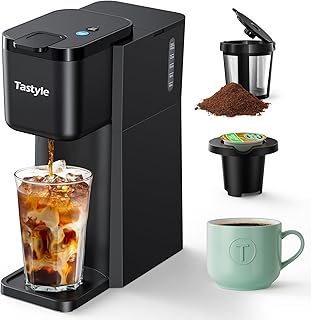


As an Amazon Associate we earn from qualifying purchases at no extra cost to you.
By Daniel Foster
🛒 Best Price Today on Amazon
Prime members get fast, free shipping on everything above, plus member-only deals. New members get a 30-day free trial — cancel anytime.
Start 30-Day Prime Free Trial →See Today’s Amazon DealsChoosing the Best Coffee Maker Single Serve for Your Kitchen
The best coffee maker single serve options split into three types that behave very differently in daily use. Identifying which type suits your routine settles most of the decision, because the differences between models within a type are far smaller than the differences between the types. Format decides cost and routine; the model decides the details.
Brew Size, Water Temperature and Footprint
Brew sizes typically run 6-12 oz (180-355 mL), and machines that offer a 12 oz option often produce weaker coffee at that setting because the same amount of grounds is diluted further. Match the machine’s largest strong setting to the mug you actually use. A 14 oz travel mug filled at a 12 oz setting is weaker again.
The Specialty Coffee Association recommends brew water at 195-205F (90-96C). Many single-serve machines run cooler than that, which produces sour, under-extracted coffee. Footprint runs roughly 6-12 in (15-30 cm) wide, and tall reservoir lids need clearance under a cabinet. Measure that gap before ordering, since it eliminates several models outright.
Pods, Reusable Filters and Ground Coffee
Pod machines are the fastest and the most expensive per cup, and proprietary pod systems lock you into one supplier. Reusable filter baskets cut that cost sharply and work with any coffee, at the price of a few seconds of filling and cleaning each morning.
Machines that take ground coffee directly avoid the pod economy entirely and generally produce better coffee, since fresh grounds beat sealed pods on flavour. The trade is a slightly slower routine and a filter basket that needs emptying rather than a capsule to bin. Over a year that basket keeps several hundred capsules out of the bin.
Space and Fit: Counter, Cabinet and Reservoir
Measure the counter depth and the clearance under any upper cabinet, since machines with top-loading reservoirs or lids need headroom to open. A standard cabinet clearance of 18 in (46 cm) rules out several taller models before any other comparison begins.
Reservoir capacity determines refill frequency: single-cup reservoirs are filled every use, while 40-75 oz (1.2-2.2 L) tanks last several days. Removable tanks are much easier to fill at a sink than fixed ones you have to pour into on the counter. Tank size also determines how often scale-forming minerals are topped up.
Running Costs and Subscription Traps
Pod cost per cup typically runs several times the cost of the equivalent ground coffee, and that difference is the real price of the machine over a year. Work out your daily consumption and multiply before deciding that a cheap machine is actually cheap.
Proprietary systems that reject third-party pods are the clearest form of lock-in, so check compatibility before buying. Machines that accept both pods and grounds keep the option open, which is worth a modest premium for anyone whose habits might change. Working the annual cost out first is how the best coffee maker single serve choice usually becomes obvious.
Top Picks: Six Single-Serve Machines
The list spans pod-only, dual-format and grounds-based machines, with a genuine drawback listed for each. Specifications come from manufacturer documentation and aggregated long-term owner reports rather than testing of our own, and current pricing should be checked at purchase.
| Model | Format | Brew sizes | Reservoir | Footprint |
|---|---|---|---|---|
| Keurig K-Mini Plus | Pods, reusable filter | 6-12 oz / 180-355 mL | Single cup | Very narrow |
| Keurig K-Supreme | Pods, reusable filter | 4-12 oz / 120-355 mL | 66 oz / 2 L | Medium |
| Ninja Pods and Grounds | Pods and grounds | 6-18 oz / 180-532 mL | Removable tank | Medium |
| Hamilton Beach FlexBrew | Pods and grounds | 8-14 oz / 237-414 mL | Single cup | Narrow |
| Nespresso Vertuo Plus | Proprietary capsules | 1.35-14 oz / 40-414 mL | 40 oz / 1.2 L | Medium |
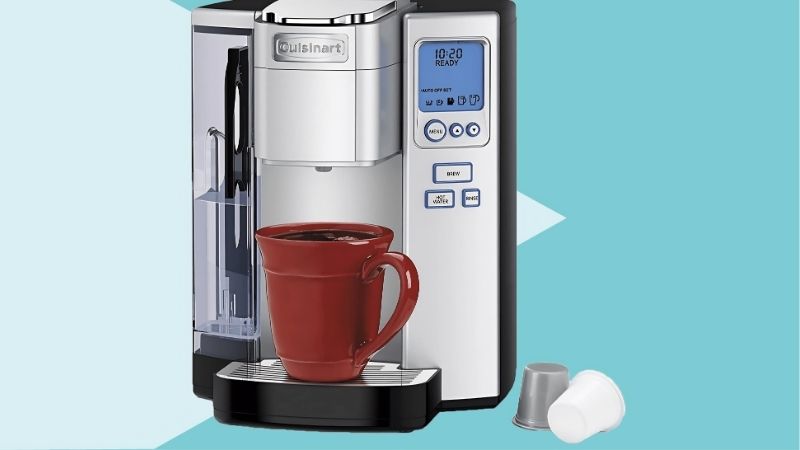
| Cuisinart SS-10 Premium | Pods, reusable filter | 4-12 oz / 120-355 mL | 72 oz / 2.1 L | Larger |
Keurig K-Mini Plus – Smallest Footprint Available
Under 5 in (13 cm) wide with a single-cup reservoir, which makes it the answer for a genuinely cramped counter, a dorm room or an office desk. It accepts a reusable filter, so the pod economy is optional rather than compulsory.
Filling the reservoir for every cup becomes tedious quickly, and there is no temperature control. Brew temperature sits at the lower end of the useful range, so darker roasts fare better than lighter ones, which need more heat to extract properly. Grinding slightly finer compensates a little for a machine that brews cool.
Keurig K-Supreme – Reservoir and Strength Control
A 66 oz (2 L) removable tank covers several days, with multi-stream extraction and a strength setting that meaningfully changes the cup. For a household where two or three people each want a different drink in the morning, it removes most of the friction.
It is considerably larger than the K-Mini and needs cabinet clearance for the lid. Pod cost remains the dominant expense unless the reusable filter is used regularly, and the plastic construction feels less durable than the price suggests. Owners commonly report the drip tray and lid hinge as the first parts to wear.
Ninja Pods and Grounds – Both Formats Properly
Takes pods or ground coffee without an adapter, with brew sizes up to 18 oz (532 mL) and a separate setting for stronger concentrate. The best coffee maker single serve buyers actually keep is often the one that does not force a format choice at purchase.
Two systems in one chassis mean more parts to clean and a larger footprint than a pod-only machine. Brew temperature is not certified against any standard, so results depend more on grind and dose than on the machine’s settings.
Hamilton Beach FlexBrew – Narrow and Dual Format
A slim machine that handles both pods and grounds with a single-cup reservoir, at a budget price. For a small kitchen where the counter is the constraint, it delivers format flexibility without the width that most dual-format machines require.
Refilling for every cup is the cost of that narrow body, and build quality is basic. Brew temperature runs cooler than the recommended range, which is most noticeable with lighter roasts that need heat to extract their sweetness. Pre-heating the mug with hot water helps more than it sounds like it should.
Nespresso Vertuo Plus – Consistency With Lock-In
Barcode-read capsules set the brew parameters automatically, producing very consistent results across drink sizes from espresso to a full mug. For consistency without any technique, no other format matches it in a machine this size.
The capsules are proprietary and third-party options are limited, which is the clearest example of the lock-in described above. Cost per cup is high, and the used capsules accumulate quickly unless you commit to the recycling programme. Capsule stock also has to be ordered rather than picked up locally in many areas.
Cuisinart SS-10 Premium – Larger Tank, More Control
A 72 oz (2.1 L) removable reservoir, five brew sizes and a temperature control setting, which is uncommon in this class and genuinely useful. The charcoal water filter also helps in hard water areas where taste and scaling are both concerns.
It occupies noticeably more counter space than the compact options and needs cabinet clearance. The temperature setting raises the ceiling but does not guarantee the full 195-205F range across the whole brew, so expect improvement rather than certification. Even a few degrees closer to the recommended range changes the cup noticeably.
Maintenance, Descaling and Cup Quality
Single-serve machines fail slowly and predictably, and almost every fault traces back to scale or old coffee oils. Even the best coffee maker single serve unit slows down once scale is ignored. Both are preventable, and preventing them keeps a cheap machine working better than an expensive neglected one.
Descaling on a Real Schedule
Calcium narrows the internal tubing, which lengthens brew time and drops water temperature below the extraction window. In hard water areas that happens within two to three months; with filtered or soft water, three to six is realistic.
Use the manufacturer’s solution or diluted white vinegar followed by two full water cycles. A machine that has started taking noticeably longer to fill a mug is already scaled, and severe cases need the cycle run twice to clear properly.
Needles, Baskets and Old Oils
Pod machines have a puncture needle that clogs with grounds, which causes weak brews and overflow. Cleaning it with a paperclip every few weeks solves a problem most owners misdiagnose as a failing pump or a faulty batch of pods.
Coffee oils go rancid in baskets and drip trays, and that is the usual cause of a machine that suddenly makes bitter coffee despite fresh pods. Rinse removable parts daily and wash them properly once a week.
Getting Better Coffee From Any Machine
Fresh grounds in a reusable filter beat sealed pods on flavour in almost every comparison, and a burr grinder is the single largest upgrade available at any price. Pre-heating the mug with hot water also stops the first sips dropping below drinking temperature.
Compact machines sell heavily around back-to-college demand in August and again as gifts through the Q4 period, so stock on popular models moves at those times. Prices in this category are otherwise reasonably stable through the year. Buying outside those peaks usually means better stock rather than a better price.
See More:
- Best low price dash cam
- Projector screens at Best Buy
- Best buy projector screens
- Best projector for games
- Best projector for gaming
Final Thoughts on the Best Coffee Maker Single Serve
Pick the format first, since pods, reusable filters and ground coffee produce very different annual costs. Then match brew size to your mug, then check the footprint against your counter and cabinet clearance before considering any other feature.
The best coffee maker single serve choice for most kitchens is a dual-format machine used with grounds most days and pods when time is short. Measure your counter and cabinet gap before ordering, and check current pricing at the time of purchase.





Write Your Review
No reviews yet. Be the first to share your experience!