
Key takeaways
Dash cam at Best Buy searches usually start with resolution, which is the least useful number on the box. Channel count, whether the camera uses a capacitor or a battery, and how it mounts matter far more to whether the footage exists when you need it.
As an Amazon Associate we earn from qualifying purchases.
Our top picks


As an Amazon Associate we earn from qualifying purchases at no extra cost to you. Ratings are shown as listed on Amazon.
By Daniel Foster
Specifications come from manufacturer documentation and long-term owner feedback rather than lab testing. Retailer stock, in-store pricing and installation services change constantly and are not quoted here; compare current figures wherever you buy.
🛒 Best Price Today on Amazon
Prime members get fast, free shipping on everything above, plus member-only deals. New members get a 30-day free trial — cancel anytime.
Start 30-Day Prime Free Trial →See Today’s Amazon DealsThe Specifications That Decide Whether Footage Is Usable
Every dash cam at Best Buy or in an online listing records video. What separates them is how many angles they cover, how they survive a hot car and how they get power. Four specifications explain it.
Channels, Resolution and Power Source
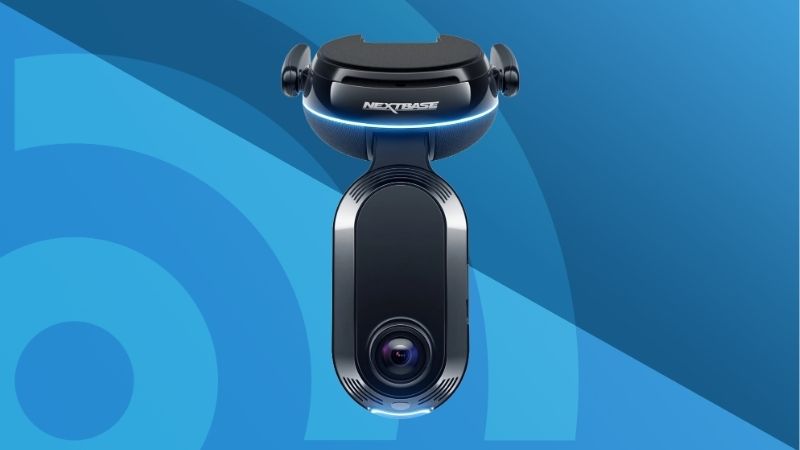
These three are the decisive numbers behind any dash cam at Best Buy comparison. Channels means front only, front plus rear, or three-channel covering the cabin as well. Resolution runs from 1080p to 4K on the front camera, with rear cameras usually lower.
Power storage is the specification most buyers miss. Cameras using a supercapacitor tolerate the heat of a parked car far better than those with a lithium battery, which swells and fails in summer. For anywhere with hot summers, a capacitor model is the safer purchase regardless of brand.
Mounting Style, Wire Routing and Where It Sits
Mounting decides how much of the installation you can do yourself. Three power routes exist: the 12V accessory socket, which is simplest and leaves a visible cable; an OBD adapter, which is tidier and taps a permanent supply; and hardwiring to the fuse box, which is required for most parking modes and is a job many people pay for.
Measure the space behind your mirror before ordering, since a bulky camera obstructs the view and some designs foul lane-assist sensor housings. Wedge-shaped bodies sit closer to the glass than cylindrical ones, and a rear camera needs a cable run the full length of the car through the headlining.
Field of View, Night Performance and Plate Legibility
Coverage and legibility are separate questions. A front field of view around 140 to 160 degrees covers adjacent lanes without excessive distortion at the edges. Wider is not better: beyond that, number plates at the frame edge stretch and become unreadable, which is the whole point of the recording.
Night performance depends on sensor quality and lens aperture rather than resolution. A 1080p camera with a good sensor frequently reads plates at night better than a cheap 4K one, which is worth remembering when comparing listings that lead with the resolution figure.
Storage, Cards and Loop Recording
Storage is where most systems quietly fail. Dash cams write continuously, overwriting the oldest footage in a loop, which is brutal on memory cards. High-endurance microSD cards rated for continuous video are essential, and standard cards fail within months in this duty.
Capacity of 64 to 256 GB is typical, and higher resolution eats it faster. Check the maximum card size the camera supports before buying a large one, and format the card in the camera every month or two, since card errors are the single most common reason a crash was not recorded.
Six Dash Cams Compared
These span budget single-channel units to three-channel systems, which covers what any dash cam at Best Buy shelf or online listing realistically offers. Each entry lists a genuine drawback.
| Model | Channels | Power storage | Best for |
|---|---|---|---|
| Garmin Dash Cam 57 | Front only | Battery | Compact discreet install |
| Viofo A139 Pro 2CH | Front and rear | Capacitor | Night footage quality |
| Nextbase 622GW | Front, rear optional | Battery | Stabilised 4K |
| Vantrue N4 | Three channel | Capacitor | Rideshare and cabin cover |
| Thinkware Q200 | Front and rear | Capacitor | Tidy hardwired setup |
| Rove R2-4K | Front only | Capacitor | Lowest outlay |
Garmin Dash Cam 57: Small Enough to Forget
A very compact 1440p camera with a magnetic mount, voice control and a field of view around 140 degrees, which fits behind a mirror without obstructing anything. Footage quality is consistently good and the app transfers clips quickly.
It uses an internal battery rather than a capacitor, which is a real concern for cars parked in summer heat. Storage is also limited to smaller card capacities than some rivals, so loop cycles come round faster at higher bitrates.
Viofo A139 Pro 2CH: Night Footage First
Built around a sensor chosen for low-light performance, with front and rear channels, capacitor power and hardwiring support for parking mode. For reading plates after dark, it is the strongest option in this group.
The interface is functional rather than polished and setup assumes some patience with menus. The app is also weaker than Garmin or Nextbase equivalents, which matters if you expect to pull clips off frequently.
Nextbase 622GW: Stabilised 4K and Emergency Features
Records 4K with image stabilisation, includes what3words location reporting and an emergency SOS function that can alert services if the camera detects an incident and you do not respond. Rear modules attach to the same body.
It runs on a battery rather than a capacitor, which limits how well it copes with a hot parked car. The 4K files also consume cards rapidly, so a large high-endurance card is effectively mandatory rather than optional.
Vantrue N4: Three Angles at Once
Covers front, cabin and rear simultaneously with capacitor power and infrared cabin lighting, which is the configuration rideshare drivers actually need. Recording all three channels gives a complete account of an incident.
The body is bulky behind the mirror and three channels consume storage very quickly, so a large card and frequent formatting are required. Cabin recording also raises consent questions with passengers, which varies by jurisdiction and should be checked locally.
Thinkware Q200: Clean Install, Solid Parking Mode
A two-channel system designed for hardwired installation, with a discreet body, capacitor power and a parking mode that uses energy-saving detection rather than continuous recording. Installation kits and cable clips are readily available.
It relies on hardwiring for its best features, which means paying for installation or doing the fuse box work yourself. The app and desktop viewer are also less refined than the mainstream consumer brands.
Rove R2-4K: Budget Entry With a Capacitor
A single-channel 4K camera at the lowest price here, using a capacitor rather than a battery, which is unusual at this level and genuinely valuable in a hot climate. Setup is simple through the 12V socket.
Low-light footage is average and the 4K label flatters a sensor that performs closer to a good 1080p camera at night. There is no rear channel option, so a rear-end collision goes unrecorded.
Installation, Heat and Long-Term Reliability
Three ownership realities decide whether a dash cam at Best Buy prices or premium money is still recording in two years, and none of them appears on the packaging.
Heat Is the Main Killer
Cabin temperatures in a parked car in summer routinely exceed 120 degrees F (49 C) on the windscreen. Lithium batteries degrade and can swell at those temperatures, while supercapacitors tolerate them, which is why capacitor models dominate recommendations in hot regions.
Parking the car in shade helps, and so does removing a battery-powered camera on the hottest days. If a camera body becomes distorted or the mount loosens permanently, heat has done its work and the unit should be replaced rather than trusted.
Memory Cards Fail Quietly
The failure mode owners hate most is discovering after a collision that the card stopped recording weeks earlier. High-endurance cards designed for continuous writing are the minimum, and even those wear out.
Format the card in the camera every month or two, and check that recent files exist at the same time. Replace the card annually in a camera that runs daily, since a card is far cheaper than the footage it fails to capture.
Where to Buy and When
Buying in a shop lets you see the body size and return a faulty unit easily, while online listings offer more models and hardwiring kits. Retailers may also offer paid installation, which is a separate service with its own terms; confirm those directly rather than assuming.
Car electronics follow the wider discount calendar, with the Amazon deal event in early October and the Black Friday to Cyber Monday window at the end of November drawing the most attention. Prices move constantly, so verify at the moment of purchase.
Frequently Asked Questions
Three questions come up in nearly every message about choosing a dash cam at Best Buy or online.
Do I need 4K?
Rarely. Plate legibility depends on sensor quality, lens and lighting more than pixel count, and 4K files consume cards several times faster. A good 1440p camera is the sensible middle ground for most drivers.
Is hardwiring necessary?
Only for parking mode, which needs power with the ignition off. For recording while driving, the 12V socket or an OBD adapter works fine. Hardwiring also requires a kit with low-voltage cutoff so the camera cannot flatten the car battery.
Capacitor or battery?
Capacitor, in almost every case. Batteries allow a few minutes of standalone operation but degrade badly in heat. Capacitors only hold enough charge to save the current file safely, which is all a permanently powered camera needs.
See More:
- Best low price dash cam
- Projector screens at Best Buy
- Best buy projector screens
- Best projector for games
- Best projector for gaming
Final Thoughts on Choosing a Dash Cam
Anyone comparing a dash cam at Best Buy with the same model online is looking at identical hardware, so decide the channel count first, insist on capacitor power if your car sits in the sun, and choose the mounting route you are actually willing to do.
Measure the space behind your mirror and buy a high-endurance card in the same order. Whether you buy a dash cam at Best Buy or from an online listing, format the card monthly and check the files exist, because a camera nobody verifies is a camera that fails silently.





Write Your Review
No reviews yet. Be the first to share your experience!