
Best cordless pool vacuum choices depend on two numbers most listings bury: runtime in minutes against your pool size, and how the unit gets back out of the water. This guide compares seven battery cleaners on coverage, debris capacity, charging and retrieval, plus what cordless designs cannot do.
As an Amazon Associate we earn from qualifying purchases.
By Daniel Foster
🛒 Best Price Today on Amazon
Prime members get fast, free shipping on everything above, plus member-only deals. New members get a 30-day free trial — cancel anytime.
Cordless Changes the Trade-Offs
The best cordless pool vacuum removes tangling, the transformer and the hose, and introduces a battery budget instead. Every design decision in this category follows from balancing suction against how long the pack lasts.
Runtime, Coverage and Debris Capacity: The Deciding Numbers
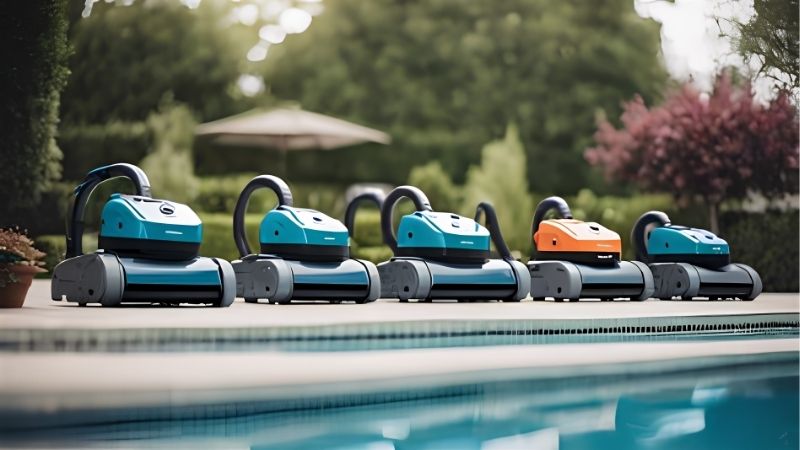
Four figures decide which best cordless pool vacuum fits: runtime in minutes, rated pool length in feet, debris capacity in liters, and which surfaces the unit cleans. Robotic cordless cleaners typically run 60 to 180 minutes and handle pools of 30 to 60 ft (9 to 18 m).
Coverage tiers matter more than suction claims. Floor-only units are cheapest, floor plus wall models climb to the tile line, and floor, wall and waterline models also skim the surface band where sunscreen residue collects.
Debris capacity of 3 to 5 L suits most residential pools, but a pool under trees fills a basket faster than the battery drains. Filter porosity matters too: fine baskets catch pollen and silt, coarse ones handle leaves without clogging.
Space and Fit: Pool Shape, Depth and Retrieval
Check the depth rating of any best cordless pool vacuum, generally 6.5 to 13 ft (2 to 4 m), and whether the unit handles your pool shape. Steps, tanning ledges and sharp corners are where cheaper robots get stuck or skip coverage.
Retrieval is the daily annoyance nobody mentions in reviews. Better models park at the waterline or signal when finished; basic ones sink to the bottom and need a hook or a swim. Weight out of water, typically 12 to 25 lb (5.4 to 11 kg), decides how easy that is.
Charging, Storage and Battery Care
Charging takes two to five hours on most models, so a large pool needing two runs cannot be cleaned in one morning. Some units charge on a dock; others require carrying the robot to a socket.
Lithium packs prefer partial charges and dislike heat. Storing a cleaner in direct sun on a pool deck through summer measurably shortens pack life, and winter storage should be at partial charge in a frost-free space.
What Cordless Cannot Do
Cordless robots cannot replace water chemistry, and no vacuum substitutes for filtration and sanitiser management. They also struggle with heavy leaf loads that a manual vacuum head on a pole handles quickly.
Algae on walls is another limit. Brushing action on these units is light, so established growth needs a manual brush and correct chemistry before a robot can keep the surface clean afterwards.
Suction is generally lower than mains-powered corded robots, since power comes from a pack rather than a transformer. For very large or very dirty pools, corded remains the stronger tool.
Best Cordless Pool Vacuum Picks: Seven Battery Cleaners
The list spans full robots and handheld spot cleaners. Specifications are manufacturer-stated and combined with recurring themes in owner reports rather than testing carried out by us.
Aiper Scuba S1
A floor, wall and waterline cleaner with app control, roughly 150 minutes of runtime and a parking function that brings it to the waterline when the cycle ends, avoiding retrieval from the deep end.
It is one of the heavier units to lift out and costs more than floor-only models. Complete surface coverage plus self-parking is what justifies it on a mid-size pool.
Aiper Seagull SE
The value pick: a floor-only cleaner with around 90 minutes of runtime, suited to pools up to roughly 40 ft (12 m), with simple one-button operation and no app.
It does not climb walls or skim, and it sinks at the end of a cycle. For a straightforward rectangular pool with a clean waterline, it covers the routine cheaply.
Beatbot AquaSense Pro
A premium multi-surface robot that cleans floor, walls, waterline and skims the surface, with mapping, app control and a solar-assisted charging option on some configurations.
It is expensive and complex, with more to go wrong than a simple floor unit. Surface skimming genuinely reduces how often you need a net.
Wybot S1
A mid-tier robot covering floor and walls with roughly 120 minutes of runtime, a reasonably large basket and a mid-range price.
Waterline cleaning is less thorough than premium units and app features are basic. Coverage per dollar is its main argument.
Betta SE Plus Solar Skimmer
A surface skimmer rather than a vacuum, running on solar during the day to collect floating leaves and insects before they sink to the floor.
It does nothing below the surface, so it pairs with a floor cleaner rather than replacing one. Under trees, it reduces the load on everything else substantially.
Water Tech Pool Blaster Max CG
A handheld battery vacuum on a pole for spot cleaning, running around 45 to 60 minutes on a charge with a reusable filter bag, for steps, corners and single problem areas.
It is manual work rather than automation and covers a small area per session. For steps and ledges that robots skip, nothing else is as quick.
Aiper Scuba N1
A larger-capacity floor and wall cleaner aimed at bigger residential pools, with extended runtime and a bigger filter basket for leaf-heavy environments.
Its size makes it heavier to retrieve and store. Basket capacity is the reason to choose it over smaller siblings.
| Model | Coverage | Runtime | Retrieval | Main trade-off |
|---|---|---|---|---|
| Aiper Scuba S1 | Floor, wall, waterline | ~150 min | Parks at waterline | Heavy, higher price |
| Aiper Seagull SE | Floor only | ~90 min | Sinks, needs hook | No wall climbing |
| Beatbot AquaSense Pro | Floor, wall, waterline, surface | Extended | Parks at waterline | Price, complexity |
| Wybot S1 | Floor and wall | ~120 min | Varies | Basic waterline |
| Betta SE Plus | Surface only | Solar, continuous | Floats | Nothing below surface |
| Pool Blaster Max CG | Spot cleaning | ~45-60 min | Handheld | Manual work |
| Aiper Scuba N1 | Floor and wall | Extended | Varies | Bulky to store |
Prices in this category swing sharply with the season on Amazon, so compare current listings and check what filter baskets are included.
Seasonal Use, Maintenance and Timing
A best cordless pool vacuum is a seasonal appliance in most climates, and how it is stored matters as much as how it is run.
Maintenance That Keeps Suction Up
Rinse the filter basket after every run with a hose, since dried sunscreen and silt block porous media quickly. A robot that seems to be losing suction almost always has a partially blocked basket rather than a failing motor.
Keep a spare basket if the model offers one. Swapping baskets lets one dry fully while the other works, which prevents the gradual clogging that comes from refitting a damp, partly rinsed filter.
Check brushes and tracks for hair, grass and stones monthly, and inspect the wheel bearings at the end of the season. Salt pools are harder on components than chlorine, so rinse with fresh water after each use where possible.
Winter Storage
Store a best cordless pool vacuum at roughly half charge in a frost-free space rather than fully charged or empty. Fully draining a lithium pack over a long winter is the most common cause of a cleaner that will not power on in spring.
Dry the unit completely before storing, and leave the basket out so residual moisture evaporates. A sealed damp robot in a shed grows mould in the filter housing.
Buying Timing
Pool equipment follows a strong seasonal cycle, with prices highest in late spring and reductions arriving as the swimming season ends. End-of-season clearance in early autumn is often the best value window.
Amazon also runs Prime Big Deal Days in early October, with Black Friday and Cyber Monday in late November, which frequently overlap with pool clearance. Discounts vary by model and cannot be promised in advance.
Frequently Asked Questions
Questions from pool owners considering a cordless cleaner.
Is cordless as powerful as corded?
Generally not. Mains-powered robots draw more power and suit large or heavily soiled pools. Cordless trades some suction for no cords, no transformer and easy setup.
How long does the battery last overall?
Packs typically hold up for a few seasons before runtime drops noticeably. Check whether a replacement battery is sold for the model before buying.
Do these clean the waterline?
Only models specifically rated for waterline cleaning. Floor-only and floor-plus-wall units leave the tile band where oils collect, which then needs manual brushing.
Can I leave it in the pool?
No. Continuous immersion and chemical exposure damage seals and shorten battery life, and most manufacturers advise removing the unit after each cycle.
See More:
- Best low price dash cam
- Projector screens at Best Buy
- Best buy projector screens
- Best projector for games
- Best projector for gaming
Choosing the Right Cleaner
The best cordless pool vacuum for you follows from pool size, surfaces and how much retrieval you will tolerate. Small rectangular pools are served well by the Aiper Seagull SE, while mid-size pools benefit from the Scuba S1 and its waterline parking.
Leafy properties should pair a floor robot with a solar skimmer, and every pool benefits from a handheld unit for steps. Rinse the basket after each run, store at half charge over winter, and remember that no vacuum replaces water chemistry.
Our top picks


![[2026 NEW] C1 Robotic Pool Cleaner with 180Mins, Iron Gray | Wall Climbing & Waterline Cleaning, Long Runtime, Dual Layers, Automatic Pool Vacuum with APP, Multi Cleaning Modes and Paths](https://m.media-amazon.com/images/I/71AOIk2qS2L._AC_UY218_.jpg)


As an Amazon Associate we earn from qualifying purchases at no extra cost to you.


Write Your Review
No reviews yet. Be the first to share your experience!