
Best hard floor vacuum cordless shopping now splits into two categories: conventional stick vacuums that only collect dry debris, and wet dry machines that vacuum and wash in one pass. They suit different homes and demand very different maintenance.
As an Amazon Associate we earn from qualifying purchases.
Our top picks


 Bissell CrossWave Pet Pro Wet Dry Vacuum
- CORE ADVANTAGE
- PET-FOCUSED DESIGN
- VERSATILE USE

 Bissell Crosswave Turbo Vacuum Mop All in
- EVERY PURCHASE SAVES PETS
- VACUUM AND WASH AT THE SAME TIME
- SURFACE CLEANING
As an Amazon Associate we earn from qualifying purchases at no extra cost to you.
By Daniel Foster
Specifications come from manufacturer documentation and long-term owner feedback rather than lab testing. Check your flooring manufacturer’s guidance before using any wet cleaning machine on wood or laminate.
🛒 Best Price Today on Amazon
Prime members get fast, free shipping on everything above, plus member-only deals. New members get a 30-day free trial — cancel anytime.
Start 30-Day Prime Free Trial →See Today’s Amazon DealsDry Vacuuming and Wet Washing Are Separate Jobs
A wet dry machine replaces the mop, not necessarily the vacuum, so the best hard floor vacuum cordless answer depends on which job you actually want removed from the week. Four specifications explain where each format fits.
Cleaning Type, Runtime and Tank Capacity
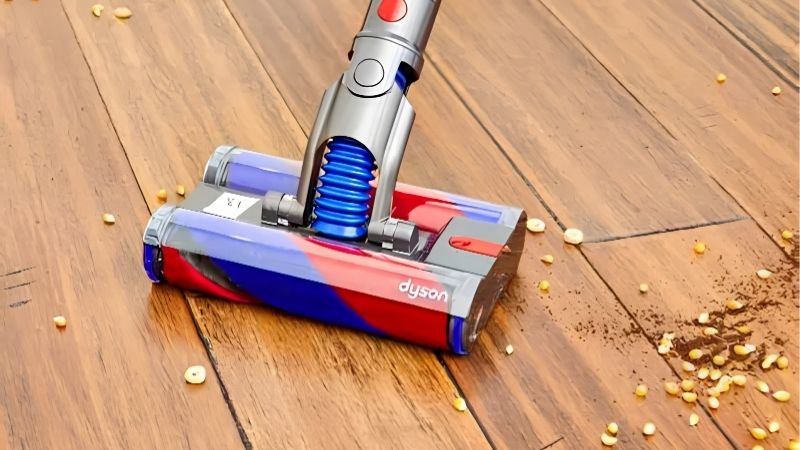
These three are the decisive numbers behind any best hard floor vacuum cordless comparison. Dry stick vacuums run 40 to 60 minutes in eco mode and far less on boost. Wet dry machines typically manage 30 to 40 minutes, limited by both battery and water, with clean tanks of around 0.6 to 0.9 qt (600 to 900 mL).
Tank size sets how much floor you cover per fill. Roughly 800 mL of clean water covers a moderate open-plan ground floor, so a larger home means refilling mid-clean, which interrupts the flow more than emptying a dust bin does.
Which Floors Tolerate Water
Flooring type decides whether the wet option is even available. Sealed tile, vinyl plank, stone and properly finished hardwood generally tolerate a damp mop head that leaves little standing water. Unsealed wood, laminate with worn seams and some engineered boards do not, and repeated wet cleaning can swell joints permanently.
Check the flooring manufacturer’s guidance before buying a wet machine, not after. If a significant share of your floor is unsuitable, a dry vacuum plus occasional careful mopping remains the safer combination.
Weight, Manoeuvrability and Where It Is Stored
Wet dry machines carry water and are heavier than dry sticks, often 9 to 11 lb (4 to 5 kg), though most are self-propelled so the weight is less noticeable in use. They cannot be lifted overhead for ceilings or used comfortably on stairs.
Docking stations for self-cleaning models need floor space plus a socket, typically 12 x 12 in (30 x 30 cm). Measure the utility corner before ordering, and remember that a wet machine needs to dry between uses, so a cupboard with no airflow is a poor choice.
Self-Cleaning Cycles and Maintenance Load
Maintenance is the deciding factor in this format. Wet machines require the roller and dirty water tank to be cleaned after every use, or they develop a smell within days. Self-cleaning docks that rinse and dry the roller automatically remove most of that chore, which is the feature that decides whether the machine keeps being used.
Even with a self-cleaning cycle, the dirty water tank needs emptying and rinsing manually. Filters need periodic washing and full drying, and rollers need replacing every few months to a year depending on use.
Six Machines Across Both Formats
The best hard floor vacuum cordless choice usually comes down to whether water is involved, so four wet dry machines are compared here alongside two options that vacuum dry. Each entry lists a genuine drawback.
| Model | Format | Runtime | Best for |
|---|---|---|---|
| Tineco Floor ONE S7 Stretch | Wet dry | Around 40 minutes | Reaching under furniture |
| Dreame H12 Pro | Wet dry | Around 35 minutes | Edge cleaning |
| Roborock Dyad Pro | Wet dry | Around 43 minutes | Dual roller coverage |
| Bissell CrossWave Cordless Max | Wet dry | Around 30 minutes | Rugs and hard floors |
| Dyson V15s Detect Submarine | Dry vacuum with wet head | Around 60 minutes dry | One machine for both |
| Shark HydroVac | Wet dry | Around 25 minutes | Lower outlay |
Tineco Floor ONE S7 Stretch: Lies Flat Under Furniture
The handle folds almost flat so the head reaches under sofas and beds, which is where hard floor dust actually collects. A dirt sensor adjusts suction and water flow automatically, and the self-cleaning cycle rinses and dries the roller in the dock.
It is expensive and the dock needs a permanent corner with a socket. The clean water tank still needs refilling on larger floors, and replacement rollers and filters are proprietary recurring costs.
Dreame H12 Pro: Cleaning to the Edge
Designed so the roller reaches close to skirting boards on both sides, which reduces the amount of hand finishing a wet machine usually leaves behind. It self-cleans with hot water and dries the roller afterwards.
It is heavy to carry between floors and, like all wet machines, unsuitable for stairs. Water and battery both limit a session, so a large ground floor may need a pause.
Roborock Dyad Pro: Two Rollers, Even Pickup
Uses counter-rotating rollers to collect debris in both directions, so forward and backward passes both clean rather than only one. Suction is strong for the class and it handles larger debris better than most wet machines.
There is no self-drying dock on the base model, so the roller must be cleaned manually to avoid odour. The unit is also bulky to store compared with a slim dry stick.
Bissell CrossWave Cordless Max: Hard Floors and Area Rugs
Vacuums and washes hard floors and can also clean area rugs on a separate setting, which suits homes where the two surfaces are mixed. Solution and water are dispensed from a single tank system.
Runtime is shorter than newer rivals and the brush requires manual rinsing after use. It also expects branded cleaning solution, which is an ongoing cost worth pricing before purchase.
Dyson V15s Detect Submarine: Dry Vacuum With a Wet Head
A conventional cordless stick that accepts a wet roller head, so it works as a full dry vacuum for the whole house and switches to washing hard floors when needed. That flexibility is unique here.
The wet head has a small water tank, so it covers less floor per fill than a dedicated wet machine, and it does not suck up standing liquid. It is also the most expensive option in this group.
Shark HydroVac: The Budget Entry
A lighter wet dry machine at a lower price, with a self-cleaning mode and a straightforward tank arrangement. For a small flat with tile or vinyl, it covers the requirement without a large outlay.
Runtime around 25 minutes limits it to smaller floor areas, and suction is modest compared with premium wet machines. Manual roller cleaning is required more often to keep it smelling fresh.
Living With a Wet Dry Machine
Three realities determine whether a best hard floor vacuum cordless purchase stays in weekly use or becomes a cupboard ornament.
Cleaning It After Every Session
A damp roller left in a warm machine grows bacteria and smells within a couple of days. Self-cleaning cycles with a drying stage handle most of this, but the dirty water tank must still be emptied and rinsed by hand each time.
Leave the roller out to air where the machine has no drying cycle. If a machine develops a persistent smell, the roller usually needs replacing rather than more cleaning, which is a routine consumable cost.
Water Use, Solutions and Floor Safety
Use only the volume of water the machine dispenses rather than pre-wetting floors, and avoid running a wet machine repeatedly over laminate seams or unsealed wood. Standing water is what damages floors, not the passing damp head.
Branded cleaning solutions are optional on most machines, and plain water suits many floors. Check your flooring guidance, since some finishes react badly to detergents regardless of which brand supplies them.
Do You Still Need a Dry Vacuum?
Most households do. Wet machines struggle with large debris, cannot be used on carpet or stairs in most cases, and are impractical for upholstery or ceilings. They replace the mop and part of the vacuum job rather than all of it.
Cleaning appliances are discounted around the Amazon deal event in early October and the Black Friday to Cyber Monday window in late November, when vacuums sell heavily as gifts. Prices move constantly, so verify at the point of purchase.
Frequently Asked Questions
Three questions come up in nearly every message from readers weighing a best hard floor vacuum cordless machine against a mop.
Can I use one on laminate or wood?
On sealed, well-maintained surfaces usually yes, since these machines leave a thin film that dries quickly. On unsealed wood or laminate with damaged seams, no. Check your flooring manufacturer’s guidance before buying.
Does it replace my vacuum?
Not entirely. Wet machines handle hard floors and struggle with carpet, stairs, upholstery and large debris. Most households keep a dry vacuum alongside and use the wet machine in place of mopping.
Why does mine smell?
Almost always a roller or dirty water tank that was not cleaned and dried after use. Run the self-clean cycle, remove and air the roller, and replace it if the smell persists, since the material holds bacteria once established.
See More:
- Best low price dash cam
- Projector screens at Best Buy
- Best buy projector screens
- Best projector for games
- Best projector for gaming
Final Thoughts on Wet Versus Dry
The best hard floor vacuum cordless choice depends on your flooring and your tolerance for maintenance. Wet dry machines save real time on tile and vinyl; dry sticks with a soft roller remain the safer answer for delicate or unsealed surfaces.
Measure the docking space and check your flooring guidance before ordering. Whichever best hard floor vacuum cordless format you choose, clean the roller and tank after every wet session, since neglect there is what ends these machines rather than motor failure.

Write Your Review
No reviews yet. Be the first to share your experience!