
Best game camera for security is a question about repurposing. Game cameras are engineered to photograph deer on a quiet trail, and using one to watch a driveway or a shed means understanding which of those design choices help and which work against you.
As an Amazon Associate we earn from qualifying purchases.
By Daniel Foster
What Transfers From Hunting to Security
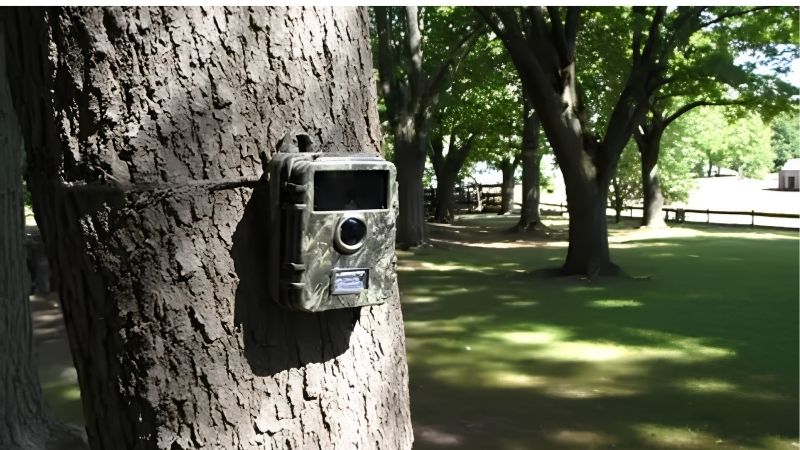
Choosing the best game camera for security means sorting what carries over. Long battery life, weatherproofing and operating without wifi all transfer directly, and they are the reason people reach for these cameras. What does not transfer is the assumption of slow-moving subjects at a fixed distance, which is why some hunting cameras miss a person walking briskly past.
The Decisive Numbers: Power, Storage and Subscription
Power is 8-12 AA cells, and lithium rather than alkaline is the meaningful choice because it holds voltage in cold weather and lasts far longer. In a low-traffic position a set can run six to twelve months; on a busy driveway, weeks.
Storage is a microSD card, generally 32-512 GB depending on model, and still images use far less space than continuous video. A card is only checked when you visit unless the camera is cellular, which is the fundamental limitation of the format.
Subscription applies to cellular models only and is priced by monthly image allowance. The best game camera for security on a busy approach will exhaust a cheap plan quickly, so calculate the annual figure across every camera before committing to the format.
Space and Fit: Mount Height and Detection Zone
The best game camera for security is mounted differently from a hunting camera, which usually sits low at around 3 ft (0.9 m) to capture animals. For security, mounting at chest height or slightly above and angling down across the approach captures faces rather than knees, which is the single most useful change.
Detection zones extend 60-100 ft (18-30 m), far more than a driveway needs, and an over-wide zone generates constant false triggers from a road or a moving branch. Many cameras allow sensitivity reduction, which is worth setting on day one rather than after a thousand empty images.
Theft, Trigger Speed and Failure Points
The best game camera for security is itself a target, and hunting models are designed to blend into woodland rather than resist removal. A steel security box and a cable lock through the mount cost a fraction of the camera and are close to essential in any accessible position.
Trigger speed separates a useful security camera from a frustrating one. Anything at 0.1-0.4 seconds catches a walking person; 1 second frequently records the empty frame after they have passed. On durability, battery door seals fail, condensation forms inside the housing in humid climates, and card slots wear.
7 Game Cameras That Work for Property
The best game camera for security is weighted towards trigger speed and reliability rather than wildlife features. These mix cellular and card-only models. Amazon prices change frequently, so treat the tiers as approximate.
| Model | Connectivity | Notable for | Price tier |
|---|---|---|---|
| Vosker V300 | Cellular, solar | Built for security use | Premium |
| SPYPOINT LINK-MICRO-S-LTE | Cellular, solar | Compact, integrated panel | Mid |
| Cuddeback CuddeLink J-1526 | Camera-to-camera mesh | Multi-camera properties | Mid-premium |
| GardePro E8 | Card only | Value, wifi transfer | Budget-mid |
| Muddy Manifest 2.0 | Card only | Fast trigger, low cost | Budget |
| Wildgame Terra Extreme | Card only | Simplest option | Budget |
| Apeman H70 | Card only | Entry level | Budget |
Vosker V300: Designed for Security From the Start
Vosker builds explicitly for property monitoring rather than hunting, with an integrated solar panel, cellular connectivity and detection tuned for people and vehicles rather than wildlife. That tuning shows in the false alert rate.
It is the most expensive option here and requires a plan, so the annual cost is significant. The housing is larger and more conspicuous than a woodland camera, which cuts both ways depending on whether you want deterrence or discretion.
SPYPOINT LINK-MICRO-S-LTE: Compact With Solar
A small body with a built-in solar panel and cellular transmission, which removes both the battery-changing trip and the card-collection trip. A free plan tier covers a small monthly image allowance.
The small form factor means a shorter flash range and a narrower detection zone. The free tier fills quickly on any busy approach, and image quality is modest compared with larger cameras.
Cuddeback CuddeLink J-1526: Mesh Across a Property
Cameras relay images to a single home unit over their own radio link, so one cellular connection or one collection point serves a network of cameras. On a large property this avoids paying a plan per camera.
The system requires buying into the ecosystem and configuring the mesh, which is more involved than a standalone camera. Individual camera image quality is average, and range between units depends on terrain.
GardePro E8: Value With Local Transfer
Card-based recording with wifi and Bluetooth for pulling images to a phone at the camera, which avoids removing the card entirely. Good trigger speed and image quality for the price.
The wifi works only at close range, so you still have to walk to the camera. There is no cellular option, making it unsuitable for genuinely remote positions.
Muddy Manifest 2.0: Fast and Cheap
A quick trigger and short recovery time at a low price, which is the combination that matters most for capturing people. Simple to configure with few settings to get wrong.
Night image quality is basic and the housing feels light. Card-only operation means regular visits, and the battery door seal is the component most likely to let water in.
Wildgame Terra Extreme: Minimal and Inexpensive
About as simple as this category gets, with a low price that makes covering several points affordable. Battery life on lithium cells is respectable in a quiet position.
Trigger speed is slower than the better options, so fast-moving subjects are sometimes missed. Build quality reflects the price and long-term outdoor durability is limited.
Apeman H70: The Entry Point
A budget card-only camera that covers the basics of motion-triggered stills and short clips, useful as a first camera to establish whether the position works before spending more.
Trigger speed and night performance both trail the mid-tier meaningfully. Treat it as a trial rather than a long-term installation, particularly in an exposed position.
Adapting a Hunting Camera to Security Duty
The best game camera for security needs a few setup changes when the subject is a person rather than an animal.
Settings Worth Changing on Day One
Reduce detection sensitivity if the camera faces a road or vegetation, set the shortest recovery interval the camera allows, and choose still images with a multi-shot burst rather than video, since bursts capture more usable frames per trigger and use less battery.
Set the date and time stamp correctly, because an image without an accurate timestamp is far less useful to an insurer or the police. Format the card in the camera each time you swap it, and check the battery door seal whenever you open it.
Protecting the Camera Itself
Use a steel security box and route a cable lock through the mounting point in any position someone can reach. Mounting slightly higher and angling down puts the camera out of casual reach while improving the capture angle.
Avoid pointing the camera where its own flash reflects off a window, a wet surface or a number plate, which washes out night images. If deterrence is the goal, a visible camera works better; if evidence is the goal, a no-glow model in a discreet position works better.
Legal Boundaries and Buying Timing
Point the camera at your own property and avoid framing a neighbour’s house, garden or a public footpath, since rules on recording beyond your boundary vary by jurisdiction. Audio recording is separately regulated and often more restricted than video.
Game cameras follow hunting season demand, so availability and discounting are strongest from late summer through autumn. Prime Big Deal Days in early October and Black Friday and Cyber Monday in late November also reach this category, and lithium AA cells are worth buying in bulk at the same time.
Frequently Asked Questions
These come up when the best game camera for security is a hunting model pressed into service around a house.
Is a game camera as good as a security camera?
Different rather than worse. It works without power or wifi and runs for months, but gives delayed stills rather than live video and has no live view unless it is cellular. For a remote gate or outbuilding it is often the only workable option.
What trigger speed do I need?
Aim for 0.1-0.4 seconds. A person walking past covers a lot of ground in a second, and slower cameras routinely capture the empty frame afterwards. Recovery time between shots matters just as much as the initial trigger.
Should I mount it low like a hunting camera?
No. Chest height or slightly above, angled down across the approach, captures faces rather than legs and puts the camera out of easy reach. That change alone improves security usefulness more than any specification upgrade.
See More:
- Best noise cancelling headphones Bose
- Best deal on air fryer
- Best buy Bella air fryer
- Best deals air fryer
- Best blender bottle
Final Thoughts on Game Cameras Around a Property
The best game camera for security is fast-triggering, runs on lithium AA cells, and is mounted higher and angled differently from how a hunting camera would be. Use a lock box in reachable positions, reduce sensitivity to cut false triggers, set the timestamp correctly, and keep the frame on your own land.
Our top picks




As an Amazon Associate we earn from qualifying purchases at no extra cost to you.




Write Your Review
No reviews yet. Be the first to share your experience!