
Best infant humidifier choices are decided in the sink rather than the shop. A unit that takes ten minutes to clean properly gets cleaned once a week at best, and a humidifier with a neglected tank disperses whatever has grown in it around the room.
As an Amazon Associate we earn from qualifying purchases.
Our top picks


As an Amazon Associate we earn from qualifying purchases at no extra cost to you.
By Daniel Foster
🛒 Best Price Today on Amazon
Prime members get fast, free shipping on everything above, plus member-only deals. New members get a 30-day free trial — cancel anytime.
Start 30-Day Prime Free Trial →See Today’s Amazon DealsJudging the Best Infant Humidifier on Maintenance
Every best infant humidifier here is cool mist, because warm mist units boil water and pose a burn risk near a child. Once that is settled, the differences that matter over months of ownership are almost entirely about upkeep.
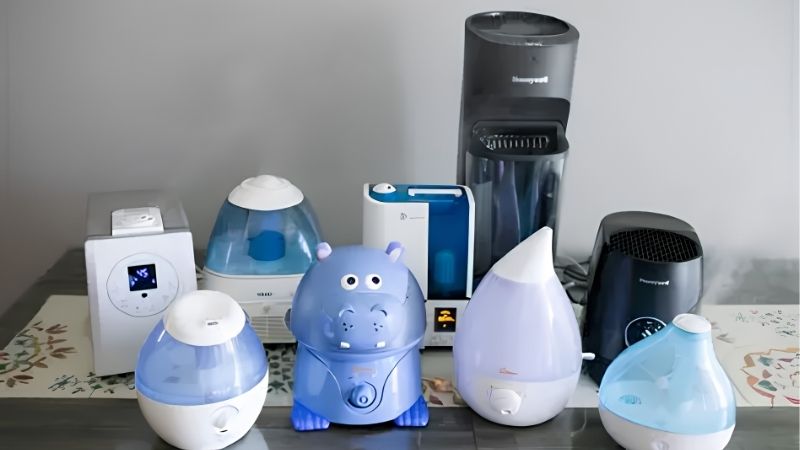
Type, Coverage and Running Costs
Ultrasonic units vibrate water into a fine mist and are near silent, typically 25-30 dB. Evaporative units draw air through a wet wick with a fan, run louder at 35-45 dB, and cannot over-humidify a room because evaporation slows as air saturates. That is a genuine safety margin rather than a marketing claim.
Coverage runs 250-500 sq ft (23-46 m2), and a typical nursery of 120-200 sq ft (11-19 m2) needs the lower end. Evaporative wicks cost money every one to three months; ultrasonic units have no filter but need distilled water in hard water areas. Over a season that cost is comparable to buying replacement wicks.
Tank Access: The Specification Nobody Lists
A tank opening wide enough for a hand and a cloth is the difference between a two-minute clean and a chore involving a bottle brush. Narrow-necked tanks cannot be scrubbed properly, and that is where biofilm accumulates unseen. A torch shone into the tank shows more than any product description.
Check whether the tank, base and nebuliser cover are dishwasher safe, since that removes most of the weekly effort. Units with several small crevices around the mist outlet take longer to dry and are the ones most often abandoned in a cupboard. Simplicity of shape is worth more than any additional feature here.
Space and Fit: Placement, Refilling and Storage
Position the unit at least 3 ft (0.9 m) from the crib on a firm surface, cord out of reach, with mist directed into open space rather than at furniture or walls. Measure the nursery before buying, since oversized output in a small room causes damp. Coverage figures assume an empty room rather than a furnished nursery.
Tank size sets refill frequency: 1-1.5 gal (3.8-5.7 L) runs 24-36 hours on low, while a 1.5 L unit needs daily attention. Consider where it will be stored out of season, since these units should be dried completely before being put away. A damp unit stored for months is usually beyond saving.
White Dust, Scale and Water Quality
Ultrasonic units disperse dissolved minerals as fine white dust that settles on surfaces, which is cosmetic rather than harmful but noticeable in hard water areas. Distilled water eliminates it entirely and also slows scale build-up inside the unit. Distilled water bought in bulk is inexpensive.
Evaporative units leave minerals in the wick instead, which is why the wick stiffens and needs replacing. Neither approach avoids maintenance; they simply move it from one place to another, and choosing between them is a preference about which chore you prefer. Neither type is maintenance free, whatever the packaging implies.
Top Picks: Six Cool Mist Units Ranked by Upkeep
Each unit below is cool mist and is assessed on how easily it cleans, with a genuine drawback listed for every entry. Which best infant humidifier suits you depends on whether you would rather replace wicks or use distilled water. Specifications come from manufacturer documentation and aggregated owner reports rather than testing of our own, and details should be verified on the listing.
| Model | Type | Tank | Ongoing cost | Cleaning effort |
|---|---|---|---|---|
| Vicks Filter-Free V4600 | Ultrasonic | 1.2 gal / 4.5 L | None | Low, wide opening |
| Venta Airwasher LW25 | Evaporative disc | 2 gal / 7.6 L | Cleaning solution only | Low, no wicks |
| Levoit LV600S | Ultrasonic | 1.5 gal / 6 L | Optional filters | Medium |
| Air Innovations MH-408 | Ultrasonic | 1.7 gal / 6.4 L | Optional filters | Medium, wide tank |
| TaoTronics Cool Mist | Ultrasonic | 1 gal / 4 L | None | Medium |
| Everlasting Comfort Cool Mist | Ultrasonic | 1.6 gal / 6 L | None | Medium, top fill |
Vicks Filter-Free V4600 – No Consumables At All
A filter-free ultrasonic unit with a wide tank opening and a straightforward shape, so there are no ongoing costs beyond water and electricity. It is the option most likely to still be in daily use six months after purchase. Longevity of habit matters more than longevity of hardware here.
Filter-free means white dust in hard water areas unless you use distilled water. The unit is basic, with no humidistat, so a separate hygrometer is needed to keep the room within the 40-60 per cent range rather than pushing past it.
Venta Airwasher LW25 – Discs Instead of Wicks
Rotating discs pass through the water and evaporate moisture into the air, with no wick to replace and no white dust at any water hardness. The tank is large and the whole assembly comes apart for cleaning without tools.
It is expensive and physically bulky, and the manufacturer’s cleaning solution is an ongoing purchase. Output is gentle, so in a very dry room the humidity rise is slower than an ultrasonic unit of similar coverage would deliver. In a small nursery that difference is barely noticeable.
Levoit LV600S – Large Tank, Smart Control
A 1.5 gal (6 L) tank with a humidistat and app control, so a target humidity can be set once and left. The unit also supports warm mist on some versions, which should simply not be used in a nursery. Warm mist near a crib is a burn risk regardless of the setting.
Two mist modes mean more internal parts to clean, and the warm mist chamber is an area that needs descaling if it is ever used. App support over a multi-year period is not guaranteed, so the manual controls matter.
Air Innovations MH-408 – Wide Tank and Long Runtime
A large opening that a hand fits into easily, combined with a 1.7 gal (6.4 L) tank and a humidistat. The best infant humidifier for a parent who dislikes fiddly cleaning is usually the one with the simplest internal geometry.
It is a physically large unit that takes up meaningful floor space in a small nursery. Optional filters reduce white dust but add a cost, and the mist outlet needs regular wiping to prevent residue building up around it. Residue there reduces output before anything else shows.
TaoTronics Cool Mist – Straightforward Mid-Range
A 1 gal (4 L) ultrasonic unit with adjustable output, automatic shut-off and a reasonable tank opening at a mid-range price. There is nothing unusual in the design, which keeps both the cleaning routine and the failure points simple.
No humidistat on the standard version means monitoring with a separate hygrometer. The tank is smaller than the large-capacity options, so refilling happens roughly daily on higher settings rather than every other day. Filling at bedtime keeps water fresher than filling in the morning.
Everlasting Comfort Cool Mist – Top-Fill Convenience
Top filling means water goes in without inverting a heavy tank over a sink, which is a genuine improvement for a routine done half-asleep. The 1.6 gal (6 L) capacity gives long runtime between refills.
Top-fill designs can be harder to dry fully inside, so leaving the lid off between uses matters more here. There is no humidistat on the base model, and white dust appears with hard water as with any ultrasonic unit. Distilled water solves it here as on the others.
The Routine That Keeps It Working
Maintenance on these units is short but genuinely daily, and a best infant humidifier neglected for a week is worse than no humidifier at all. Skipping it does not merely reduce performance; it turns a helpful appliance into one that disperses whatever has been sitting in the tank overnight.
The Daily and Weekly Routine
Empty the tank each morning, rinse it, and leave it open to air dry rather than refilling immediately. Refilling at bedtime with fresh water rather than leaving water standing all day is the single habit that matters most.
Weekly, clean with white vinegar or the manufacturer’s solution, paying attention to the nebuliser plate on ultrasonic units and the wick housing on evaporative ones. Rinse thoroughly afterwards so no cleaning solution remains in the tank. Any vinegar smell means it needs another rinse.
Managing Scale, Dust and Filters
Distilled water removes white dust and slows scale, which is worth the cost in hard water areas. Where tap water is used, descale monthly rather than waiting for visible deposits, since scale reduces output before it becomes obvious. A drop in mist volume is the first symptom of scale.
Evaporative wicks need replacing every one to three months, and a stiff or discoloured wick is past its useful life. Budget for that as a running cost rather than a surprise, since a saturated wick reduces output substantially. Marking the replacement date on the wick itself avoids guessing.
Seasonal Use and Storage
Demand for humidifiers rises as heating comes on through the colder months and drops again in spring, so stock and pricing move with that cycle. Buying ahead of the season usually means better availability rather than a better price. Stock on the popular nursery models thins out by midwinter.
Before storing, run the unit dry, clean every component and leave it fully open for a day so nothing damp is sealed inside. A unit put away wet develops mould that is difficult to remove and often ends its useful life. Ten minutes of drying prevents that entirely.
See More:
- Best low price dash cam
- Projector screens at Best Buy
- Best buy projector screens
- Best projector for games
- Best projector for gaming
Final Thoughts on the Best Infant Humidifier
Choose cool mist, then choose on tank access and running costs rather than on features. A wide opening, few crevices and no consumables produce a unit that stays in service, which matters far more than a slightly higher output figure.
The best infant humidifier is the one whose cleaning routine you will still be doing in three months. Measure the nursery and check placement clearance before ordering, and confirm tank capacity and filter requirements on the listing at the time of purchase.





Write Your Review
No reviews yet. Be the first to share your experience!