
Best place to put air purifier questions usually arrive after the machine does, when the readings refuse to improve. Placement changes real-world performance more than most specification differences, so this guide covers clearance, airflow and room logic, then matches seven models to the positions they actually suit.
As an Amazon Associate we earn from qualifying purchases.
Our top picks

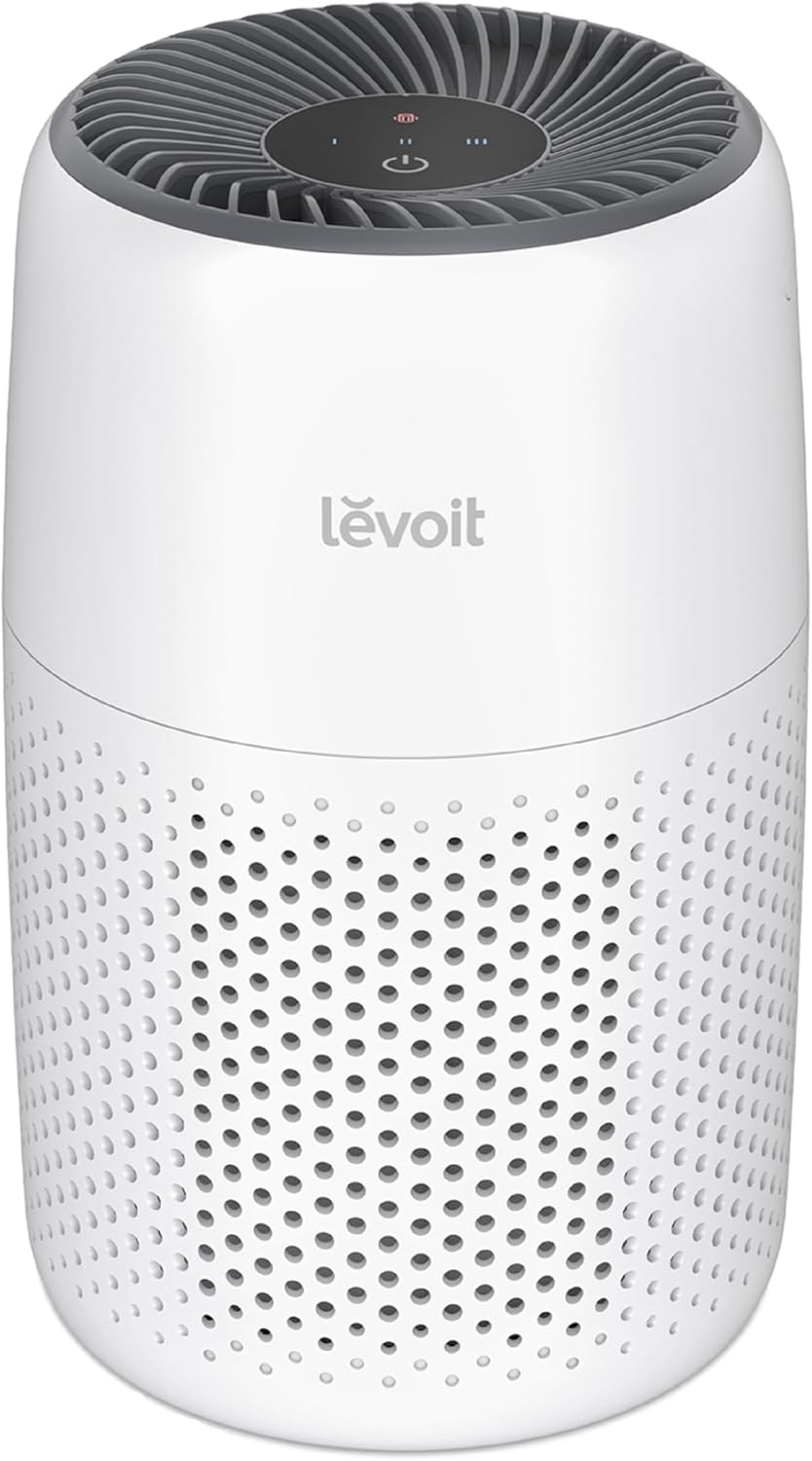
 VOOPNU Air Purifiers for Home
- Effortless Operation: Simplified control panel with intuitive design…
- Compact Yet Powerful: Covers up to 1,076 ft²…
- 360° Airflow & High Efficiency Filtration: The elegantly…

 LEVOIT Air Purifier for Home Allergies and
- Power Source: Corded Electric
- Control Method: Touch
- Filter Type: 3 in 1 Filtration
Covers up to 1073 square feet on one unit
Operates as quiet as 24 decibels in sleep mode
Captures 99.97 percent of particles down to 0.1 microns
Requires genuine Levoit replacement filters for proper performance
Corded electric design needs a nearby wall outlet


 Purivortex Air Purifiers for Bedroom
- Cleaner Air In Minutes: Purivortex is proven to…
- Breathe Easier with 99.97% Filtration: Purivortex HEPA air…
- Bigger Filter, Better Purification: Purivortex goes beyond the…
As an Amazon Associate we earn from qualifying purchases at no extra cost to you.
By Daniel Foster
Placement Rules That Change Measured Performance
A purifier only cleans the air that reaches it. Every obstruction, every dead corner and every open door alters how much of the room actually circulates through the filter, which is why two identical machines can produce different sensor readings in the same house.
Clearance, Coverage and Air Changes: The Numbers That Decide It
Start with clean air delivery rate and the room size. A machine rated near 240 cfm delivers roughly four to five air changes per hour in a 350 square foot room, which is the level allergy sufferers generally want. Undersizing cannot be fixed by clever positioning.
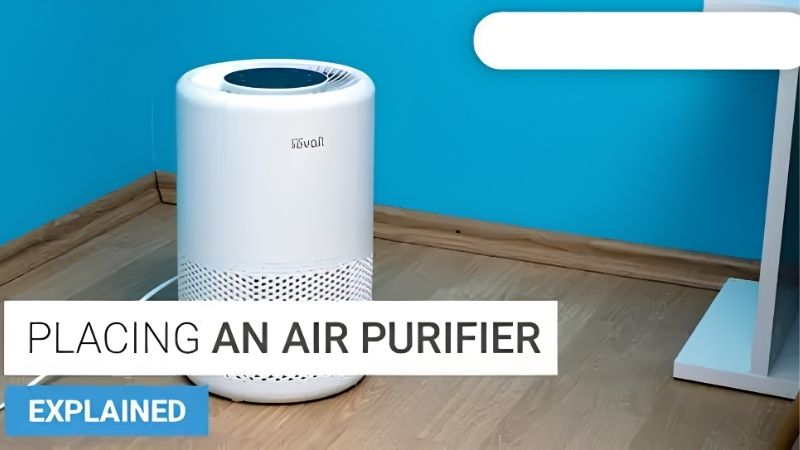
Clearance is the second number. Most manufacturers specify at least 6 to 12 inches of open space around the intake, and side-intake designs suffer more than 360-degree cylindrical ones when pushed against furniture. A unit wedged between a sofa and a wall can lose a substantial share of its rated throughput.
Height matters too. Fine particles stay suspended and circulate with room currents, so a purifier raised slightly on a low table often performs better than one sitting on carpet, where the pile absorbs airflow and dust settles beyond reach of the intake.
Space and Fit: Matching the Unit to the Position
Measure the intended spot before ordering. Tower units need roughly a foot square of floor and clearance above the outlet, box designs are wider but shorter, and wall-mounted models free the floor entirely at the cost of a permanent installation and a nearby outlet.
Cable length is the detail that ruins plans. Many purifiers ship with a cord under six feet, which forces the unit toward the wall it should stand away from. Check the length against the distance to the nearest socket before deciding on the best place to put air purifier hardware in a given room.
Room Logic: Sources, Doors and Sleeping Positions
Place the machine near the pollution source when there is one. A litter tray, a kitchen doorway or a shedding pet bed produces a concentrated plume, and intercepting it before it disperses is more efficient than filtering the whole room afterwards.
In bedrooms, the priority shifts to the breathing zone. A position within about six to ten feet of the bed, out of the direct airflow path so the draught is not felt, gives the best overnight result. Closing the door raises effective air changes dramatically by shrinking the volume being treated.
Seven Purifiers Matched to Real Positions
The picks below are organised by where they belong rather than by price, since the best place to put air purifier hardware differs by model geometry. Each names a genuine limitation. Specifications reflect manufacturer documentation and aggregated owner reports over time rather than measurements taken here.
1. Bedside, Quiet Operation: Levoit Core 300S
Compact, cylindrical and drawing air from all sides, the Core 300S tolerates a tighter corner than side-intake designs and runs near 24 decibels on its lowest setting. For a nightstand-adjacent position in a small bedroom it is the sensible default.
Coverage suits rooms up to roughly 220 square feet at a useful air change rate, so larger bedrooms need a step up. The filter is a single sealed cartridge, replaced whole.
2. Living Room Corner: Coway Airmega AP-1512HH
Side and front intake with a top outlet makes this one happy in a corner position provided several inches of clearance remain. Automatic mode reacts quickly when cooking smoke drifts in from an adjacent kitchen.
Corner placement is a compromise rather than an ideal, and the ionising function defaults to on after a power interruption. The casing shows dust readily.
3. Open Plan, Central Position: Blueair Blue Pure 211i Max
Designed to sit in the open and move a large volume quietly, this one rewards a central placement that a tower cannot exploit. In a combined kitchen and living space it handles the volume without running at an audible speed.
It needs floor space in the middle of a room, which not every household will accept, and the wide footprint makes it awkward against furniture.
4. No Floor Space: Rabbit Air MinusA2
Wall mounting solves placement in small apartments and nurseries where nothing can occupy the floor. Mounted at mid-height with clear space around it, it draws from the zone where particles actually circulate.
Installation is permanent, requires anchoring into structure and a nearby outlet, and the unit sits at the premium end of the market. Filter customisation adds to replacement cost.
5. Near a Kitchen or Litter Tray: Winix 5500-2
The thick carbon pellet layer makes this the right machine for a position close to an odour source. Placed at the edge of a kitchen or beside a pet area, it intercepts the plume before it spreads through the house.
Carbon saturates faster in that duty, so replacement intervals shorten. Top fan speed is loud enough to be intrusive in an open-plan space.
6. Large Room, Central Floor: Honeywell HPA300
High throughput suits a big room where the unit can sit clear of walls, and coverage near 465 square feet gives real turnover in a family living area. Simple mechanical controls mean nothing to reconfigure after a power cut.
It is large, plain and audible at higher settings, and triple filter replacements make the annual running cost noticeable.
7. Home Office Desk Height: Blueair Blue Pure 511
Small enough to sit on a desk or shelf, which raises the intake into the breathing zone in a room where floor space is committed to furniture. Power draw is minimal for all-day running.
There is no sensor or automatic mode, and coverage genuinely suits only small rooms. Elevated placement also needs a stable surface, since the unit is light.
| Position | Recommended model | Intake style | Clearance needed |
|---|---|---|---|
| Bedside, small bedroom | Levoit Core 300S | 360 degree | Moderate |
| Living room corner | Coway AP-1512HH | Front and side | Generous |
| Open plan, central | Blueair 211i Max | Bottom to top | Generous |
| Wall mounted | Rabbit Air MinusA2 | Front panel | Front only |
| Beside odour source | Winix 5500-2 | Front | Generous |
| Large room, floor centre | Honeywell HPA300 | Front | Generous |
| Desk or shelf height | Blueair Blue Pure 511 | Bottom to top | Moderate |
Availability and pricing shift frequently, so confirm both at the time of purchase rather than relying on published figures.
Common Placement Mistakes and Long-Term Upkeep
Most disappointing results trace back to three or four repeated errors, all of them free to correct. Understanding them is worth more than upgrading to a larger machine, and none of them costs anything to fix.
The Errors That Cost the Most Airflow
Behind a curtain is the worst position, since fabric blocks the intake and traps the outlet stream against the window. Under a desk with a closed back panel is nearly as bad, and inside a media cabinet defeats the purpose entirely.
Directly beside an open window is the second common error. The machine ends up filtering incoming outdoor air continuously and never reaches equilibrium in the room, which is why the best place to put air purifier units during pollen season is an interior wall with windows closed.
Maintenance That Preserves Performance
Vacuum the pre-filter monthly. It is the single habit that keeps throughput near the rated figure, and neglecting it shortens HEPA life substantially in homes with pets or carpet.
Replace carbon on schedule rather than by smell, since odour capacity exhausts without any indicator. Motors typically outlast several filter generations, so consumables dominate the lifetime cost and should be priced before purchase.
Check the electrical safety listing as well, since these machines run continuously for years. A recognised certification mark on the label is a basic requirement, and it is worth confirming that replacement filters remain available for the model rather than discontinued a year after launch.
Seasonal Patterns and When to Buy
Demand rises with ragweed in late summer, spikes regionally during wildfire smoke episodes, and climbs again through heating season as windows stay shut. Stock on popular models thins quickly during a smoke event.
Two windows are worth planning around: Prime Big Deal Days in early October and Black Friday through Cyber Monday at the end of November. Buying before a season starts is generally easier than buying during one.
Frequently Asked Questions
These are the questions readers ask most often once the machine is home and the placement decision is live.
Should the door stay open or closed?
Closed, in the room being treated. Shutting the door shrinks the volume the machine must handle, which raises effective air changes per hour substantially and produces a noticeably faster improvement in sensor readings. This is why the best place to put air purifier units is almost always a room you can close.
Is one purifier enough for a whole home?
Rarely, which is why the best place to put air purifier hardware is a single occupied room. Filtration is a room-level intervention, and air moving between rooms dilutes the effect. Most households do better with one appropriately sized unit in the bedroom than one large machine in a hallway.
Does running it near the floor help with dust?
Not as much as expected. Settled dust stays settled until disturbed, while the particles worth capturing remain suspended at breathing height. Slight elevation on a low table usually outperforms floor placement.
Can it sit behind furniture if the front is clear?
For front-intake models, sometimes. For side or bottom intake designs, no. Check which surface draws air on your specific unit before deciding the best place to put air purifier equipment in a crowded room.
See More:
- Best low price dash cam
- Projector screens at Best Buy
- Best buy projector screens
- Best projector for games
- Best projector for gaming
Final Thoughts on Placement
The best place to put air purifier hardware is in the room you occupy most, clear of walls and furniture, slightly raised, with the door closed and the machine sized correctly for the floor area. Those five conditions account for nearly all the difference between a disappointing result and a good one.
Measure the room and the distance to the nearest outlet before ordering, confirm the intake style of the model you are considering, and vacuum the pre-filter monthly once it arrives. Placement is free performance, and most owners leave it on the table.





Write Your Review
No reviews yet. Be the first to share your experience!